
Finding the right book cabinet with door for your home requires balancing your available floor area, ceiling height, and the physical dimensions of your reading collection. In compact living environments like Singapore’s HDB flats and condominiums, every centimeter counts, making precise measurements essential to prevent a bulky unit from overwhelming your room. By evaluating your physical space, door clearances, and delivery pathways before purchasing, you can select a cabinet that offers ample storage while maintaining a comfortable, open flow.
Assessing Your Available Floor and Wall Space
To find the maximum footprint your room can accommodate, start by measuring the designated floor width and depth with a high-quality metal measuring tape. Do not rely on digital floor plans alone, as actual wall-to-wall distances can vary slightly after plastering, painting, or renovation work. Ensure you measure along the floor where the base of the cabinet will sit, taking into account any protruding skirting boards that prevent furniture from flushing completely against the wall. If your floor is uneven, use a spirit level to check for slopes that might cause a tall cabinet to lean forward once loaded.
Look closely for wall obstructions that could interfere with a tall or wide cabinet. Note the positions of electrical outlets, light switches, internet ports, and air conditioning trunking, which are common in local apartments. Covering these utilities can restrict access to essential plugs or require you to pull the cabinet forward, consuming valuable floor space. If you must place the cabinet over an outlet, look for models with open back panels or plan to cut a neat cable access hole during assembly.
Products mentioned in this guide
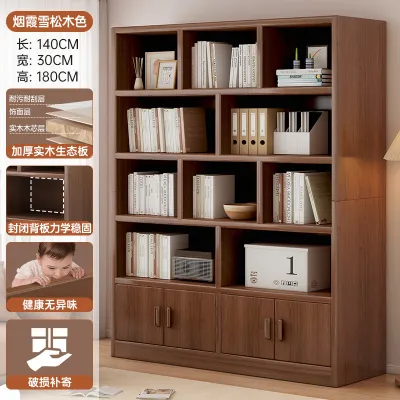
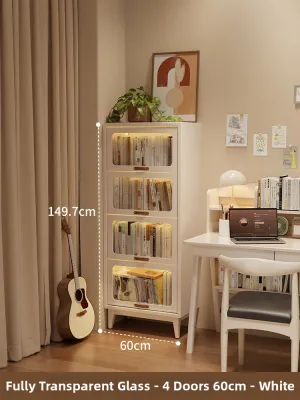
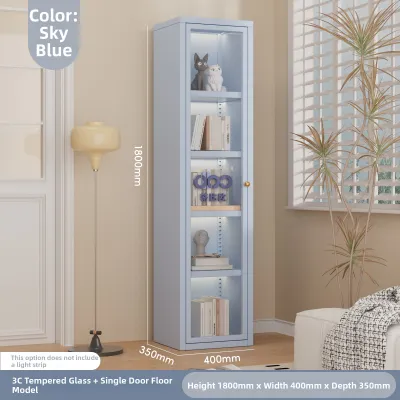
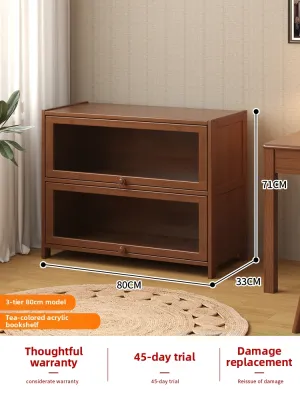
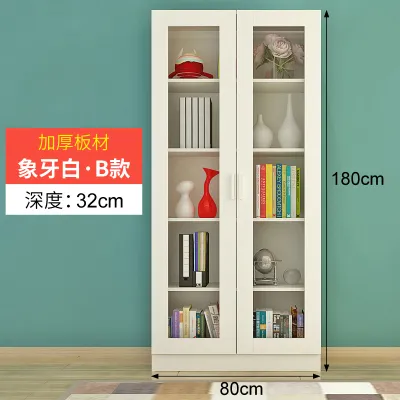
![[A-STAR] 2 + 1 Door Display Bookcase cabinet Storage shelves (FREE INSTALL)](https://img.lazcdn.com/g/p/1df4088b89e8e18be5053c22636e398b.jpg_400x400q80.jpg_.webp)
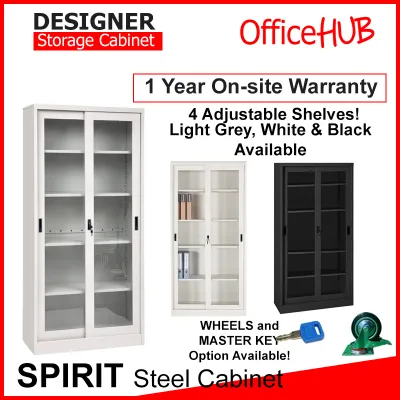
![[FREE INSTALLATION] KENZZO :Belly Glass Door Display Cabinet /book shelf/ filing cabinet/ wardrobe](https://img.lazcdn.com/g/p/ef0152d394d3bae692e449cb326dcb39.jpg_400x400q80.jpg_.webp)
Prices are valid at publication and may change. Please refer to the product page for the latest price.
Next, measure the vertical clearance from the floor to the ceiling. If you are considering a tall, near-ceiling unit, subtract at least 10 to 15 centimeters from the total height to allow room for assembly, upright tilting, and any decorative top moldings. Be mindful of low-hanging beams, ceiling fans, light fixtures, and window sills that might limit how high or wide your book cabinet can be.
Matching Cabinet Dimensions to Your Storage Needs
Your book collection itself dictates the internal volume and shelf configuration you need. Gather your books and categorize them by size, separating standard paperbacks, larger novels, A4 folders, and oversized art books or binders. This categorization helps you determine whether you need a cabinet with adjustable shelves or if fixed shelf heights will suffice. Adjustable shelves offer the greatest flexibility, allowing you to reconfigure the interior layout as your collection evolves.

When choosing a book cabinet with door, remember that the doors and back panels reduce the usable internal depth. While an open bookshelf might allow books to overhang slightly, a closed cabinet requires all items to sit completely behind the door frame. Check the manufacturer’s specified internal depth rather than just the external depth to ensure your largest books can be stored without preventing the doors from closing. For example, standard A4 files typically require an internal depth of at least 30 centimeters to clear the door hinges.
To estimate the total linear shelf space required, stack your books tightly together on a table and measure the length of the stack. Compare this total length to the combined width of the cabinet’s shelves. Planning for about 10 to 15 percent of extra shelf space is a practical way to accommodate future book purchases and decorative items without overloading the unit. Additionally, placing heavier textbooks and binders on the lower shelves improves the overall stability of the cabinet.
Evaluating Depth and Door Swing for Room Flow
The external depth of your cabinet directly impacts the remaining walkway space in your room. Standard book cabinets typically range from 30 to 45 centimeters in depth. In narrow hallways, study rooms, or compact bedrooms, a deeper cabinet can restrict movement and make the room feel cramped, so a shallower model is often more appropriate. If you are placing the cabinet in a high-traffic corridor, a depth of 30 centimeters or less is ideal to keep the pathway clear.
The type of door mechanism you choose is critical for maintaining smooth room flow. Hinged doors require a clear arc in front of the cabinet to open fully, which means you must measure the door width and ensure no coffee tables, desks, or beds block this path. If your floor space is highly constrained, consider a cabinet with sliding doors or glass panels that slide within tracks, as these require zero front clearance to operate. Sliding doors are particularly useful in tight study corners where a desk sits close to the storage unit.
As a general rule, plan for a clearance zone of at least 60 to 90 centimeters in front of the cabinet. This space allows you to stand comfortably, open the doors wide, bend down to reach lower shelves, and pass by even when the cabinet is in use. If the cabinet is placed near a doorway, verify that the open cabinet doors will not collide with the room’s entry door. You should also check that the door handles do not protrude too far into walkways where they could catch on clothing.
Navigating Delivery and Assembly Clearances
A common oversight is purchasing a cabinet that fits the room but cannot physically reach it. Before finalizing your order, measure the dimensions of all entry points, including the building’s lift doors, lift interior height, corridor turns, and your home’s main entrance. Flat-pack units are easier to transport through tight spaces, but pre-assembled cabinets require generous clearance along the entire delivery route. If you live in an apartment without lift access or with a particularly small elevator, a modular or flat-pack design is almost always a more practical choice.
Measure the narrowest door frames and hallway corners inside your home that the delivery team must navigate. If your apartment has tight turns or low structural beams, a long, single-box package or a fully assembled tall cabinet might get stuck. Checking these dimensions beforehand prevents costly return fees or delivery failures. Don’t forget to account for light fixtures or wall-mounted art along the hallway that could be damaged during transit.
Additionally, consider the physical space required for assembly. If you are purchasing a flat-pack book cabinet, you will need an open floor area that is at least as wide and long as the cabinet lying flat, plus extra room for you to move around it during construction. Ensure the room has enough ceiling height to tilt the fully assembled cabinet upright once it is put together on the floor. If space is tight, you may need to assemble the unit in a larger room, such as the living room, and carry it to its final destination, which requires checking the internal doorways once more.
Finalizing Your Size Shortlist and Safety Checks
With all measurements in hand, compile a strict maximum dimension checklist for your search: maximum width, maximum depth, and maximum height. This checklist acts as your hard boundary when browsing online marketplaces or visiting local showrooms, helping you quickly filter out units that are physically incompatible with your space. Having these numbers ready also makes it easier to consult with sales representatives or custom furniture makers.
Once you find a model that fits your dimensions, review the manufacturer’s specifications for weight capacity. Books are exceptionally heavy when packed together, so verify the maximum load limit per shelf and the total weight capacity of the unit. Ensure the shelf material and support brackets are robust enough to prevent sagging over time under the weight of your collection. Solid wood or high-density fiberboard shelves generally offer better resistance to bending under heavy loads than thin particleboard, though you should always check the manufacturer’s rated weight capacity.
Finally, prioritize structural safety by planning for secure wall anchoring. Tall, narrow cabinets, especially those with heavy glass or wooden doors, pose a tip-over hazard when doors are opened. Identify your wall type—such as concrete, drywall, or brick—and ensure you use the correct wall plugs and anti-tip brackets to anchor the cabinet firmly to the wall. If you are renting and cannot drill into the walls, look for wider, lower cabinets that have a lower center of gravity and are inherently more stable.
Frequently Asked Questions (FAQ)
How much extra space should I leave around a book cabinet with doors?
It is best to leave a minimum clearance of 1 to 2 centimeters on either side of the cabinet and at least 5 centimeters at the top. This small gap prevents the cabinet from scraping against adjacent walls during installation and allows for natural air circulation, which is important in humid climates. For the front, ensure the clearance space is wider than the cabinet door panel by at least 30 centimeters so you can stand in front of the unit while opening the doors.
Can I use a shallow book cabinet with doors for large textbooks?
Standard textbooks, binders, and art books often require an internal shelf depth of at least 30 centimeters. Many shallow cabinets designed for paperbacks have an internal depth of only 20 to 25 centimeters, which will prevent larger books from fitting or cause them to block the doors from closing. Always check the manufacturer’s detailed internal shelf dimensions rather than the external depth before purchasing a shallow unit for academic or professional books.

Community discussion
Share your experience or ask a question. Comments are reviewed before publication.