
Finding the perfect balance between storage capacity and floor space is a common challenge when furnishing a nursery in a Singapore HDB flat. With typical bedroom layouts being highly compact, introducing a new piece of furniture requires careful spatial planning. A baby storage cabinet must hold clothes, diapers, toys, and bedding without turning the room into a cramped, impassable space. By understanding your room’s specific dimensions and accounting for daily movement, you can select a cabinet that fits seamlessly into your layout while keeping essential baby items organized and accessible.
Measuring Your HDB Bedroom or Nursery Corner
Before browsing online marketplaces or visiting local furniture showrooms, you must obtain precise measurements of the designated corner or wall area. Start by measuring the floor width and depth of the exact spot where the cabinet will stand. When taking these measurements, do not simply measure from wall to wall at waist height. Always measure along the floor line and account for the thickness of the skirting boards. Skirting boards typically protrude by 1 to 2 centimeters, which can prevent a flat-backed cabinet from sitting flush against the wall, potentially disrupting your alignment in tight corners.
Vertical space is equally important in compact HDB bedrooms. Measure the height from the floor to the ceiling, but pay close attention to any overhead obstructions. Note the position of wall-mounted air conditioning units, window sills, and existing built-in wardrobes. An air conditioning unit requires clear space below it for proper airflow and routine servicing, meaning a tall cabinet cannot be placed directly underneath it. Similarly, ensure the cabinet height does not block window frames, which could restrict natural light and ventilation.
Products mentioned in this guide
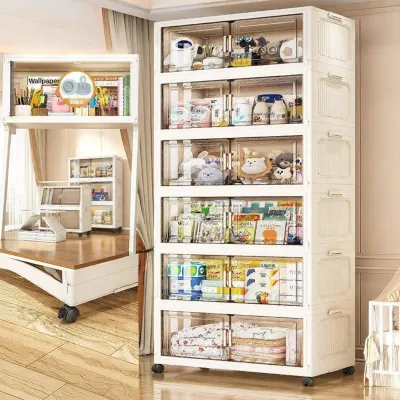
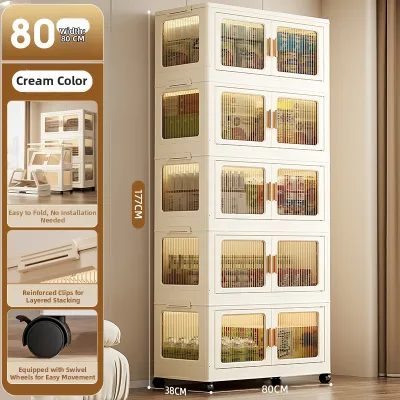
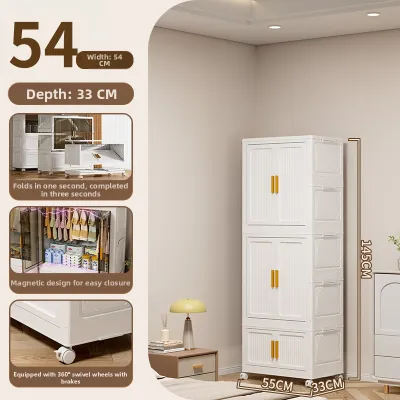

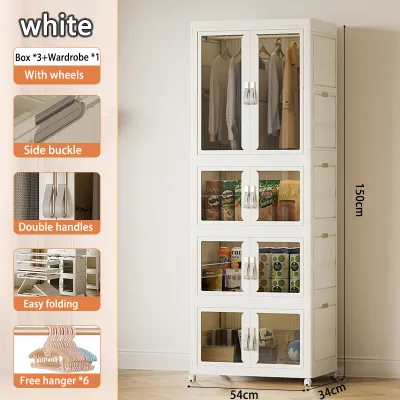
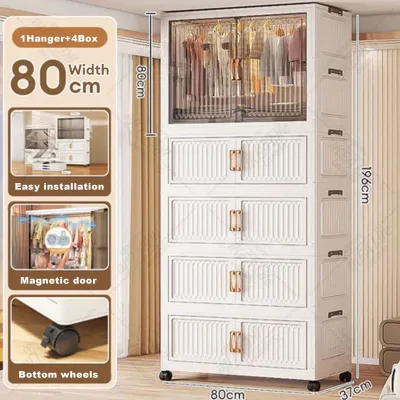
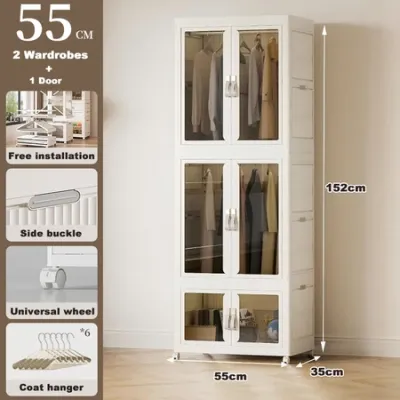
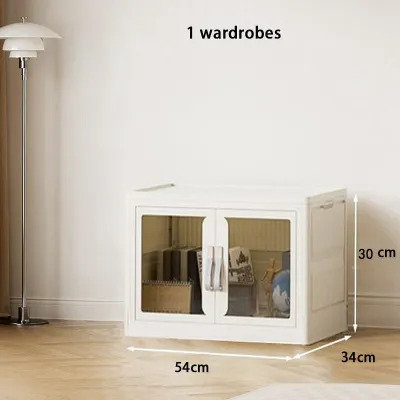
Prices are valid at publication and may change. Please refer to the product page for the latest price.
Finally, map out the locations of all wall fixtures in the room. Take note of power sockets, light switches, and data points. Placing a heavy storage cabinet directly in front of an active electrical outlet limits your access to power for baby monitors, nightlights, or white noise machines. If you must place the cabinet near these points, ensure there is sufficient clearance to plug in devices safely without bending the cables against the back of the furniture.
Accounting for Clearance, Doors, and Walkways
A cabinet might physically fit into a corner on paper, but it can still make the room feel unusable if you do not account for functional clearance. The most critical factor is the swing arc of any doors in the immediate vicinity. Measure the swing path of the main bedroom door, built-in wardrobe doors, and even nearby windows. A collision between a swinging door and a newly installed baby cabinet can damage both pieces of furniture and create a safety hazard in a busy room.

Walkway clearance is another vital consideration for daily comfort and safety. In a nursery, you will frequently navigate the room while carrying a sleeping baby, holding a laundry basket, or rushing during late-night diaper changes. Maintain a clear path of at least 60 to 70 centimeters between the cabinet and other major furniture pieces, such as the baby crib or changing table. This ensures you can move freely without bumping into sharp corners or feeling restricted.
Additionally, you must factor in the depth of the cabinet when its drawers or doors are fully extended. A drawer that measures 40 centimeters deep when closed will require almost double that space when pulled open to its maximum limit. If the clearance in front of the cabinet is too narrow, an open drawer can completely block the walkway or strike the side of the crib, making it difficult to access clothes while attending to your baby.
Evaluating Cabinet Dimensions and Configurations
When selecting a baby storage cabinet, you will generally choose between two primary configurations: tall, narrow vertical units or low, wide horizontal units. Tall cabinets maximize vertical space, making them highly suitable for tight corners where floor area is limited. They offer substantial storage capacity without taking up a large footprint. However, because they are tall, they can make a small room feel more enclosed, and they must be securely anchored to prevent tipping.
Low and wide cabinets, such as a chest of drawers, offer a different set of advantages. The top surface of a low cabinet can often double as a changing station by adding a secure changing mat, saving you from buying a separate piece of furniture. This dual-purpose setup is highly efficient for compact HDB bedrooms. The trade-off is that horizontal units require a wider stretch of wall space, which might limit where else you can position the crib or parent bed.
Regardless of the configuration, pay close attention to the depth of the cabinet. For a typical HDB bedroom, a cabinet depth of 40 to 45 centimeters is often the sweet spot. This depth is sufficient to store folded baby clothes, bedding, and storage bins, yet shallow enough to preserve precious floor space. To ensure long-term usability, look for cabinets with adjustable shelving and modular compartments. Baby items change rapidly; while you may need small cubbies for diapers and onesies now, you will require larger hanging spaces and deeper shelves as your child grows into toddlerhood.
Safety and Installation Requirements for HDB Walls
Safety is the most critical aspect of installing any freestanding furniture in a child’s environment. As babies grow, they naturally begin to pull themselves up on furniture, and open drawers can act as a ladder, creating a severe tip-over risk. Securing your baby storage cabinet to the wall with an anti-tip anchoring kit is a non-negotiable step that must be completed during assembly, regardless of the cabinet’s height or weight.
The method you use to anchor the cabinet depends entirely on the wall construction in your HDB flat. Most HDB flats feature solid concrete structural walls or precast concrete internal walls. Drilling into concrete requires a rotary hammer drill, masonry drill bits, and high-quality plastic wall plugs or concrete anchors to ensure a firm hold. If your nursery corner is located against a drywall partition—which is common in some newer BTO layouts that allow flexible room configurations—you must use specialized hollow-wall anchors or toggle bolts, as standard wall plugs will not hold securely in plasterboard.
In addition to wall anchoring, the way you organize the cabinet plays a major role in its stability. Always place the heaviest items, such as bulk packs of wet wipes, heavy blankets, and winter wear, on the lowest shelves or in the bottom drawers. This practice keeps the cabinet’s center of gravity low, significantly reducing the risk of tipping. Lighter items, like baby socks, hats, and swaddles, should be kept in the upper sections where they are easy to reach during daily routines.
Common Sizing Mistakes to Avoid
One of the most frequent mistakes parents make is failing to account for the gap created by skirting boards. If you buy a cabinet that matches your corner’s floor measurements exactly, the skirting board will push the bottom of the cabinet away from the wall. This creates a gap at the back, which can cause the cabinet to lean forward slightly or prevent you from anchoring it flush against the wall. To avoid this, look for cabinets with a recessed base designed to clear skirting boards, or subtract the skirting board thickness from your maximum allowable depth.
Another common oversight is ignoring the clearance needed for drawer pulls and handles. While the cabinet frame itself might fit within your measured boundaries, protruding handles can catch on curtains, strike adjacent walls, or snag your clothing as you walk past. In tight HDB bedroom corners, consider choosing cabinets with recessed handles, integrated finger pulls, or push-to-open mechanisms to maintain a sleek, snag-free profile.
Lastly, avoid placing tall storage cabinets too close to your air conditioning unit. Doing so can restrict the airflow in the room, making the air conditioner work harder and increasing your energy bills. It also makes it incredibly difficult for technicians to access the unit for regular cleaning and maintenance. Ensure there is a generous gap between the top of the cabinet and the bottom of the air conditioner to allow for proper air circulation and hassle-free servicing.

Community discussion
Share your experience or ask a question. Comments are reviewed before publication.