
The actual capacity of a shoerack cabinet rarely matches the advertised number of pairs because marketing estimates typically assume small, flat shoes packed tightly together. To find out how many pairs a cabinet will actually hold, you must calculate the usable internal width, factor in your specific shoe styles, and account for the physical space required by different types of footwear. By taking systematic measurements of both your collection and your home’s entryway, you can avoid the frustration of doors that will not close or shelves that leave half your shoes on the floor.
Assess Your Shoe Collection and Storage Needs
Before browsing online marketplaces or visiting furniture showrooms, you must conduct a thorough audit of your current footwear collection. Group your shoes by type, such as flat sandals, running sneakers, high heels, and ankle boots. Each category has vastly different spatial requirements; a pair of slim canvas slip-ons takes up significantly less horizontal and vertical space than a pair of chunky platform trainers or structured leather dress shoes.
Once you have categorized your collection, count the total number of pairs in each group. It is wise to allocate a buffer of at least 10% to 20% to accommodate future purchases, seasonal footwear changes, or shoes worn by guests. If you plan to store items other than shoes in the cabinet, such as original shoe boxes, leather care kits, umbrellas, or keys, note these requirements down. Storing shoes inside their original cardboard boxes can easily cut your cabinet’s total capacity in half, as boxes introduce uniform, bulky dimensions that do not conform to the natural shape of the footwear.
Products mentioned in this guide
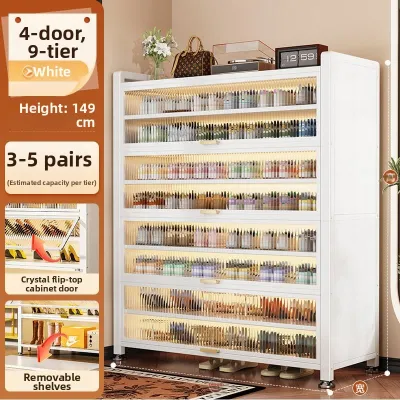
![[INNDESIGN.SG] Ballry 2 Doors Shoe Cabinets (Fully Assembled and Free Delivery)](https://img.lazcdn.com/g/p/6ab9af88181bd44e61cc738ac302ed85.jpg_400x400q80.jpg_.webp)
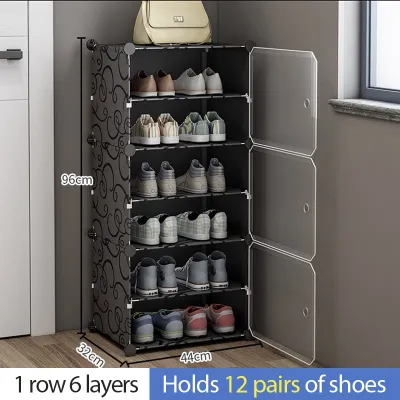
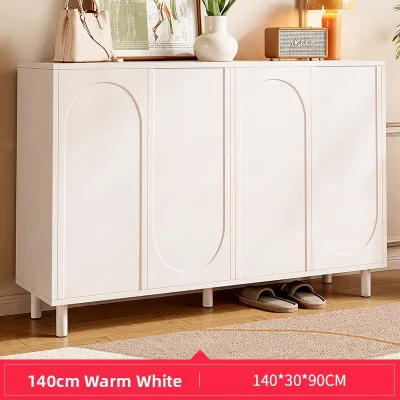
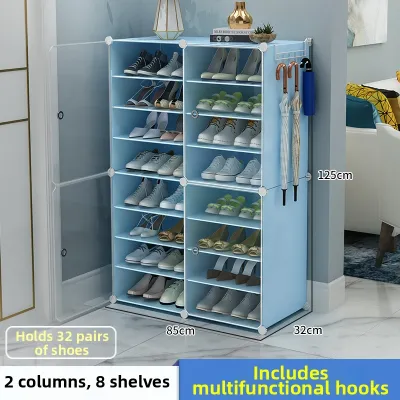
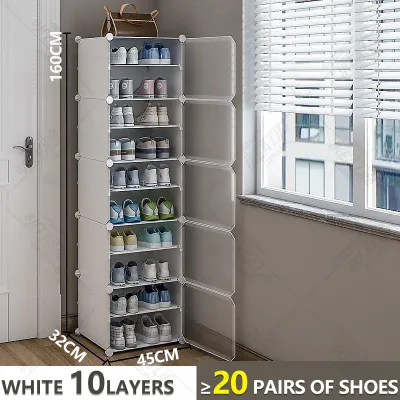
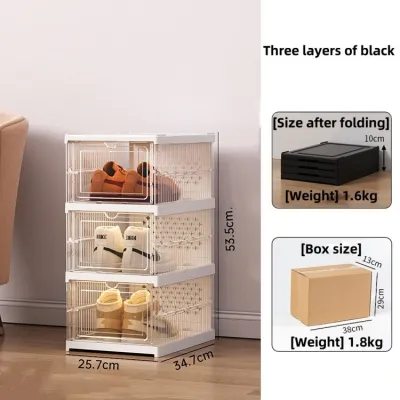
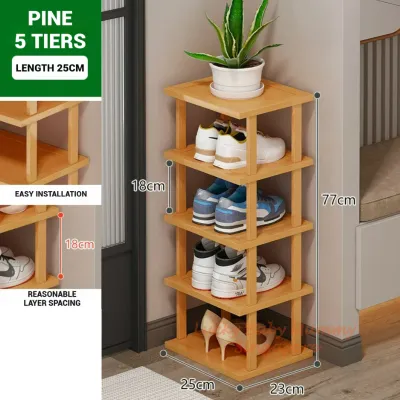
Prices are valid at publication and may change. Please refer to the product page for the latest price.
Measure Your Available Space for a Shoerack Cabinet
In many urban homes, such as apartments and condominiums in Singapore, entryway space is highly constrained. You must measure the exact width, height, and depth of the designated footprint where the cabinet will stand. Be sure to account for baseboards, light switches, electrical outlets, and any wall irregularities that might prevent the cabinet from sitting flush against the wall. Even a minor protrusion can force the cabinet forward, disrupting the flow of your entryway.

Next, calculate the physical clearance required for daily operation. If the cabinet features hinged doors or pull-out drawers, measure the swing radius to ensure they can open fully without hitting adjacent walls, main entrance doors, or household items. You should also leave enough physical space for a person to bend down, reach into the lower shelves, and comfortably retrieve their shoes without feeling cramped.
Finally, consider the logistics of getting the furniture into your home. If you are purchasing a pre-assembled shoerack cabinet, verify the dimensions of your building’s lift, stairwells, corridors, and front door frame. A cabinet that fits your entryway perfectly is of little use if it cannot clear the elevator ceiling or turn the corner in a tight hallway during delivery.
Translate External Dimensions into Actual Shoe Capacity
To determine the true storage capacity of a shoerack cabinet, you must look past the external dimensions listed on the product tag. Subtract the thickness of the side panels, top panel, and any internal vertical dividers from the external width to find the usable internal width. For example, a cabinet with an external width of 80 cm might only offer 75 cm of actual internal shelf space once you account for thick composite wood panels and door hinges.
Shelf adjustability is another critical factor in maximizing capacity. Fixed shelves often result in wasted vertical space, leaving large empty gaps above low-profile flats while failing to accommodate high-top sneakers. Look for cabinets with pre-drilled peg holes that allow you to adjust the height of individual shelves. This flexibility lets you compress the vertical space for flat shoes and expand it for taller footwear, optimizing every square centimeter.
To estimate how many pairs will fit on a single shelf, measure the widest part of your most frequently worn shoes. A typical pair of men’s sneakers may measure 20 cm to 22 cm in width, while women’s flats might only require 15 cm to 18 cm. Divide the usable internal shelf width by your average shoe pair width. If your shelf is 75 cm wide and your shoes average 20 cm per pair, you can comfortably fit three pairs per shelf, leaving a 15 cm gap that is too small for a fourth pair unless you utilize space-saving shoe slots or overlap the shoes slightly.
Evaluate Cabinet Depth and Door Clearance
Cabinet depth is the most common point of failure when choosing shoe storage. Measure your longest shoe from the tip of the toe to the back of the heel. Standard shoerack cabinets often feature an internal depth of 30 cm to 32 cm. If your household includes larger shoe sizes, such as US 11 or above, these shoes may measure 30 cm or more in length, meaning they will press against the back wall and prevent standard cabinet doors from closing properly.
When choosing door styles, weigh the spatial trade-offs of hinged doors versus sliding doors. Hinged doors require clear floor space in front of the cabinet but allow you to view and access your entire shoe collection at once. Sliding doors are excellent for narrow corridors because they do not swing outward, but they always block half of the cabinet’s interior at any given time and require wider tracks, which can reduce the usable internal depth of the cabinet.
For exceptionally narrow entryways, angled or pull-down tipping bucket cabinets are a popular alternative. These designs store shoes vertically or at an angle, allowing the cabinet depth to be as slim as 15 cm to 20 cm. However, this space-saving design comes with a capacity trade-off: they generally hold fewer pairs overall, and high-top sneakers, thick boots, or high heels may not fit into the compartments at all.
Common Sizing Mistakes to Avoid Before Purchasing
One of the most frequent mistakes is assuming that a wider cabinet automatically translates to proportional capacity increases. Internal vertical partitions, which are necessary to support the weight of wide shelves, can consume several centimeters of usable space. Always check the internal layout diagrams to see if a wide cabinet is split into multiple narrower compartments, as this will alter your pair-per-shelf calculations.
Another common oversight is failing to plan for seasonal or specialized footwear, such as tall leather boots, wellingtons, or safety boots. If your cabinet lacks removable shelves, you may be forced to store these taller items on top of the cabinet, in your wardrobe, or bent out of shape on a standard shelf. Ensure at least one section of the cabinet can be configured with a high vertical clearance to preserve the structure of your boots.
Lastly, do not ignore the weight capacity of the shelves, especially if you are considering a budget-friendly cabinet made of thin particleboard. Storing multiple pairs of heavy leather boots or keeping shoes inside heavy cardboard boxes can cause shelves to sag or bow over time. Before purchasing, verify the manufacturer’s guidelines regarding shelf load limits and look for cabinets with sturdy shelf support pins and thick back panels to ensure long-term stability.
Frequently Asked Questions (FAQ)
How much depth does a shoerack cabinet need for large shoes?
To accommodate larger footwear sizes, measure your longest shoe from heel to toe and add a 2 cm margin for clearance. Compare this measurement directly to the cabinet’s specified internal depth rather than its external depth. For shoes larger than US 10, look for a cabinet with an internal depth of at least 33 cm to 35 cm to ensure the doors close smoothly without crushing the heels or toes.
Can I fit tall boots in a standard shoe rack cabinet?
Standard cabinets with fixed shelves usually have a vertical clearance of 15 cm to 20 cm, which is too low for tall boots. To store boots upright without creasing the shafts, you must select a cabinet that features removable shelves, highly adjustable peg systems, or a dedicated tall side compartment designed specifically for boot storage.

Community discussion
Share your experience or ask a question. Comments are reviewed before publication.