
Finding the right shoebox storage size for your wardrobe requires balancing your closet’s physical dimensions with the specific profiles of your footwear. To maximize your storage efficiency, you must measure the exact usable depth, width, and height of your wardrobe shelves while accounting for structural obstructions like hinges and door frames. Simultaneously, matching these spatial limits to the height and width of your tallest and widest shoes ensures that no space is wasted. By taking a systematic approach to measuring both your wardrobe and your shoe collection, you can select organizers that fit seamlessly, protect your footwear, and keep your closet looking neat.
Measure Your Wardrobe and Available Space
Before purchasing any storage containers, you must establish the precise physical boundaries of your wardrobe’s interior. Start by measuring the internal width, height, and depth of each shelf or compartment where you plan to place the boxes. Do not rely on the external dimensions of the wardrobe cabinet, as the thickness of the side panels, back panels, and internal dividers will reduce the actual usable space. Use a metal measuring tape for accuracy, and note down the smallest measurements if your wardrobe has any slight structural variations or uneven shelves.
Pay close attention to potential obstructions within the wardrobe that could block the placement or removal of your shoeboxes. Wardrobe door hinges, sliding door tracks, and magnetic catches often protrude into the usable storage area, effectively reducing the clearance width near the front of the shelf. If your wardrobe has hinged doors, measure the clearance when the doors are fully open to ensure the boxes can be pulled straight out without hitting the door frame. For wardrobes with drawers, verify that the pull-out paths of the drawers do not collide with the proposed location of your shoeboxes.
Products mentioned in this guide
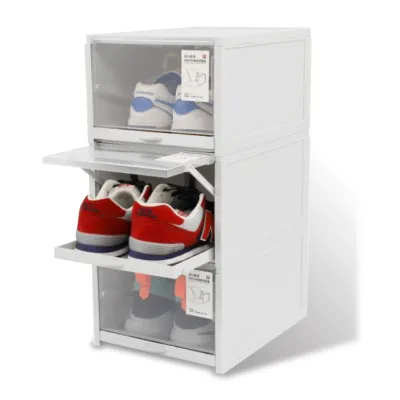
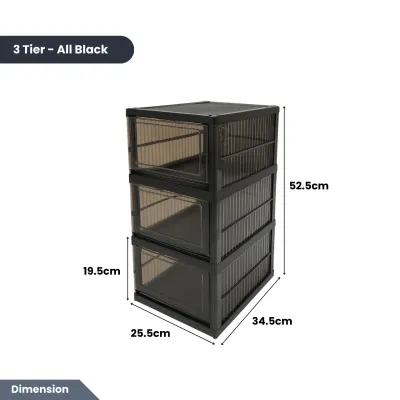
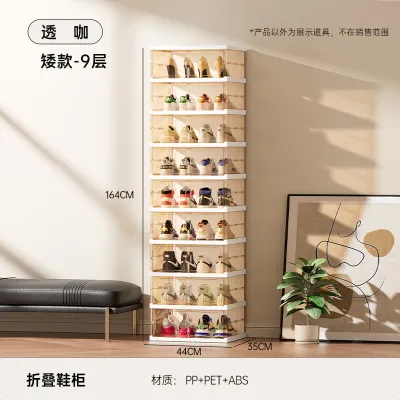
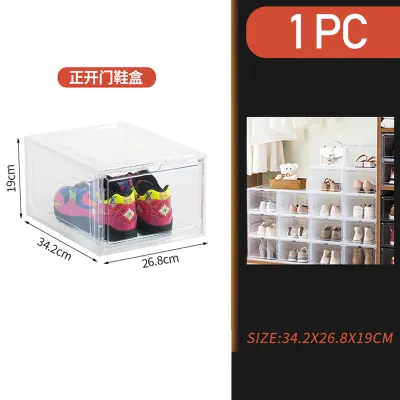
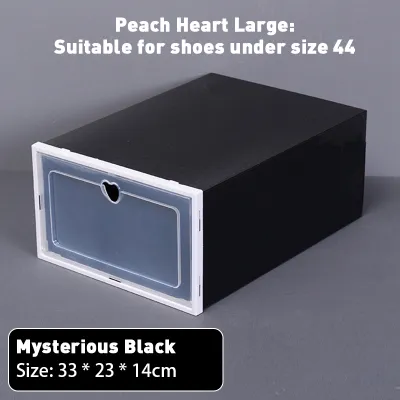
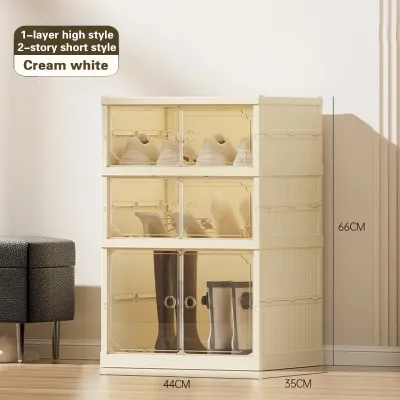
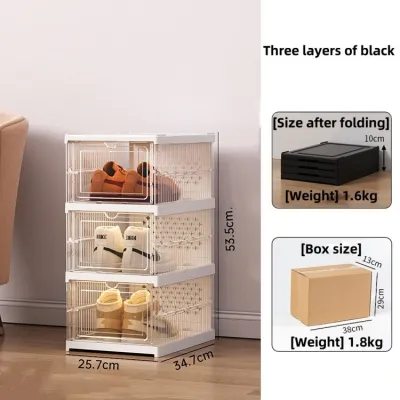
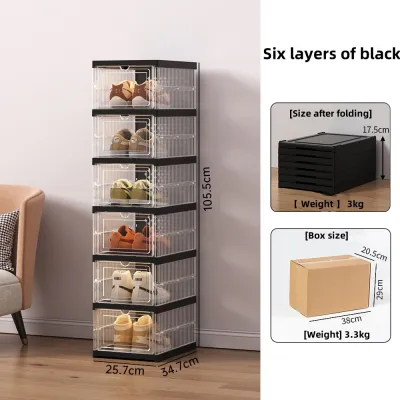
Prices are valid at publication and may change. Please refer to the product page for the latest price.
Another critical factor is the weight capacity of your existing wardrobe shelves. Adding multiple rows of stacked shoeboxes, especially those containing heavy leather boots or bulky sneakers, can place a significant load on individual shelves. Check your wardrobe manufacturer’s specifications to determine the maximum weight limit for each shelf board. If this information is unavailable, inspect the thickness and material of the shelves; thin particleboard shelves may sag over time under heavy loads, whereas solid wood or reinforced shelves offer greater stability.
Assess Your Shoe Collection and Capacity Needs
To choose the right box sizes, you must categorize your shoe collection based on the physical profile of each pair. Different types of footwear require vastly different amounts of vertical and horizontal space. For instance, low-profile shoes like flats, sandals, and loafers can easily fit into standard, low-height boxes, allowing you to stack more units vertically. On the other hand, high-heeled shoes, ankle boots, and bulky athletic sneakers require taller and wider boxes to prevent the upper materials from being crushed or creased.

Once you have categorized your footwear, decide whether you will stack the boxes vertically or arrange them side-by-side. This decision depends heavily on your shelf height and how frequently you need to access each pair. For daily-wear shoes, a side-by-side arrangement on an eye-level shelf offers the quickest access. For seasonal footwear or formal shoes that you wear less frequently, vertical stacking on higher or lower shelves is an practical way to utilize underused vertical space. Measure the height of your tallest shoes when standing upright to determine the minimum internal height required for your storage boxes.
It is also wise to plan for future additions to your shoe collection and allow room for seasonal rotation. Filling every square centimeter of your wardrobe immediately leaves no room for new purchases, which can quickly lead to cluttered floors or overflow areas. Consider leaving a buffer of empty space or choosing a modular shoebox system that allows you to add more units as your collection grows. During seasonal transitions, you can rotate your shoes, placing active-season footwear in the most accessible spots and storing off-season pairs in the deeper or higher sections of your wardrobe.
Match Shoebox Dimensions to Wardrobe Configurations
With your wardrobe measurements and shoe profiles in hand, you can now match them to specific shoebox dimensions. Standard shoeboxes are generally suitable for flats, sandals, and standard sneakers, while oversized or extra-large boxes are necessary for high-tops, boots, and larger shoe sizes. Compare the external dimensions of the boxes against your measured shelf depth. Ideally, the depth of the shoebox should match the depth of your shelf as closely as possible without protruding past the edge, which would prevent wardrobe doors from closing properly.
When selecting the material of your shoeboxes, weigh the trade-offs between clear plastic and opaque options. Clear plastic boxes offer high visibility, allowing you to identify your shoes instantly without opening multiple containers, which saves time during busy mornings. However, if you prefer a highly uniform, minimalist aesthetic that hides visual clutter, opaque boxes with labels might be your preferred choice. Regardless of the material, ensure the boxes feature adequate ventilation holes or gaps to prevent moisture buildup, which is particularly important in humid climates to protect leather and fabric from mold.
Before building tall columns of stacked boxes, review the product labels and manufacturer instructions for stacking limits and structural stability. Not all shoeboxes are designed to support heavy vertical loads, and stacking them too high can cause the lower boxes to buckle or the entire column to collapse. Look for boxes with interlocking mechanisms, such as tabs or grooves, that secure the units together when stacked. Testing the stability of a small stack first is a practical way to ensure your setup remains secure and safe within your wardrobe.
Common Sizing Mistakes and How to Avoid Them
One of the most common mistakes when planning wardrobe storage is ignoring the space needed for hand clearance. If you pack your shelves tightly from wall to wall and shelf to shelf, you will struggle to slide your fingers around or between the boxes to retrieve them. Always leave a small gap of at least one to two centimeters at the top and sides of your shoebox stacks. This minor clearance makes it much easier to grip, pull out, and replace individual boxes without scraping your knuckles or damaging the wardrobe walls.
Another frequent error is purchasing a single, uniform box size for your entire shoe collection. While a uniform set of boxes looks highly organized, it often leads to wasted vertical space when storing low-profile shoes, or forces you to store boots and heels on their sides, which can ruin their shape. Instead, opt for a modular system from a single manufacturer that offers different heights but shares the same width and depth dimensions. This allows you to stack different box sizes neatly together while maintaining a clean, aligned look.
Finally, remember to subtract the physical thickness of adjustable shelf pins, brackets, and wardrobe dividers from your usable width calculations. Many wardrobes feature metal or plastic support pins that protrude from the side panels to hold up adjustable shelves. If your shoeboxes fit too snugly against the sides, these pins can scratch the boxes or prevent them from sitting flat on the shelf. Always measure the distance between the innermost points of these brackets rather than the absolute wall-to-wall width of the wardrobe cabinet.
Frequently Asked Questions (FAQ)
Can I use shoebox storage on adjustable wardrobe shelves?
Yes, you can use shoebox storage on adjustable shelves, provided you verify the shelf’s weight rating and distribute the load evenly. Avoid placing all the heaviest boxes in the center of the shelf, as this can cause the board to bow over time. Additionally, check that the dimensions of your chosen boxes do not interfere with the shelf adjustment pins or side support rails, ensuring the boxes can slide in and out smoothly without catching on the hardware.
How do I prevent stacked shoeboxes from toppling over?
To prevent stacked shoeboxes from toppling, always follow the manufacturer’s recommended maximum stacking height and stop if the column feels unstable. Place your heaviest shoes, such as boots and heavy sneakers, in the bottom boxes to establish a low center of gravity. For taller stacks, choose boxes with built-in interlocking tabs or grooves, and ensure the base boxes are resting on a completely flat, level wardrobe shelf.

Community discussion
Share your experience or ask a question. Comments are reviewed before publication.