
Finding a suitable shoe rack for your closet is a balancing act between your available physical space and the specific demands of your footwear collection. In Singapore, where residential layouts often feature compact built-in wardrobes or dedicated walk-in closets, maximizing every square centimeter is essential. A poorly fitted shoe organizer can lead to jammed doors, damaged footwear, and wasted vertical space. By systematically measuring your closet, evaluating your shoe types, and selecting a compatible configuration, you can create an efficient storage system that keeps your shoes protected and easily accessible.
Measure Your Available Closet Space
Before purchasing any shoe rack, you must establish the exact physical boundaries of the designated storage area. Start by using a metal measuring tape to record the width, depth, and height of the floor space or shelf where you plan to place the rack. If you are fitting the organizer inside a built-in wardrobe, measure the internal dimensions rather than the external frame. Be sure to measure at multiple points—top, middle, and bottom—as walls and wardrobe panels are not always completely square.
Next, account for the clearance required by your closet doors. For hinged doors, measure the swing path to ensure the shoe rack will not obstruct the door from opening fully or cause your shoes to scrape against the door panel. For sliding doors, identify the overlap zone where the doors bypass each other. A rack that is too wide may sit in a position that prevents sliding doors from opening wide enough to access the outer edges of the shelves. Additionally, take note of any low-hanging clothes on the hanging rods above, as you will need sufficient vertical clearance to retrieve shoes without disturbing your garments.
Products mentioned in this guide
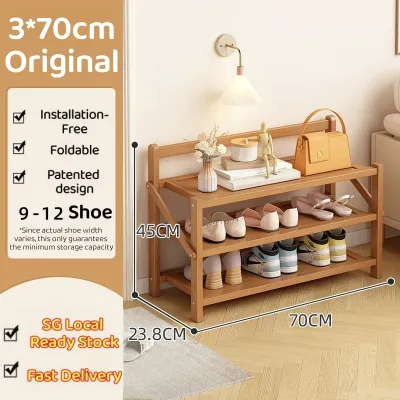
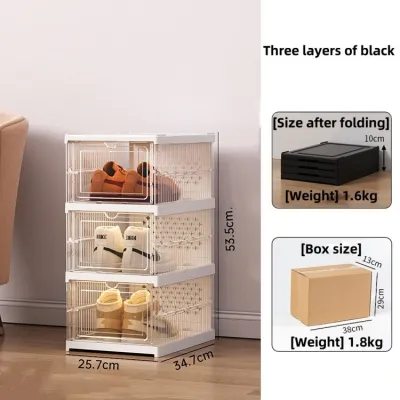
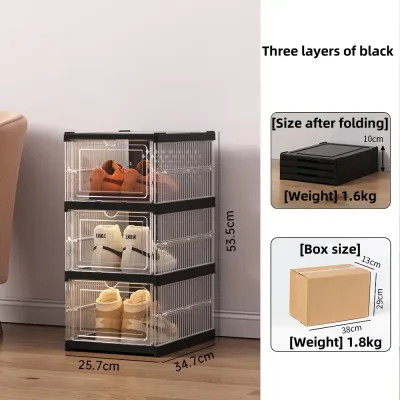
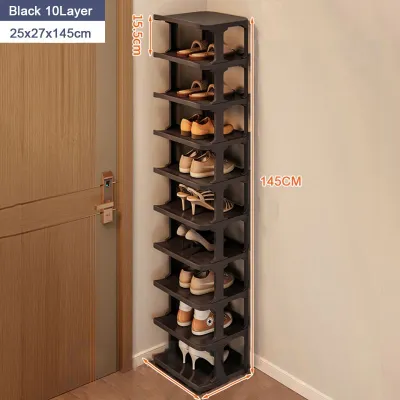
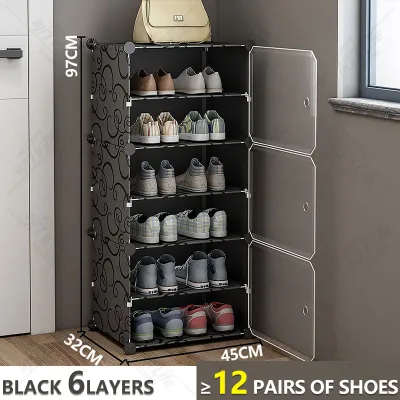
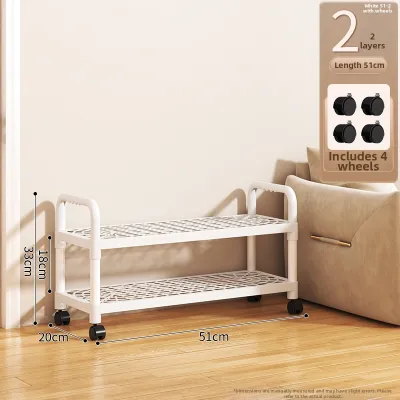
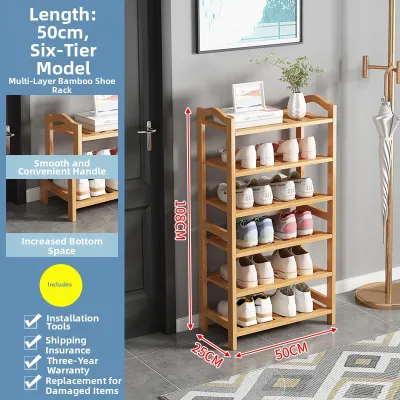
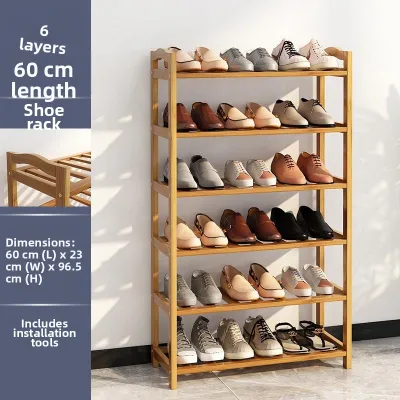
Prices are valid at publication and may change. Please refer to the product page for the latest price.
Do not overlook the architectural details at the base of your closet. Baseboards, skirting boards, and sliding door tracks can reduce the usable floor width and depth by several centimeters. If your closet floor has a baseboard, a freestanding shoe rack might not sit flush against the back wall, which can cause the unit to tilt forward or wobble. Check the stability of the floor surface as well; uneven flooring or thick carpeting can compromise the balance of tall, narrow racks, making anchoring to the wardrobe wall or shelf a necessary safety precaution.
Assess Your Footwear Volume and Types
An effective shoe storage solution must accommodate your actual collection while leaving room for future acquisitions. Begin by gathering all the shoes you intend to store in the closet and sorting them by style and frequency of use. Count the total number of pairs to determine your baseline capacity requirement. If you frequently purchase new footwear, it is wise to add a buffer of ten to twenty percent to your total count so your new purchases do not immediately overflow onto the closet floor.

The physical dimensions of your shoes dictate the spacing and depth of the shelves you need. Standard flat shoes, sneakers, and sandals generally require less vertical clearance, typically around 10 to 15 centimeters. However, high heels, ankle boots, and mid-calf boots require significantly more height, often ranging from 20 to 40 centimeters. If your collection includes a mix of these styles, look for shoe racks with adjustable shelves or varying tier heights. Storing tall boots on a fixed-height rack designed for flats will force you to bend or fold the shafts, which can crease and damage leather or synthetic materials over time.
Furthermore, consider the horizontal footprint of your footwear. Bulky running shoes, wide-soled trainers, and men’s dress shoes occupy more width per pair than narrow flats or flip-flops. Measure the width of your widest pairs to calculate how many shoes can realistically fit side-by-side on a single shelf. For example, a shelf width of 60 centimeters might comfortably hold three pairs of narrow sandals but only two pairs of wide athletic sneakers. Understanding these spatial requirements prevents overcrowding, which can scuff shoe surfaces and make retrieval frustrating.
Match Shoe Rack Configurations to Closet Layouts
Different closet layouts require specific shoe rack configurations to maximize storage efficiency. Freestanding and stackable shoe racks are highly versatile options suitable for closets with wide floor areas or adjustable shelving systems. These units allow you to customize the height by adding tiers as your collection grows, making excellent use of vertical space. When selecting a freestanding rack, verify its load capacity and joint stability, especially if you plan to stack multiple units. Ensure the interlocking mechanisms are secure to prevent the top tiers from shifting when you pull out a pair of shoes.
For narrow closets, reach-in wardrobes, or spaces with limited floor area, hanging and over-the-door organizers offer an excellent alternative. These systems utilize vertical dead space that would otherwise go unused. Hanging organizers typically attach to the closet rod using heavy-duty hook-and-loop fasteners or hooks, providing vertical fabric cubbies for individual pairs. Over-the-door organizers hang on the back of the closet door, keeping shoes completely off the floor. While highly space-efficient, these options are well-suited for lightweight footwear like flats, sandals, and slippers, as heavy boots can strain the hanging mechanisms or cause the door to sag.
In deep walk-in closets or deep built-in wardrobes, pull-out or sliding shelf systems provide added convenience. These systems feature shelves mounted on ball-bearing drawer slides, allowing you to pull the entire rack outward to access shoes stored at the very back. This configuration eliminates the need to reach into dark, deep corners and ensures that every pair remains visible. When planning a pull-out system, ensure there is sufficient clearance in front of the wardrobe for the slides to extend fully without hitting opposite walls or furniture, and verify that the slides are rated to handle the weight of your heaviest shoes.
Verify Clearance, Ventilation, and Daily Access
Proper clearance and ventilation are critical to maintaining a fresh, hygienic closet environment, particularly in humid climates like Singapore’s. When shoes are stored in enclosed spaces without adequate airflow, trapped moisture can lead to mold growth, musty odors, and the deterioration of shoe materials. Choose shoe racks with open slatted shelves, wire mesh, or breathable fabric rather than solid wood or plastic panels. These designs allow air to circulate freely around the entire shoe, helping to dissipate moisture and prevent stagnant air pockets.
In addition to airflow, you must ensure the physical depth of the shoe rack does not interfere with the daily operation of your closet. A standard shoe rack depth ranges from 30 to 35 centimeters, which accommodates most shoe sizes. However, if you wear larger shoe sizes, your shoes may overhang the front of the shelves. If the rack is placed too close to the closet door, this overhang can prevent the door from closing completely or cause the door to press against the shoes, scuffing the toes. Always leave at least 2 to 3 centimeters of clearance between the front of your longest shoes and the closed closet door.
Daily accessibility should also guide how you arrange your shoe rack. Group your footwear by frequency of use and place your most worn pairs at an ergonomic height—typically between hip and eye level—where they can be reached without bending down or stretching. Less frequently worn items, such as formal dress shoes or seasonal footwear, can be placed on the lowest shelves or the very top tiers. If you use a tall freestanding rack, ensure it is anchored securely to the wall or wardrobe frame to prevent tipping when reaching for items on the upper shelves.
Common Sizing and Placement Mistakes to Avoid
One of the most common mistakes when choosing a shoe rack is ignoring the actual depth of the shoes themselves. Many buyers measure only the frame of the shoe rack, assuming that if the rack fits inside the closet, the shoes will too. However, shoes often extend slightly beyond the shelf edges, especially on shallow racks. To avoid this issue, measure your longest pair of shoes from heel to toe and compare this measurement to the shelf depth of the rack, ensuring the closet door can still close smoothly when the shoes are in place.
Another frequent error is purchasing fixed-height racks without considering the variety of your footwear. A rack with uniform 12-centimeter shelf gaps may seem efficient, but it will leave you with no place to store boots, high heels, or high-top sneakers. This often results in these taller shoes being left on the closet floor, defeating the purpose of having a dedicated organizer. Opting for a modular system or a rack with at least one or two taller shelves provides the flexibility needed to accommodate your entire collection.
Finally, avoid overcrowding the closet floor with a shoe rack that is too large for the space. While it is tempting to buy the largest rack possible to maximize storage, an oversized unit can restrict your movement inside a walk-in closet or block access to adjacent drawers and hanging sections. Ensure there is always enough clear floor space to stand comfortably while selecting your shoes and opening nearby wardrobe doors. If floor space is extremely limited, prioritize vertical or hanging storage solutions rather than forcing a wide freestanding rack into a tight corner.
Frequently Asked Questions (FAQ)
Can I use a standard freestanding shoe rack inside a built-in wardrobe?
Yes, you can use a freestanding shoe rack inside a built-in wardrobe, provided you carefully verify the internal dimensions. Standard built-in wardrobes typically have an internal depth of 55 to 60 centimeters, which easily accommodates most freestanding shoe racks that average 30 to 35 centimeters in depth. However, you must check the height of the wardrobe’s lower compartment and ensure the rack does not interfere with hanging clothes or internal drawers. Measure the door opening width as well, as sliding door tracks can narrow the entry point, making it difficult to slide a pre-assembled rack inside.
How do I prevent shoe odors when storing them inside a closed closet?
To prevent odors in a closed closet, always ensure your shoes are completely dry and aired out before placing them on the rack. In Singapore’s humid climate, inserting passive moisture absorbers, silica gel packets, or activated charcoal deodorizers near the shoe rack can help control humidity and neutralize odors. Choosing a shoe rack with an open, ventilated design—such as wire mesh or slatted wood—promotes air circulation. Additionally, consider rotating your shoes regularly and wiping down the shelves periodically with a mild disinfectant to maintain a clean, odor-free storage environment.
Community discussion
Share your experience or ask a question. Comments are reviewed before publication.