
Selecting the right shoe stool requires balancing your entryway’s physical footprint with your household’s daily storage needs. A shoe stool serves a dual purpose: it provides a stable seat for putting on footwear and keeps your most frequently used pairs organized right at the door. To find the perfect match, you must measure your available floor space, calculate the active shoe rotation of your household, and select a design that offers sufficient weight capacity and shelf depth.
Assessing Your Entryway Space and Clearance
Before browsing designs, you must establish the maximum physical boundaries of your entryway. Use a measuring tape to determine the exact width, depth, and height available for the stool. In many homes, especially compact apartments or flats with narrow foyers, every centimeter counts. A stool that is too deep can turn a high-traffic corridor into an awkward bottleneck.
Beyond the basic footprint, you must account for the swing arcs of nearby doors. Open your main entrance door, safety gate, and any adjacent closet doors fully to ensure they do not strike the proposed seating area. Leave a comfortable clearance zone—ideally at least 90 centimeters of walkway width—so family members can easily pass by while someone is seated. If your entryway is near a wall outlet or light switch, verify that the height of the stool does not obstruct access.
Products mentioned in this guide
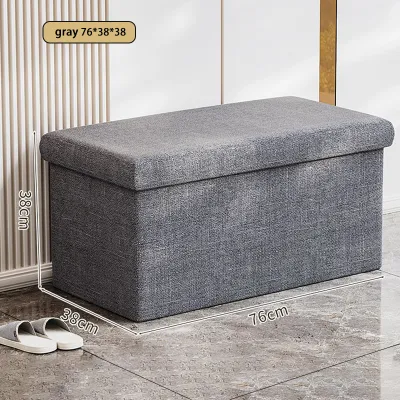
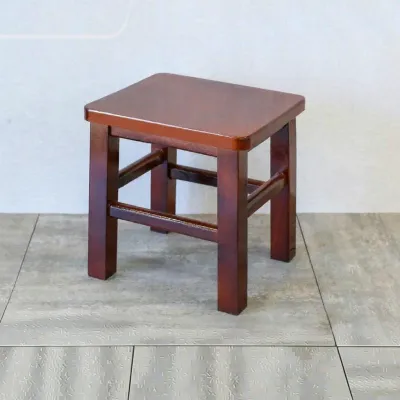
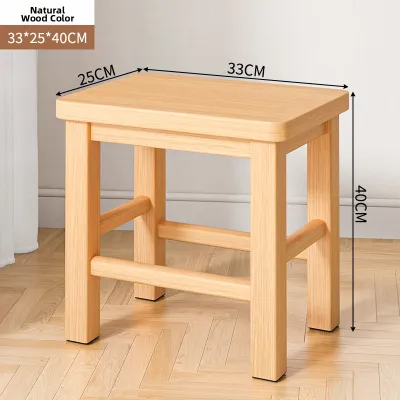
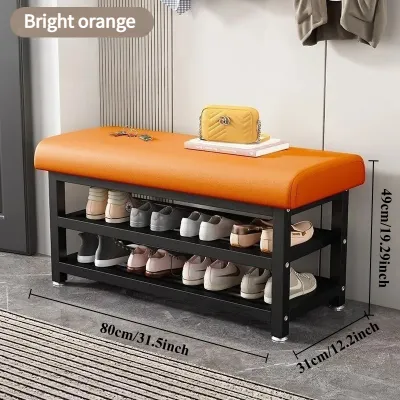
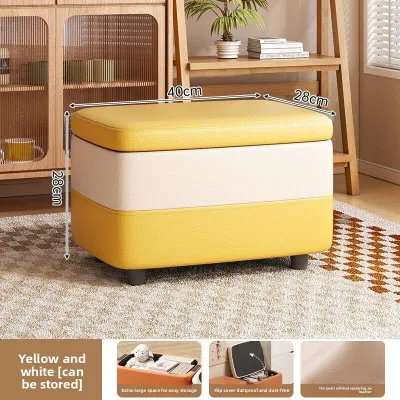
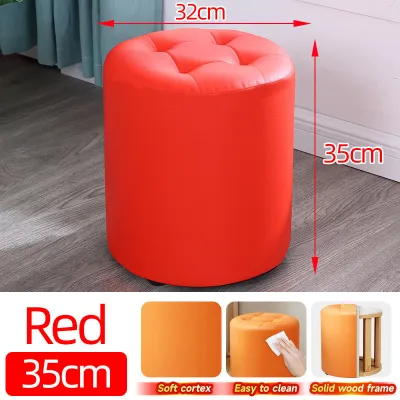
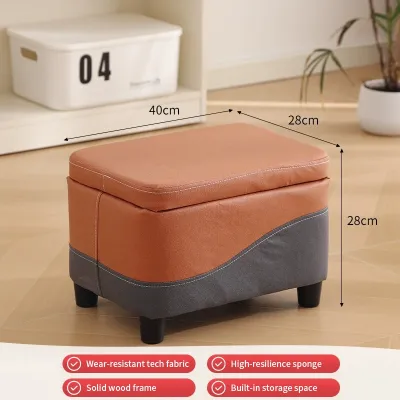
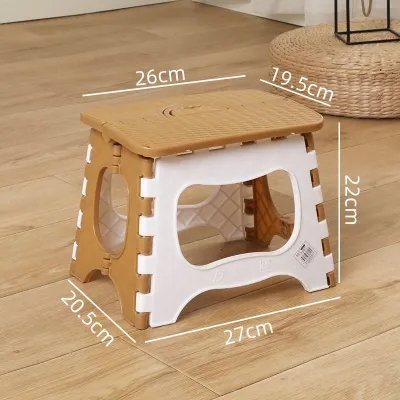
Prices are valid at publication and may change. Please refer to the product page for the latest price.
Visual clutter is another critical factor to manage in a tight entryway. A bulky, solid-sided storage bench can make a small foyer feel cramped and dark. If your space is limited, consider an open-frame design that allows light to pass through, creating an illusion of openness. Additionally, ensure the placement of the stool does not block emergency exit paths or ventilation grates, keeping your home safe and compliant with local building guidelines.
Estimating Shoe Storage Needs by Household Size
To determine the ideal capacity, distinguish between your daily shoe rotation and your long-term storage. A shoe stool is not meant to house your entire footwear collection; its primary job is to organize the pairs you wear most often. Keeping seasonal footwear, formal shoes, or specialized sports gear in a main wardrobe or a separate closed cabinet prevents the entryway stool from becoming overloaded and messy.

As a general guideline, estimate your capacity needs based on the number of people in your home. For a single professional or a couple, a stool that holds four to six pairs is usually sufficient for daily wear. For a larger family of four or five, you will likely need a capacity of eight to twelve pairs to prevent shoes from spilling onto the floor. If your household members frequently wear bulky footwear, such as heavy work boots or thick athletic sneakers, you must allocate more physical space per pair.
Do not forget to plan for guests and lifestyle variations. If you regularly host gatherings, having a designated open tier or a small empty space beneath the stool allows visitors to tuck their shoes away neatly. For households with active children, consider allocating the lowest, most accessible shelf specifically for their smaller shoes, which helps them build good habits of tidying up after school.
Matching Shoe Stool Dimensions to Pair Capacity
The relationship between a shoe stool’s physical dimensions and its actual storage capacity depends heavily on shelf width and depth. Standard adult shoes typically require a shelf depth of at least 30 to 35 centimeters to sit flat without overhanging. In terms of width, a single pair of adult shoes generally occupies about 20 to 25 centimeters of horizontal space. Therefore, a stool with a width of 60 centimeters can comfortably accommodate two pairs of adult shoes per tier, while an 80-centimeter stool can hold three pairs.
Tier spacing is equally important for maximizing storage efficiency. Standard flat shelves with a height clearance of 15 to 18 centimeters are ideal for flats, sneakers, and sandals. However, if you need to store high heels, ankle boots, or high-top sneakers, look for stools that feature adjustable shelves or varying tier heights. Some designs offer a taller side compartment specifically for boots, preventing the shafts from bending or creasing.
Structural stability must always take priority when matching dimensions to capacity. When a shoe stool is fully loaded with footwear and supports the weight of an adult sitting down, the frame experiences significant stress. Check the manufacturer’s specifications for the maximum static weight limit of the seating surface, which typically ranges from 100 to 150 kilograms for standard household models. Ensure the joints are reinforced with sturdy hardware, and avoid overloading the shelves beyond their rated capacity to prevent sagging or structural failure.
Evaluating Multi-Functional and Space-Saving Designs
If your entryway is exceptionally tight, standard open-shelf stools might not be the most efficient choice. Multi-functional designs, such as storage benches with lift-up cushioned seats or hidden drawers, offer a clean aesthetic by keeping shoes completely out of sight. These closed compartments are excellent for storing small entryway essentials like umbrellas, shoe horns, keys, or shopping bags alongside your footwear.
For narrow corridors, consider space-saving alternatives like slim-profile shoe cabinets with tilting compartments. While these designs may offer less traditional seating comfort, they occupy minimal depth—often under 25 centimeters—while still providing a surface to lean on or sit briefly. Alternatively, stackable or modular stools allow you to expand your storage vertically as your household grows, making the most of unused wall space without expanding the floor footprint.
When choosing between different designs, weigh the trade-offs between seating comfort and internal storage volume. A thick, plush foam cushion offers superior comfort but may reduce the vertical space available for shelves underneath. If the stool is primarily used for quick transitions of less than a minute, a thinner cushion or a smooth wooden bench top may be more practical, as it is easier to clean and allows for maximum internal storage height.
Finalizing Your Selection and Safety Checks
Before making your final purchase, run through a comprehensive safety and compatibility checklist. Verify that the manufacturer’s stated weight limits align with the needs of your heaviest household members. If you plan to use the stool in a home with young children or elderly family members, prioritize designs with rounded corners to minimize the risk of accidental bumps and bruises.
Stability is paramount to prevent tipping accidents, especially when someone leans forward to tie their laces. Look for a shoe stool with a wide, stable base and a low center of gravity. If the stool is tall or narrow, check if the manufacturer provides wall-anchoring hardware to secure it firmly in place. Additionally, inspect the bottom of the legs; they should be equipped with non-slip rubber feet or felt pads to protect your flooring from scratches and prevent the stool from sliding on smooth tiles or laminate.
Finally, pay close attention to assembly requirements and hardware quality. If the stool requires self-assembly, carefully follow the step-by-step instructions provided in the manual. Ensure all screws, bolts, and dowels are tightened securely, and check them periodically after a few weeks of use to confirm they have not loosened. A well-assembled, properly maintained shoe stool provides a safe, organized, and welcoming transition point for your home for years to come.
Frequently Asked Questions (FAQ)
How many pairs of shoes can a standard shoe stool hold?
The capacity of a standard shoe stool depends on its width and the number of tiers. A typical compact stool measuring 60 centimeters in width with two open shelves can hold approximately four to six pairs of standard adult shoes. If the stool features three tiers or a wider frame of 90 centimeters, the capacity can increase to nine or ten pairs. Keep in mind that bulky footwear, such as boots or wide athletic sneakers, will reduce the overall capacity, whereas children’s shoes or slim sandals can often be doubled up or nested to save space.
Is a shoe stool safe for children to sit on while putting on shoes?
Yes, a shoe stool can be safe for children, provided you verify its stability and weight distribution. Look for a model with a low center of gravity, a wide base, and non-slip feet to prevent the stool from sliding or tipping when a child climbs onto it. Avoid lightweight or top-heavy designs that can easily wobble. It is also highly recommended to choose a stool with rounded edges and a soft, securely attached cushion to prevent injuries from sharp corners. Always supervise young children and ensure the stool is placed on a flat, level surface.

Community discussion
Share your experience or ask a question. Comments are reviewed before publication.