
Choosing the right shoe rack stool for your home requires balancing seating comfort with storage capacity. As a general rule of thumb, you should allocate space for 2 to 3 pairs of daily-wear shoes for each household member. For a single professional or a couple, a compact 2-tier shoe rack stool holding 4 to 6 pairs is usually sufficient. Larger families of three or four will likely need a 3-tier design or a wider bench that can accommodate 6 to 9 pairs near the entrance.
However, storage capacity must be balanced against physical ergonomics. While adding more tiers increases storage, it also raises the seat height. A safe, comfortable seating height for most adults ranges between 40cm and 48cm; exceeding this can make it difficult for children or elderly family members to sit safely. Before purchasing, you must verify your entryway’s physical dimensions to ensure the stool does not obstruct doorways or main walking paths.
Step 1: Audit Your Household's Shoe Collection
Before looking at designs, you must determine your actual storage needs by auditing the shoes that accumulate at your front door. It is easy to overestimate how many shoes a compact entryway bench can hold, or conversely, underestimate how many pairs your family leaves out daily.
Products mentioned in this guide
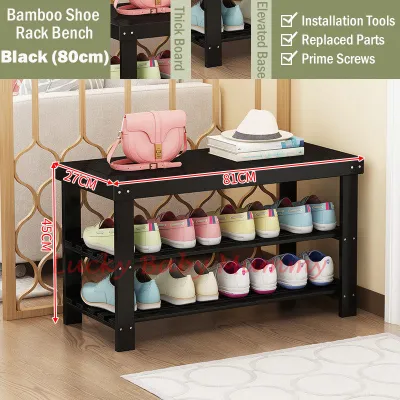
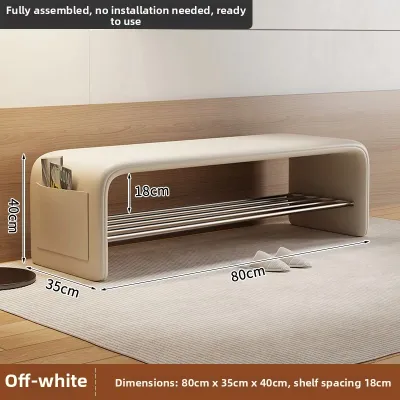
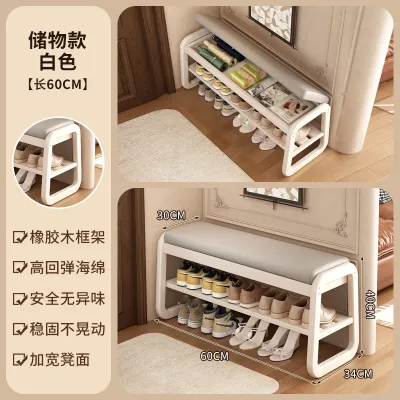
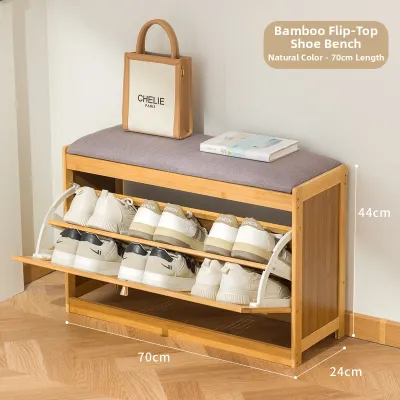
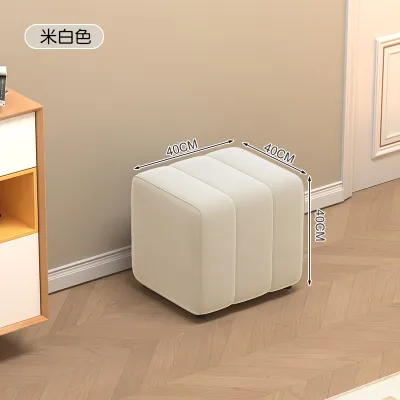
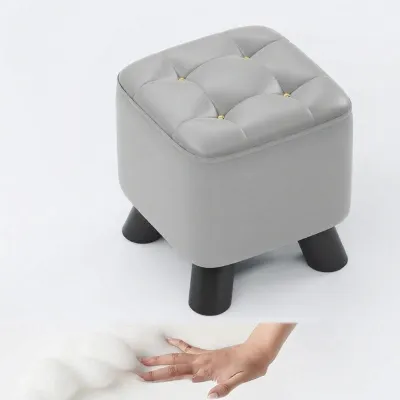
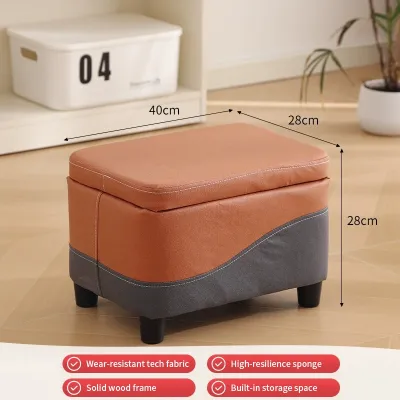
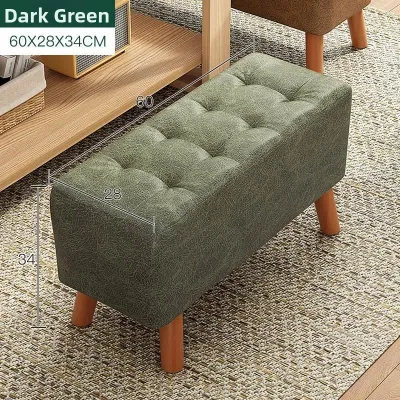
Prices are valid at publication and may change. Please refer to the product page for the latest price.
Baseline Pairs per Person Start by counting only the shoes that require immediate, daily access. This typically includes work shoes, school shoes, and everyday walking sandals or sneakers. For a household of four, if each person keeps just two pairs of shoes at the entrance, you already need to accommodate 8 pairs of shoes. If your family members frequently switch between running shoes, casual slip-ons, and formal wear, that number can easily climb to 12 pairs or more.
Adjusting for Bulky Footwear Standard shoe rack capacities are often calculated using average-sized, low-profile footwear like flats or slim sandals. In reality, bulky sports shoes, high-top sneakers, and wide-fit footwear occupy significantly more space. A single pair of chunky running shoes or men’s formal leather shoes can take up 1.5 to 2 standard shelf slots. If your household collection consists primarily of athletic shoes or larger sizes, a shelf rated for three pairs may realistically only fit two.
Guest and Seasonal Needs In Singaporean households, it is customary to remove shoes before entering the living space, which means your entryway must also accommodate guest footwear. If you frequently host friends or extended family, keeping a few slots open on your shoe rack stool for guest slippers is highly practical. Additionally, consider how you handle seasonal or less-frequently worn footwear. To keep your entryway stool from overflowing, establish a system where only active shoes remain on the stool, while formal heels, boots, and off-season footwear are stored in a main shoe cabinet or wardrobe inside the home.
Step 2: Match Storage Tiers to Seating Designs
The physical design of your shoe rack stool directly dictates how many shoes you can store and how comfortable the seating experience will be. Finding the right balance between horizontal width, vertical tiers, and structural stability is key to selecting a piece that serves both functions effectively.

Tier Configurations Most shoe rack stools come in either 2-tier or 3-tier configurations. A 2-tier design is the most common and ergonomic option. It keeps the seat height at a comfortable 40cm to 45cm, allowing users of all ages to sit down and rise easily. However, a 2-tier stool has a limited capacity, usually holding between 4 and 6 pairs of adult shoes. A 3-tier design increases storage capacity to 6 to 9 pairs, but this extra tier often raises the seat height to 50cm or more. For households with young children or elderly relatives, a seat this high can make it difficult to plant feet firmly on the floor, compromising stability and safety.
Shelf Width and Depth To maximize capacity without raising the seat height, look at horizontal dimensions. Standard widths for entryway stools range from 60cm to 100cm. A 60cm wide stool typically fits 2 pairs of adult shoes per shelf, while an 80cm stool fits 3 pairs, and a 100cm stool can accommodate 4 pairs. The depth of the shelves is equally important; a depth of 30cm to 35cm is standard. If members of your household wear larger shoe sizes (such as US 11 or EU 45 and above), ensure the shelf depth is at least 35cm to prevent the back of the shoes from hanging over the edge and blocking the entryway path.
Seating Dimensions and Comfort The top surface of the stool must offer enough surface area to support a sitting adult comfortably. A seat depth of less than 30cm can feel unstable and cramped. Look for a cushion or wooden top that is at least 30cm to 40cm deep. If space permits, a wider seat not only makes it easier to sit down but also provides a temporary spot to place bags, keys, or groceries while you transition into or out of the home.
Weight and Stability Limits Because this furniture piece functions as a seat, stability is paramount. You must check the manufacturer’s specified weight capacity before purchasing. High-quality shoe rack stools typically support loads ranging from 100kg to 150kg. Inspect the frame material and joint construction; solid wood or reinforced metal frames offer superior stability compared to thin plastic or lightweight hollow-aluminum alternatives. Ensure the base has non-slip pads or feet to prevent the stool from sliding on smooth tiled floors when someone sits down or stands up.
Step 3: Measure Your Entryway and Clearance
Even the most spacious shoe rack stool is useless if it blocks your doorway or makes your foyer feel cramped. Entryways in modern apartments, especially HDB BTO flats in Singapore, are often compact, requiring precise measurements before you buy.
Footprint and Height Clearance Begin by measuring the exact floor area where you plan to place the shoe rack stool. Use a measuring tape to mark out the maximum width and depth that the space can accommodate. If you plan to place the stool underneath a wall-mounted console table, a mirror, or a row of coat hooks, you must also measure the vertical clearance. Ensure there is enough height for a seated person to sit upright without hitting their head on any overhanging fixtures.
Door Swings and Walkways One of the most critical steps is accounting for the swing radius of your main entrance door and any external metal gate. Open your door fully to a 90-degree angle and measure the remaining clearance. The shoe rack stool must sit entirely outside this swing path. Furthermore, you must maintain a clear walkway. In Singapore, maintaining unobstructed pathways is essential for daily convenience and emergency evacuation. Ensure that the depth of the stool leaves at least 90cm of walking space in the corridor or foyer so family members can pass by easily, even when carrying bags.
Usability Clearance A common oversight is measuring only the physical footprint of the stool while ignoring the space needed to actually use it. When a person sits down to put on or remove shoes, their knees and feet extend forward by an additional 40cm to 50cm. Bending over to tie shoelaces requires even more frontal clearance. Ensure there is adequate open space directly in front of the stool so users do not bump their knees against opposite walls or adjacent furniture.
Common Sizing Mistakes to Avoid
Avoiding common pitfalls can save you the hassle of returning a heavy piece of furniture or dealing with a cluttered entryway.
Overestimating Shelf Capacity Many buyers purchase a shoe rack stool based solely on the manufacturer’s advertised capacity, only to find that their actual shoe collection does not fit. Advertised capacities are often based on small, flat shoes. If your household wears chunky sneakers, platform shoes, or work boots, you must assume the actual capacity will be lower than advertised. Always look at the physical width of the shelves rather than the stated pair capacity.
Ignoring Seat Height and Ergonomics It is tempting to choose a tall, multi-tier stool to maximize storage in a small footprint. However, a seat that is too high can be uncomfortable and unsafe, particularly for older adults who may lose their balance if their feet cannot touch the floor. Conversely, a stool that is too low (under 35cm) can be difficult to stand up from for those with knee or joint pain. Prioritize a standard ergonomic height of 40cm to 45cm for universal comfort.
Blocking Entryway Flow Selecting a shoe rack stool that is too deep for your hallway creates a constant physical hazard. In tight foyers, even an extra 5cm of depth can turn a useful bench into a tripping hazard. If your entryway is exceptionally narrow, look for slim-profile designs or models with open wire shelves that reduce visual bulk, keeping the space feeling open and safe.
Frequently Asked Questions (FAQ)
How many pairs of shoes fit on a standard 2-tier shoe rack stool?
A standard 2-tier shoe rack stool typically accommodates between 4 and 6 pairs of adult shoes, depending on the horizontal width of the unit. For a compact 60cm width, you can comfortably store 4 pairs of standard shoes (2 pairs per shelf). If you opt for a wider 80cm or 100cm bench, the capacity increases to 6 or 8 pairs. Keep in mind that bulky footwear, such as wide sneakers or boots, will reduce this capacity, while flat sandals or children’s shoes can sometimes be doubled up or nested to fit more pairs.
Can I use a shoe rack stool for heavy winter boots or tall footwear?
Yes, but you must verify the vertical clearance between the shelves and the overall weight distribution of the unit. Most standard shoe rack stools have a shelf clearance of 15cm to 18cm, which is insufficient for tall boots or high-top footwear. To accommodate taller shoes, look for designs that feature adjustable shelf heights, a removable middle shelf, or a dedicated tall side compartment. For safety and stability, always place heavier boots on the bottom shelf to keep the stool’s center of gravity low and prevent it from tipping over when you sit down.

Community discussion
Share your experience or ask a question. Comments are reviewed before publication.