
Choosing the right shoe rack goes beyond simply picking a piece of furniture with a high pair count. For households in HDB flats and condos, finding a practical storage solution requires balancing your growing shoe collection, the number of people in your home, and the specific spatial constraints of your entryway. A standard shoe rack typically holds anywhere from 6 to over 40 pairs of shoes, but the suitable capacity for your home depends on your household size, footwear types, and the physical limits of your entryway. For a typical Singapore household living in an HDB flat or condominium, balancing storage capacity with available floor space is a daily practical necessity. Finding the right fit requires looking beyond the manufacturer’s advertised pair count to analyze your actual collection, measure your entryway clearance, and select a configuration that keeps your home organized and safe.
Assess Your Shoe Collection and Household Needs
Start with a systematic audit of your household’s footwear. Instead of guessing, physically gather and count every pair of shoes currently in use. A single adult might own anywhere from five to over twenty pairs, ranging from daily work shoes and casual sandals to specialized sports shoes and formal wear. Footwear volume is not uniform; a pair of slim flat sandals occupies a fraction of the space required by high-top basketball sneakers, platform heels, or heavy work boots. When estimating capacity, group your shoes by height and width, as bulky shoes require wider and taller shelf clearances that can quickly reduce the actual number of pairs a standard rack can accommodate.
Consider your household dynamics and future growth. A family with young children might require less space initially, but children’s shoes quickly grow in size, and their collection expands as they enter school and sports activities. Additionally, establish a clear distinction between daily-use footwear and occasional items. High-traffic shoes like school shoes, daily work heels, and running sneakers belong in the most accessible spots, while off-season boots, formal dress shoes, or specialized sports gear can be cleaned and stored in bedroom wardrobes or utility closets to free up prime entryway real estate.
Products mentioned in this guide
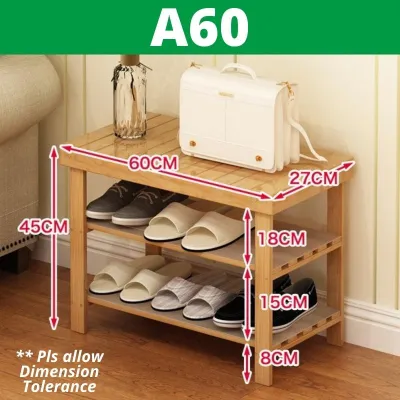
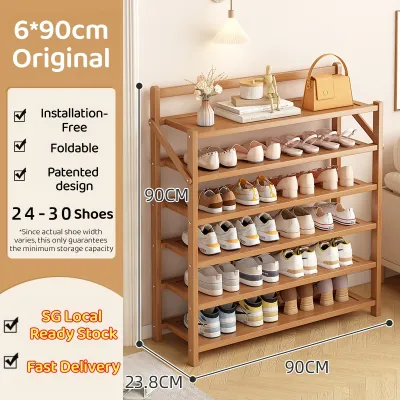
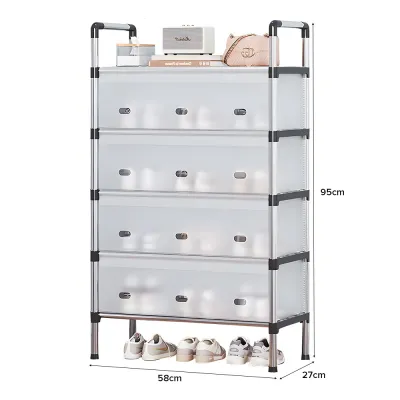
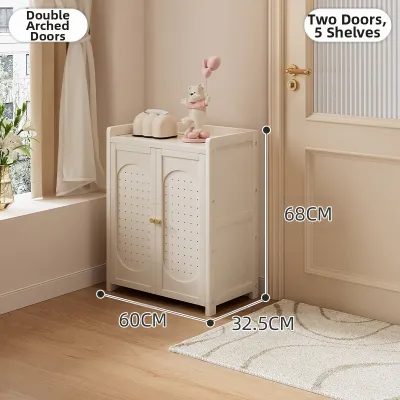
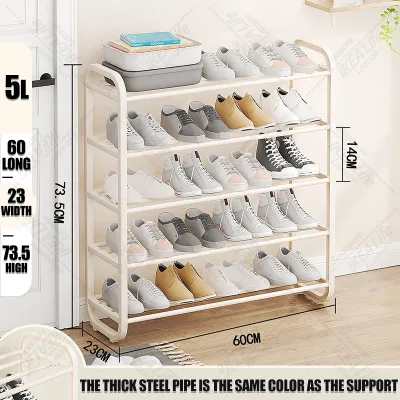
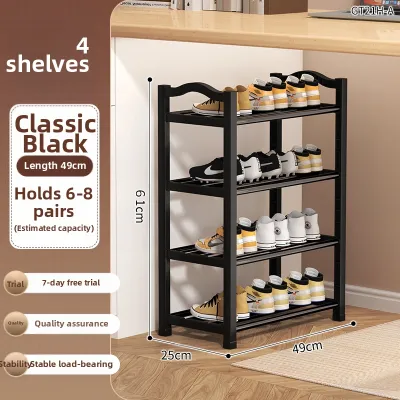
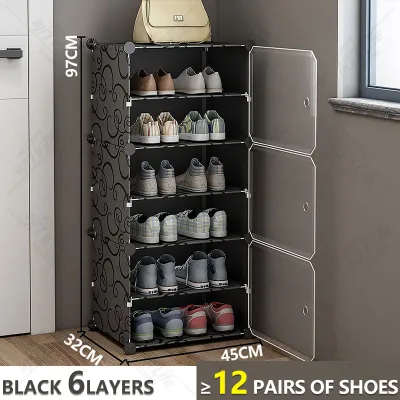
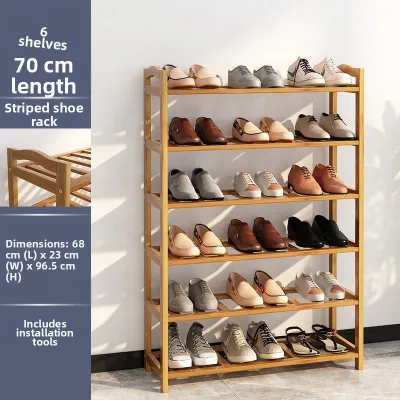
Prices are valid at publication and may change. Please refer to the product page for the latest price.
Measure Your Available Space and Clearance
Accurate physical measurements are the foundation of a successful furniture purchase. Before browsing designs, use a reliable measuring tape to determine the maximum width, depth, and height available in your designated entryway zone. Take note of any fixed wall fixtures, such as electrical distribution boards (DB boxes), fiber termination points, intercom units, or light switches, which must remain accessible and unobstructed. Blocking these utilities not only violates safety standards but also creates significant inconvenience during maintenance or emergencies.

Walkway clearance is a critical safety and functional consideration, particularly in compact HDB foyers or narrow condo hallways. Measure the width of your corridor with the main door fully open to ensure that any proposed shoe rack leaves a clear, comfortable path for daily traffic, carrying groceries, or moving larger items. In Singapore, civil defense and town council regulations also dictate minimum clearance widths for common corridors, so any external shoe storage must strictly comply with these safety guidelines to ensure safe evacuation routes.
Do not overlook the swing paths of doors and drawers, as well as architectural details like baseboards and skirting boards. A shoe cabinet with swing-out doors or pull-out drawers requires significant clearance in front of it to open fully, making sliding doors or open-tiered shelves a more practical choice if space is tight. Additionally, skirting boards prevent flat-backed furniture from sitting completely flush against the wall, so look for shoe racks with back cutouts or adjustable leveling feet that can compensate for these floor-level variations and prevent wobbling.
Match Rack Types to Your Capacity and Layout
Freestanding tiered shoe racks are a highly popular and versatile option for many homes. These open-shelved structures allow for good ventilation, which is particularly beneficial in Singapore’s humid climate to prevent moisture buildup and odor. They are easy to assemble, relocate, and reconfigure as your storage needs change, making them a flexible choice for growing households. Because they are open, they also allow you to see your entire collection at a glance, making it quick and easy to select your footwear for the day.
For extremely tight entryways where floor space is at a premium, wall-mounted, floating, or over-the-door options offer an elegant solution. By lifting the storage off the floor, you keep the ground level clear, making it easier to sweep and mop. Floating units also create a visually lighter feel in small spaces, though they do require secure anchoring into concrete or sturdy wall studs to handle the weight of multiple pairs of shoes safely. This style is particularly suited for modern, minimalist interiors where floor space is highly valued.
Enclosed shoe cabinets provide a clean, streamlined look by completely concealing footwear clutter behind solid doors, protecting your shoes from dust and light exposure. However, enclosed cabinets require careful consideration of depth, as the doors add to the overall footprint, and they must feature adequate ventilation slots or louvers to prevent musty odors from developing inside. Before committing, check manufacturer specifications for adjustable shelf spacing and weight limits to ensure the unit can support the collective weight of your heaviest footwear without sagging.
Common Sizing Mistakes and How to Avoid Them
One of the most frequent errors is overestimating the actual capacity of a shoe rack based solely on the manufacturer’s advertised pair count. These estimates are often calculated using small, slim shoes placed tightly side-by-side. In reality, adult sneakers, wide-soled running shoes, and structured dress shoes require more horizontal space, meaning a shelf rated for four pairs might only comfortably fit three. To avoid this, always check the physical width of the shelves and compare it to the width of your own shoes.
Ignoring the overall depth of the shoe rack can lead to frustrating daily inconveniences. If the shelves are too shallow, larger shoes will overhang the front edge, creating a tripping hazard in narrow walkways and causing shoes to be knocked off the rack by passing family members. Always compare the physical length of your largest pair of shoes against the internal depth specification of the rack before purchasing to ensure a proper fit and prevent shoes from catching on passing traffic.
Another critical oversight is failing to measure the delivery and installation path. Even if a shoe cabinet fits well in your entryway, it must first get there. Measure the height and width of your main door frame, the internal dimensions of your building’s elevator, and any tight corners in the stairwell or hallway. This is especially important for fully assembled solid wood cabinets or large flat-pack boxes that cannot be easily maneuvered around tight angles, preventing delivery day disappointment.
Frequently Asked Questions (FAQ)
How much depth does a standard shoe rack need?
A standard shoe rack typically requires an internal depth of at least 30 to 35 centimeters to accommodate most adult shoe sizes comfortably without overhang. For households with larger shoe sizes, such as men’s US size 11 and above, a depth of 38 centimeters or more is highly recommended. It is highly practical to physically measure the sole length of the largest pair of shoes in your home and add a small buffer of two to three centimeters to ensure the cabinet doors can close completely or that the shoes do not protrude into the walkway.
Can I add more tiers to my existing shoe rack later?
Whether you can expand your shoe rack depends entirely on its design and the manufacturer’s specifications. Modular or stackable shoe racks are specifically engineered with interlocking joints or connecting pins to allow vertical expansion safely. However, you must always consult the manufacturer’s guidelines to verify the maximum recommended stacking height and weight limits. Adding unauthorized tiers to a non-stackable rack can severely compromise its structural integrity, shift the center of gravity, and create a serious tip-over hazard, making secure wall anchoring absolutely essential if any vertical expansion is attempted.

Community discussion
Share your experience or ask a question. Comments are reviewed before publication.