
Selecting the ideal shoe capacity for a shoe rack bench is a balancing act between your household’s daily habits and the physical limits of your entryway. In Singaporean homes, where foyer space in HDB flats and condominiums is often compact, this piece of furniture must serve a dual purpose: providing a stable seat for putting on footwear and offering streamlined storage for high-traffic shoes. A bench that is too small leads to messy shoe piles on the floor, while one that is too large congests your main walkway.
To determine the right size, you must calculate the number of “active” pairs your household uses daily and match this to the bench’s physical dimensions. A household of one or two people typically needs a bench holding 4 to 8 pairs, while a larger family of four or five requires a capacity of 12 to 16 pairs or a secondary storage system. By analyzing your family’s needs, spatial constraints, and the physical specifications of the furniture, you can find a bench that keeps your entryway organized and functional.
Assessing Your Household's Total Shoe Storage Needs
To choose the right capacity, you must first differentiate between active daily storage and long-term storage. A shoe rack bench is designed to be a high-traffic transit station for the shoes you wear most frequently, rather than a permanent archive for your entire collection. Storing off-season footwear, formal heels, or hiking boots in bedroom wardrobes or dedicated closed cabinets keeps the entryway bench clear for daily essentials.
Products mentioned in this guide
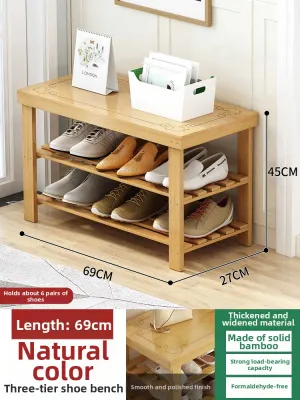
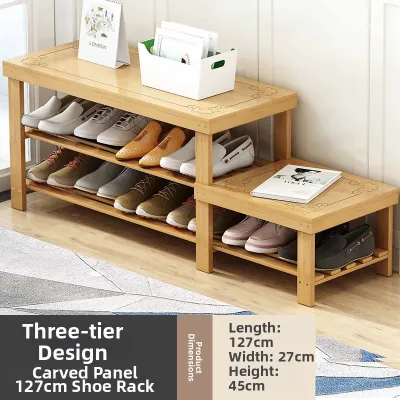
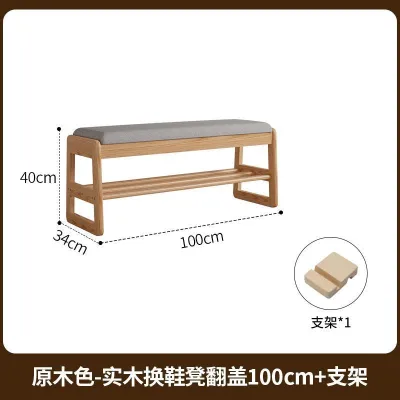
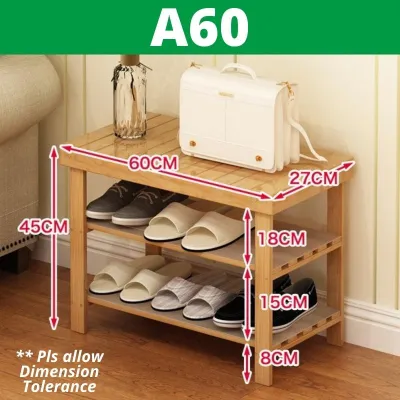
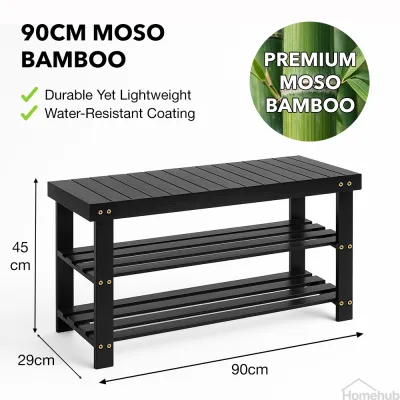
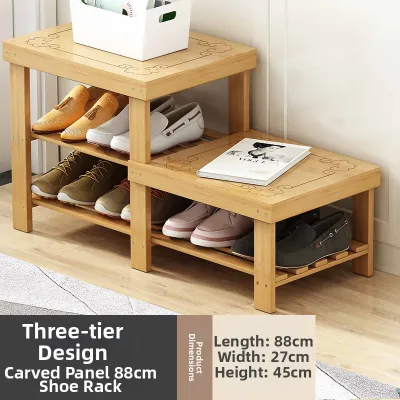
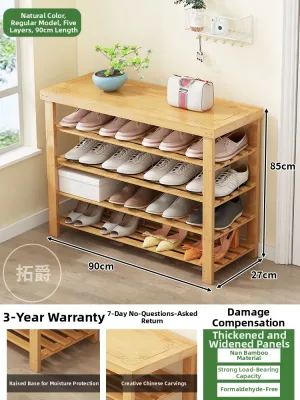
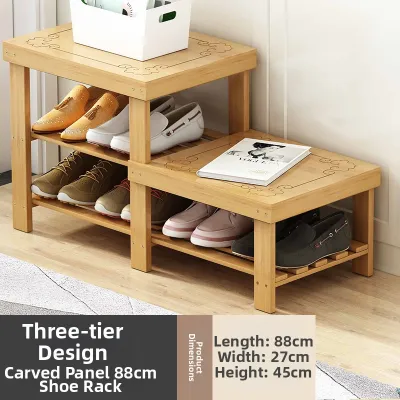
Prices are valid at publication and may change. Please refer to the product page for the latest price.
For a practical baseline, allocate a specific number of active pairs per household member. A standard recommendation is to allow two to three pairs of active shoes per adult or teenager, and one to two pairs per young child. This typically includes everyday work or school shoes, a pair of running sneakers, and casual sandals or indoor slippers.
Household composition significantly affects the physical volume of storage required. Adults and teenagers wear larger shoe sizes that occupy more lateral and vertical space on a shelf. Children’s shoes are smaller and can sometimes be doubled up on a single tier, but children also tend to outgrow footwear rapidly, leading to a constant rotation of sizes.
If your household includes older adults, their specific footwear needs and physical safety must be factored into the entryway setup. Supportive orthopedic shoes or walking shoes can be bulkier than standard flats. Additionally, older adults benefit greatly from a highly stable, dedicated seating surface at an ergonomic height, meaning the bench must prioritize structural integrity over maximum storage density.
In Singapore’s tropical climate, high humidity levels can cause mold to develop quickly on footwear left in dark, unventilated spaces. Wet weather from sudden afternoon downpours means shoes often return home damp. Your entryway storage must allow these shoes to dry completely before they are moved to long-term storage, making well-ventilated bench shelving essential.
Translating Shoe Rack Bench Dimensions into Usable Capacity
When shopping for a shoe rack bench, do not rely solely on generic manufacturer capacity labels, such as “holds 10 pairs.” These estimates are often based on small, narrow footwear. To understand the realistic capacity, you must look at the finished internal width of the shelves and compare it to the actual width of your family’s shoes.

An average pair of men’s shoes (size US 9 to 11) requires approximately 22 to 25 cm of lateral shelf space. Women’s flats, sandals, or heels generally require about 18 to 20 cm per pair. If you have a bench with a usable internal shelf width of 80 cm, it will comfortably fit three pairs of men’s sneakers (3 x 25 cm = 75 cm) or four pairs of women’s sandals (4 x 20 cm = 80 cm).
Tier height and shelf adjustability are critical for accommodating diverse shoe types. Standard shoe rack benches feature a fixed tier height of 15 to 20 cm, which is ideal for low-profile sneakers, flats, and slippers. However, high-top sneakers, mid-cut boots, or high heels require a vertical clearance of 25 to 30 cm to stand upright without bending the shoe shafts.
Opting for a bench with adjustable or removable shelves provides the flexibility to customize the interior layout. If you need to store ankle boots, you can remove one shelf to create a taller compartment. Keep in mind that removing a shelf reduces the total number of tiers, which directly decreases the overall shoe capacity of the bench.
Your choice between open shelving and enclosed cabinets also impacts usable capacity and maintenance. Open-slat shelves offer excellent ventilation, easy cleaning, and immediate access, but they keep your footwear fully visible. Enclosed cabinets with doors conceal visual clutter for a minimalist look, but they restrict airflow and often have slightly less usable depth due to the thickness of the doors and back panels.
Regardless of the design, check the manufacturer’s care and maintenance instructions. Do not assume a material like solid wood or engineered board is naturally moisture-resistant. Look for protective finishes that can withstand damp soles, and establish a habit of wiping down wet shoes before placing them on the shelves to preserve the furniture’s lifespan.
Matching the Bench Footprint to Your Entryway Space
Before purchasing a high-capacity shoe rack bench, you must verify that its physical footprint fits your foyer without obstructing daily movement. Start by measuring the available wall width and depth in your entryway. Remember to account for baseboards, light switches, electrical outlets, and door frames that might prevent the bench from sitting flush against the wall.
Walkway clearance is a vital safety consideration, especially in narrow apartment corridors. You should maintain a clear walkway width of at least 90 to 100 cm in front of the bench. This space ensures that family members can walk past comfortably even when someone is seated on the bench putting on their shoes.
Carefully check the swing paths of all nearby doors. This includes your main entrance door, the metal safety gate common in HDB flats, and any adjacent closet or bedroom doors. The bench must be positioned so that no door collides with it when opened fully, which prevents damage to both the furniture and your home’s doors.
Seating ergonomics and load capacity are essential for a safe user experience. A comfortable seating height for most adults is between 40 and 45 cm from the floor. A reliable shoe rack bench should support a load capacity of at least 100 kg for a single seat, and up to 180 kg or more for a double seat. Always verify the manufacturer’s specified weight limit to ensure safety.
If your entryway is exceptionally tight, prioritize a compact footprint over maximum storage. A tall, narrow bench with two tiers of storage can provide a reasonable shoe capacity without extending too far into the room. Balancing your storage desires with the need for an open, uncluttered landing zone makes your home feel more welcoming.
During assembly, pay close attention to the structural joints and fastening hardware. Whether the bench comes pre-assembled or requires self-assembly, ensure all screws, dowels, and brackets are tightened securely. If the bench is lightweight or tall, check if the manufacturer recommends anchoring it to the wall to prevent tipping.
Common Capacity and Sizing Mistakes to Avoid
One of the most common mistakes is assuming that all tiers in a shoe rack bench have uniform dimensions. Often, the bottom tier has slightly less vertical clearance due to the floor frame, or the top tier is partially restricted by the underside of the seat cushion. Always measure each individual tier’s clearance before organizing your shoes.
Ignoring the depth requirement for larger shoe sizes can lead to significant frustration. Standard benches often have a depth of 30 to 33 cm. If a household member wears a shoe size of US 11 (EU 45) or larger, their shoes may overhang the front of the shelf. In an enclosed cabinet, this prevents the doors from closing; in an open rack, overhanging shoes can easily become tripping hazards.
Avoid buying a bench that fits your exact current shoe count with zero breathing room. Families grow, shoe styles change, and seasonal footwear needs fluctuate. Purchasing a bench with a small capacity buffer—such as room for two additional pairs—prevents your entryway from spilling over into chaos the moment you buy a new pair of shoes.
Finally, do not overlook the stability of the bench when it is fully loaded. A bench filled with heavy work boots on the top shelf and lightweight slippers on the bottom can become top-heavy. Distribute the weight evenly by placing your heaviest footwear on the lowest tier, which keeps the center of gravity low and enhances overall stability.
Frequently Asked Questions (FAQ)
How do I accommodate guests' shoes without buying a larger bench?
Your shoe rack bench should be sized to meet the daily needs of your permanent household, not the peak capacity of occasional social gatherings. To accommodate guests without cluttering your entryway, use temporary overflow solutions.
A neat, low-profile shoe tray or a designated floor mat can be placed temporarily in the hallway or near the door during hosting events. Once your guests leave, these temporary solutions can be easily cleaned, stacked, and stored away in a utility closet, keeping your main entryway spacious and tidy.
Is it better to buy two smaller shoe rack benches or one large one?
The choice between two smaller benches and one large unit depends on your entryway’s layout and your organizational preferences. Two smaller, modular benches offer excellent flexibility for awkward layouts, such as L-shaped foyers or spaces interrupted by structural pillars. You can place one bench near the door for immediate daily use and the second further down the hallway for secondary storage.
Conversely, a single large bench provides a cohesive, high-end look with a wider, uninterrupted seating surface. This setup is ideal for long, straight walls and offers a more comfortable seating area for multiple family members. Base your decision on your specific wall measurements and whether you prefer centralized or zoned shoe organization.

Community discussion
Share your experience or ask a question. Comments are reviewed before publication.