
Finding the perfect shoe cabinet for a Singapore home requires balancing your household’s footwear collection with the physical realities of local entryway layouts. Whether you live in a cozy apartment or a spacious condominium, space near the front door is often at a premium. Choosing the right capacity involves calculating your actual storage needs, measuring your space accurately, and selecting a design that accommodates your lifestyle without obstructing daily movement.
Assess Your Shoe Collection and Household Needs
To determine the ideal capacity, start by conducting a thorough audit of your household’s footwear. Count the number of shoes each family member owns and categorize them by frequency of use. A practical baseline is to allocate space for at least six to eight pairs of shoes per adult for regular rotation, plus additional slots for specialty footwear like sports shoes, formal wear, and sandals.
Next, differentiate between immediate-access storage and long-term preservation. Daily-wear shoes are best kept on open racks or lower shelves where they can air out quickly. Off-season shoes, formal heels, or expensive leather boots are better suited for closed cabinets that protect them from dust. If you prefer a clean, minimalist entryway, a closed cabinet is ideal, but you may still want an open bottom gap for quick-slip shoes.
Products mentioned in this guide
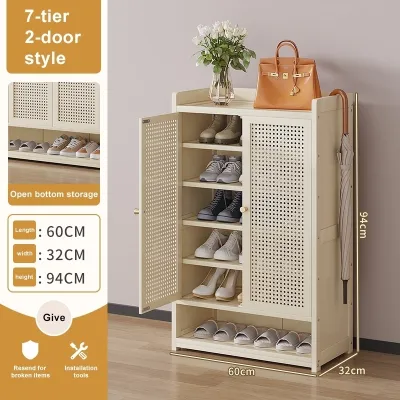
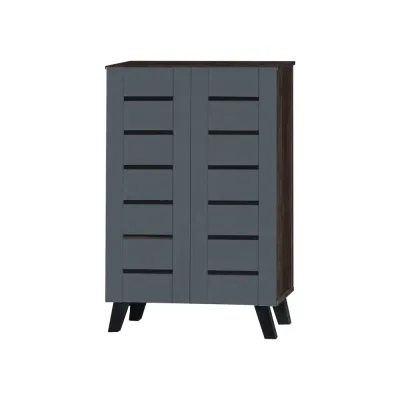
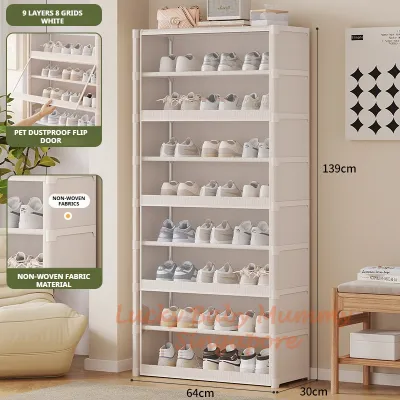
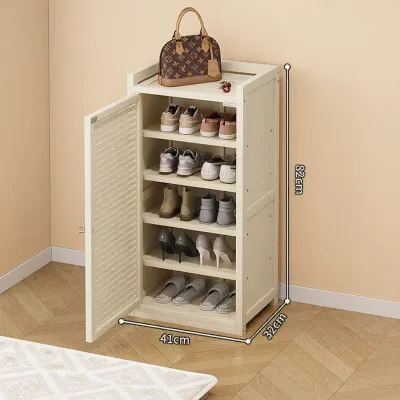
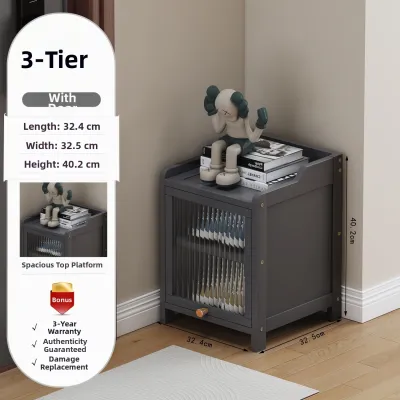
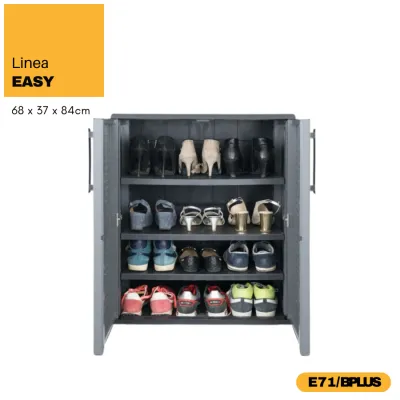
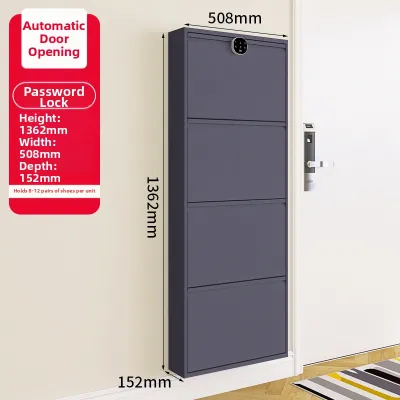
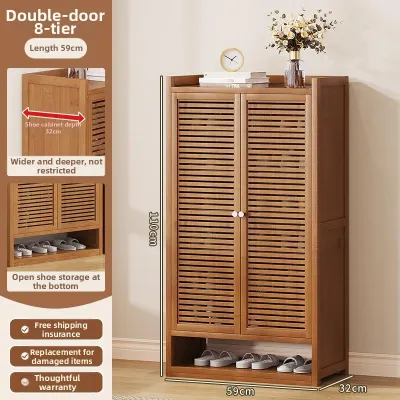
Prices are valid at publication and may change. Please refer to the product page for the latest price.
Do not forget to plan for future growth. Families with young children must account for rapidly changing shoe sizes and an increasing number of pairs over time. Even for single or double-occupant households, leaving a buffer of 15% to 20% extra capacity prevents the cabinet from overflowing when guests visit or when your collection inevitably expands.
Measure Your Entryway and Available Space
Before browsing online marketplaces or visiting local furniture showrooms, you must obtain precise measurements of your designated entryway area. Use a reliable measuring tape to record the maximum width, height, and depth available. Pay close attention to fixed architectural features such as skirting boards, door frames, light switches, power outlets, and distribution board boxes, as these can restrict how flush a cabinet can sit against the wall.

Walkway clearance is critical for maintaining a comfortable flow of traffic. Ensure that placing a cabinet does not block the main entrance door or any adjacent doors, such as a household shelter door. As a general rule, aim to maintain a clear walkway width of at least 90 to 100 centimeters in your foyer so that family members can walk past, carry groceries, or maneuver strollers without bumping into furniture.
If you are considering placing storage outside your main door, you must adhere to strict safety guidelines. In Singapore, the Singapore Civil Defence Force mandates a minimum clear escape passage of 1.2 meters along common corridors. Always check your specific town council or condominium management rules before placing any furniture in shared spaces, as non-compliant items may face removal orders or pose serious fire safety hazards.
Match Cabinet Dimensions to Your Space and Capacity
Translating your shoe count into physical cabinet dimensions requires understanding how shelf space correlates to actual footwear. The number of pairs you can fit per tier depends heavily on the cabinet’s width and the average width of your shoes. Standard adult shoes typically require about 20 to 25 centimeters of horizontal space per pair, meaning a 100-centimeter-wide shelf can comfortably hold four pairs.
To maximize this space, look for cabinets featuring adjustable or removable internal shelves. Footwear heights vary dramatically between flat sandals, running sneakers, and high heels or boots. Adjustable shelving allows you to customize the vertical clearance of each tier, preventing wasted vertical space above low-profile shoes while accommodating taller pairs without bending them.
Width and Depth Configurations
The depth of your shoe cabinet is often the most limiting factor in narrow entryways. Standard horizontal shelving requires an internal depth of at least 30 to 35 centimeters to accommodate average shoe sizes flat. If your entryway is exceptionally narrow, look for slim-profile cabinets with angled shelves or tipping bucket mechanisms. These designs store shoes vertically or at an angle, reducing the external cabinet depth to as little as 15 to 20 centimeters.
When selecting the width, consider the physical dimensions of the largest shoes in your household. If multiple family members wear larger sizes, standard width increments might leave awkward gaps where a partial pair cannot fit. Measuring the exact sole width of your widest shoes helps you calculate whether a specific cabinet width will maximize the number of pairs per row without leaving unusable, empty margins.
Height and Tier Arrangements
Vertical space offers an excellent opportunity to increase storage capacity without expanding the cabinet’s footprint. Low-profile shoe benches are highly functional for small households, providing storage for six to ten pairs while doubling as a convenient seat for putting on shoes. However, larger families will benefit more from tall, multi-tier cabinets or floor-to-ceiling modular units that maximize vertical wall space.
When opting for tall cabinets, safety must be your top priority. Always verify your ceiling height before purchasing, and ensure the unit can be securely anchored to the wall using appropriate brackets and wall plugs. This is especially critical in households with children or pets, as tall, front-heavy cabinets can easily tip over when multiple drawers or doors are opened simultaneously.
Common Sizing and Placement Mistakes to Avoid
One of the most frequent mistakes is overlooking the difference between external cabinet dimensions and actual internal shelf depth. Back panels, door hinges, and sliding door tracks all consume valuable space, sometimes leaving the interior too shallow for larger shoes or original shoeboxes. Always check the manufacturer’s specified internal depth rather than relying solely on the overall external depth.
Another common error is ignoring ventilation, which is particularly problematic in Singapore’s hot and humid climate. Fully enclosed cabinets without ventilation holes, slatted doors, or mesh panels trap moisture and sweat from worn shoes. This creates an ideal breeding ground for mold, mildew, and unpleasant odors; to prevent this, choose designs that promote airflow or allow shoes to dry completely before storing them.
Finally, do not forget to account for operational clearances. A cabinet might fit perfectly in your entryway when closed, but opening swing doors or pulling out deep drawers can completely block your walkway or collide with nearby walls. Ensure you have sufficient physical space to stand, bend down, and open the cabinet doors fully without feeling cramped or restricted.
Frequently Asked Questions (FAQ)
How much depth is needed for a shoe cabinet to fit large men's shoes?
To accommodate larger men’s shoes flat on a shelf, you generally need an internal depth of at least 33 to 35 centimeters. To find your exact requirement, measure the longest shoe in your household from heel to toe. Keep in mind that external cabinet depth includes the thickness of the doors and the back panel, so look for products with an external depth of at least 35 to 38 centimeters, or opt for angled, space-saving shelves if your entryway is too narrow.
Can I place a shoe cabinet outside my apartment door in Singapore?
Yes, but you must strictly comply with local fire safety and estate regulations. The Singapore Civil Defence Force requires a minimum clear corridor width of 1.2 meters to ensure safe evacuation during emergencies. Additionally, you must check with your specific town council or condominium management, as some estates have stricter bylaws regarding corridor storage, and placing items in common areas must never obstruct access to fire hydrants, dry risers, or your neighbors’ entryways.

Community discussion
Share your experience or ask a question. Comments are reviewed before publication.