
Determining how many shoe boxes you need is a balancing act between the size of your current footwear collection, your future shopping habits, and the physical limits of your home. To build an organized, visually clean, and highly functional setup, you must calculate your baseline capacity before purchasing any containers. Choosing the right shoes box storage system ensures your footwear remains protected from dust and humidity while remaining easily accessible.
A successful storage plan avoids the frustration of mismatched boxes that wobble or overflow. By systematically evaluating your collection and measuring your available floor space, you can determine the exact number of units required to house your shoes safely. This guide will walk you through auditing your collection, understanding box dimensions, measuring your space, and avoiding common placement mistakes.
Assess Your Shoe Collection to Establish a Baseline Capacity
Before looking at product catalogs, you must conduct a thorough inventory of your existing footwear. Every pair of shoes occupies a unique physical volume, meaning a simple count of pairs is not enough to determine your storage needs. You must categorize your collection by height, profile, and usage frequency to establish a realistic baseline.
Products mentioned in this guide
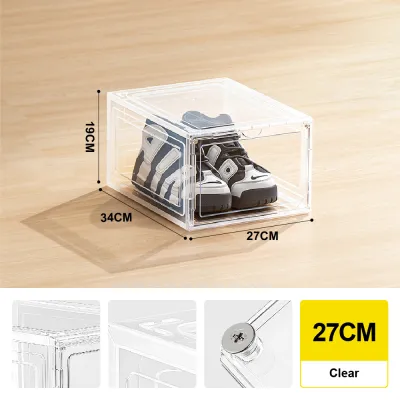
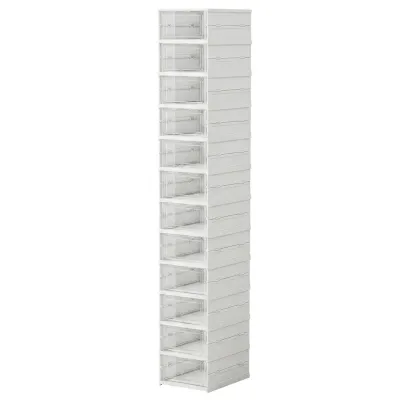
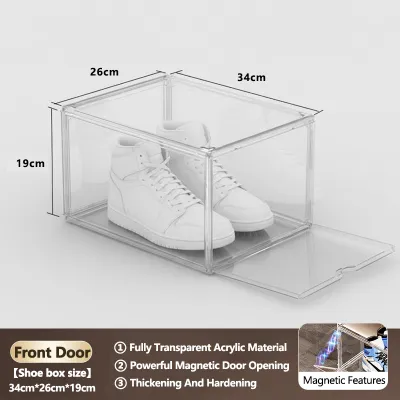
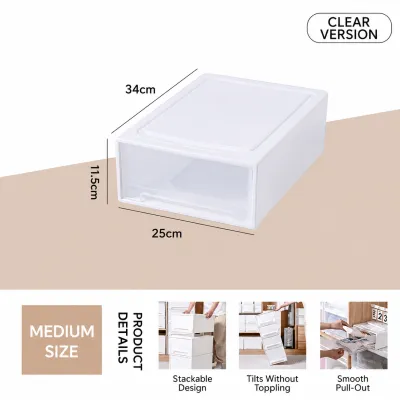
![[SG Stock] Transparent Shoe Box | Front and Side View Organizer | Storage Box](https://img.lazcdn.com/g/p/8fbcf778ff80155edfb52d595c04e35f.png_400x400q80.png_.webp)
Prices are valid at publication and may change. Please refer to the product page for the latest price.
Categorize by Profile Begin by sorting your footwear into three distinct categories based on their vertical profile. Low-profile shoes include flat sandals, slippers, flip-flops, and low-top canvas shoes. These items require minimal vertical clearance and can often fit into standard, compact boxes. Medium-profile shoes encompass everyday sneakers, running shoes, loafers, brogues, and standard heels. These require moderate height to prevent the tops of the shoes from scraping against the ceiling of the box. High-profile shoes consist of high-top sneakers, ankle boots, riding boots, and platform heels. These specialized items demand significantly taller containers to avoid bending or crushing the shafts and collars.
Count and Buffer Once your shoes are sorted, count the exact number of pairs in each profile category. Do not buy storage that only fits your current inventory. Instead, add a 20% to 30% buffer to your total count to accommodate anticipated growth. If you currently own 30 pairs of shoes, plan a storage capacity for 36 to 39 pairs. This extra space prevents your system from becoming instantly obsolete after your next shopping trip. It also provides dedicated space for seasonal rotations, specialized sports footwear, or guest slippers near the entrance of your home.
Identify Display vs. Deep Storage Not every shoe in your collection requires the same level of accessibility. Divide your inventory into daily-use footwear, seasonal or occasional wear, and collectible items. Daily-use shoes are best suited for highly accessible, drop-front stackable boxes placed near your main entryway. Collectibles or expensive heels that you wear only a few times a year can be placed in deep storage, such as clear lidded boxes on higher wardrobe shelves. This distinction helps you allocate your budget efficiently, as premium display boxes can be reserved for your prized pairs while standard containers house everyday items.
Compare Shoes Box Storage Types and Internal Dimensions
Selecting the right shoes box storage requires a clear understanding of how different storage solutions measure capacity. Many buyers make the mistake of looking only at the external dimensions of a box, assuming their shoes will fit comfortably inside. However, the physical structure of the box itself can significantly reduce the actual usable space.

External vs. Internal Dimensions The external dimensions of a shoe box represent the total space the unit occupies in your room. The internal dimensions, however, represent the actual space available for your footwear. Thick plastic walls, interlocking lips, drop-front door hinges, and structural reinforcement ridges all consume valuable internal space. For example, a box with an external length of 36 centimeters might only offer 33 centimeters of internal length. If you wear larger shoe sizes, such as US 11 (EU 45) or above, these few centimeters are critical. Always verify the manufacturer’s specified internal dimensions to ensure your shoes can lie flat without bending the heels or compressing the toe boxes.
Stackable Clear Boxes vs. Shoe Cabinets Modular stackable boxes offer unparalleled flexibility and scalability. They allow you to build a custom storage configuration that fits odd-shaped corners, under-stair alcoves, or narrow closet spaces. Because they are transparent, you can identify your shoes instantly without opening multiple containers. On the other hand, traditional wooden or laminate shoe cabinets provide a clean, concealed aesthetic that hides clutter entirely. Cabinets typically offer a higher storage capacity per square meter of floor space because they utilize thin, adjustable internal shelves. However, they are heavy, require significant assembly, and cannot be easily expanded once your collection outgrows their fixed dimensions.
Standard Profile Boxes for Sneakers and Flats
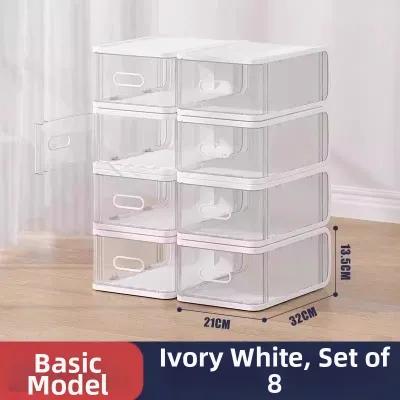
Standard-sized shoe boxes are the workhorses of home organization. They are designed to maximize vertical stacking efficiency, allowing you to build tall, neat columns in narrow entryways or bedroom closets. These boxes are ideal for low-to-medium profile footwear, such as running shoes, tennis sneakers, flats, and sandals.
When utilizing standard boxes, you can stack them higher because their uniform shape distributes weight evenly. However, they are generally unsuitable for chunky lifestyle sneakers, high-heeled pumps, or mid-top shoes. Forcing larger footwear into a standard box can distort the shape of the shoe, cause permanent creasing, or put outward pressure on the box walls, leading to stack instability.
Extended Height Boxes for Boots and High-Tops
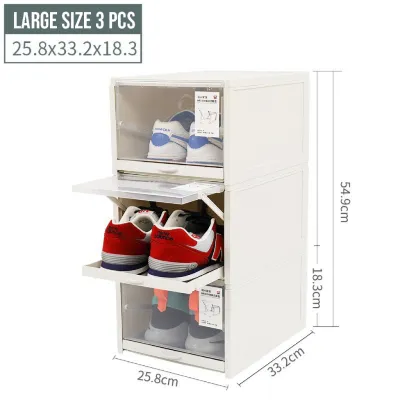
For oversized footwear, you must incorporate extended-height or “side-drop” boxes into your capacity planning. High-top sneakers, basketball shoes, ankle boots, and combat boots require containers with extra vertical clearance so they can stand upright. Side-drop boxes, which open from the longer side rather than the narrow end, are particularly useful for displaying and storing longer, taller footwear.
It is important to recognize that these larger boxes have a significantly bigger physical footprint. Because they occupy more width and depth, you will fit fewer units across a given wall or shelf. When calculating your total capacity, you must adjust your layout to account for the larger volume of these premium containers, ensuring you do not run out of floor space.
Measure Your Space and Calculate Maximum Safe Capacity
Before purchasing your shoes box storage, you must measure your designated storage area with precision. Overestimating your space can lead to blocked walkways, doors that cannot open fully, or unstable stacks that pose safety hazards.
Floor and Wall Measurement Use a metal measuring tape to record the exact width, depth, and height of your intended storage zone. Whether you are placing the boxes in a condominium foyer, an HDB entryway, or a built-in wardrobe, measure twice to ensure accuracy. Pay close attention to baseboards, light switches, electrical outlets, and wall moldings, as these architectural features can reduce the usable width by several centimeters. If you plan to place stackable boxes inside a wardrobe, measure the clear opening width of the wardrobe doors, which is often narrower than the internal cabinet width.
Clearance and Traffic Flow A functional storage setup must not obstruct the daily movement of people through your home. Ensure there is adequate walkway clearance around your shoe boxes. In Singapore’s residential layouts, entryways are often narrow corridors. You must account for the swing radius of your main entrance door, gate, and any nearby room doors. Additionally, calculate the clearance needed to open the drop-front panels of the shoe boxes. If a box door swings downward or outward, you need at least 15 to 20 centimeters of clear space in front of the stack to access your shoes comfortably. Finally, leave a small gap of 1 to 2 centimeters between the back of the boxes and the wall to promote air circulation, which is essential in humid climates to prevent mold growth on leather shoes.
Calculating Safe Stacking Limits To find the maximum number of boxes you can stack vertically, divide the total available wall height by the external height of a single shoe box. For example, if your ceiling height is 240 centimeters and each box is 20 centimeters tall, the theoretical maximum stack is 12 boxes. However, you must never stack boxes to the absolute ceiling without verifying structural stability.
Always consult the manufacturer’s instructions to find the recommended maximum stacking limit for your specific box model. Lightweight plastic boxes may only support a stack of 6 units safely, while heavy-duty, rigid polymer boxes with interlocking frames might support up to 10 or 12 units. To prevent dangerous tip-overs, especially in homes with children or pets, any freestanding stack taller than 1.5 meters should be secured to the wall using furniture straps or wall anchoring brackets.
Avoid Common Sizing and Placement Mistakes
Avoiding common pitfalls during the planning phase will save you time, money, and potential damage to your home or footwear.
Ignoring Door and Drawer Clearance One of the most frequent mistakes is placing shoe boxes too close to adjacent doors, drawers, or appliances. A stack of boxes that blocks a closet door from opening fully or prevents a kitchen drawer from sliding out creates constant daily frustration. Always map out the swing paths of all doors in the vicinity before finalizing your storage placement.
Overstacking Without Anchoring Stacking modular plastic boxes too high without proper support is a major safety hazard. As a stack grows taller, its center of gravity rises, making it highly susceptible to tipping if bumped. This risk is amplified in households with active children or climbing pets. If you must stack boxes high, always place the heaviest shoes at the bottom of the column and utilize wall anchors to secure the top units.
Blocking Shared Corridors For those living in HDB flats or apartments in Singapore, storage placement must comply with local fire safety and building management guidelines. Placing large shoe racks or tall stacks of shoe boxes in shared common corridors is strictly regulated. You must maintain a minimum clear escape passage width—typically 1.2 meters—to ensure residents can evacuate safely during an emergency. Never block access to dry risers, fire hose reels, or escape stairwells with your storage units.
Assuming All Boxes Are Interchangeable It is highly tempting to buy different brands of stackable shoe boxes over time as your collection grows or as sales occur. However, different manufacturers use proprietary interlocking tabs, grooves, and dimensions. Mixing brands in a single column prevents the boxes from locking together securely, resulting in a highly unstable, wobbling stack. To maintain structural integrity and a clean visual line, select a reputable brand and stick to their specific ecosystem for all your modular storage needs.
Frequently Asked Questions (FAQ)
Can I mix different sizes of stackable shoe boxes in one column?
Yes, you can often mix different sizes of stackable shoe boxes in a single column, provided they are from the same manufacturer and share identical base dimensions (width and depth). Many brands design their standard and extra-tall boxes to interlock seamlessly with one another. When mixing heights, always place the tallest, heaviest boxes at the bottom of the stack. This keeps the center of gravity low, ensuring the column remains stable and reducing the risk of tipping.
How do I determine the weight limit for stacked shoe storage?
To determine the safe weight limit, you must check the manufacturer’s specifications for both individual box weight limits and the maximum stack load. Individual plastic shoe boxes typically support between 2 to 5 kilograms each, but the bottom box in a stack must bear the combined weight of all units above it. Never exceed these limits or store heavy non-shoe items (like tools or books) in plastic shoe boxes, which can cause cracking or structural collapse.

Community discussion
Share your experience or ask a question. Comments are reviewed before publication.