
Selecting the right rotatable shoe rack capacity requires balancing your household’s active footwear collection with the physical constraints of your entryway or foyer. Unlike static cabinets, a rotatable shoe rack relies on a central spinning axis, meaning its actual storage efficiency depends heavily on shoe shapes, heel heights, and the physical clearance required for a full 360-degree spin. By auditing your current shoe inventory, matching your household size to the appropriate tier configuration, and verifying your floor space, you can find a storage solution that keeps your home organized without cluttering your living space.
Calculate Your Household's Actual Shoe Volume
To determine the baseline capacity you need, start by conducting a physical audit of every shoe currently stored near your entryway. Group these shoes by household member and frequency of use. Daily-wear items like school shoes, work flats, and running sneakers should be counted first, as these require the most accessible placement on the rack.
Next, separate your active footwear from specialty or seasonal items. Formal heels, dress shoes, hiking boots, and sports cleats do not necessarily need to live on a high-traffic entryway rack. Decide whether your new rotatable shoe rack will serve as the primary storage unit for all household footwear or if it will function strictly as an organizer for active, daily-wear pairs while off-season items are kept in bedroom closets.
Products mentioned in this guide
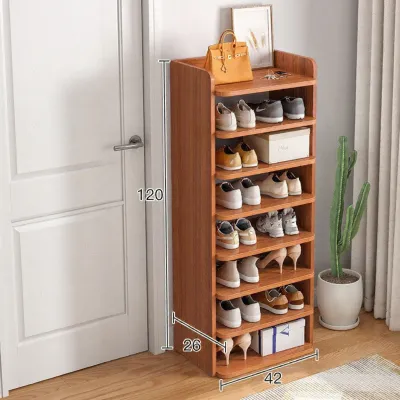
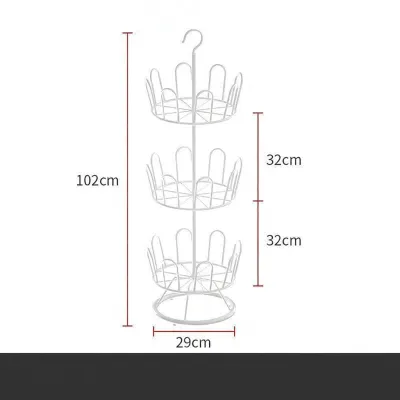
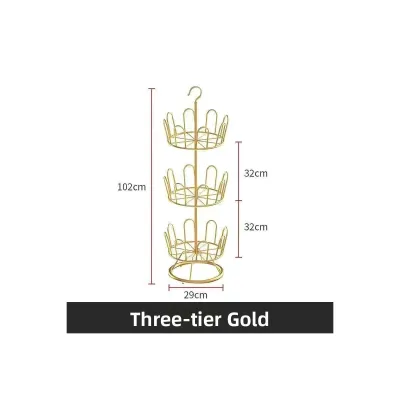
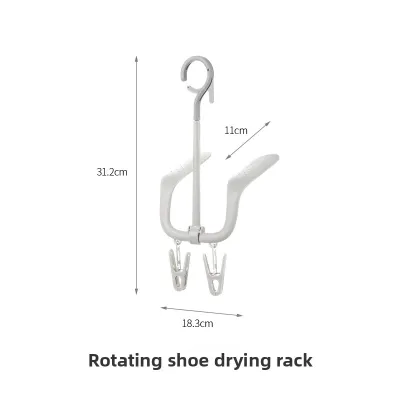
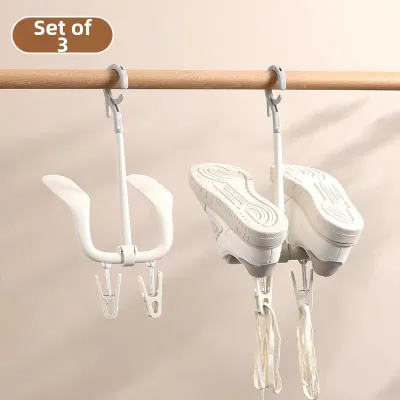
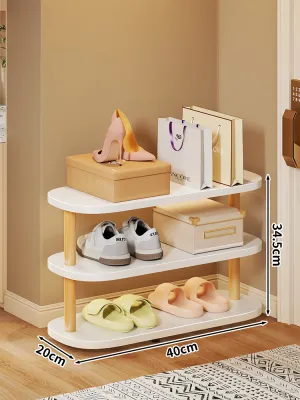
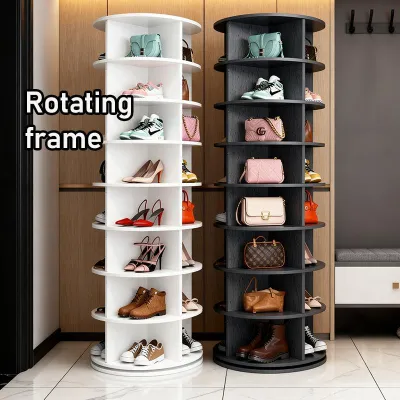
Prices are valid at publication and may change. Please refer to the product page for the latest price.
Do not forget to account for future lifestyle changes and household habits. If you frequently host guests, adding a buffer of two to four slots for visitor slippers is a practical step. Similarly, if your household includes growing children or individuals with hobbies that require specialized footwear, factoring in a 15% to 20% capacity buffer will prevent your new rack from becoming instantly overcrowded.
Match Shoe Volume to Rotating Rack Tiers and Designs
Translating your shoe count into the correct number of tiers requires looking closely at the rack’s structural design. Rotatable shoe racks are typically categorized by their height and the number of circular or octagonal tiers they feature. However, a simple tier count can be misleading because the actual capacity per level varies based on the diameter of the carousel and whether the shelves feature adjustable dividers.

For single individuals or couples with a streamlined collection of low-profile shoes, a compact three-to-five-tier rotatable rack is often sufficient. This setup typically accommodates basic flats, sandals, and low-top sneakers. For average-sized households of three to four people, a mid-sized model featuring seven to nine tiers offers a more realistic balance, allowing each family member dedicated space for multiple pairs of daily footwear. Larger households or avid collectors will generally require tall, ten-to-twelve-tier columns to keep all active shoes organized in one place.
The physical shape of your footwear plays a major role in how many pairs actually fit on each tier. Bulky items such as high-top sneakers, platform shoes, and boots occupy significantly more vertical and horizontal space than flat sandals or loafers. When shopping, check if the manufacturer provides adjustable or removable dividers. Being able to customize the height between tiers allows you to store taller boots without sacrificing entire levels of storage or forcing shoes to bend and lose their shape.
Measure Your Floor Space and Rotation Clearance
A rotatable shoe rack is highly valued for its space-saving vertical design, but it requires more physical clearance than a traditional static cabinet. Before purchasing, you must measure both the static footprint of the unit and the dynamic clearance zone required for it to spin freely. Use a measuring tape to map out the exact diameter of the rack on your floor, ensuring there is a clear buffer zone around the entire circumference.
The rotation path must remain completely unobstructed by surrounding architectural features and furniture. Check the swing paths of nearby front doors, room doors, and closet doors to ensure they will not collide with the rack when opened. Take note of baseboards, which can push the base of the rack further away from the wall, as well as low-hanging light switches, intercom panels, or decorative wall art that might interfere with a tall rotating column.
Pathway safety is a critical consideration, particularly in narrow entryways or corridors common in apartments. Measure the remaining walkway width when the rack is fully loaded. In Singapore homes, maintaining a clear, unobstructed path is essential for daily traffic and emergency egress. Ensure that family members can comfortably walk past the rack, even when someone is actively spinning it to select a pair of shoes. For taller models, also verify your ceiling height and check for any overhead obstructions like wall-mounted air conditioning units or decorative crown molding.
Verify Stability and Weight Limits for Fully Loaded Racks
Because a rotatable shoe rack concentrates its entire weight on a single central axis, structural stability is paramount. A fully loaded rack carrying dozens of pairs of shoes can become top-heavy, posing a tipping hazard if the base is too narrow or lightweight. When evaluating different models, check the manufacturer’s specifications for the maximum weight capacity per tier and for the overall unit. Look for designs that feature a heavy, reinforced base plate or a wide footprint that anchors the center of gravity close to the floor.
The durability of the rotation mechanism depends heavily on the quality of the central support pole and the shelf brackets. Taller, multi-tier models require a thick, metal central column to prevent bowing or shaking during rotation. Inspect the bracket designs to ensure they can support heavier footwear, such as leather boots or heavy-soled sneakers, without sagging over time.
Assembly conditions and floor compatibility also dictate how stable the rack will remain in daily use. If you plan to place the rack on a hard surface like tile or vinyl, check if the unit includes non-slip floor protection pads to prevent the base from shifting or scratching the floor during rotation. For carpeted areas, ensure the base is designed to sit flat without wobbling. Always follow the manufacturer’s assembly instructions carefully, ensuring all joints and bearings are securely tightened to maintain smooth, balanced rotation.
Avoid Common Sizing and Capacity Mistakes
One of the most frequent errors when choosing a rotatable shoe rack is overestimating its actual capacity by ignoring the “dead space” near the central rotating pole. Because the shelves radiate outward from a central axis, the space closest to the pole is often too narrow to accommodate the heels or toes of standard adult shoes. When calculating capacity, assume that you may need to place shoes at a slight angle, which can slightly reduce the total number of pairs that fit compared to flat, rectangular shelves.
Another common mistake is overlooking the visual bulk of a tall, fully loaded rotating column in a compact entryway. While a ten-tier rack might fit your entire shoe collection, its solid cylindrical shape can dominate a small foyer, making the entrance to your home feel cramped and dark. If space is tight, consider a shorter, wider model or a semi-enclosed design that blends more naturally with your existing decor.
Finally, do not assume that all shelves within a rotating rack are uniform. Many shoppers purchase a rack only to find that their high-top sneakers or ankle boots do not fit between the fixed tiers. Always verify the vertical clearance between individual shelves before buying, and prioritize models that offer adjustable shelf heights so you can customize the storage layout to match your household’s diverse footwear collection.

Community discussion
Share your experience or ask a question. Comments are reviewed before publication.