
Finding the perfect balance between shoe storage and entryway space is a common challenge for homeowners, especially in space-constrained urban environments like Singapore where apartments require highly efficient layouts. A pvc shoe cabinet is an excellent solution for these spaces, offering a lightweight, moisture-resistant, and easy-to-clean alternative to traditional wooden furniture. However, selecting the right capacity requires more than just counting the number of people in your household. To choose a cabinet that keeps your entryway organized and clutter-free, you must evaluate your specific footwear collection, measure your physical space with precision, and understand the structural limits of the material.
By taking a systematic approach to capacity planning, you can avoid the frustration of overflowing shelves or a bulky cabinet that blocks your front door. This guide will walk you through auditing your collection, matching cabinet configurations to household sizes, measuring your entryway, and avoiding common sizing mistakes.
Assess Your Household's Shoe Storage Needs
Before browsing online marketplaces or visiting furniture showrooms, you must conduct a thorough audit of your household’s current footwear. Lay out every pair of shoes currently in use to get an accurate visual representation of your storage requirements. It is easy to underestimate the sheer volume of footwear a family accumulates, particularly when activewear, work shoes, and casual sandals are all stored in the same entryway.
Products mentioned in this guide
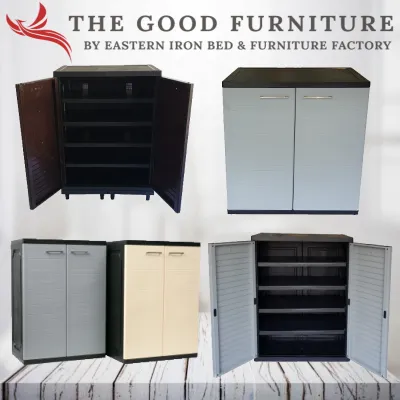

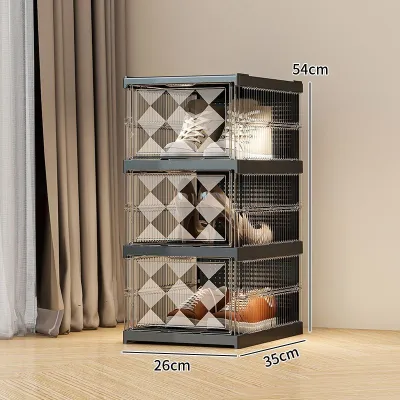
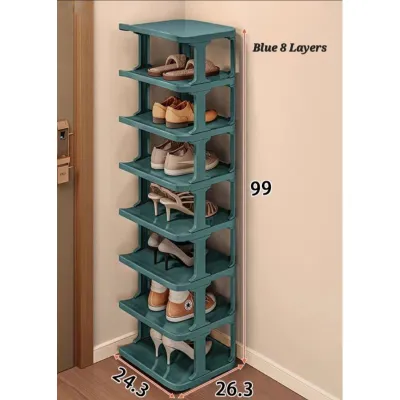
Prices are valid at publication and may change. Please refer to the product page for the latest price.
Categorizing your footwear by style and volume is a critical step because different shoe designs require vastly different amounts of physical space. For example, flat sandals, flip-flops, and canvas slip-ons can easily sit on low-clearance shelves or even be stacked slightly to save space. Conversely, bulky basketball sneakers, thick-soled running shoes, high heels, and boots require significantly more vertical clearance and wider shelf spacing. If your household has a high proportion of high-top sneakers or boots, a standard cabinet with fixed, low-profile shelves will quickly run out of usable space.
Your shoe collection is not static, so your storage solution should not be either. When calculating your required capacity, always factor in a buffer of 10% to 20% for future purchases, seasonal footwear changes, or lifestyle shifts. If you have growing children, their shoe sizes will increase rapidly, requiring larger and deeper slots over time. Failing to plan for this growth is one of the most common reasons homeowners find themselves shopping for a replacement cabinet within just a year or two of their purchase.
Finally, remember that a shoe cabinet often serves as a multi-purpose entryway organizer. You must account for non-shoe items that will inevitably share this storage space, such as guest slippers, shoe horns, umbrellas, cleaning sprays, brushes, and keys. If you plan to store these accessories inside the cabinet, allocate at least one full shelf or drawer for them, which will reduce the total number of shoe pairs the unit can hold. The actual volume and variety of your collection, rather than a simple headcount, dictate the true capacity you need.
Match PVC Shoe Cabinet Capacity to Household Size
Once you have a clear understanding of your storage needs, you can begin matching your household size to specific cabinet capacities. While individual habits vary, standard household sizes generally align with specific tier configurations and pair capacities. Choosing a cabinet that fits your household bracket ensures you do not waste valuable floor space on an oversized unit or struggle with an undersized one.

Solo or Couple (1-2 people) For single professionals or couples, a compact pvc shoe cabinet is typically sufficient. These units generally feature 2 to 4 tiers and can accommodate between 8 and 16 pairs of shoes. Compact cabinets are highly suited for narrow entryways, corridors, or small rental rooms. Because they have a small footprint, they keep the entryway looking tidy and open while providing just enough space for daily-wear shoes, with formal or seasonal footwear stored away in bedroom wardrobes.
Small Family (3-4 people) A small family requires a mid-sized cabinet with 5 to 8 tiers, offering a capacity of 20 to 30 pairs. At this stage, adjustable shelving becomes highly beneficial. Children’s shoes are much smaller and can often be double-stacked or placed on shorter shelves, while adult footwear requires full-height clearance. Having adjustable or removable shelves allows you to customize the interior layout to maximize space efficiency as your children’s shoe sizes grow.
Large Household (5+ people) Large households with five or more members need high-capacity or dual-column PVC cabinets featuring 10 or more tiers, capable of holding 40 or more pairs of shoes. For these households, modular PVC designs are particularly advantageous. Because PVC is a lightweight material, modular units can be configured with wider footprints or placed side-by-side without creating the heavy, imposing visual bulk that a massive solid wood cabinet would present. This modularity allows you to scale your storage horizontally or vertically depending on your entryway layout.
Regardless of your household size, always verify the manufacturer’s stated pair capacity with caution. Most brands calculate shoe capacity based on standard, low-profile flat shoes (such as EU size 37 or 38 flats). If your household consists of individuals with larger feet (EU size 43 and above) or those who wear chunky sneakers and boots, the actual capacity of the cabinet may be 20% to 30% lower than the advertised figure. Always cross-reference the physical dimensions of the shelves with the dimensions of your largest shoes.
Measure Your Entryway and Installation Space
No matter how perfect a cabinet’s capacity seems on paper, it must fit harmoniously into your physical entryway. Before making a purchase, grab a measuring tape and record the three critical dimensions of your designated installation footprint: width, depth, and height. Measuring only the floor area is a common mistake; you must also evaluate the surrounding vertical and horizontal clearance.
Walkway clearance is paramount, especially in compact apartments where the main door opens directly into a narrow hallway or living room. Ensure that placing the cabinet leaves a clear walkway of at least 90 to 100 centimeters to allow residents to move freely, carry groceries, or move large items in and out of the home. You must also measure the swing radius of your front door, nearby bedroom doors, and even the cabinet doors themselves. If you choose a cabinet with swing-out doors, ensure they can open fully without striking walls, light switches, or other furniture.
Architectural features can easily disrupt your placement plans if overlooked. Take note of skirting boards or baseboards along the bottom of your walls. These projections prevent the cabinet from sitting completely flush against the wall, which can steal 1 to 2 centimeters of depth or cause the unit to tilt slightly forward if it is top-heavy. Additionally, check for the location of electrical outlets, internet fiber points, light switches, and distribution boxes (DB boxes). Your cabinet must not block access to these essential utilities.
To ensure your shoes actually fit inside the closed cabinet, measure the length of the largest shoe in your household from heel to toe. Standard shoe cabinets typically feature an internal depth of 30 to 35 centimeters. If someone in your home wears a size US 11 (EU 45) or larger, their shoes may measure over 30 centimeters in length. In a shallow cabinet, these shoes will prevent the doors from closing fully unless they are placed sideways, which drastically reduces the overall pair capacity of the unit.
Finally, consider the delivery and assembly conditions of your chosen cabinet. While PVC cabinets are frequently sold as flat-packs that are highly convenient to transport through tight spaces, pre-assembled units require careful planning. You must measure the entire delivery path, including the height and width of your building’s elevator, narrow stairwells, corridor turns, and your main entrance door frame, to guarantee the cabinet can reach its final destination without damage.
Common Sizing and Capacity Mistakes to Avoid
Selecting a shoe cabinet seems straightforward, but several common pitfalls can lead to storage inefficiency or premature product failure. Being aware of these mistakes will help you make a more informed purchase.
- Ignoring shoe depth: Many buyers focus solely on the width and height of a cabinet, only to realize too late that the internal depth is too shallow for their larger shoes or chunky sneakers. Always check the internal shelf depth, not just the external product dimensions.
- Overlooking adjustable shelf needs: Purchasing a cabinet with entirely fixed shelves limits your flexibility. Without removable or adjustable dividers, you will find it impossible to store high heels, ankle boots, or high-top sneakers without bending the collars or wasting entire shelves.
- Maxing out the physical space: Avoid buying a cabinet that matches your entryway's physical dimensions down to the millimeter. Walls are rarely perfectly straight, and leaving zero margin for error can make installation incredibly difficult, block adjacent light switches, or cause the cabinet to scratch your paintwork.
- Buying for today's inventory only: Selecting a cabinet that perfectly fits your current number of shoes leaves no room for guests or new purchases. Always build in a small buffer so your entryway remains organized even when hosting visitors.
- Assuming all PVC shelves are equal: PVC is highly valued for its water resistance and lightweight properties, but its load-bearing capacity varies. Thin, unreinforced PVC panels can sag over time if overloaded with heavy leather boots, wet umbrellas, or non-shoe storage items. Always check the manufacturer's load-bearing specifications per shelf and distribute weight evenly.
Frequently Asked Questions (FAQ)
Can I add more tiers to my PVC shoe cabinet later?
Whether you can add tiers depends entirely on the design and construction of your specific PVC shoe cabinet. Many modular, interlocking, or DIY-style PVC racks are designed with stackable connectors, allowing you to purchase additional panels and expand the unit vertically or horizontally. However, you must always consult the manufacturer’s instructions before adding height. Stacking a lightweight PVC cabinet too high can raise its center of gravity, compromising its stability and increasing the risk of tipping over. If you do expand your cabinet vertically, it is highly recommended to secure the unit to the wall using appropriate anchoring brackets.
How much weight can a standard PVC shoe cabinet shelf hold?
A standard PVC shoe cabinet shelf is typically designed to support lightweight to medium-weight footwear, with an average load capacity ranging from 3 to 5 kilograms per shelf. However, this limit varies significantly depending on the density of the PVC, the thickness of the panels, and whether the shelves are reinforced with internal metal support rods. To prevent warping, sagging, or structural damage, check the manufacturer’s specific care and weight instructions. Avoid using the shelves to store heavy household items such as power tools, large books, or heavy appliances, and place your heaviest footwear on the bottom shelves to maintain a low center of gravity.

Community discussion
Share your experience or ask a question. Comments are reviewed before publication.