
Finding the perfect balance between storage capacity and floor space is a common challenge when furnishing modern Singapore homes. The MUJI stacking shelf system offers an elegant, modular solution to this problem, allowing you to customize your storage vertically and horizontally. However, because modular furniture relies on precise structural grids, choosing the wrong dimensions can lead to a unit that either overpowers your room or fails to fit your specific storage items. Selecting the right size requires a clear understanding of MUJI’s modular logic, accurate physical measurements of your room, and a realistic assessment of what you intend to store.
By taking a systematic approach to planning your configuration, you can design a shelving unit that maximizes every square centimeter of your home. Whether you are looking to build a floor-to-ceiling library in a condominium living room or add low-profile toy storage to an HDB bedroom, understanding how these components fit together is the first step toward a successful installation.
Understanding the MUJI Stacking Shelf Modular System
The foundation of the MUJI stacking shelf system is its open, modular grid. Unlike traditional pre-assembled bookcases, this system is constructed using a series of side panels and horizontal shelves that connect via internal steel rods. This design allows you to start with a basic starter unit and expand it by adding extension sets. Because the extension sets share a side panel with the existing structure, the system maintains a seamless, continuous look without doubling the thickness of the vertical supports.
Products mentioned in this guide
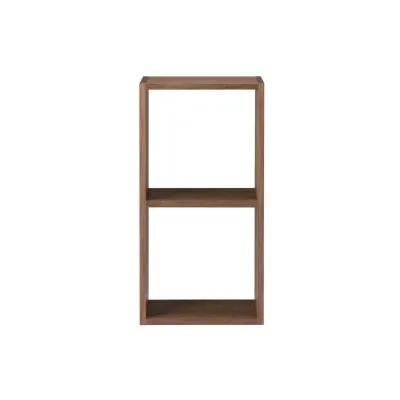
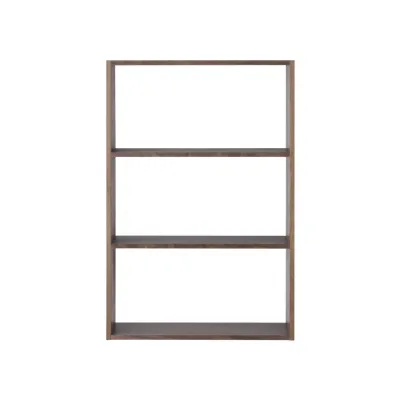
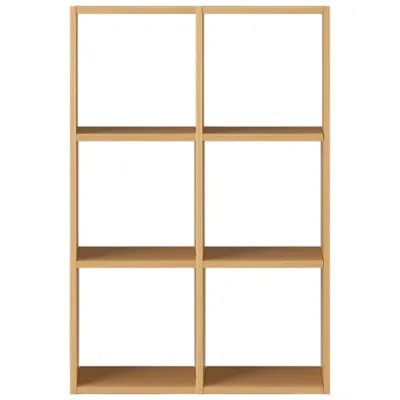
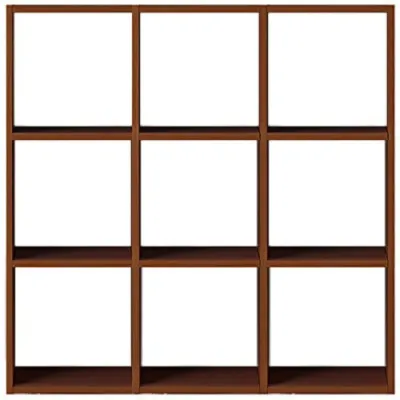
Prices are valid at publication and may change. Please refer to the product page for the latest price.
When planning your layout, you will encounter various width and height categories, generally classified into narrow, regular, and wide options, as well as small, medium, and large heights. Because modular systems require absolute precision to fit together correctly, you should always consult the official MUJI website or in-store catalog to verify the exact, up-to-date centimeter measurements of each component before purchasing. This step is particularly important because minor design updates or regional variations can affect how different parts align.
The depth of the stacking shelf is another critical dimension to consider. The standard depth is designed to accommodate a wide variety of items, from standard novels to larger folders. This depth ensures that the unit remains stable while maintaining a relatively slim profile that does not encroach too far into your living space. Before finalizing your purchase, verify that this depth matches your intended storage containers and the physical clearance of your walk paths.
To complete your configuration, you can choose from various finishing components, such as top panels, base frames, and optional casters. Adding base frames or casters will alter the final overall height of your unit and can affect its load capacity and stability. Casters offer the benefit of mobility, making it easier to clean behind the unit, but they also change how the shelf interacts with your flooring and wall-anchoring systems.
Measuring Your Space for a Perfect Fit
Before ordering any modular components, you must conduct a thorough physical survey of the room where the shelf will stand. Start by using a high-quality metal tape measure to determine the maximum width, height, and depth of the allocated footprint. Avoid relying on visual estimation or the dimensions listed on your home’s floor plan, as actual built dimensions often vary slightly from architectural drawings.

When measuring your walls, always take measurements at multiple points: along the floor, at waist height, and near the ceiling. In many Singapore apartments, walls are not perfectly plumb, and ceilings may have minor slopes. A recessed nook that measures 120 centimeters wide at the floor level might only measure 118 centimeters near the ceiling. Measuring at multiple points ensures you identify these discrepancies early, preventing a scenario where a tall shelf cannot fit into its designated space.
Accounting for Skirting Boards and Power Outlets
One of the most common installation hurdles is the presence of wall skirting boards. These boards, which typically run along the base of the wall, protrude into the room and prevent the back of the shelving unit from sitting flush against the wall surface. Measure both the height and the depth of your skirting boards so you can calculate how much of a gap will be created between the shelf and the wall.
Additionally, you must map the exact locations of all wall-mounted power outlets, light switches, and data ports. If your shelving unit blocks these utility points, you will lose access to them unless you plan your grid configuration to leave those specific sections open. If you must run cables behind the shelf, ensure there is sufficient clearance to prevent cords from being pinched or bent at hazardous angles.
This gap created by skirting boards and cables also directly impacts how you install safety hardware. Anti-tip brackets and wall-anchors must be securely fastened to prevent the unit from falling forward. If there is a gap between the shelf frame and the wall, you will need to use appropriate spacer blocks or adjustable anchoring hardware to bridge the distance without compromising the structural integrity of the anchor.
Checking Doorways, Lifts, and Hallways
Measuring the final resting place of your shelf is only half the battle; you must also ensure the components can safely reach that destination. In Singapore, navigating tight condominium corridors, HDB passenger lifts, and narrow bedroom doorways can be challenging. Before purchasing, measure the clearance width and height of every doorway, elevator entrance, and hallway corner along the delivery route.
Pay close attention to the turning radiuses in tight corridors and stairwell landings. If you are purchasing long, single-piece top panels or tall side frames, these components cannot be bent or easily maneuvered around sharp corners. Compare the length of the longest packaging box against your transit measurements to ensure the delivery team can bring the items into your home without damaging your walls or the furniture.
If your building’s lift is particularly small, you may need to order smaller, modular components that can be assembled entirely inside the room, rather than larger, pre-assembled frames. Checking these delivery pathways beforehand prevents costly return fees and delivery delays.
Matching Shelf Dimensions to Your Storage Needs
A common mistake when choosing a MUJI stacking shelf is selecting dimensions based solely on available wall space without considering what will be stored inside the grid. Because the wooden frames have a distinct thickness, the internal usable space of each compartment is smaller than the external dimensions of the unit. Always base your storage calculations on the internal compartment dimensions rather than the overall footprint.
Sizing for Books and Media
If you plan to use your stacking shelf primarily as a bookcase, you must match the grid heights to your reading collection. Standard paperbacks require relatively little vertical clearance, meaning a tall, undivided grid compartment will result in a significant amount of wasted vertical space. For a collection consisting mainly of small books, look into optional middle shelves or adjustable dividers to create multi-tiered storage within a single grid.
Conversely, large format items such as A4 textbooks, design portfolios, and art magazines require taller compartments to stand upright. Storing these items horizontally because the shelf is too short makes retrieval difficult and can damage the book spines over time. Measure your tallest books and compare them to the internal height of the grid options to ensure a comfortable fit.
Depth is also a factor when storing media. If the shelf is too shallow, large books will overhang the edge, exposing them to dust, sunlight, and accidental bumps. Choosing a shelf depth that allows your books to sit fully within the frame protects your collection and maintains a clean, uniform visual line along the front of the unit.
Sizing for General Household Items
For general household storage, the most efficient approach is to reverse-engineer your shelf dimensions based on standard storage accessories. MUJI designs its stacking shelves to integrate perfectly with its proprietary storage line, including soft polyethylene cases, rattan baskets, polyester cotton linen boxes, and acrylic drawers.
Before selecting your shelf size, decide which storage boxes you want to use. Calculate the total width of the boxes you plan to place side-by-side within a single compartment, and add a small margin of approximately 5 to 10 millimeters on each side. This extra margin ensures you can easily slide the baskets or drawers in and out without scraping the wooden veneer of the shelf frame.
For bulky items like winter blankets, sports equipment, or hanging clothes, you will need larger, open grid configurations. If you are using the shelves for desktop organization or countertop storage, smaller, low-profile frames are more appropriate as they keep daily essentials within arm’s reach without cluttering your workspace.
Space-Saving Configurations for Compact Homes
In compact apartments, smart spatial planning is essential to prevent large furniture pieces from making rooms feel dark or cramped. One effective strategy is vertical stacking. By utilizing high vertical configurations, you can take advantage of unused airspace near the ceiling, leaving more of your precious floor footprint open for movement.
Another highly effective layout strategy is using the MUJI stacking shelf as a room divider. Unlike many cheap bookcases that feature raw, unfinished back panels, the MUJI stacking shelf is fully finished on both sides. This makes it an excellent double-sided partition for open-plan living and dining areas. It defines separate functional zones while allowing natural light and air to flow through the open grid compartments, preserving a sense of spaciousness.
To maintain visual lightness in a small room, avoid filling every single grid compartment with solid boxes. Leaving several compartments completely open allows the wall behind the shelf to remain visible, which tricks the eye into perceiving the room as larger. You can also use low-profile base frames equipped with casters for lower units, making it easy to roll the shelf away when you need to clean the floor or reconfigure your living space.
Regardless of the configuration you choose, safety must remain your top priority. Any shelf configuration that is tall, top-heavy, or placed in a household with active children or pets must be securely anchored to the wall. In Singapore, most interior walls are constructed from solid concrete or brick, which require masonry drill bits and heavy-duty wall plugs for secure mounting. If you are anchoring to a drywall partition, always locate the structural studs or use specialized hollow-wall anchors to ensure the unit cannot tip over under heavy loads.
Common Sizing Mistakes to Avoid
When planning your modular shelving, it is easy to overlook minor details that can disrupt your entire installation. One frequent mistake is ignoring overhead obstructions. Air conditioning fan coil units (FCUs), ceiling fans, curtain pelmets, and false ceilings can all restrict the usable vertical space in a room. Always measure the clearance below these fixtures, and ensure that a spinning ceiling fan will not come into contact with the top of a tall shelf.
Another common error is measuring only the flat floor space without accounting for the extra depth added by base frames, leveling feet, or casters. These small hardware additions can extend the outer boundaries of the unit just enough to block a doorway or prevent a nearby drawer from opening fully. Always calculate your space requirements using the absolute maximum outer dimensions of the fully assembled unit.
Additionally, do not assume that all MUJI modular lines can be freely mixed and matched. The brand offers several distinct shelving systems, such as the Stacking Shelf and the Unit Shelf (which features steel or pine frames). These systems use different dimensional grids and connection hardware, meaning accessories designed for one system may not fit another. Double-check that all add-on parts, drawers, and extension frames belong to the exact same product line.
Finally, avoid relying on visual estimation or memory when shopping. Before making a purchase, use a physical tape measure and blue painter’s tape to mock up the exact footprint of the shelf on your floor and wall. This physical outline allows you to walk around the space, test door clearances, and visualize the scale of the furniture in your actual room before committing to a specific size.
Frequently Asked Questions (FAQ)
Can I add more units to my MUJI stacking shelf later?
Yes, the system is designed to grow with your changing storage needs. You can expand your configuration vertically or horizontally by purchasing compatible extension sets. When expanding, ensure you purchase components from the same depth series to maintain structural alignment. It is also highly recommended to keep the original assembly tools and any spare connecting hardware provided with your starter unit, as these will be necessary when securing new extensions.
Do MUJI stacking shelves need to be anchored to the wall?
Any configuration that is tall (typically three grids or higher), top-heavy, or placed in high-traffic areas must be securely anchored to the wall to prevent tipping hazards. This safety precaution is especially critical in homes with young children or pets. Always consult the manufacturer’s safety guidelines for specific height limits, and use high-quality wall anchors appropriate for your specific wall material, such as concrete plugs for masonry walls or toggle bolts for drywall partitions.

Community discussion
Share your experience or ask a question. Comments are reviewed before publication.