
Maximizing storage space in Singapore’s Housing & Development Board (HDB) flats requires a strategic approach to furniture selection. With typical common bedrooms measuring around 10 to 12 square metres and master bedrooms averaging 14 to 16 square metres, traditional bulky wooden wardrobes can easily overwhelm the floor plan. Metal rack wardrobes have emerged as a popular, highly customizable alternative, offering a lighter visual footprint and modular flexibility.
However, finding the right metal rack wardrobe is not simply a matter of picking a popular brand or design. The success of this storage solution depends entirely on matching the unit’s exact dimensions, configuration, and structural stability to your specific room layout. A poorly planned rack can restrict movement, block natural light, or even present safety hazards if overloaded.
This guide provides a comprehensive framework for assessing your HDB bedroom space, selecting the optimal wardrobe dimensions, and evaluating retail options. By focusing on practical measurements, material specifications, and safety considerations, you can establish a highly functional open or semi-open closet system that complements your home.
Products mentioned in this guide

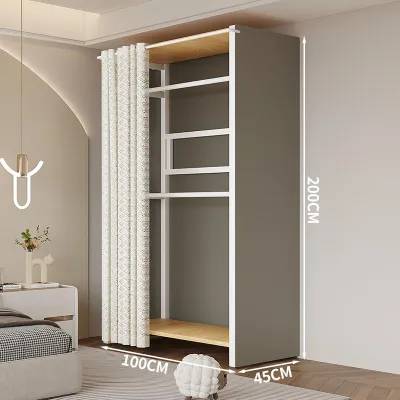
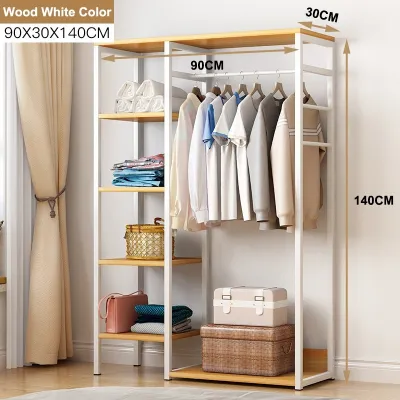
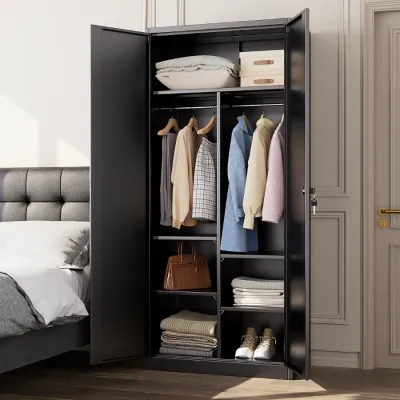
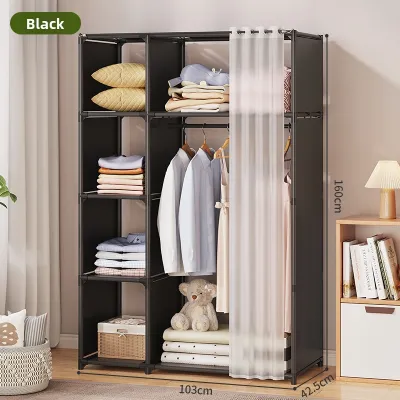
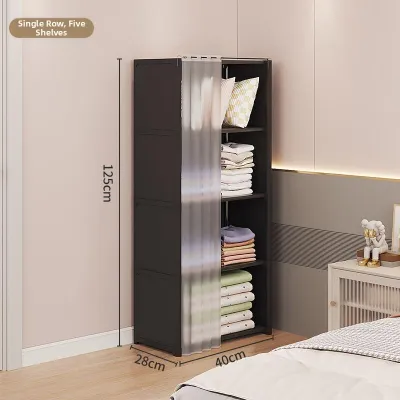
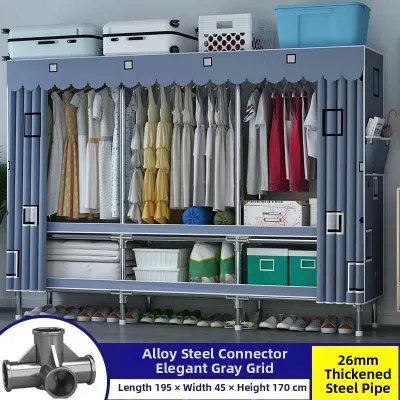
Prices are valid at publication and may change. Please refer to the product page for the latest price.
Measuring Your HDB Bedroom for a Metal Rack Wardrobe
Before browsing online marketplaces or visiting local furniture showrooms, you must establish the precise physical boundaries of your bedroom. Start by measuring the exact floor footprint where you intend to place the metal rack. Use a steel measuring tape rather than a digital app to ensure accuracy down to the millimetre, as even a slight deviation can prevent a modular frame from fitting into a designated alcove.
Ceiling height is another critical dimension, especially if you are considering floor-to-ceiling tension rod systems or tall freestanding racks. Standard HDB ceiling heights typically range from 2.6 to 2.8 metres, but this can vary in top-floor units or older estates. Be sure to measure from the actual floor surface to the lowest point of the ceiling, accounting for any plasterboard false ceilings or decorative cornices.
Do not overlook structural protrusions that are common in HDB flats. Skirting boards along the base of the wall will prevent the wardrobe frame from sitting completely flush against the wall, effectively stealing one to two centimetres of depth. Additionally, take note of air-conditioning trunking, electrical conduits, and light switches. If an air-con pipe runs along the upper portion of your wall, you must select a wardrobe height that leaves sufficient clearance for future servicing and prevents moisture from dripping onto your clothes.
Beyond the physical footprint of the rack itself, you must plan for functional clearances. Ensure there is at least 60 to 70 centimetres of open walking space in front of the wardrobe to allow you to stand, browse, and reach for items comfortably. If your metal rack features pull-out drawers or wire baskets, measure their fully extended depth to ensure they do not collide with your bed frame, bedside tables, or bedroom doors.
The layout strategy differs significantly between a common room and a master bedroom. In a 10 to 12 square metre common room, a single-wall layout is usually the most efficient, placing the rack parallel to the bed to preserve a central walkway. In a larger master bedroom of 14 to 16 square metres, you might have the luxury of utilizing an L-shaped corner configuration or creating a dedicated walk-in wardrobe zone behind a partition wall.
Choosing the Right Dimensions and Configurations
Selecting the correct depth for your metal rack wardrobe is a balancing act between storage capacity and room flow. Standard wardrobe depths typically range from 40 to 60 centimetres. A 45-centimetre depth is highly space-efficient for narrow HDB walkways, but it requires you to hang clothes at an angle or use transverse (front-to-back) hanging rods. If you prefer standard parallel hanging, a depth of at least 55 to 60 centimetres is necessary to prevent coat hangers and sleeves from protruding into the room.

The choice between modular shelving systems and fixed-frame designs depends on your long-term living plans. Modular systems allow you to adjust the height of shelves, add hanging rods, or integrate drawers as your storage needs change over time. This adaptability is particularly useful for growing families or renters who may need to reconfigure the wardrobe for a future home. Fixed-frame designs, while less adaptable, often offer straightforward assembly and a highly stable, uniform structure.
To ensure your wardrobe remains safe and functional, you must check the manufacturer’s weight capacity labels for every shelf and hanging rod. Do not assume all metal racks are built to support heavy winter coats, denim, or stacked storage boxes. High-quality systems will specify a maximum load capacity per shelf (often ranging from 20 to 50 kilograms) and per hanging rod.
When planning the internal configuration, aim for a balanced distribution of hanging space, shelving, and drawers. Allocate long hanging sections (approximately 120 to 150 centimetres in height) for dresses and long coats, and double-hanging sections (about 90 to 100 centimetres each) for shirts, trousers, and skirts. Use adjustable wire or metal shelves for folded items, and reserve the very top shelves for lightweight, infrequently used items like seasonal bedding or travel bags.
How to Evaluate Metal Wardrobe Brands and Retailers
When shopping for a metal rack wardrobe in Singapore, you will encounter a wide variety of brands and retailers, ranging from global flat-pack furniture giants to local industrial shelving specialists. Because you cannot always test the physical stability of a rack online, you must scrutinize the product specifications carefully. Look for detailed information regarding material thickness; steel tubes with a wall thickness of 1.2 millimetres or greater generally offer significantly better resistance to bending than cheaper, thinner alternatives.
The type of protective finish applied to the metal is crucial for long-term durability. Look for specifications that explicitly mention powder coating, galvanized steel, or specialized anti-rust treatments. A high-quality powder-coated finish not only protects the underlying steel from moisture but also resists scratching and chipping from metal coat hangers. Avoid untreated or poorly painted steel, which can quickly degrade in humid environments.
Examine the joint construction and connection mechanisms described in the product manual or listing. Wardrobes that utilize heavy-duty plastic connectors, threaded metal screws, or locking taper sleeves are generally more stable than those relying on simple friction fits. If the retailer does not provide clear diagrams or descriptions of these joints, treat it as a warning sign regarding the structural integrity of the product.
Before finalizing your purchase, review the retailer’s customer service and after-sales policies. Check the terms regarding missing or damaged parts, as flat-pack metal components can occasionally get scratched or dented during transit. A reliable retailer should offer a clear return window and a warranty period that covers structural defects.
Finally, leverage verified buyer reviews on ecommerce platforms and home renovation forums. Filter reviews to look for feedback from users who have owned the wardrobe for six months or longer. Pay close attention to comments mentioning assembly difficulty, missing hardware, structural wobbling under load, or early signs of rust. These real-world observations are often more revealing than the manufacturer’s marketing descriptions.
Assembly, Stability, and Safety Considerations
Proper assembly is fundamental to the safety and longevity of any metal rack wardrobe. When your delivery arrives, verify that all components, screws, and connectors match the parts list before beginning construction. Assemble the unit on a flat, clean surface—such as a cardboard sheet or a rug—to prevent scratching the protective finish of the metal poles.
Follow the manufacturer’s instructions step-by-step, ensuring that every joint is fully tightened and locked into place. If your HDB bedroom floor is slightly uneven, which is common near balcony doors or older tiled areas, utilize the adjustable leveling feet provided with the rack. A wardrobe that is even slightly tilted will experience uneven weight distribution, putting undue stress on the joints and increasing the risk of structural failure.
For freestanding metal racks, especially those taller than 1.8 metres, wall anchoring is highly recommended. Many manufacturers include wall-anchoring kits consisting of straps, brackets, or screws. Securing the rack to your concrete or brick HDB wall is essential if you have young children or pets who might attempt to climb the shelves, or if you live in a household where heavy items are stored on upper shelves. If you are renting and cannot drill into the walls, opt for a wider, lower-profile rack with a deeper base footprint to maximize natural stability.
Distribute the weight of your belongings logically to maintain a low center of gravity. Place heavy items, such as storage boxes, luggage, and thick winter wear, on the lowest shelves. Lighter items, such as t-shirts, accessories, and hats, should occupy the upper sections.
Regularly inspect your metal wardrobe during daily use for warning signs of structural distress. Check for any visible bowing in the horizontal shelves or hanging rods, which indicates that the weight limit has been exceeded. If you notice the frame swaying when you slide hangers across the rod, or if the vertical poles begin to lean, immediately remove some weight and retighten all connection joints.
Frequently Asked Questions (FAQ)
Do metal rack wardrobes rust in Singapore's humid climate?
Singapore’s high relative humidity can cause untreated metal to oxidize over time, but high-quality metal rack wardrobes are designed to resist this. When shopping, verify that the product specifications list a protective finish such as powder coating, chrome plating, or galvanized steel. These coatings act as a barrier, preventing moisture and oxygen from reaching the underlying steel.
To maintain the finish, establish a simple cleaning routine. Dust the metal frame regularly with a dry microfiber cloth, as accumulated dust can trap moisture against the surface. Avoid using harsh chemical cleaners, abrasive scrubbing pads, or excessively wet cloths, which can scratch or wear down the protective coating. If you spill liquid on the frame, wipe it dry immediately.
Can I use a metal rack wardrobe as a room divider in an HDB flat?
Yes, an open metal rack wardrobe can serve as an effective room divider to zone a multi-functional space, such as separating a sleeping area from a study nook in a master bedroom. However, because the rack will not be positioned flush against a wall, stability is a primary concern. You must ensure the unit has a wide base footprint or is secured using dual-sided anchoring systems, such as tension poles that lock securely between the floor and the ceiling.
Additionally, consider the visual impact of using open storage as a divider. Exposed clothing and accessories can quickly look cluttered when viewed from both sides of the room. To maintain a clean, organized aesthetic, integrate uniform storage boxes, fabric bins, or woven baskets onto the shelves to conceal smaller items and create a cohesive visual barrier.

Community discussion
Share your experience or ask a question. Comments are reviewed before publication.