
To choose the right Meng Liang bookcase size for your home, you must balance your available wall footprint and vertical clearance with your actual storage volume and weight requirements, while ensuring the delivery path can accommodate the packaged or pre-assembled dimensions. In compact living environments, selecting furniture requires a systematic approach that looks beyond aesthetics to evaluate physical space, structural safety, and long-term utility.
Quick Guide to Sizing Your Meng Liang Bookcase
Finding the perfect bookcase size involves a simple four-step process. First, measure your intended wall space, paying close attention to hidden obstacles like skirting boards and electrical outlets. Second, measure your doorways and lift access to ensure the unit can actually enter your home. Third, audit your book collection to estimate the total shelf depth and height you require. Finally, select a configuration—whether tall and vertical or wide and horizontal—that matches your room layout while prioritizing safety features like wall anchoring.
Measure Your Wall and Delivery Path Accurately
Before browsing any furniture catalog, you must obtain precise measurements of the area where the bookcase will stand. Use a metal measuring tape to measure the width, height, and depth of the wall space at three different points—floor level, mid-wall, and ceiling level—as walls are rarely perfectly square. A variance of even a single centimeter can prevent a tight-fitting bookcase from sliding into its designated spot.
Products mentioned in this guide
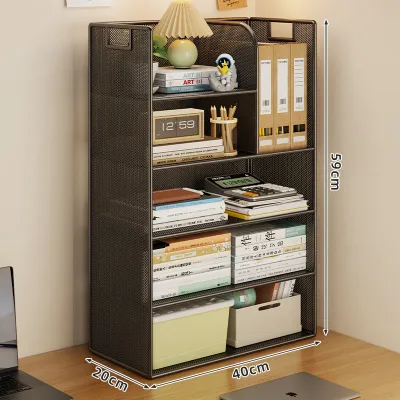
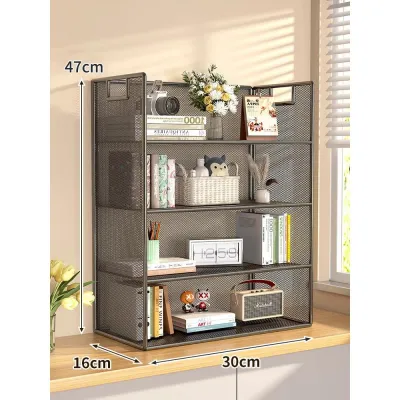
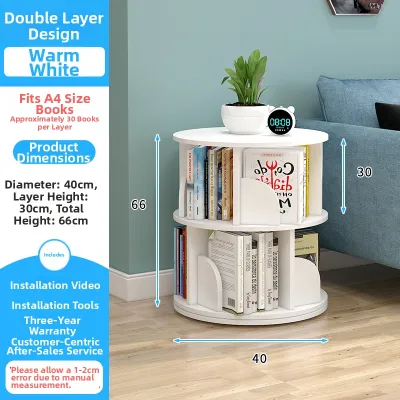
Prices are valid at publication and may change. Please refer to the product page for the latest price.

Do not overlook physical obstacles. Skirting boards run along the bottom of the wall and will prevent the bookcase from sitting completely flush against the plaster, so you must account for this 1 to 2-centimeter gap. Additionally, identify the locations of power outlets, light switches, and air conditioning trunking. Blocking these can cause long-term inconvenience, and overhead trunking can significantly reduce your usable vertical clearance.
Measuring the delivery path is just as critical as measuring the final room. Many homeowners select a bookcase that fits their wall perfectly, only to discover that the packaged box or pre-assembled frame cannot fit inside the residential lift or navigate a tight corridor corner. Measure the height, width, and diagonal clearance of your building’s elevator doors, your main entrance door, and any hallway turns.
Finally, consider the visual breathing room of the space. A massive bookcase that spans from wall to wall can make a small room feel cramped and dark. To maintain an airy environment, aim to leave at least 15 centimeters of open space on either side of the bookcase.
Estimate Storage Capacity for Your Books and Decor
An accurate assessment of what you intend to store will dictate the physical dimensions of the shelves you need. Begin by categorizing your collection by size. Standard paperbacks require a shelf depth of only 15 to 20 centimeters and a vertical clearance of 20 to 25 centimeters. Hardcover novels and standard binders generally need a depth of 25 centimeters and a height of 30 centimeters, while oversized art books demand a depth of at least 30 centimeters.
Once you have categorized your items, estimate the total linear shelf space you require by measuring your current book stacks. It is always wise to plan for future acquisitions by allocating an extra 20% of shelf space. This ensures that your new purchases will have a home without forcing you to upgrade your furniture prematurely.
The choice between fixed and adjustable shelves is another critical factor. Fixed shelves provide excellent structural rigidity because they are securely fastened to the outer frame. However, if your collection includes a mix of small paperbacks and tall binders, look for a Meng Liang bookcase model that features adjustable shelves. These units use pre-drilled peg holes, allowing you to customize the height of each individual compartment.
Weight capacity is a vital safety and durability consideration. Books are incredibly heavy when packed together; a single shelf filled with dense textbooks can easily weigh over 20 kilograms. Before purchasing, check the manufacturer’s specifications for the maximum load capacity per shelf. Always place your heaviest items on the bottom shelves to keep the unit’s center of gravity as low as possible.
Match Configurations to Your Room Layout
The layout of your room will largely determine whether a vertical or horizontal bookcase configuration is the most appropriate choice. Tall vertical bookcases are highly efficient because they utilize vertical wall space, making them ideal for narrow rooms or small bedrooms where floor space is limited. They draw the eye upward, which can make a room with standard ceilings feel taller.
Conversely, wide horizontal bookcases are excellent for spaces with low vertical clearance or underutilized areas. Placing a low, wide bookcase beneath a window, under a wall-mounted television, or along the back of a sofa keeps the sightlines of the room open. Horizontal units also offer a spacious top surface that can be used to display decorative items, serving a dual purpose as both storage and a console table.
If you anticipate that your library will continue to grow, modular bookcase systems offer an adaptable solution. These systems allow you to start with a single basic unit and expand your storage over time by adding matching units side-by-side or stacking compatible components vertically. This flexibility is particularly useful for renters who may need to reconfigure their furniture to fit different room layouts in a future home.
You must also decide between open-back and closed-back designs. Open-back bookcases do not have a solid rear panel, allowing the wall color to show through. This design has a lighter visual weight, making it an excellent choice for small spaces. However, closed-back bookcases offer superior structural stability and prevent books and small decorative items from slipping off the back of the shelves.
Verify Clearance, Safety, and Installation Requirements
Proper installation and safety checks are essential to ensure your bookcase remains stable and secure throughout its lifespan. First, consider the environmental conditions of the room. In humid climates, pushing a wooden bookcase flush against an exterior wall can trap moisture, leading to mold growth. To promote healthy air circulation, always leave a gap of at least 2 centimeters between the back of the bookcase and the wall.
Wall anchoring is a non-negotiable safety requirement for any tall storage unit. Bookcases that are top-heavy can easily tip over if they are bumped, overloaded, or climbed on by children or pets. Most manufacturers supply wall-anchoring hardware with their units. Before installation, identify your wall type—such as concrete, drywall, or brick—to ensure you use the correct wall plugs and screws.
Finally, always consult the product manual for specific assembly instructions and hardware requirements. Before loading any books onto the shelves, use a spirit level to check that the unit is perfectly level. If your floor is slightly uneven, use adjustable leveling feet or sturdy shims beneath the base of the bookcase to correct the tilt and prevent unnecessary stress on the joints.
Avoid Common Bookcase Sizing Mistakes
One of the most frequent mistakes shoppers make is ignoring the depth of the shelves. If you choose a bookcase that is too shallow, your larger books and binders will overhang the edges, which looks disorganized and can obstruct narrow walkways. Always measure your largest items before finalizing your purchase to ensure they will fit completely within the shelf depth.
Another common error is failing to measure the entire delivery path. It is incredibly frustrating to purchase a beautiful bookcase only to find that the delivery team cannot maneuver it through your front door or up the stairwell. Taking a few minutes to measure your doorways, corridors, and lift dimensions beforehand can save you from costly return fees.
Lastly, many people overload their shelves without checking the manufacturer’s weight limits. Overloading causes the shelves to sag, which permanently damages the wood and compromises the structural integrity of the entire unit. Always adhere to the recommended weight capacities and distribute your items evenly.
Frequently Asked Questions (FAQ)
Can I place a Meng Liang bookcase in front of a window?
Placing a bookcase directly in front of a window is generally not recommended due to environmental risks. Direct sunlight can cause the wood finish to fade and dry out over time, while also causing the covers and pages of your books to yellow and deteriorate. Furthermore, blocking a window restricts natural light and ventilation, and any condensation or rain seepage from the window frame can introduce moisture, leading to wood warping and mold growth.
How do I know if a tall bookcase needs to be anchored to the wall?
As a general safety rule, any bookcase that stands taller than 120 centimeters, or any unit that feels unstable when loaded, must be anchored to the wall. This is especially critical if the bookcase is placed on carpeted or uneven floors, or if you have children or pets in the home. Always refer to the manufacturer’s assembly instructions for specific anchoring guidelines, and ensure you use the appropriate hardware designed for your specific wall material.

Community discussion
Share your experience or ask a question. Comments are reviewed before publication.