
Finding the right mattress firmness is the foundation of restorative sleep, directly influencing how your muscles relax and how your spine aligns overnight. The ideal firmness is not a universal standard; rather, it is a personal calculation determined by your primary sleeping position and your body weight. By understanding how these two factors interact with different mattress materials, you can move past subjective marketing terms and select a sleep surface that prevents morning aches and supports your body naturally.
Decoding Mattress Firmness Scales and Support
To navigate the mattress market, it is helpful to understand the standard 1-to-10 firmness scale used by most manufacturers. On this scale, a rating of 1 represents an incredibly soft surface with almost no resistance, while a 10 represents a surface as rigid as a carpeted floor. In practice, the vast majority of consumer mattresses fall between a 3 (soft) and an 8 (firm). A medium-firm mattress, which typically rates around a 6 or 7, is often considered the baseline for general comfort and is a common starting point for many households.
However, a critical distinction must be made between “support” and “comfort” or “feel.” Support refers to the mattress’s ability to keep your spine in a neutral alignment, preventing your heavier midsection from sinking too deep. Comfort, on the other hand, refers to the top layers of the mattress—often made of memory foam, latex, or fiber quilting—which relieve pressure points at the shoulders, hips, and knees. A mattress can feel incredibly soft on the surface while still providing excellent deep structural support, just as a hard mattress can fail to support your spine if it does not contour to your body’s natural curves.
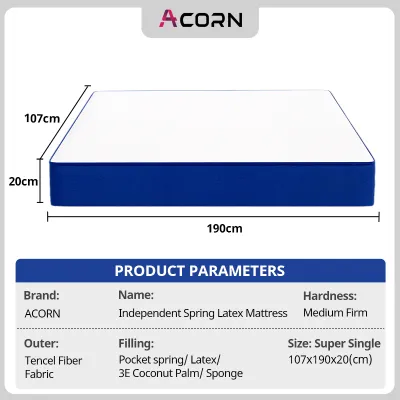
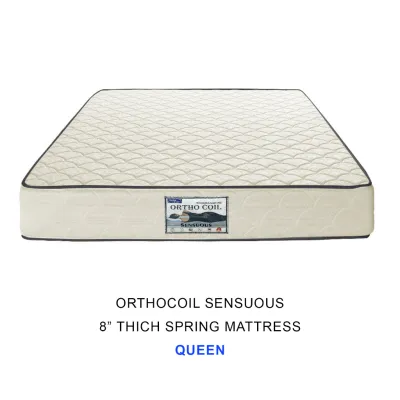
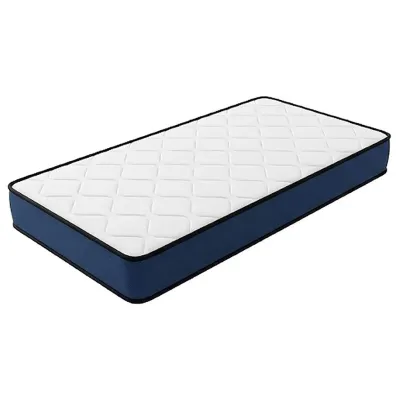
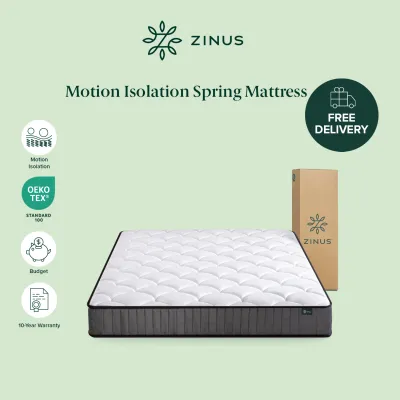
Products mentioned in this guide
![[SG] NEXT DAY DELIVERY + FREE PILLOWS. Pocket Spring FIRM Mattress Luxury Memory Foam Single Super Single Queen King High Quality. Euro Design and High Quality. Comes in King Size Queen Super Single and Single Size Mattress. Free & Fast Delivery](https://img.lazcdn.com/g/p/7a1606edfe626e0213b6a523e1ea3b1b.jpg_400x400q80.jpg_.webp)
![[Bulky] DREAMAX Equinox Rest 8 Inch Comfort Pocket Spring Mattress / 20cm / Bed (SG) / sd](https://img.lazcdn.com/g/p/c25e074503162de8fade85f5c4b33c8d.jpg_400x400q80.jpg_.webp)
![[1-2 day delivery] Foldable Foam Mattress 3-Fold Mattress](https://img.lazcdn.com/g/ff/kf/Se38f308a460b4ba3aef73a3da6703c621.jpg_400x400q80.jpg_.webp)

Prices are valid at publication and may change. Please refer to the product page for the latest price.
Because firmness ratings are subjective and vary between brands, a “medium” mattress from one manufacturer might feel like a “firm” from another. This variation makes it essential to look closely at the specific material layers, such as the thickness of the comfort foam and the gauge of the support coils, or to perform physical testing before making a final decision.
Evaluating Firmness Needs by Sleeping Position
Your sleeping position determines where your body concentrates pressure on the mattress surface, which directly dictates your firmness requirements.

Side sleepers require a mattress that offers significant pressure relief. When you lie on your side, your shoulders and hips bear the brunt of your body weight. If the mattress is too firm, these areas will experience high pressure, leading to restricted circulation, tossing and turning, and joint stiffness. Consequently, side sleepers typically benefit from a medium-soft to medium mattress (around a 4 to 6 on the scale) that allows the shoulders and hips to sink in just enough to keep the spine straight.
Back sleepers need a balanced surface that contours to the lower back while keeping the hips from sinking too deeply. If a mattress is too soft, the pelvis sinks, flattening the natural lumbar curve and straining the lower back muscles. If it is too firm, the mattress will not fill the gap under the lower back, leaving the lumbar spine unsupported. Back sleepers generally find their ideal match in a medium to medium-firm mattress (a 5 to 7 on the scale) that offers a blend of surface contouring and robust underlying support.
Stomach sleepers require a firmer surface than other sleeping styles. Lying on the stomach naturally coaxes the lumbar spine into an arch. If the mattress is soft, the pelvis sinks deep into the comfort layers, exaggerating this arch and putting severe pressure on the lower back ligaments and muscles. To prevent this “hammocking” effect, stomach sleepers usually need a firm mattress (a 7 to 8 on the scale) with a highly supportive core that keeps the hips and shoulders on a level plane.
Combination sleepers, who shift positions throughout the night, need a responsive surface that facilitates easy movement. If a mattress is too soft or slow-moving, changing positions requires extra physical effort, which can disrupt sleep cycles. A medium-firm mattress (a 6 on the scale) with responsive materials, such as latex or pocketed coils, allows combination sleepers to move freely while providing a versatile balance of pressure relief and support for any posture they adopt.
Adjusting Your Choice Based on Body Weight
While your sleeping position provides a baseline, your body weight is the force that actually compresses the mattress layers, altering how firm or soft the bed feels in practice.
Lighter individuals (typically under 60 kg) exert less force on the mattress surface. Because they do not compress the comfort layers deeply, a mattress rated as “medium” may feel quite firm to them. Lighter sleepers often need to choose a mattress that is slightly softer than what is generally recommended for their sleeping position. For example, a lighter side sleeper may need a soft mattress (a 3 or 4 on the scale) to experience adequate contouring and pressure relief at the shoulders and hips.
Average-weight individuals (between 60 kg and 90 kg) generally experience mattresses closest to their advertised firmness ratings. A mattress marketed as medium-firm will typically feel medium-firm to someone in this weight range. For these sleepers, the standard recommendations based on sleeping position serve as an accurate guide without major adjustments.
Heavier individuals (over 90 kg) exert greater force on the mattress, compressing both the comfort layers and the support core more intensely. This deep compression can cause them to sink through the soft comfort layers and bottom out against the firmer support core, leading to pressure points and spinal misalignment. To counteract this, heavier sleepers generally require a firmer mattress with a more robust support system, such as thick pocketed coils or high-density foam bases. A heavier side sleeper, for instance, might need a true medium-firm mattress with a thick comfort layer to prevent sinking too deep while still receiving adequate pressure relief.
Practical Steps to Test and Verify Spinal Alignment
Selecting a mattress requires active verification to ensure the surface delivers on its promise of spinal alignment. When shopping in a showroom, avoid the common mistake of simply sitting on the edge of the bed or lying down for a few seconds. Instead, spend at least ten to fifteen minutes resting in your primary sleeping position. Wear comfortable clothing and try to replicate your actual sleeping posture as closely as possible.
To verify spinal alignment, bring a partner or friend to observe your posture while you lie on the mattress. If you are a side sleeper, your spine—from the base of your neck down to your tailbone—should form a straight, horizontal line parallel to the floor. If your hips or shoulders are resting too high, the mattress is too firm; if they sink too low, creating a downward curve, the mattress is too soft. For back sleepers, there should be no large gap between your lower back and the mattress surface, and your partner should not be able to easily slide their hand under your lumbar spine.
Because a brief in-store test cannot fully replicate the experience of sleeping on a mattress night after night, it is highly beneficial to look for brands that offer extended home sleep trials. A proper adjustment period typically takes several weeks, as your muscles and joints adapt to a new support structure. Ensure you understand the return and exchange policies, including any potential collection fees or packaging requirements, before finalizing your purchase.
Signs Your Current Mattress Firmness Is Wrong for You
Your body will often communicate when a mattress is no longer providing the correct level of firmness and support. Waking up with persistent morning stiffness, shoulder pain, or lower back aches is a primary indicator. If you experience sharp pain in your shoulders or hips, your mattress is likely too firm, causing pressure points that restrict blood flow. Conversely, if you wake up with a dull, aching lower back that gradually fades after you stand up and stretch, your mattress is likely too soft, allowing your pelvis to sink and straining your lumbar muscles.
Physical changes over time can also alter your firmness requirements. Significant weight fluctuations, pregnancy, injuries, or the natural aging process can change how your body interacts with a mattress. A surface that felt comfortable five years ago may no longer provide the support your body needs today.
It is also important to distinguish between an initially incorrect firmness choice and a mattress that has simply reached the end of its lifespan. If your mattress has visible sagging, deep body impressions that do not recover, or if you can feel the internal springs, the structural support core has degraded. In these cases, the mattress cannot be saved by adjusting the surface feel, and a complete replacement is necessary to restore proper spinal alignment.
Frequently Asked Questions (FAQ)
Can I change the firmness of my existing mattress?
Yes, you can alter the surface feel of an existing mattress to a certain extent by adding a mattress topper. A plush topper made of memory foam, latex, or down alternative can soften a mattress that feels too hard, providing immediate pressure relief for your shoulders and hips. Conversely, a firm latex or high-density foam topper can add a layer of surface tension to a bed that feels slightly too soft. However, a topper only modifies surface comfort; it cannot fix a mattress with a degraded support core or deep structural sagging. If the underlying mattress is dipping or sagging, a topper will simply follow those contours and fail to provide proper support.
Is a firmer mattress always better for back pain?
No, a firmer mattress is not universally better for back pain. This common misconception often leads individuals to purchase extremely hard surfaces that actually worsen their discomfort. An excessively firm mattress does not contour to the natural curves of the spine, leaving the lower back unsupported and placing intense pressure on the shoulders and hips. For many individuals, a medium-firm mattress offers the optimal balance, providing enough surface contouring to cushion pressure points while maintaining a strong support core to keep the spine aligned. Because back pain can stem from various underlying issues, individuals experiencing chronic pain should consult a medical professional for personalized guidance.

Community discussion
Share your experience or ask a question. Comments are reviewed before publication.