
Choosing the right mattress firmness for floor sleeping requires adjusting your usual preferences because a solid floor offers zero give. Without the flexible support of bed slats or a box spring, any mattress will feel significantly firmer than it would on a frame. To find the ideal balance, you must match your sleeping position and body weight to a firmness level that prevents bottoming out while still cushioning your pressure points on an unyielding surface.
Why Floor Sleeping Changes Mattress Support Requirements
When you place a mattress directly on the floor, you remove the flexible foundation that bed frames naturally provide. Traditional slatted bases and box springs flex under weight, absorbing a portion of the downward pressure. Without this suspension, the solid floor acts as an unyielding barrier, forcing the mattress to absorb all of your body weight.
Consequently, a mattress that feels medium-plush on a frame will feel noticeably firmer on a hard floor. The comfort layers compress faster because there is no downward give beneath the mattress core. This shift means you cannot rely solely on standard showroom impressions; you must compensate for the extra firmness the floor introduces.
Products mentioned in this guide
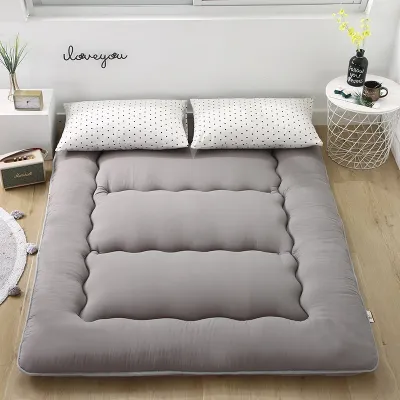



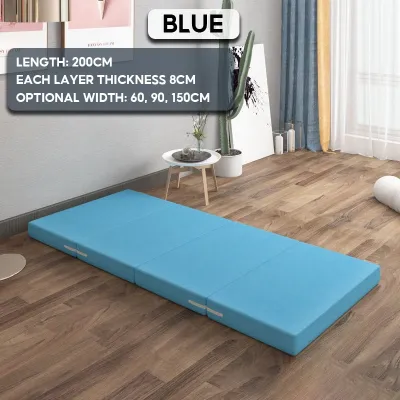
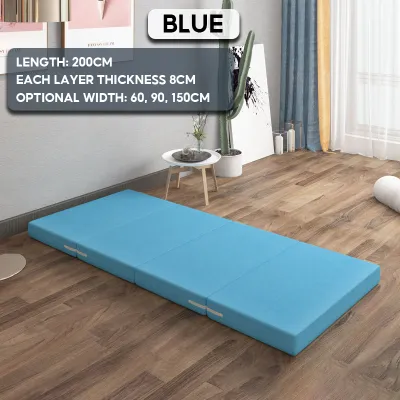

![[Inence] Customized Mattress Student Dormitory Children Floor Bunk 50607075808590110 * 170 * 180 * 19014 xfFi](https://img.lazcdn.com/g/p/7f435230273226f2a24b2b802e984a34.jpg_webp_400x400q80.jpg_.webp)
Prices are valid at publication and may change. Please refer to the product page for the latest price.
Before committing to this setup, review the manufacturer’s warranty and care guidelines. Many brands explicitly state that placing the mattress directly on the floor voids the warranty. This policy is often due to the increased risk of moisture accumulation and mold growth, as well as accelerated wear on the bottom cover.
Matching Firmness to Your Sleeping Position on the Floor
Your primary sleeping posture dictates how your body distributes weight, which becomes even more critical when sleeping close to a hard floor. Side sleepers require significant pressure relief at the shoulders and hips to prevent joint pain. Because the floor makes any mattress feel firmer, side sleepers should generally opt for a medium or medium-soft mattress to ensure these high-pressure areas can sink in sufficiently.

Back and stomach sleepers require a different support profile to keep the spine in a neutral position. For these positions, a medium-firm to firm mattress is typically ideal on the floor. The solid surface underneath helps prevent the hips and pelvis from sagging too deeply, which is a common cause of lower back strain. However, because the floor adds firmness, a mattress labeled “firm” might feel exceptionally rigid, so a medium-firm option often provides the best balance of support and comfort.
Combination sleepers, who rotate between various positions throughout the night, face the challenge of balancing pressure relief with ease of movement. A mattress that is too soft will make it difficult to turn over on a non-yielding floor, while one that is too firm will cause discomfort when resting on the side. A balanced medium mattress with responsive comfort layers allows for smooth transitions while maintaining adequate support for both back and side positions.
How Body Weight Affects Firmness Feel Without a Bed Frame
Body weight heavily influences how deeply you sink into a mattress, and this effect is amplified on a solid floor. Lighter individuals, typically those weighing under 60 kilograms, exert less downward force. On a hard floor, they may find that a standard medium-firm mattress feels like an unyielding board because they cannot compress the comfort layers enough. For these sleepers, a softer firmness rating is often necessary to achieve adequate comfort.
Conversely, heavier individuals, particularly those weighing over 90 kilograms, exert substantial pressure that can compress comfort layers entirely. On a floor setup, this deep compression can cause the sleeper to “bottom out,” feeling the hard floor directly beneath the mattress core. To prevent this, heavier sleepers require a thicker mattress with a robust, high-density support core, often leaning toward a firm or extra-firm rating.
To find the ideal firmness, evaluate your body weight alongside your preferred sleeping position. A light side sleeper will almost certainly need a softer mattress to avoid shoulder pain on the floor, while a heavier back sleeper will require a firm, highly supportive model. Mapping these two factors together helps narrow down the target firmness range before you begin shopping.
Thickness and Material Checks for Floor Mattresses
The thickness of your mattress plays a vital role in ensuring you do not feel the hard floor underneath. As a general rule, a floor mattress should be at least 15 to 20 centimeters thick to provide adequate separation. Thinner mattresses, such as traditional futons or tri-fold travel mats, can work for temporary use but often lack the substantial support layers needed for daily, long-term sleep.
Different mattress materials behave uniquely when placed directly on a solid surface. All-foam mattresses, especially those made of memory foam, conform closely but can trap heat and moisture against the floor due to a lack of airflow. Hybrid and innerspring mattresses offer better internal ventilation because of their open coil structures, but they still require regular inspection to ensure moisture does not collect at the base.
Before purchasing, carefully examine the product specifications and care labels for any floor-use restrictions. Some manufacturers design specific models with breathable bottom covers or moisture-resistant materials. If the label specifies that a slatted foundation or a specific bed base is required, follow those guidelines to maintain the mattress’s structural integrity and hygiene.
Preventing Moisture and Mold Under Floor Mattresses
In warm and humid climates like Singapore’s, moisture accumulation is the greatest challenge of floor sleeping. When you sleep, your body releases heat and sweat, which travels downward. Without a raised bed frame to facilitate airflow underneath, this moisture becomes trapped between the bottom of the mattress and the floor, creating an ideal breeding ground for mold, mildew, and dust mites.
To protect your health and your mattress, establishing a consistent maintenance routine is essential. Prop the mattress upright against a wall at least once a week to allow both the underside and the floor to dry completely. Opening windows or running a dehumidifier during this time helps accelerate the drying process and keeps the indoor environment fresh.
Additionally, using a breathable barrier between the mattress and the floor can significantly improve ventilation. Traditional tatami mats, slatted rug pads, or low-profile wooden floor bases elevate the mattress slightly without adding the height of a standard bed frame. These barriers allow air to circulate underneath, reducing condensation and extending the lifespan of your mattress.
Frequently Asked Questions (FAQ)
Can I put any mattress directly on the floor?
Not all mattresses are suitable for direct floor use. While high-density foam and hybrid mattresses can physically sit on the floor, the lack of airflow increases the risk of mold and voided warranties. Always check the manufacturer’s guidelines, as some brands strictly prohibit floor placement, while others offer specific models designed with breathable bottom layers suitable for this setup.
Does sleeping on a floor mattress help with back pain?
Sleeping on a floor mattress can help some individuals by providing a firmer, more stable surface that keeps the spine aligned. However, if the mattress is too thin or too firm for your sleeping position, it can worsen pressure points and increase discomfort. If you experience persistent back pain, it is important to consult a healthcare professional before making a permanent transition to floor sleeping.

Community discussion
Share your experience or ask a question. Comments are reviewed before publication.