
Choosing the right mattress firmness is the single most important decision for securing restful sleep and long-term spinal health. To find the ideal Krafter mattress firmness, you must balance your primary sleeping position with your body weight and personal comfort preferences. While a side sleeper typically requires a softer surface to cushion the shoulders and hips, a stomach sleeper needs a firmer plane to prevent the hips from sinking. By understanding how these physical factors interact with mattress specifications, you can confidently select a model that keeps your spine in neutral alignment throughout the night.
Quick Diagnostic: The Core Rules of Mattress Firmness
At its core, mattress firmness is not just about how soft or hard a bed feels when you first lie down; it is about maintaining healthy spinal alignment. When you sleep, your spine should maintain its natural curve, similar to your posture when standing upright. A mattress that is too soft will cause your heaviest parts to sink excessively, while a mattress that is too firm will push against your joints, creating painful pressure points.
The ideal sleep surface must strike a delicate balance between pressure relief and structural support. Pressure relief is achieved through the comfort layers at the top of the mattress, which contour to your body shape. Structural support comes from the deeper core layers, which prevent your body from sinking too deep.
Products mentioned in this guide
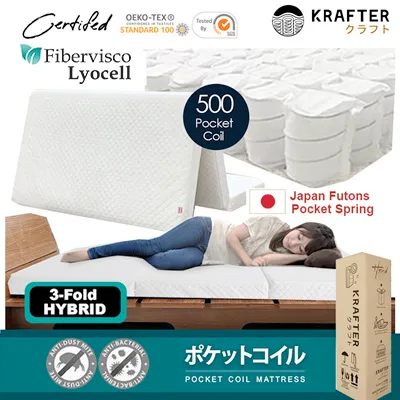
Prices are valid at publication and may change. Please refer to the product page for the latest price.
Because everyone has a unique body shape, weight distribution, and favoured sleeping posture, a single universal firmness level cannot suit every individual. Your personal biomechanics dictate how much force you exert on the mattress surface, which in turn determines how much the comfort layers must yield to keep your spine straight.
To establish a baseline for your search, you can use a general mapping of sleep positions to firmness levels. Side sleepers generally perform best on medium-soft to medium surfaces. Back sleepers typically find their match in the medium to medium-firm range, while stomach sleepers require a firm surface to keep their pelvis aligned with their shoulders.
Step 1: Identify Your Primary Sleeping Position
Your dominant sleeping position is the foundation of your mattress selection process because it dictates where your body requires cushioning and where it needs rigid support. Side sleeping is the most common posture, but it places immense pressure on concentrated areas of the body. When you lie on your side, your shoulders and hips protrude deeply into the mattress, meaning you need a medium-soft to medium surface that contours to these curves while supporting the narrower waist.

Without sufficient give in these key areas, side sleepers often experience numbness, tingling, or morning soreness in their shoulders and hips. A mattress that is too firm forces the spine to curve downward in the middle, leading to chronic lower back pain over time.
Back sleepers require a more balanced distribution of support and contouring. When lying on your back, your weight is distributed relatively evenly, but your lower back has a natural arch that must be supported. A medium to medium-firm mattress allows the hips to sink just enough to fill the lumbar gap without letting the lower spine sag into an unnatural posture.
Stomach sleepers face the greatest challenge in maintaining spinal alignment. Sleeping on your stomach naturally coaxes the pelvis downward, which can arch the lower back excessively if the mattress is too soft. To prevent this hyperextension of the lumbar spine, stomach sleepers must choose a firm mattress that keeps the hips level with the shoulders and chest.
If you find yourself waking up in a different position than the one you fell asleep in, you are likely a combination sleeper. Combination sleepers need a highly responsive, medium-firm surface that facilitates easy movement. A mattress with a balanced, medium feel allows you to transition smoothly between positions without feeling stuck in the comfort layers.
Step 2: Adjust for Your Body Weight and Build
While your sleeping position provides a baseline, your body weight is the primary force that determines how firm a mattress actually feels to you. Standard manufacturer firmness ratings are typically calibrated for individuals of average weight, meaning lighter or heavier sleepers must adjust their expectations accordingly.
Lighter individuals, generally defined as those weighing under 60 kilograms, exert less downward force on the mattress. Consequently, they often perceive standard medium mattresses as being much firmer than advertised. If you have a lighter build, you will likely need to select a softer model to achieve the necessary contouring and pressure relief, especially if you sleep on your side.
Average-weight individuals, falling between 60 and 90 kilograms, will find that their experience closely aligns with standard manufacturer descriptions. For this group, a medium or medium-firm rating will perform exactly as intended, providing a predictable balance of surface comfort and deep support.
Heavier individuals, weighing over 90 kilograms, exert substantial pressure on the mattress layers. On a soft or standard medium bed, heavier sleepers risk sinking straight through the comfort layers and bottoming out against the rigid support core. This not only compromises spinal alignment but also accelerates the wear and tear of the mattress materials.
To ensure long-term structural integrity, heavier sleepers should look for firmer models or those featuring high-density support cores, such as thick pocketed coils or high-density polyfoam. Always check the manufacturer’s specified weight capacity limits and core material densities before making a purchase to guarantee the mattress can support your build over many years.
Step 3: Account for Pain, Partners, and Preferences
Beyond posture and weight, your daily physical health and lifestyle factors play a major role in determining the right mattress feel. If you suffer from chronic joint or back pain, you must carefully weigh the need for surface pressure relief against the necessity of rigid underlying support. For instance, active joint inflammation may require a slightly softer comfort layer to prevent painful friction, while chronic lower back stiffness often demands a firmer, highly supportive core.
Sharing a bed introduces another layer of complexity, as partners often have different sleep preferences and body types. When buying a mattress for two, you must evaluate motion transfer—how well the mattress isolates movement when one person rolls over. Pocketed coil systems and memory foam layers excel at absorbing motion, preventing sleep disruptions.
If you and your partner have vastly different firmness requirements, consider looking into dual-firmness mattresses or split configurations. Alternatively, a true medium-firm mattress often serves as a practical compromise, offering enough surface contouring for a side-sleeping partner and sufficient core support for a back-sleeping partner.
Ultimately, subjective comfort preferences must be balanced against objective spinal alignment. While you might love the cloud-like feel of an ultra-plush mattress, you must remain mindful of whether your body actually receives the support it needs to wake up pain-free. Use your physical comfort as a guide, but let spinal alignment be the final deciding factor.
Step 4: Verify Krafter Specifications and Trial Policies
To ensure you are making a sound investment, you must look past marketing buzzwords like “luxury plush” or “orthopedic support” and examine the actual technical specifications of the Krafter mattress. Request the product specification sheet to verify the density of the foam layers and the gauge of the coil system. A lower coil gauge indicates thicker, firmer wire that provides robust support, while higher-density foams offer enhanced durability and contouring.
In Singapore’s warm and humid climate, mattress materials can behave differently over time. High humidity can cause certain low-density foams to soften prematurely, making it even more critical to verify that your chosen Krafter model utilizes high-quality, breathable materials. Ensure the mattress dimensions fit your bed frame and that your home’s doorways and lift access can accommodate the delivery of a flat, non-rollable mattress if applicable.
Before finalizing your purchase, carefully review the retailer or brand’s sleep trial policy and return conditions. A proper sleep trial is essential because your body requires time to adjust to a new sleep surface. In Singapore, look for policies that offer a reasonable trial period, and pay close attention to any associated return fees, transport charges, or packaging requirements.
Be prepared for a mandatory break-in period, which typically lasts between three to four weeks. During this initial phase, the brand-new materials will gradually soften, and your muscles will adapt to the new support structure. If the mattress still feels uncomfortable after this period, you can then determine whether you need to utilize the trial policy to exchange it for a different firmness level.
Frequently Asked Questions (FAQ)
Can I change the firmness of my Krafter mattress after buying it?
If your Krafter mattress feels slightly too firm after the break-in period, you can easily soften the surface by adding a high-quality mattress topper made of memory foam or latex. However, if the mattress is fundamentally too soft and lacks core support, a topper will not resolve the issue, as it will simply sink along with the underlying layers. Always check if your specific Krafter model features a flippable design with dual firmness levels, or utilize the brand’s sleep trial return policy to exchange the mattress for a more suitable model.
Is a firmer mattress always better for back pain?
No, an extra-firm mattress is not universally better for back pain and can sometimes worsen the condition by failing to contour to the natural curves of your spine. True back support relies on a strong structural core, while surface comfort requires a layer that relieves pressure on your joints. A medium-firm mattress is often a highly suitable choice for back pain, as it provides the necessary lumbar support while cushioning the shoulders and hips. If you experience persistent or severe back pain, consult a healthcare professional for personalized guidance.

Community discussion
Share your experience or ask a question. Comments are reviewed before publication.