
Choosing the right headboard size for your bed frame in a Housing & Development Board (HDB) bedroom requires balancing comfort, aesthetics, and strict spatial limits. Because HDB bedrooms typically feature compact layouts, a headboard that is too wide or too thick can easily block wardrobe doors, cover essential power sockets, or restrict walking paths. The ideal headboard should align with your bed frame’s width, match the scale of your mattress height, and leave enough clearance for daily movement. By taking precise measurements of your bed frame and mapping out the surrounding wall space, you can select a headboard that enhances your bedroom’s design without making the room feel cramped.
Measuring Your Bed Frame and Available Space
Before browsing designs, you must establish the physical baseline of your sleeping area. Start by measuring the exact width, length, and thickness of your existing bed frame. Do not rely solely on standard mattress sizes, as bed frame designs can add several centimeters of bulk to the overall dimensions. Use a metal measuring tape to capture the outer edges of the frame, as this is the exact width your headboard will need to accommodate or complement.
Next, assess the wall where the bed will sit. Measure the distance from the head of the bed to nearby walls, windows, and built-in wardrobes. In many HDB flats, the master bedroom layout places the bed close to the wardrobe doors. You must ensure that the added depth of a headboard does not prevent these doors from opening fully. If you have sliding wardrobe doors, check if the headboard will overlap with the track or restrict access to the hanging space.
Products mentioned in this guide
![[PRE-ORDER] Getha V6 Headboard](https://img.lazcdn.com/g/p/73a7b43ed7069e4572e7c5324027179e.jpg_400x400q80.jpg_.webp)
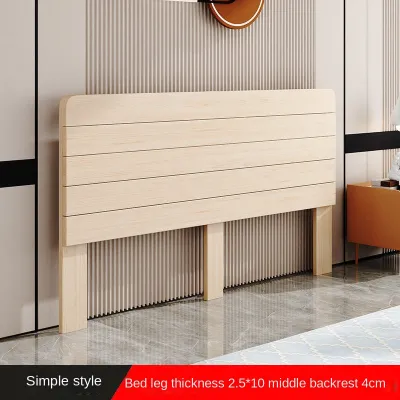
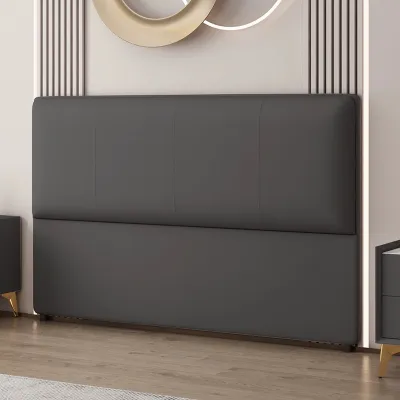
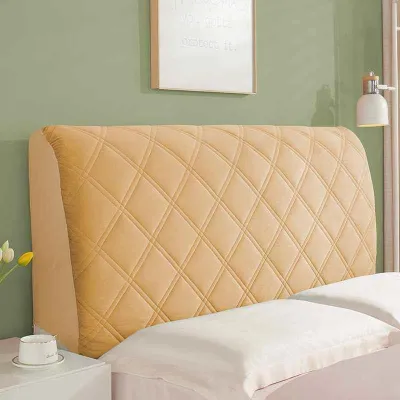
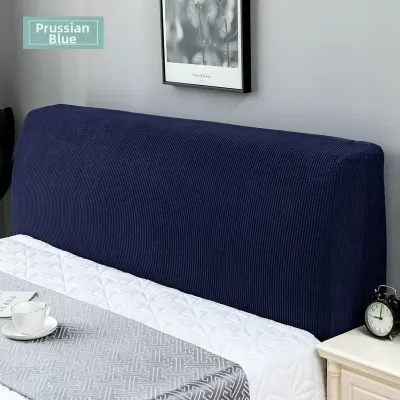

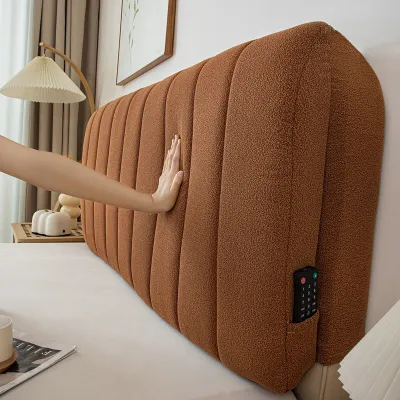
Prices are valid at publication and may change. Please refer to the product page for the latest price.
Finally, account for the architectural details of your room. Measure the depth of your skirting boards, as they prevent furniture from sitting completely flush against the wall. Locate all power sockets, light switches, and data ports near the bed. A headboard that accidentally covers these outlets can make it difficult to plug in bedside lamps or charge your phone without pulling the entire bed forward, which wastes precious floor space.
Proportions and Visual Balance in Compact Bedrooms
In a compact HDB bedroom, visual weight is just as important as physical dimensions. A headboard that is too tall or visually heavy can dominate the room, making the ceiling feel lower than it actually is. To maintain a sense of openness, evaluate the headboard height relative to your ceiling height and any nearby window sill levels. If your bed is positioned near a window, the headboard should sit well below the sill to avoid blocking natural light and disrupting the visual flow of the room.

The materials, textures, and colors you choose also affect the perception of space. Heavy, dark-colored, or deeply tufted upholstered headboards carry significant visual weight and can make a small room feel enclosed. In contrast, slim wooden headboards, light-colored fabrics, or open-spindle designs allow light to pass through, creating an airy feel. If you prefer an upholstered look, opt for low-profile padding with clean lines rather than bulky, oversized cushioning.
Extended-width headboards, which stretch beyond the sides of the bed frame to frame the bedside tables, are popular for creating a hotel-like aesthetic. However, in a standard HDB bedroom, these designs can easily overwhelm the space. An extended headboard draws the eye horizontally, which can make a narrow room feel even shorter. If you choose an extended design, ensure it is relatively low in height and finished in a neutral color that matches the wall to minimize its visual impact.
Choosing the Right Width and Height Dimensions
Selecting the specific dimensions of your headboard involves comparing standard and extended widths, calculating the ideal height, and evaluating thickness. Standard headboards are designed to sit flush with the outer edges of your bed frame. This is generally the most space-efficient choice for HDB bedrooms, as it keeps the footprint of the bed as compact as possible. It also ensures that the headboard aligns with standard mattress sizes, making it easier to arrange bedding and pillows.
To determine the appropriate height, you must factor in both your mattress thickness and how you intend to use the bed. If you enjoy sitting up to read, watch television, or work on a laptop, the headboard needs to be tall enough to support your back and head comfortably. Measure the height of your mattress from the floor, then add at least 60 to 70 centimeters of visible headboard height above the mattress surface. This ensures that even with plush pillows propped up, there is still enough headboard visible to provide comfortable support and a balanced look.
Headboard thickness is a critical dimension that directly impacts the remaining walking clearance at the foot of the bed. In many HDB layouts, the walkway between the foot of the bed and the opposite wall or wardrobe is already narrow. A thick, heavily padded upholstered headboard can add 10 to 15 centimeters of depth, pushing the entire bed frame forward and restricting this walkway. For tight spaces, look for slim headboards with a thickness of 5 centimeters or less, or consider a wall-mounted panel that takes up minimal depth.
Installation Clearances and Functional Checks
A successful headboard installation requires verifying that the chosen size allows for practical daily use. Start by checking the clearance on both sides of the bed for bedside tables. If your headboard is wider than the bed frame, it may overlap with the space reserved for nightstands. Ensure that your bedside tables can sit flat against the wall without being pushed forward by the headboard, and check that any drawers or cabinet doors on the nightstands can open fully without obstruction.
Cable management and socket accessibility are also vital. If your headboard must cover wall outlets due to the room’s layout, plan how you will access them. Some headboards feature built-in cutouts or integrated power strips, while others may require you to use right-angle plugs or extension cords before securing the headboard in place. Never squash power cords between a heavy headboard and the wall, as this can damage the cables and pose a safety hazard.
Additionally, compare the spatial footprint and structural requirements of different mounting styles. Wall-mounted headboards are excellent for saving floor space because they can be hung flush against the wall, but they require drilling into the wall, which may not be ideal for renters. Freestanding headboards stand on the floor and are held in place by the weight of the bed frame, making them easy to install but slightly bulkier. Bed-attached headboards bolt directly to the frame, requiring you to verify that the mounting brackets on both the frame and the headboard are fully compatible.
Common Sizing and Placement Mistakes to Avoid
One of the most common mistakes when installing a headboard in an HDB flat is overlooking the depth of the skirting boards. Skirting boards typically protrude 1 to 2 centimeters from the wall. If you purchase a headboard designed to mount flush to the wall, this protrusion will create an awkward gap at the top, causing the headboard to tilt or wobble. To avoid this, look for headboards with skirting board cutouts at the base, or use spacers and brackets designed to accommodate the gap.
Another frequent error is selecting an overly thick upholstered headboard without measuring the clearance for wardrobe doors. In many master bedrooms, the wardrobe is built along the adjacent wall, leaving just enough room to walk past the bed. Adding a bulky headboard can reduce this clearance to the point where wardrobe doors hit the mattress or the walkway becomes uncomfortable to navigate. Always prioritize walking clearance over aesthetic bulk.
Lastly, avoid choosing a headboard height that obstructs essential wall fixtures. In Singapore’s climate, air conditioning is common, and indoor units are often mounted high on the bedroom walls. A headboard that is too tall can block the airflow from the unit or make it difficult to access the filters for regular cleaning. Similarly, ensure the headboard does not cover wall-mounted reading lights, light switches, or window frames, as this can compromise both the functionality and the safety of your bedroom setup.
Frequently Asked Questions (FAQ)
Can I use a wider headboard on a smaller bed frame?
Yes, you can use a wider headboard on a smaller bed frame, but it requires careful planning. Visually, an oversized headboard can create a dramatic look, acting as a feature wall that anchors the bed and bedside tables. However, in a compact HDB bedroom, this setup can easily make the room feel smaller and more cluttered. Structurally, you must ensure you have the correct mounting hardware to support the wider, heavier headboard safely. Since the mounting points on a smaller bed frame will not align with a wider headboard, you will likely need to mount the headboard directly to the wall rather than attaching it to the frame.
How much clearance is needed between the bed and the wall?
The clearance needed between the bed and the wall depends on your headboard’s mounting style and the presence of skirting boards. For a flush-mounted or wall-mounted headboard, you generally need to allow for the thickness of the mounting brackets, which is typically around 1 to 2 centimeters, plus the depth of your skirting boards. Freestanding headboards may require a slightly larger gap of 2 to 5 centimeters to prevent the headboard from rubbing against the wall and causing scuff marks. Always check the manufacturer’s specifications for exact depth measurements and bracket requirements to ensure a secure, stable fit.

Community discussion
Share your experience or ask a question. Comments are reviewed before publication.