
Finding the perfect bed headboard for a Singapore HDB bedroom requires balancing personal style with strict spatial limits. Because typical HDB master bedrooms and common rooms have compact footprints, an oversized headboard can quickly make a room feel cramped and disrupt daily movement. Selecting the right headboard involves matching its physical dimensions and visual weight to your specific room layout, ensuring you preserve valuable walking paths while achieving a polished look.
Understanding Proportional Rules for HDB Headboards
HDB flats, particularly newer Build-To-Order (BTO) units, feature standardized ceiling heights and cozy bedroom dimensions. When choosing a headboard, the scale must harmonize with these vertical and horizontal limits. A headboard that is too tall can make the ceiling feel lower than it actually is, creating an oppressive atmosphere. Conversely, a headboard that is too wide can overwhelm the wall, leaving little room for bedside tables or wardrobe doors to open.
Physical dimensions are only half the equation; visual weight plays an equally critical role in space planning. Visual weight refers to how heavy or dominant an object appears to the eye. For instance, a dark, heavily tufted velvet headboard has a high visual weight and can dominate a small room, even if its physical measurements fit the space. On the other hand, a light-colored, slim wooden headboard or a low-profile upholstered panel has a lighter visual weight, helping the room feel more open and airy.
Products mentioned in this guide
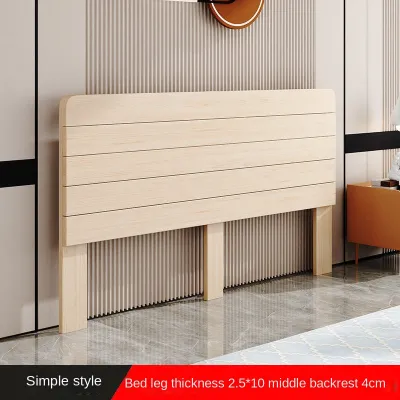
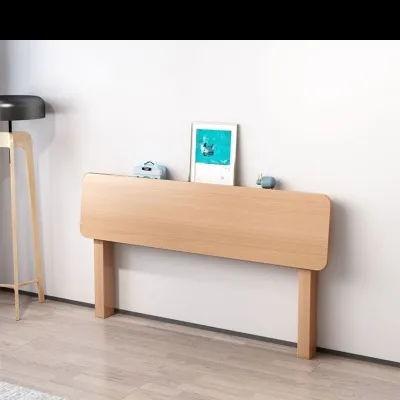
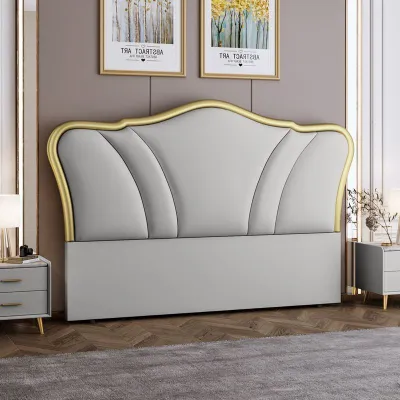
![[PRE-ORDER] Getha Diamond Square B-Wing Headboard](https://img.lazcdn.com/g/p/6ae08237b4455bdb7c80d60c5988b4f8.jpg_400x400q80.jpg_.webp)
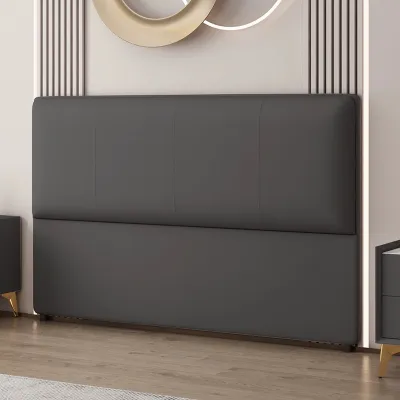
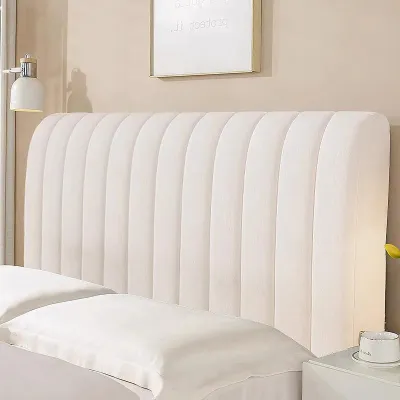
Prices are valid at publication and may change. Please refer to the product page for the latest price.
Traffic flow is another essential consideration. In a typical HDB bedroom, the clearance around the bed is often tight. A thick headboard pushes the entire bed frame forward, eating into the walking path at the foot of the bed. Keeping the headboard’s physical depth to a minimum ensures you maintain comfortable pathways for moving around the room, changing bedsheets, and accessing closets.
Measuring Your Bedroom Space and Clearances
Before browsing headboard designs, accurate measurements of your bedroom are essential to avoid costly layout mistakes. Start by measuring the width of the wall where the bed will be placed. Be sure to measure from baseboard to baseboard rather than wall to wall, as baseboards can reduce the usable width by a few centimeters. Note the location of electrical outlets, light switches, and data ports, ensuring the headboard will not block access to them.

Next, measure the ceiling height and account for any architectural features that project into the room. In Singapore HDB flats, air-conditioner trunking often runs along the upper portion of bedroom walls. You must measure the distance from the floor to the bottom of this trunking to ensure your headboard does not interfere with it. Additionally, check for structural beams or columns that might prevent a headboard from sitting flush against the wall.
Clearance for existing furniture and fixtures is another critical factor. Measure the distance required for built-in wardrobe doors to swing open fully without hitting the bed or headboard. If you have sliding wardrobe doors, ensure there is enough clearance for you to stand comfortably while accessing your clothes. Don’t forget to check the swing of the bedroom door and any window panels, as well as the clearance needed for bedside tables and drawers.
Finally, consider delivery and installation logistics. Before purchasing, verify the finished dimensions of the headboard against your doorway and lift access. HDB lifts and narrow corridors can pose challenges for transporting large, single-piece headboards. Ensuring the item can physically reach your bedroom is just as important as ensuring it fits the wall.
Matching Headboard Dimensions to Your Bed Size
To achieve a balanced look, your headboard’s dimensions must align with your mattress size, whether you have a Single, Queen, or King bed. The standard width of a headboard typically matches the width of the bed frame, but some designs extend slightly beyond the mattress edges to create a more integrated look. For HDB bedrooms, keeping the headboard width flush with the bed frame is generally the most space-efficient choice, as it maximizes the remaining wall space for other furniture.
Height guidelines require balancing the headboard with both the ceiling height and the height of your bedside tables. A standard headboard height ranges from 90 to 120 centimeters from the floor to the top of the panel. If your HDB bedroom has a standard ceiling height of around 2.6 meters, a headboard within this range will look proportional. If you prefer a taller headboard to serve as a focal point, ensure it does not rise so high that it dwarfs your bedside tables or blocks natural light from nearby windows.
The thickness, or depth, of the headboard is a critical dimension that directly impacts usable floor space. Headboards can range from a slim 2 centimeters for simple wooden panels to over 15 centimeters for deeply padded, upholstered designs. In a compact HDB room, every centimeter counts. Choosing a slim headboard ensures that your bed frame does not protrude too far into the room, preserving precious walking space at the foot of the bed.
Selecting Space-Saving Headboard Styles
When space is at a premium, selecting the right style can make a significant difference in how spacious your bedroom feels. Low-profile and slim upholstered panels are excellent choices for a minimal physical footprint. These designs offer the comfort of a padded backrest without the bulk of traditional tufted headboards. Look for models with a depth of 5 centimeters or less to keep the bed as close to the wall as possible.
Floating or wall-mounted headboards are another highly effective option for compact HDB bedrooms. Because these headboards mount directly to the wall, they do not require a bulky frame that rests on the floor. This frees up floor space beneath the bed, making it easier to clean and vacuum. Wall-mounted designs also allow you to customize the mounting height, giving you greater flexibility in aligning the headboard with your mattress and bedside tables.
For rooms lacking space for traditional bedside tables, integrated storage or shelving headboards offer a smart, multi-functional solution. These headboards feature built-in niches, shelves, or slim drawers, eliminating the need for separate nightstands. This consolidated design saves valuable floor space on either side of the bed, allowing you to position the bed closer to walls or wardrobes if necessary.
Using Design Tricks to Enhance Spatial Perception
Beyond physical dimensions, you can use clever design techniques to alter the perceived scale of your HDB bedroom. Incorporating vertical lines or tall, narrow headboard designs can draw the eye upward, creating the illusion of a higher ceiling. Vertical paneling, slender wooden slats, or vertical stitching on upholstered headboards can all help make a compact room feel more grand and spacious.
The choice of materials and colors also plays a vital role in spatial perception. Light, neutral tones such as beige, cream, soft gray, or light wood finishes help bounce natural light around the room, making it feel brighter and more open. If you prefer upholstered headboards, select fabrics with a subtle texture rather than heavy, dark patterns. For wooden headboards, light-colored woods like oak or ash can add warmth without visually overwhelming the space.
The mounting height of your headboard can also influence how spacious the room feels. Mounting a headboard slightly higher than standard can create a sense of verticality, but it must be balanced carefully. If the headboard is mounted too high, it can leave a large, awkward gap between the mattress and the bottom of the headboard. Aim for a height that allows the headboard to frame the bed beautifully while maintaining a clean, cohesive line with surrounding furniture.
Navigating Installation Constraints and Safety Checks
Installing a headboard in an HDB flat requires careful attention to structural constraints and safety. Before mounting any headboard to a wall, you must identify the wall type. HDB walls can be made of concrete (structural walls or precast panels) or drywall (often used for internal partitions in newer flats). Concrete walls require a masonry drill and heavy-duty wall plugs, while drywall requires specific hollow-wall anchors to support the weight of the headboard.
Safety checks are paramount to avoid damaging hidden utilities. Always check for concealed electrical wiring, plumbing pipes, or air-conditioner conduits before drilling into any wall. In Singapore, electrical wires typically run vertically or horizontally from switches and sockets, so avoid drilling directly above or beside these fixtures. Using a reliable stud finder with live-wire detection can help you locate safe drilling zones.
Always verify the structural capacity of the wall and the headboard’s weight based on the manufacturer’s specifications. Heavy wooden or metal headboards require robust anchoring to prevent them from tipping over or pulling away from the wall. If you are unsure about the wall’s integrity, the location of hidden utilities, or the appropriate mounting hardware to use, stop immediately and consult a qualified professional installer to ensure a safe and secure installation.
Frequently Asked Questions (FAQ)
Can I use a headboard if my bed is pushed against a window?
Yes, you can use a headboard against a window, but you must observe specific clearance and material conditions. Ensure the headboard does not block the operation of window handles, sliding tracks, or window safety grilles. There should be sufficient clearance to open the windows fully for ventilation. Additionally, consider the effects of Singapore’s humid climate. Placing upholstered or wooden headboards directly against window glass can expose them to condensation, direct sunlight, and moisture, which may lead to mold growth or wood warping. Opt for moisture-resistant materials or ensure a gap of at least 10 to 15 centimeters between the headboard and the window to allow for proper airflow.
Are tufted or heavily padded headboards suitable for small rooms?
While tufted or heavily padded headboards offer excellent comfort, they are generally less suitable for small HDB bedrooms due to their physical and visual bulk. The deep padding and tufting can add 15 centimeters or more to the bed’s overall length, significantly reducing walking clearance at the foot of the bed. Visually, the heavy texture and deep shadows of tufting can make a small room feel more crowded. If you prefer the comfort of upholstery, look for slim, low-profile padded headboards with clean lines and minimal depth, which provide a soft backrest without sacrificing valuable floor space.
Community discussion
Share your experience or ask a question. Comments are reviewed before publication.