
Selecting the ideal hanging shoe organizer capacity requires a systematic evaluation of your current footwear collection, your daily storage habits, and the physical boundaries of your living space. In compact homes, such as typical apartments in Singapore, maximizing vertical storage is a practical way to keep entryways and closets clear. However, choosing an organizer with too many slots can lead to a unit that drags on the floor or prevents your door from closing, while an undersized option leaves your favorite pairs scattered. By matching your shoe types to specific slot dimensions and verifying your door or closet clearance, you can find a storage solution that keeps your footwear organized and easily accessible.
Count Your Shoes and Determine Slot Requirements
To establish a realistic capacity baseline, begin by gathering every pair of shoes you intend to store in the organizer. Grouping your footwear by style is a critical first step because different designs occupy vastly different amounts of physical space. Flat sandals, flip-flops, and thin canvas slip-ons require minimal volume, whereas structured running shoes, high heels, and ankle boots demand significantly more height and width.
As you sort through your collection, note how many pairs fall into each category. If your collection consists primarily of low-profile shoes, you can often look for organizers with standard, compact pockets. Conversely, if you regularly wear bulky sneakers or platform heels, you will need to look for organizers featuring wider, reinforced slots or flexible mesh pockets that can stretch slightly without tearing.
Products mentioned in this guide
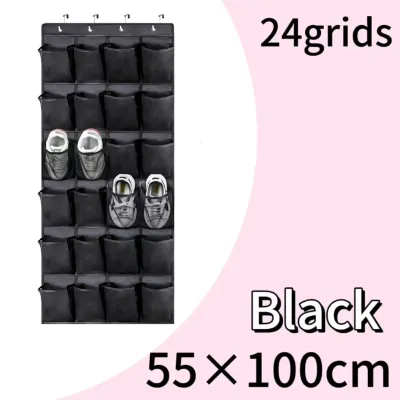
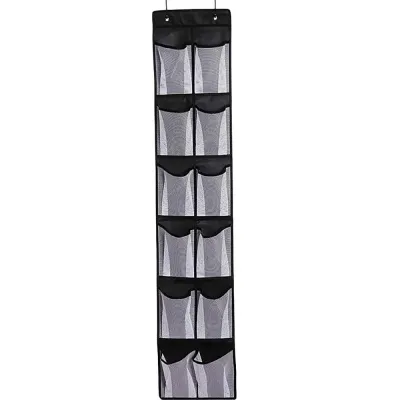
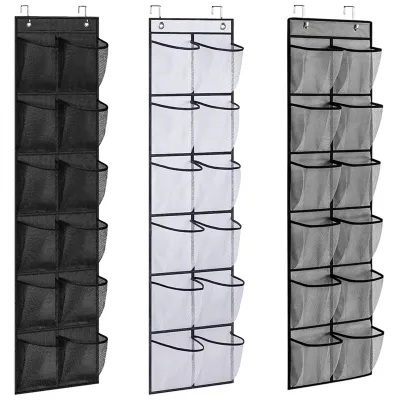
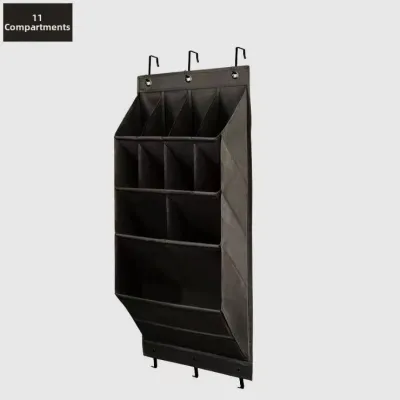
Prices are valid at publication and may change. Please refer to the product page for the latest price.
It is also wise to account for seasonal rotation and future acquisitions. If you live in a climate with distinct seasons, or if you simply rotate your footwear based on wet and dry weather, you might not need to store your entire collection at once. However, leaving a buffer of two or three empty slots is highly recommended. This prevents your new organizer from becoming instantly obsolete the next time you purchase a new pair of shoes.
Finally, decide whether you plan to store one shoe per slot or keep pairs together. While keeping a pair in a single pocket is the standard approach, some ultra-slim organizers are designed for single shoes, meaning a 24-pocket unit would only hold 12 pairs. Always check the manufacturer’s specification sheet to confirm whether the advertised capacity refers to individual shoes or complete pairs.
Measure Your Door or Closet Space for Hanging
Before purchasing any hanging shoe organizer, you must take precise measurements of the installation area to ensure a proper fit. If you plan to hang the unit over a door, start by measuring the vertical height from the very top edge of the door down to the floor. The organizer should hang freely without touching the floor, as any dragging will cause the bottom pockets to wear out quickly and accumulate dust.

Next, measure the horizontal width of the door panel. Standard doors vary in width, and an organizer that is too wide may overlap with the door handle, lock mechanism, or hinges. Ensure there is at least a few centimeters of clearance on either side of the organizer so it does not get pinched in the door frame when you open or close the door.
Clearance behind the door is another critical factor that is frequently overlooked. Over-the-door hooks require a small gap between the top of the door and the frame—typically around 1.5 to 2 millimeters—to allow the door to latch shut. Additionally, the depth of the filled organizer must be compatible with the space behind the door when it is fully opened against a wall. If the space is too tight, the shoes will constantly bump against the wall, potentially scuffing the paint or damaging the footwear.
If you plan to hang the organizer from a closet rod instead of a door, the measurement process is slightly different. Measure the vertical distance from the top of the closet rod to the floor or the shelf below it. You must also measure the horizontal rod space the organizer will occupy, as some wide models can take up as much hanging space as several coats or dresses, reducing your overall wardrobe capacity.
Match Organizer Capacity to Your Measured Space
Once you have your shoe count and space measurements, you can begin matching these figures to standard organizer dimensions. Hanging shoe organizers generally come in standard configurations, such as 10-shelf vertical cubbies, 12-pocket over-the-door sleeves, or large 24-pocket grids. To find the right balance, compare the overall length of the organizer against your measured vertical height, keeping in mind that the unit will sag slightly when fully loaded.
Evaluate the individual slot dimensions provided by the manufacturer. A standard pocket is typically about 12 to 15 centimeters wide and 20 to 25 centimeters deep. If you wear larger shoe sizes, such as men’s US size 10 or above, standard pockets may be too narrow, causing your shoes to stick out or stretch the fabric excessively. In such cases, look for organizers with extra-wide pockets or open-sided shelves that allow for some overhang without compromising stability.
For highly constrained spaces, specialized designs can offer a practical solution. Some organizers feature adjustable configurations, allowing you to zip off or fold up the bottom sections if they are too long for your door. Others utilize a staggered or diagonal pocket design that minimizes the depth profile, making them ideal for narrow hallways or shallow closets where every centimeter of clearance matters.
Verify Weight Limits and Hanging Hardware Compatibility
A hanging shoe organizer must be robust enough to support the cumulative weight of your footwear. Shoes can be surprisingly heavy; a single pair of leather boots or heavy-duty trainers can weigh over a kilogram. Before making a purchase, review the manufacturer’s specified weight capacity for the entire unit as well as the weight limit for individual slots.
Pay close attention to the materials used in the organizer’s construction. Look for heavy-duty fabrics such as 600D polyester, reinforced non-woven fabric, or sturdy mesh, and check that the seams around the hanging points are double-stitched. The hooks or hanging straps are the primary failure points; metal hooks are generally much more durable than plastic alternatives and are less likely to bend under a full load.
The mounting surface itself must also be evaluated for load-bearing capacity. Standard wooden or metal doors can easily support a fully loaded organizer, but lightweight hollow-core doors or flimsy closet rods may sag or warp over time. Additionally, measure the thickness of your door to ensure the included hooks will fit snugly. If the hooks are too wide for the door thickness, the organizer will slide around and scratch the door’s finish whenever the door is moved. You can prevent this by placing small adhesive felt pads on the inside of the hooks to create a secure, scratch-free fit.
Avoid Common Sizing and Capacity Mistakes
One of the most common mistakes when choosing a hanging shoe organizer is ignoring the height of your footwear. Attempting to force tall boots, high-top sneakers, or high heels into standard, flat pockets will not only deform your shoes but can also rip the pocket seams. For these types of footwear, look for organizers with open shelves or adjustable compartments rather than tight, enclosed pockets.
Another frequent error is uneven weight distribution. Shoppers often place their heaviest shoes in the top slots for easy access, which puts immense strain on the hanging hooks and causes the top of the organizer to sag forward. To maintain structural integrity and prolong the life of your organizer, always place your heaviest footwear in the bottom slots and reserve the lighter flats, sandals, or slippers for the top sections.
Finally, failing to measure the clearance between the top of the door and the frame can lead to frustration. If the over-the-door hooks are too thick, you will find yourself unable to close the door completely, or you may scratch the door frame every time you force it shut. Always verify hook thickness and door clearance before purchasing, or consider a closet-rod hanging model if your door frame clearance is exceptionally tight.
Frequently Asked Questions (FAQ)
Can I fit two pairs of shoes in one slot?
Whether you can fit two pairs of shoes into a single slot depends entirely on the shoe style and the pocket material. Lightweight, flat footwear such as flip-flops, thin leather sandals, or soft house slippers can easily be nested together and slid into a single standard pocket. However, bulky athletic shoes, structured leather dress shoes, and high heels should always have their own dedicated slots. Forcing these larger styles together will crush the shoe structures, scuff the materials, and put excessive tension on the organizer’s seams, leading to premature tearing.
What if my shoe collection grows beyond the organizer's capacity?
If your shoe collection expands beyond your organizer’s capacity, you do not necessarily need to replace the entire system. If your door or closet rod has extra horizontal space, you can hang a second, narrower organizer side-by-side with the first one. Alternatively, implement a seasonal rotation system. Store out-of-season footwear, such as heavy winter boots or summer sandals, in under-bed storage boxes or clear plastic bins, and use your hanging organizer exclusively for the shoes you wear on a weekly basis. This keeps your active collection organized without cluttering your living space.

Community discussion
Share your experience or ask a question. Comments are reviewed before publication.