
Selecting the right folding bed mattress firmness requires balancing your personal sleep posture and body weight with the physical limitations of a collapsible frame. Unlike standard stationary beds, a folding bed mattress must bend repeatedly without losing its structural integrity or bottoming out against the support base. By matching your primary sleeping position and body weight to a compatible firmness level, you can prevent morning stiffness and ensure your space-saving bed remains fully functional for years.
Understanding the Firmness Scale and Folding Bed Constraints
Mattress firmness is typically measured on a scale from 1 to 10, with 1 being extremely soft and 10 being extra firm. This scale represents surface resistance and how much the mattress contours to your body. However, the perceived firmness of a folding bed mattress is heavily influenced by the bed’s foundation. A mattress placed on a flexible wire mesh or spring-link deck will feel noticeably softer and sag more than the same mattress resting on solid wooden slats or a metal platform.
Additionally, folding beds present a unique design challenge: the trade-off between mattress thickness and foldability. While a thicker mattress generally provides better comfort and deep support, it requires more space to bend. Most folding bed mattresses are limited to a thickness of 5cm to 15cm so the frame can close securely. Because the mattress is thinner than a standard bed, choosing the correct firmness and material density is critical to prevent your body from sinking completely through the foam and pressing against the hard frame underneath.
Products mentioned in this guide
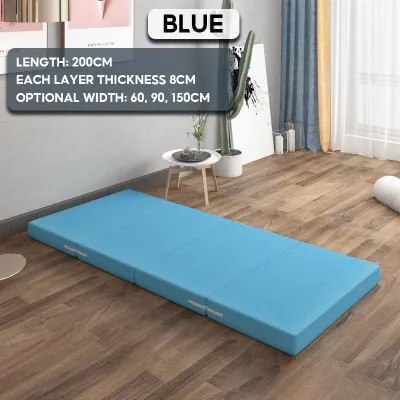

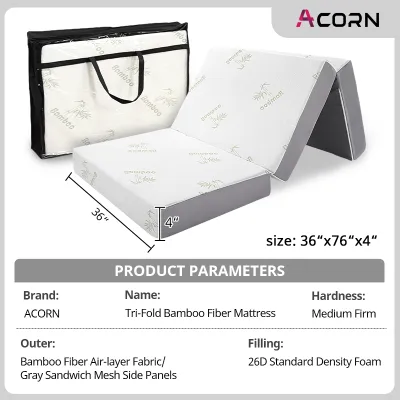
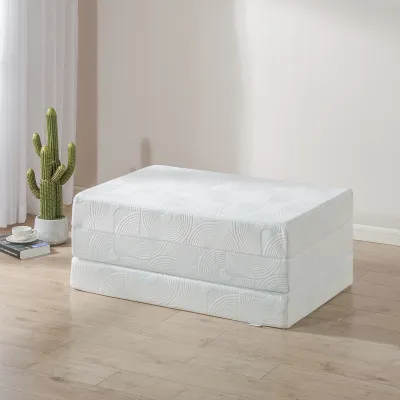
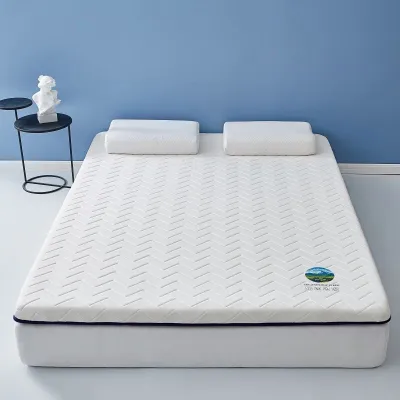
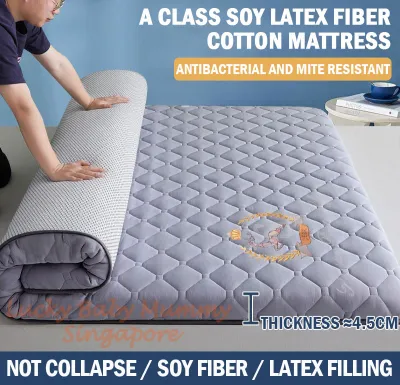
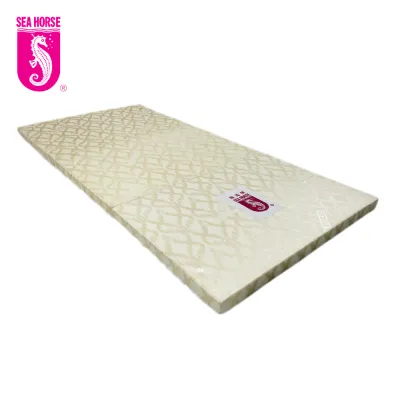
Prices are valid at publication and may change. Please refer to the product page for the latest price.
Mapping Your Sleep Position to the Right Support Level
Achieving proper spinal alignment and pressure point relief are the primary ergonomic goals of any sleeping surface. Your dominant sleeping posture determines where your body exerts the most concentrated pressure, which dictates the level of surface resistance you need to sleep comfortably without waking up in pain.

Because no single firmness level accommodates every sleeping habit, identifying how you spend most of the night is the first step to narrowing down your options. A mattress that is ideal for a back sleeper can cause severe shoulder discomfort for someone who sleeps on their side.
Side Sleepers
Side sleepers require a mattress that offers sufficient contouring to cushion the shoulders and hips, which are the primary contact points. If the surface is too rigid, these high-pressure areas will bear the brunt of your body weight, leading to restricted circulation, numbness, and frequent tossing and turning.
To maintain a neutral spine, look for a soft-to-medium folding bed mattress that allows your shoulders and hips to sink slightly. This sinkage ensures your spine remains straight rather than bowing upward. However, ensure the mattress still has a high-density core layer to prevent your midsection from sagging too deep, which can cause lateral spinal misalignment.
Back and Stomach Sleepers
Back and stomach sleepers need a more supportive, resistant surface to keep the pelvis and hips elevated. For back sleepers, a medium-firm mattress supports the natural curve of the lower lumbar region while allowing the buttocks to sink just enough to prevent tension in the lower back.
Stomach sleepers require an even firmer surface to prevent the heavier midsection from sinking into the mattress. When a mattress is too soft, the pelvis drops, arching the spine unnaturally and placing severe strain on the lower back muscles. A firm folding bed mattress provides the upward resistance necessary to keep your shoulders and hips on the same horizontal plane.
Combination Sleepers
Combination sleepers frequently transition between different positions throughout the night and require a highly responsive, medium-feel surface. A medium-firm mattress is often the most practical compromise, offering enough surface give to cushion the shoulders when on your side, while providing the structural support needed when you roll onto your back.
When selecting a mattress for active sleepers, prioritize materials with quick recovery times, such as high-resilience polyurethane foam. These materials adapt instantly to your movements, preventing that “stuck” sensation that makes shifting positions difficult. If you experience specific joint pain upon waking, choose a firmness that prioritizes the position you spend the most time in.
Adjusting Your Firmness Choice for Body Weight and Build
Your body weight directly affects how deeply you compress the mattress materials, which alters how firm the bed actually feels to you. A mattress rated as “medium-firm” can feel incredibly hard to a lighter individual and overly soft to a heavier sleeper.
Lighter individuals, typically weighing under 60 kg, exert less force on the mattress surface. They often find standard medium-firm mattresses too rigid because they do not compress the comfort layers enough to trigger pressure relief. For these sleepers, a slightly softer mattress is necessary to allow proper contouring and prevent joint pain.
Conversely, heavier individuals, typically weighing over 90 kg, compress foam layers much more deeply. A soft or thin mattress will compress completely under their weight, causing them to bottom out against the metal or wooden support frame. Heavier sleepers should opt for a firmer, high-density mattress that distributes weight evenly and maintains its supportive shape over time.
Before purchasing, always check the maximum load capacity of both the mattress and the folding frame. A frame with a low weight limit or weak support slats can sag under heavier loads, completely neutralizing the supportive benefits of a firm mattress and posing a safety risk. Ensure the combined weight of the sleepers does not exceed the manufacturer’s specified limits.
Adapting for Pain Points and Shared Sleeping Arrangements
If you suffer from chronic physical discomfort, your firmness choice should target your specific pain points. Lower back pain typically requires a medium-firm to firm surface that keeps the spine aligned and prevents the pelvis from sinking. Joint, hip, or shoulder pain, on the other hand, often benefits from a slightly softer surface that cradles these sensitive areas and minimizes pressure build-up.
For folding beds used in guest rooms or shared occasionally with a partner or child, motion isolation and edge support become important. High-density memory foam or pocket spring folding mattresses help absorb movement, preventing one sleeper’s shifts from waking the other.
Keep in mind that while the right mattress firmness can alleviate temporary pressure-related discomfort, it is not a medical cure. For chronic, severe, or worsening back and joint pain, always consult a qualified healthcare professional rather than relying solely on mattress adjustments.
Testing the Mattress and Verifying Folding Bed Compatibility
Before finalizing your purchase, perform a physical check or carefully review the product specifications. If testing in a showroom, spend at least ten to fifteen minutes lying on the mattress in your typical sleeping position, using a pillow of similar loft to your own to accurately assess spinal alignment.
When buying online, check the retailer’s sleep trial policies, return conditions, and warranty terms. Ensure the warranty explicitly covers use on folding frames, as some standard mattress warranties are voided if the product is bent or folded repeatedly.
Most importantly, measure the finished dimensions of your folding bed frame, including the clearance within the folding hinges and storage compartments. A mattress that is even slightly too thick or rigid will prevent the frame from locking securely when collapsed, potentially damaging the folding mechanism or straining the frame’s joints.
Frequently Asked Questions (FAQ)
Can I use a regular mattress topper to change the firmness of my folding bed?
Adding a mattress topper can temporarily alter the surface feel, making a firm mattress feel softer or adding a layer of contouring. However, a topper only modifies the surface comfort and cannot fix a sagging or structurally unsupportive base mattress. Additionally, adding a topper increases the overall thickness of the bedding. This extra bulk can prevent the folding bed from closing properly, strain the locking clips, or damage the folding mechanism during storage. If you use a topper, you must remove and store it separately whenever the bed is folded.
Does the folding mechanism affect the long-term firmness of the mattress?
Yes, the repeated bending and compression inherent to folding beds can accelerate wear on the mattress materials. Over time, the constant stress along the fold lines can cause the foam to soften prematurely, crease, or lose its resilient support in those specific zones. To mitigate this, check the manufacturer’s care instructions. Some folding mattresses are designed to be rotated or flipped to ensure even wear, while others feature specialized hinged segments that protect the internal structure from folding damage.

Community discussion
Share your experience or ask a question. Comments are reviewed before publication.