
Choosing the right foldable dining chair for a compact Singapore home requires balancing daily seating comfort with smart storage efficiency. In HDB flats and smaller apartments where every square metre counts, the ideal chair must not only fit comfortably under your dining table when open but also tuck away seamlessly when folded. Finding this balance involves measuring your active dining zone, checking the vertical clearance against your table apron, and verifying the exact folded dimensions against your designated storage spots.
Measure Your Dining Space and Storage Areas First
Before browsing online marketplaces or visiting local showrooms, grab a measuring tape to map out your active dining area. The most critical measurement is the pull-out clearance behind your dining table. To allow a seated person to push their chair back and stand up comfortably, you generally need a clear zone of at least 60 to 75 centimetres from the table edge to the nearest wall or obstacle. If your dining area sits adjacent to a busy corridor, factor in extra space so family members can walk past without squeezing.
Walkway widths must remain functional even when the chairs are fully occupied. In typical HDB layouts, dining areas often share space with living room passages or kitchen entryways. Ensure that when the foldable chairs are in use, they do not block main traffic routes or prevent doors from opening. Marking the floor with painter’s tape based on the chair’s open depth can help you visualize whether the layout remains passable.
Products mentioned in this guide
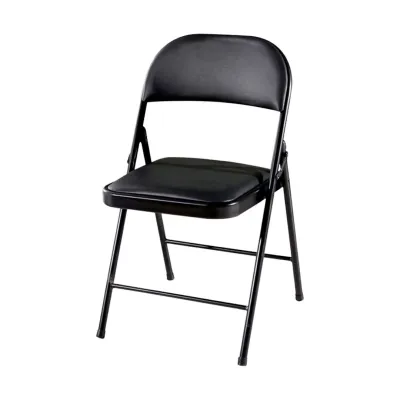
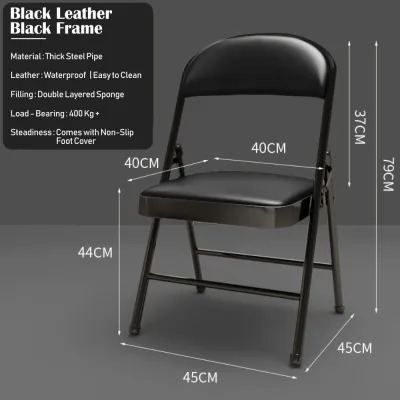
![[✅SG Ready Stock] Folding Chair Designer Dining Chair Conference Chair Foldable Fold Office Chair Adlut Kids Folding Chair Super Fast Delivery](https://img.lazcdn.com/g/p/42bbb6c4319119ffee90f49d92586615.jpg_400x400q80.jpg_.webp)
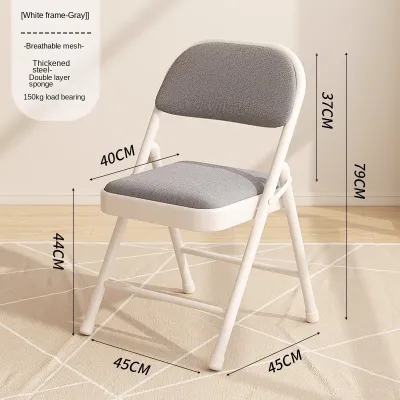
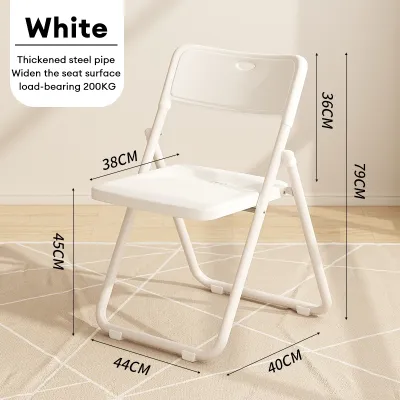
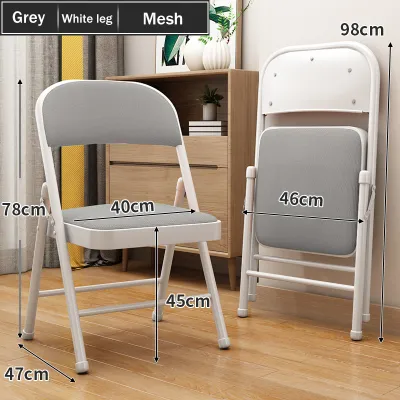
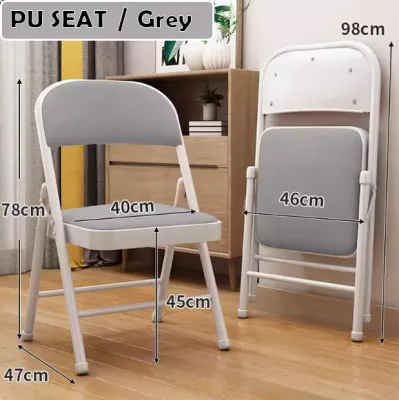
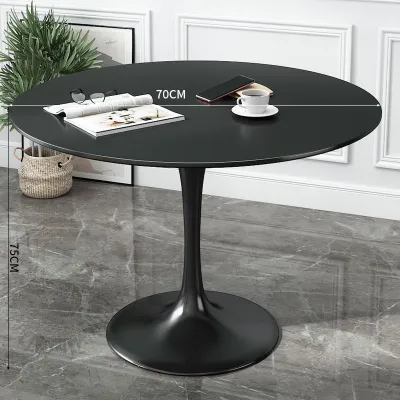
Prices are valid at publication and may change. Please refer to the product page for the latest price.
Equally important is measuring your intended storage zones before making a purchase. Whether you plan to slide the folded chairs into a narrow utility closet, tuck them under a sofa, or stack them behind a household shelter door, you must know the exact height, width, and depth of these spaces. A chair that is even a centimetre too wide or tall for your storage niche will end up cluttering your living area, defeating the purpose of choosing a foldable design.
Match Chair Dimensions to Your Table and Comfort Needs
To ensure a comfortable dining experience, the vertical gap between the chair seat and the underside of your dining table is paramount. For most standard dining tables, a gap of 25 to 30 centimetres between the top of the seat cushion and the bottom of the table surface provides comfortable legroom. However, many compact tables feature thick support aprons or structural frames underneath. Always measure from the lowest point of the table underside rather than the tabletop itself to avoid trapping your thighs.

Seat width is another critical factor that directly impacts both comfort and seating capacity. While wider seats offer a more relaxed dining experience, they limit the number of chairs you can place along a compact table edge. Measure the distance between your dining table legs to determine how many chairs can realistically fit side-by-side. For tight spaces, look for streamlined profiles that maximize seat area without unnecessary armrests or wide, splayed legs.
Never assume a chair’s structural integrity based solely on its frame material. While metal and solid wood are traditionally associated with durability, manufacturing quality and joint design vary widely. Always verify the manufacturer’s stated weight capacity on the product label or specification sheet. This is especially important for foldable furniture, where moving joints and hinges bear concentrated stress during daily use.
Evaluate the Folded Footprint and Handling
The efficiency of a foldable dining chair depends heavily on its folded footprint and how easily it can be handled. Compare flat-fold thickness against standing-fold depth to see which style matches your storage setup. Some chairs fold completely flat, making them ideal for sliding under low furniture or stacking horizontally. Others are designed to stand upright on their own when folded, which works well in narrow closets or utility corners where wall support is unavailable.
Consider the physical weight of the chair and the simplicity of its folding mechanism. If you plan to set up and pack away these chairs daily, heavy solid wood or steel frames can quickly become a chore to handle. Lightweight materials like aluminum or high-density polymers are easier to carry, but you must ensure they offer sufficient stability when unfolded. Test the folding mechanism if possible, looking for smooth transitions that do not require excessive force or risk pinching your fingers.
Pay close attention to the design of the hinges, locking pins, and feet. Protruding metal parts or sharp edges can easily scratch your walls, damage adjacent furniture, or snag delicate fabrics during transport and storage. Look for models with integrated protective caps, rubberized feet, and recessed hardware. These small details protect your home’s finishes and ensure the chairs slide smoothly in and out of tight storage gaps.
Common Sizing and Clearance Mistakes to Avoid
One of the most common spatial oversights in small apartments is ignoring door swing arcs and cabinet drawer extensions. A foldable chair placed too close to a kitchen cabinet or entryway door can block access to essential storage or cause accidental collisions when someone enters the room. Map out the swing paths of all nearby doors, drawers, and appliances to ensure they can open fully even when the dining chairs are occupied.
Another frequent mistake is assuming all foldable chairs fold down to a uniform, ultra-thin profile. In reality, padded seats, curved backrests, and angled legs often add significant bulk to the folded state. Always check the exact folded dimensions provided by the manufacturer rather than relying on product photos, which can make chairs look flatter than they are. This prevents the frustration of buying chairs that ultimately fail to fit into your designated storage gaps.
Finally, do not overlook the design of your dining table’s base. Pedestal tables, trestle bases, or tables with thick, inward-slanted legs can restrict how far a chair can slide underneath. If your foldable chairs cannot be tucked partially under the table when open, they will occupy valuable floor space even when no one is dining. Ensure the chair’s front legs and seat width are compatible with the open clearance between your table legs.
Frequently Asked Questions (FAQ)
What is the standard seat height for a foldable dining chair?
Most standard foldable dining chairs feature a seat height ranging from 43 to 48 centimetres from the floor to the top of the seat. This range aligns well with standard dining tables, which typically stand between 73 and 76 centimetres tall. To guarantee a comfortable fit, measure the height of your specific table and subtract 30 centimetres to find your ideal seat height. If your table has a thick apron or support beam, measure from the bottom of that beam to ensure your legs have enough clearance.
Can foldable dining chairs be hung on the wall to save floor space?
Yes, certain foldable dining chairs are specifically designed to be hung on wall hooks or dedicated mounting racks to free up floor space. However, you must verify that the chair frame or backrest is structurally compatible with hanging and that the manufacturer supports this storage method. Before drilling into your walls, check the integrity of the wall material—especially in HDB flats where internal walls may be non-structural or made of lightweight concrete. Always use appropriate wall plugs, anchor screws, and heavy-duty hooks rated for the combined weight of the chairs, and follow the manufacturer’s installation instructions closely.

Community discussion
Share your experience or ask a question. Comments are reviewed before publication.