
Choosing the right firmness for a Seahorse queen mattress depends on matching your primary sleeping position, body weight, and personal comfort preferences with the structural support of the bed. Because Seahorse mattresses are widely recognized for their dense, supportive foam and latex-like compositions, understanding how their specific firmness levels interact with your body is essential to avoid a sleeping surface that feels too rigid or too soft.
A queen-size mattress is a major investment for Singapore bedrooms, where space optimization and sleep quality are paramount. Making the correct choice requires evaluating how the mattress distributes your weight, aligns your spine, and fits into your existing bed frame and bedroom layout.
Understand Seahorse Mattress Firmness Options
Mattress firmness is typically rated on a scale from 1 to 10, where 1 is extremely soft and 10 is exceptionally firm. Seahorse mattresses often lean toward the firmer end of this spectrum, a characteristic highly valued for robust spinal support. A soft option in this range still provides a stable foundation but incorporates plusher comfort layers, whereas a firm option offers minimal sinkage and maximum resistance.
Products mentioned in this guide



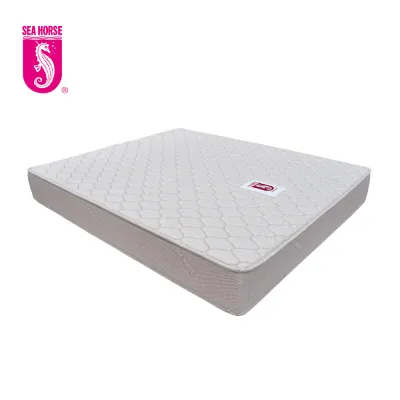
Prices are valid at publication and may change. Please refer to the product page for the latest price.
It is crucial to distinguish between surface comfort and core support. Surface comfort is the initial feel when you first lie down, influenced by the top quilting and cushioning layers. Core support, on the other hand, is the deeper resistance provided by the high-density foam or spring core, which keeps your spine aligned throughout the night. A mattress can have a soft, inviting surface while still maintaining a highly supportive core.
To determine the exact firmness rating of a specific model, always check the official product label, specification sheet, or the manufacturer’s product tag. These documents detail the density of the foam layers and the structural composition, helping you verify whether a model designated as medium-firm aligns with your expectations before making a purchase.
Match Firmness to Your Primary Sleeping Position
Your dominant sleeping posture dictates how your body weight is distributed across the mattress surface, making it the primary factor in choosing a firmness level. Proper spinal alignment occurs when your ears, shoulders, and hips remain in a straight line, regardless of your position.

Side sleepers require a mattress that offers sufficient pressure relief for the shoulders and hips. If the mattress is too firm, these protruding areas will experience high pressure, leading to numbness and tossing. A soft to medium-firm mattress allows these pressure points to sink in just enough to keep the spine straight.
Back sleepers need a balanced level of support that maintains the natural curve of the lower back. A medium to medium-firm mattress is generally ideal, as it prevents the pelvis from sinking too deeply while still cushioning the shoulders and thoracic spine.
Stomach sleepers require a firmer surface to prevent their midsection from sagging. When the hips sink too deep into a soft mattress, it arches the lower back unnaturally, leading to morning stiffness. A firm mattress keeps the body flat and aligned.
Combination sleepers, who rotate through multiple positions during the night, benefit most from a versatile medium feel. This level provides enough surface responsiveness to facilitate easy movement while offering a balanced compromise between pressure relief and support.
Adjust for Body Weight and Physical Build
Your body mass directly influences how deeply you compress the mattress layers, which alters your perception of its firmness. A mattress that feels medium-firm to an average-weight person might feel incredibly hard to a lighter individual or overly soft to a heavier sleeper.
Lighter individuals typically exert less downward force on the mattress. Consequently, they may find firm mattresses too rigid, as they do not compress the comfort layers enough to experience pressure relief. For these sleepers, a softer or medium mattress often provides better contouring.
Average-weight individuals generally find the best balance on medium to medium-firm mattresses. These models offer enough give to cushion joints while maintaining a supportive base that prevents excessive sinkage.
Heavier individuals require firmer support to prevent sinking through the comfort layers onto the hard core of the mattress. A firm mattress distributes weight more evenly and prevents the premature sagging that can compromise spinal alignment.
Before finalizing your choice, check the manufacturer’s stated weight capacity and structural limits on the product tag or user manual. Ensuring the mattress is rated for your weight category protects its structural integrity and preserves its supportive qualities over its lifespan.
Evaluate Personal Comfort and Specific Needs
When sharing a queen-size bed, motion isolation becomes a critical factor for undisturbed sleep. High-density foam mattresses, characteristic of many Seahorse models, excel at absorbing movement, preventing vibrations from transferring across the bed when a partner tosses or turns.
Edge support is another essential consideration, particularly in compact Singapore bedrooms where you might sit on the edge of the bed to get dressed. A mattress with reinforced edges prevents the feeling of rolling off when sleeping near the perimeter and provides a stable platform for sitting.
Temperature regulation is highly relevant in warm, humid climates. Dense foam layers can retain body heat, so look for models that incorporate breathable fabric covers, gel-infused layers, or open-cell structures to enhance airflow and keep the sleeping surface cool.
While adjusting mattress firmness can alleviate general discomfort, it is not a cure for chronic medical conditions. If you suffer from persistent joint, neck, or back pain, consult a healthcare professional for personalized advice rather than relying solely on mattress adjustments.
Verify Your Choice Before Purchasing
To ensure your chosen firmness level is correct, visit physical showrooms in Singapore to test the exact model in person. Lie down in your typical sleeping position for at least ten to fifteen minutes to get an accurate feel for the support and pressure relief.
Carefully review the sleep trial periods, return conditions, and potential restocking fees from official brand stores or authorized retailers. A trial period allows you to test the mattress in your home environment, which is crucial since it can take several weeks for your body to adjust to a new sleeping surface.
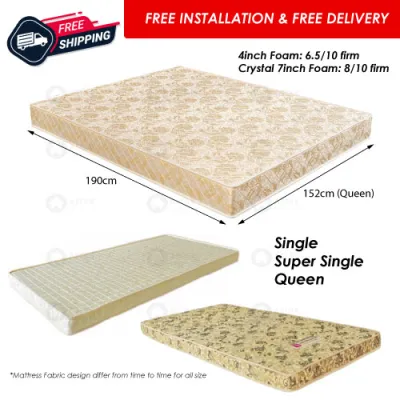
Finally, measure your available bedroom space and existing bed frame compatibility before ordering. A standard queen-size mattress in Singapore measures 152 cm by 190 cm. Ensure your bed frame matches these dimensions and that there is sufficient clearance for delivery through your doorways, hallways, and lift access.
Frequently Asked Questions (FAQ)
Can I change the firmness of my mattress after buying it?
The core firmness of a mattress is determined by its internal structure and cannot be fundamentally altered once manufactured. However, you can adjust the surface feel by adding a mattress topper; a soft topper can cushion a bed that is too firm, while a firm topper can add slight resistance to a soft bed. Additionally, check if your specific model features a flippable design with dual firmness options on opposite sides.
Is a firm mattress always better for back pain?
No, a firm mattress is not universally better for back pain. While adequate support is necessary to keep the spine aligned, an overly rigid mattress can create painful pressure points on the shoulders and hips, worsening discomfort. The ideal mattress balances support with pressure relief, and anyone experiencing chronic back pain should consult a medical professional for targeted recommendations.

Community discussion
Share your experience or ask a question. Comments are reviewed before publication.