
Choosing the right firmness for an 8-inch mattress requires a clear understanding of how a slimmer profile behaves under pressure. Unlike thicker 10- or 12-inch models, an 8-inch mattress has less physical space to transition from a soft comfort surface to a solid support core. To find the ideal match for your sleeping needs, you must balance your primary sleeping position and body weight against the mattress’s internal layer composition.
In compact living environments, such as apartments and HDB flats in Singapore, the 8-inch mattress is a highly popular choice for guest rooms, daybeds, and pull-out trundles. However, because the physical boundary between the comfort layer and the support base is so narrow, selecting the wrong firmness can quickly lead to discomfort or premature wear. Understanding the mechanics of this specific thickness is the first step toward securing a restful night’s sleep.
How an 8-Inch Profile Changes Firmness Perception
An 8-inch mattress typically features a much thinner comfort layer—often only one to two inches of foam, latex, or fiber fill—resting directly on a dense support core. This ratio of comfort material to support material means there is less cushioning to absorb your body weight before you encounter the stiff base layer. Consequently, the overall surface feel is highly dependent on how easily your body compresses these thin top layers.
Products mentioned in this guide
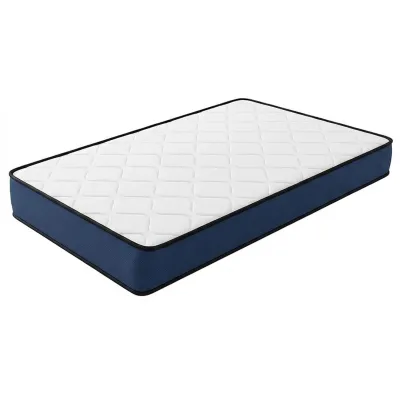
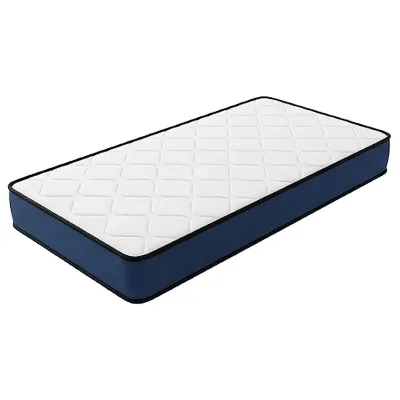
Prices are valid at publication and may change. Please refer to the product page for the latest price.
Because of this limited sinkage depth, an 8-inch mattress will almost always feel noticeably firmer than a thicker mattress made of the exact same materials. A material formulation rated as “medium” in a 12-inch model can easily feel like a “medium-firm” or even a “firm” in an 8-inch profile. This is because your body quickly bypasses the thin comfort layer and meets the unyielding resistance of the support core.
To avoid purchasing a bed that feels like a wooden board, you should check the product specifications for a detailed layer breakdown rather than relying solely on generic firmness ratings. Look for the exact thickness and density of each layer. A model with a high-density transition layer between the top comfort foam and the base core will offer a smoother gradient of support, preventing that sudden, jarring sensation of hitting the hard bottom layer.
Match Firmness to Your Primary Sleeping Position
Your sleeping posture determines where your body exerts the most concentrated pressure, which dictates how the mattress layers must compress to keep your spine aligned. Because an 8-inch mattress has limited depth, matching the firmness to your position is critical to prevent morning aches.

Side sleepers require significant pressure relief at the shoulders and hips to maintain a straight spinal column. In an 8-inch mattress, a medium-soft to medium feel is generally necessary to allow these protruding joint areas to sink in. However, because of the thin profile, side sleepers must ensure the top comfort layer is made of highly resilient material, such as high-density memory foam or natural latex, to prevent the hips from pressing directly into the hard support core.
Back sleepers require a balanced surface that supports the natural curve of the lower spine without allowing the pelvis to sag. A medium to medium-firm 8-inch mattress typically provides the ideal balance. This firmness level offers just enough surface contouring to fill the lumbar gap while keeping the hips elevated and aligned with the shoulders.
Stomach sleepers need a firm surface to prevent the pelvis and midsection from bowing downward, which can place severe strain on the lower back. An 8-inch mattress with a firm rating is highly recommended for this position. The thin profile works to your advantage here, as the proximity to the dense support core ensures your body remains flat and properly aligned throughout the night.
Combination sleepers who shift positions frequently require a responsive medium feel. If you turn often, look for an 8-inch mattress that incorporates pocket springs or natural latex. These materials bounce back quickly, allowing you to change positions easily without feeling stuck in a deep compression pocket, which is a common issue with slow-moving memory foams in thinner profiles.
Adjust for Body Weight and Thickness Limits
Your body weight is the primary force acting upon the mattress, directly influencing how much you compress the limited layers of an 8-inch profile. Understanding this interaction helps you predict how firm the mattress will actually feel in daily use.
Lighter individuals, typically weighing under 60 kg, exert less downward force and may struggle to compress the top comfort layer of an 8-inch mattress. For these sleepers, a mattress rated as “medium” might feel unexpectedly firm and unyielding. If you fall into this weight category, opting for a medium-soft model will help you experience the intended pressure relief and contouring.
Average to heavier individuals compress thin comfort layers much more rapidly. If you weigh more than 80 kg, you are highly likely to push straight through a soft comfort layer and rest directly on the dense support core. This makes a soft 8-inch mattress feel uncomfortably hard and flat, while also straining your joints. For heavier sleepers, a firmer initial choice or a thicker mattress profile is usually necessary to maintain comfort.
Recognizing the physical signals of “bottoming out” is crucial when evaluating an 8-inch mattress. If you feel a solid, unyielding barrier beneath the top cushioning, or if you experience localized hip and shoulder pain, the mattress profile is likely too thin for your body type. In such cases, upgrading to a 10- or 12-inch model with deeper transition layers is a more sustainable solution than trying to force a thin mattress to work.
Weigh Edge Support and Motion Isolation Trade-offs
Selecting a firmness level for an 8-inch mattress also involves managing secondary performance factors, which become particularly important if you share the bed or use it in a multi-functional space.
Softer 8-inch mattresses often suffer from weak edge support. Because the thin comfort layers compress completely under concentrated weight, sitting on the edge of a soft mattress can make you feel as though you are sliding off. If you regularly sit on the perimeter to get dressed, or if you sleep close to the edge, a firmer model or a hybrid option with reinforced pocket coils around the perimeter is essential.
Conversely, firmer 8-inch mattresses tend to transfer more motion across the surface. Without thick, dampening foam layers to absorb movement, energy from a partner’s shifts can easily travel through the dense support core to your side of the bed. If motion isolation is a priority, a medium-firm all-foam mattress will perform better than a traditional open-coil innerspring of the same thickness.
For couples with conflicting firmness preferences, finding a middle ground on an 8-inch mattress can be challenging. A practical strategy is to select a medium-firm base mattress to ensure adequate spinal support for both partners, and then customize individual comfort levels using targeted bedding accessories. This approach maintains the structural integrity of the thin mattress while addressing personal comfort needs.
Test and Verify Your Mattress Choice
Because firmness perception is highly subjective, verifying your choice through real-world testing and careful observation is the most reliable way to ensure long-term satisfaction.
Always prioritize retailers that offer a clear sleep trial period, ideally spanning at least 30 nights. It takes your body several weeks to adjust to a new mattress structure and shed old muscle memory. During this initial break-in phase, the materials will also soften slightly, revealing the true, long-term feel of the mattress.
Pay close attention to your morning body signals during the trial period. Waking up with stiffness or pressure-point pain in your shoulders and hips suggests the mattress is too firm for your sleeping position. Conversely, a dull, aching sensation in your lower back is a classic sign that the surface is too soft, allowing your midsection to sag during the night.
Finally, verify that your bed base complies with the manufacturer’s warranty requirements. An inadequate foundation, such as widely spaced slats, can cause an 8-inch mattress to sag prematurely, completely altering its intended firmness and support. For most 8-inch mattresses, a solid platform or a slatted frame with gaps no wider than 5 to 7 cm is recommended to maintain structural integrity.
Frequently Asked Questions (FAQ)
Can I make an 8-inch firm mattress feel softer?
Yes, adding a separate mattress topper is an effective way to introduce surface plushness to a firm 8-inch mattress. A 2-inch topper made of memory foam, gel-infused foam, or natural latex can provide the pressure relief you need without compromising the support of the underlying mattress. However, keep in mind that a topper can only soften a bed that is too firm; it cannot restore support to a mattress that is already sagging or structurally worn out.
Is an 8-inch mattress too thin for heavy individuals?
For individuals with higher body weights, an 8-inch mattress may struggle to provide adequate spinal alignment and pressure relief over time. The risk of compressing through the thin comfort layers and bottoming out on the support core is much higher, which can lead to discomfort and premature sagging. If you weigh more than 90 kg, it is highly recommended to check the manufacturer’s weight capacity guidelines or consider a thicker mattress profile with robust support layers.
Does the bed base affect the firmness of an 8-inch mattress?
Yes, the foundation beneath your mattress plays a significant role in how firm it feels. A solid platform bed, a non-yielding divan, or placing the mattress directly on the floor will make an 8-inch mattress feel noticeably firmer. In contrast, a slatted base with flexible, arched slats can introduce a slight springiness and soften the overall feel. Always ensure your base meets the manufacturer’s specifications to prevent damage and preserve your warranty.

Community discussion
Share your experience or ask a question. Comments are reviewed before publication.