
Choosing the right firmness for a single spring mattress requires balancing your primary sleeping position with your body weight to ensure proper spinal alignment. Side sleepers and lighter individuals generally benefit from softer comfort layers that relieve pressure on the shoulders and hips, while back or stomach sleepers and heavier individuals require firmer support to prevent the midsection from sinking. By understanding how these factors interact with the underlying coil system, you can select a mattress that provides both surface comfort and structural support.
When shopping for a single spring mattress, especially for compact living spaces such as apartments or flats in Singapore, size and accessibility are practical starting points. A standard single mattress typically measures 91 cm by 190 cm. Before focusing on firmness, verify that your bed frame matches these dimensions and that your home’s doorways, corridors, and lifts can accommodate the delivery. While a single mattress is relatively easy to maneuver compared to larger sizes, checking these physical constraints prevents delivery day complications.
Understanding the Difference Between Firmness and Support
Many mattress shoppers confuse firmness with support, but they refer to two entirely different aspects of mattress construction. Firmness describes the immediate feel of the mattress surface when you first lie down. It is determined by the comfort layers, which may consist of memory foam, latex, polyfoam, or fiber quilting. Support, conversely, refers to how well the mattress keeps your spine in a neutral alignment. This is driven by the underlying spring core, such as pocketed coils or interconnected Bonnell springs, which push back against your body weight.
Products mentioned in this guide
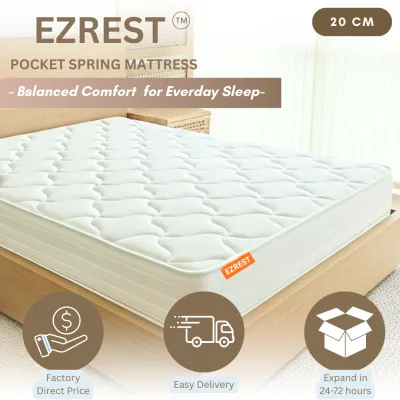
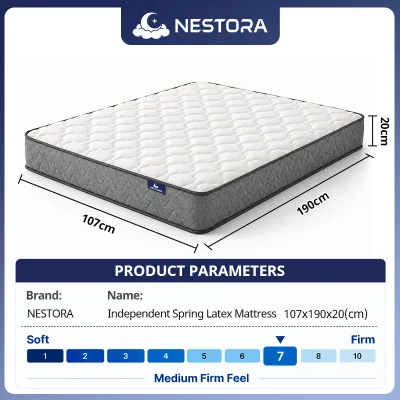
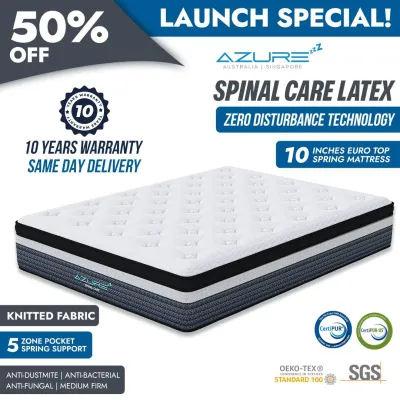
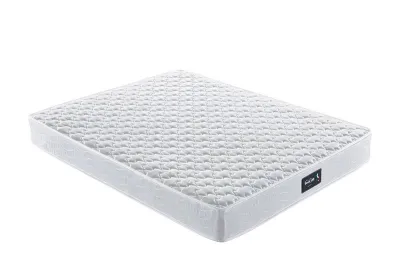
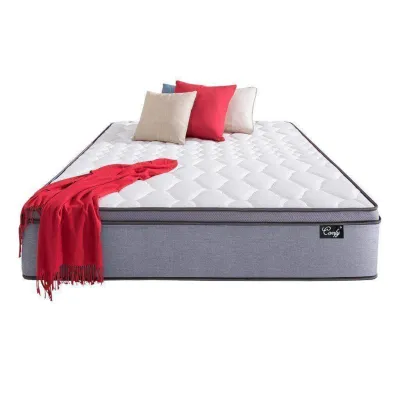
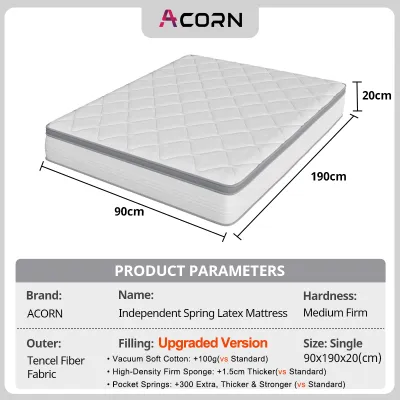
Prices are valid at publication and may change. Please refer to the product page for the latest price.
The construction of the top layers significantly influences this initial feel without altering the structural support underneath. For example, a tight top mattress has a flat, thin comfort layer stitched directly to the spring unit, resulting in a firmer, more traditional feel. A pillow top or Euro top mattress features an extra layer of padding stitched to the top, providing a plush, cushioning sensation. Even if two mattresses share the exact same spring system, a pillow top version will feel much softer than a tight top version.
Because there is no universal industry standard for mattress firmness, relying solely on a generic scale can be misleading. One manufacturer’s “medium” might feel like another’s “firm.” To make an accurate assessment, always consult the specific brand’s product specifications and customer feedback. Look for detailed descriptions of the comfort layer materials and the coil system rather than relying on a simple numerical rating.
Matching Surface Feel to Your Primary Sleeping Position
Your sleeping position is the primary factor determining how much cushioning your mattress needs to keep your spine aligned. When you lie down, your body weight is not distributed evenly. Different positions create distinct pressure points that require targeted relief from the comfort layers.

Side sleepers require a softer to medium-soft surface. In this position, the shoulders and hips bear the brunt of the body’s weight and protrude deepest into the mattress. If the surface is too firm, these areas cannot sink in, forcing the spine out of alignment and causing pressure build-up that leads to tossing and turning. A single spring mattress with a thick, contouring comfort layer allows the shoulders and hips to sink just enough to keep the spine straight.
Back sleepers need a balanced medium to medium-firm surface. The mattress must support the natural S-curve of the spine, particularly the lumbar region. If the mattress is too soft, the hips will sink too deep, flattening the lower back. If it is too firm, the mattress will not contour to the lower back, leaving a gap and causing muscle tension. A responsive pocket spring system with a moderate comfort layer provides the ideal blend of contouring and upward support.
Stomach sleepers require a firm surface to maintain proper alignment. Sleeping on the stomach naturally coaxes the lower back into an arch. If the mattress comfort layers are too soft, the pelvis sinks deep into the bed, exaggerating this arch and straining the lower back muscles and ligaments. A firm single spring mattress keeps the hips level with the shoulders, preventing spinal misalignment.
Combination sleepers, who rotate through multiple positions during the night, should look for a versatile medium-firm mattress. The comfort layers should be responsive enough to allow easy movement without making you feel “stuck.” Pocketed springs are highly beneficial here, as they react individually to movement, providing targeted support as you shift positions.
Adjusting Your Choice Based on Body Weight and Pressure
While your sleeping position dictates the ideal alignment profile, your body weight determines how much you will actually compress the mattress materials. The same mattress will feel completely different to individuals of different weights.
Lighter individuals, typically weighing under 60 kg, exert less downward pressure on the mattress. On a standard medium-firm mattress, they may not compress the comfort layers enough to experience any contouring or pressure relief, making the bed feel exceptionally hard. For lighter sleepers, a softer mattress or one with a thicker, more compliant comfort layer is often necessary to achieve comfortable pressure relief.
Average-weight individuals, falling between 60 kg and 90 kg, generally find that their experience aligns closely with standard manufacturer firmness ratings. A medium or medium-firm single spring mattress will typically provide them with the intended balance of surface comfort and deep structural support.
Heavier individuals, weighing over 90 kg, exert substantial downward force. They risk sinking completely through soft comfort layers and bottoming out against the spring unit, which can cause severe pressure points. To prevent this, heavier sleepers require firmer comfort layers and a robust spring system. Look for mattresses featuring thicker coil wire gauges or zoned pocket springs that offer reinforced support in the center third of the mattress to prevent “hammocking.”
Before purchasing, always cross-reference your weight with the manufacturer’s load capacity and support guidelines. Some brands design specific models with reinforced edge support and high-density foams to accommodate heavier weight profiles, ensuring the mattress maintains its shape and support over time.
How to Test and Verify a Single Spring Mattress
Whether you choose to shop in a physical showroom or purchase online, verifying the mattress’s suitability requires a systematic approach.
When testing a mattress in-store, avoid the common mistake of simply sitting on the edge or pressing your hand into the surface. Lie down on the mattress in your typical sleeping position for at least 10 to 15 minutes. This allows your body heat and weight to settle into the comfort layers, giving you a realistic sense of how the mattress supports your spine and relieves pressure. Pay close attention to whether you feel any tension in your lower back or shoulders.
If you are purchasing online, scrutinize the technical specifications. Check the coil type—pocket springs offer superior contouring and motion isolation compared to traditional Bonnell springs. Look for a risk-free sleep trial period, which typically ranges from 90 to 120 nights. A sleep trial is essential because it takes several weeks for your body to adjust to a new mattress. Ensure you understand the return policy, including any return shipping fees or pickup conditions.
For a single spring mattress, edge support is a critical consideration. Because a single bed has a smaller surface area, you are more likely to sleep near the perimeter. Poor edge support can make you feel as though you are rolling off the bed, effectively reducing the usable sleep surface. Look for models with reinforced foam encasements or thicker coils around the border to ensure stability and consistent firmness across the entire mattress surface.
Frequently Asked Questions (FAQ)
Can I change the firmness of my current single spring mattress?
Yes, you can alter the surface feel of your mattress by adding a mattress topper. If your current mattress is too firm, adding a soft memory foam, latex, or fiber-filled topper can provide the necessary pressure relief and contouring. However, a topper cannot fix a mattress that is too soft or already sagging. If the underlying spring core has lost its structural integrity, a topper will simply follow the contour of the sag, failing to provide proper spinal support.
Does a single spring mattress feel different from a larger size in the same model?
The core materials, coil gauge, and comfort layer thickness remain consistent across all sizes of a specific mattress model, meaning the theoretical firmness rating is identical. However, because a single mattress has a smaller surface area, you are always closer to the reinforced edges. This proximity can make the overall surface feel slightly firmer or more rigid than a queen or king-size mattress of the same model. Additionally, while motion transfer is rarely an issue for a single sleeper, robust edge support is much more noticeable and necessary on a single bed to maximize the usable sleeping area.

Community discussion
Share your experience or ask a question. Comments are reviewed before publication.