
Selecting the ideal firmness for a king-size mattress requires balancing your primary sleeping position, body weight, and individual comfort preferences. Because a king-size bed represents a significant investment and occupies a substantial footprint in your bedroom, making the correct choice is essential for long-term sleep quality and spinal health. In Singapore, where high humidity and compact residential layouts in HDB flats or condominiums are common, your choice must also account for material breathability and delivery logistics. By understanding how your body interacts with different support structures, you can select a mattress that keeps your spine neutrally aligned while relieving pressure on your joints.
Understand Mattress Firmness Scales and Feel
Mattress firmness is typically rated on a standard scale from 1 to 10, with 1 being extremely soft and 10 being extra firm. This scale is not an absolute, standardized metric across the industry; a “medium-firm” rating from one manufacturer might feel like a “medium” or “firm” from another. Instead, use this scale as a relative guide to narrow down your options. It is also helpful to distinguish between the initial feel of the top comfort layers and the deep support provided by the mattress core.
The concept of support is often confused with firmness. Support refers to how well a mattress keeps your spine in a neutral alignment, preventing your heavier midsection from sinking too deep. Comfort, on the other hand, refers to pressure relief on the surface. A mattress can have a soft, contouring comfort layer that cushions your shoulders and hips while still offering a highly supportive core that keeps your spine straight.
Products mentioned in this guide
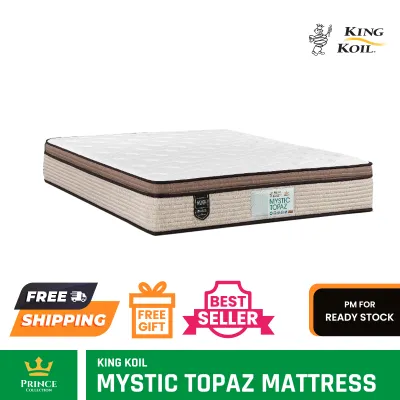
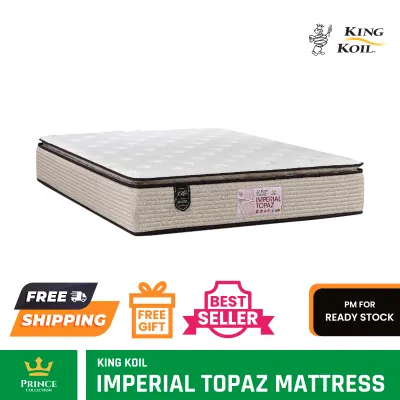
Prices are valid at publication and may change. Please refer to the product page for the latest price.
The subjective feel of a mattress is heavily influenced by its material composition. Memory foam tends to contour closely to the body, creating a “sinking-in” sensation that can feel softer and trap more heat. In contrast, natural latex offers a responsive, buoyant feel that keeps you on top of the mattress. In Singapore’s warm climate, hybrid mattresses combining pocket springs with breathable comfort layers are highly popular because they facilitate airflow while balancing surface cushioning with deep structural support.
Match Firmness to Your Primary Sleeping Position
Your primary sleeping position is the most critical factor in determining your baseline firmness needs. When you sleep, your spine should maintain the same natural curve it has when you are standing upright. If your mattress is too soft or too firm for your position, your muscles will work overtime to maintain alignment, leading to chronic stiffness and fatigue.

Side sleepers require a mattress that offers excellent pressure relief, typically falling in the medium-soft to medium range (around 4 to 6 on the firmness scale). When sleeping on your side, your shoulders and hips protrude deeply into the mattress. A surface that is too firm will compress these areas, restricting blood flow and causing tossing and turning. A contouring comfort layer allows these pressure points to sink in just enough to keep the spine straight.
Back sleepers need a balanced surface that supports the natural curve of the lower back, usually found in the medium to medium-firm range (5 to 7 on the scale). If the mattress is too soft, the pelvis will sag into the bed, straining the lumbar muscles. If it is too firm, the mattress will not conform to the lower back’s curve, leaving a gap that forces the spine into an unnatural, flat position.
Stomach sleepers require a firmer surface, typically rated medium-firm to firm (7 to 9 on the scale). Sleeping on your stomach naturally puts pressure on your lower back. If the mattress comfort layers are too plush, your hips and abdomen will sink deeply, arching your spine backward and causing severe lower back strain. A firm surface keeps the pelvis elevated and aligned with the shoulders.
Combination sleepers, who shift positions throughout the night, benefit most from a responsive medium mattress (around 5 to 6 on the scale). This middle-ground firmness provides enough contouring for side sleeping while maintaining the surface tension needed for back or stomach sleeping. Highly responsive materials, such as latex or pocketed coils, make it easier to change positions without feeling stuck in the comfort layers.
Adjust for Body Weight and Type
Your body weight directly affects how deeply you compress a mattress, which changes how firm the bed feels to you. The standard firmness recommendations are generally calibrated for individuals weighing between 60 and 90 kilograms. If your weight falls outside this range, you will need to adjust your target firmness accordingly.
Lighter individuals, typically weighing under 60 kilograms, exert less downward force on the mattress. As a result, they often perceive mattresses as being firmer than their official ratings suggest. A lighter side sleeper may find a standard “medium” mattress too rigid, preventing their shoulders and hips from sinking in enough to relieve pressure. For these individuals, softer comfort layers are necessary to achieve proper contouring and comfort.
Heavier individuals, weighing over 90 kilograms, compress mattress layers much more deeply. They often perceive mattresses as being softer than rated and risk sinking straight through the comfort layers onto the rigid support core. To prevent this “bottoming out” effect, heavier sleepers generally require firmer mattresses or hybrid models with robust, high-density foam or thick-gauge pocket spring support cores to maintain healthy spinal alignment.
Weight distribution also plays a significant role in how firmness is experienced. Individuals with broader shoulders or wider hips concentrate more weight in specific areas, requiring deeper contouring to prevent localized pressure points. Conversely, those with more even weight distribution can comfortably sleep on a wider variety of surface feels without experiencing alignment issues.
Evaluate King-Size Specific Considerations
Choosing a king-size mattress introduces unique variables, particularly when the bed is shared by two people with different sleeping positions, body weights, or comfort preferences. A standard king-size mattress in Singapore measures approximately 183 cm by 191 cm, providing ample space but also requiring careful consideration of how the surface behaves under two distinct bodies.
When partners have conflicting firmness needs—such as a lightweight side sleeper sharing a bed with a heavier stomach sleeper—a single, uniform mattress firmness may lead to discomfort for one or both individuals. In these scenarios, a split-king configuration is an excellent solution. This setup utilizes two separate mattresses (often equivalent to two single or super-single beds) placed side-by-side within a single king-size frame, allowing each partner to select their ideal firmness level. Alternatively, some manufacturers offer dual-firmness mattresses, where the left and right halves of a single king-size bed are constructed with different internal support structures.
Edge support is another critical factor for king-size beds. High-quality edge support prevents the perimeter of the mattress from sagging when you sit or sleep near the edge. This effectively maximizes the usable sleeping surface, allowing couples to utilize the entire width of the bed without feeling like they might roll off. Look for mattresses featuring reinforced foam encasements or thicker coils around the perimeter.
Motion isolation is essential for minimizing sleep disruptions caused by a partner tossing and turning. Generally, memory foam and pocket spring mattresses offer superior motion isolation compared to traditional open-coil innersprings. However, the firmness level can also affect motion transfer; extremely firm mattresses may transmit more surface vibrations, whereas softer, contouring materials tend to absorb movement more effectively.
Finally, consider the physical dimensions and delivery logistics of a king-size mattress in Singapore. Given the tight corridors, small lifts, and narrow stairwells of many HDB flats and condominiums, delivering a solid, heavy king-size mattress can be challenging. Verify the finished dimensions of your doorways and lift access before purchasing. If access is highly restricted, a mattress-in-a-box model or a split-king setup can simplify delivery and installation significantly.
Test and Verify Your Mattress Choice
Because mattress firmness is highly subjective, verifying your choice through physical testing or structured trial periods is crucial to ensuring long-term satisfaction. Waking up with localized stiffness, lower back pain, or shoulder soreness are common indicators that your current mattress firmness is incorrect and failing to support your body properly.
When testing mattresses in a retail showroom, recreate your actual sleeping conditions as closely as possible. Lie down in your primary sleeping position for at least 10 to 15 minutes rather than just sitting on the edge or lying down for a few seconds. Bring or request a pillow that matches the height and loft you use at home, as your pillow height directly influences your neck and spinal alignment.
Relying solely on a brief showroom test can be misleading, as your body needs time to adjust to a new sleeping surface. Look for retailers that offer comprehensive sleep trial periods, which typically range from 30 to 100 nights. This trial allows you to test the mattress in your own home. Keep in mind that new mattresses, especially those made of high-density foams or latex, require a break-in period of at least two to three weeks before they reach their true, intended firmness level.
Before finalizing your purchase, carefully review the terms of the sleep trial and return policy. Ensure you understand any associated fees, such as return shipping, restocking charges, or delivery fees for exchanges. In Singapore, some retailers may charge a nominal fee to cover the logistics of retrieving or swapping a king-size mattress, so clarifying these details beforehand prevents unexpected expenses.
Frequently Asked Questions (FAQ)
Can I change the firmness of my existing king-size mattress?
Yes, you can adjust the surface feel of your mattress without replacing the entire bed. Adding a mattress topper is a highly effective, reversible way to alter firmness; a plush memory foam or soft latex topper can add pressure relief to a bed that feels too firm, while a high-density foam topper can add a touch of surface tension to a bed that is slightly too soft. Additionally, inspect your bed frame, slats, or foundation. A sagging or damaged foundation can cause a mattress to feel unsupportively soft, and replacing or reinforcing the slats can instantly restore the mattress’s intended firmness and support.
Does a firmer mattress always mean better back support?
No, a firmer mattress does not automatically guarantee better back support. Proper spinal support requires a mattress to conform to the natural curves of your body while keeping your spine neutrally aligned. If a mattress is excessively firm, it will not contour to your shoulders and hips, creating high-pressure zones and leaving your lower back unsupported. This lack of contact forces your lower back muscles to remain tense throughout the night, often resulting in stiffness and pain upon waking. The ideal mattress must balance surface contouring with deep structural support.

Community discussion
Share your experience or ask a question. Comments are reviewed before publication.