
The ideal firmness for a foldable tatami mattress depends heavily on your primary sleeping position, as the mattress’s compact thickness and folding joints alter how your body weight is distributed. Generally, side sleepers require a medium-soft to medium surface to cushion the shoulders and hips, back sleepers benefit from a medium-firm feel to support the natural lumbar curve, and stomach sleepers need a firm surface to prevent the midsection from sinking. Because foldable tatami mattresses are typically thinner than standard spring mattresses, selecting the correct firmness is crucial to prevent your body from bottoming out against the hard floor beneath. In warm and humid climates like Singapore, these versatile, space-saving sleeping solutions are highly popular for guest rooms, studio apartments, and minimalist living spaces. However, maximizing their comfort requires a clear understanding of how different materials, thicknesses, and sleeping postures interact to support your body throughout the night.
Assess Your Sleeping Position and Body Support Needs
Identifying your dominant sleeping posture is the first step in selecting a mattress that maintains healthy spinal alignment. When you lie down, your body exerts pressure unevenly, with the heaviest zones concentrated around the shoulders, hips, and lower back. A mattress that is too soft allows these heavy areas to sink excessively, distorting the natural curve of your spine, while a surface that is too firm can create painful pressure points and leave gaps where your body lacks support. By understanding how your body interacts with a sleeping surface, you can make an informed decision that promotes restful sleep and prevents chronic discomfort.
Side Sleepers
Side sleepers require a surface that offers sufficient contouring to accommodate the prominent curves of the shoulders and hips. Without adequate cushioning, these areas bear the brunt of the body’s weight, leading to restricted circulation, joint soreness, and frequent tossing and turning. A medium-soft to medium foldable tatami mattress allows these pressure points to sink just enough to keep the spine in a straight, horizontal line. However, because foldable models are relatively thin, side sleepers must verify that the mattress core has enough density to prevent their hips from pressing directly against the hard floor. Look for models that incorporate a supportive base layer beneath a softer comfort layer to achieve this balance.
Products mentioned in this guide
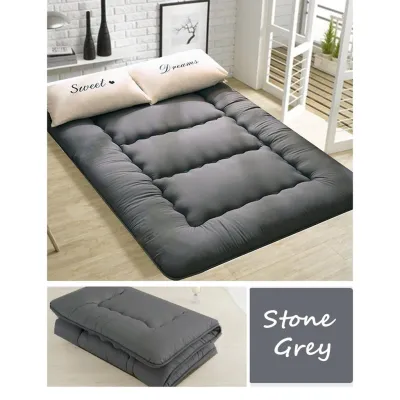


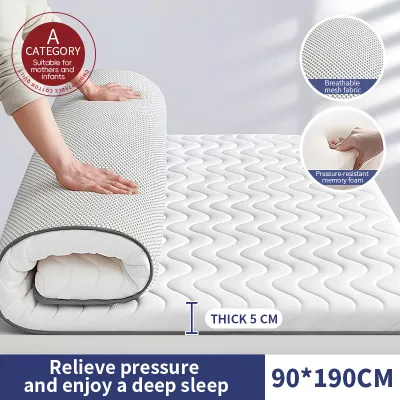

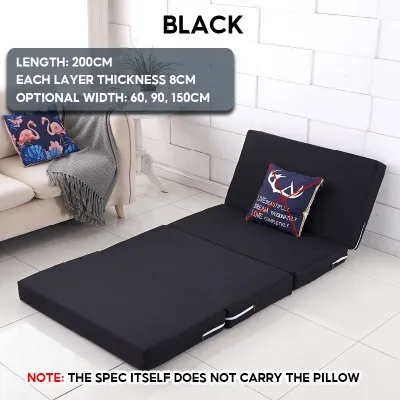

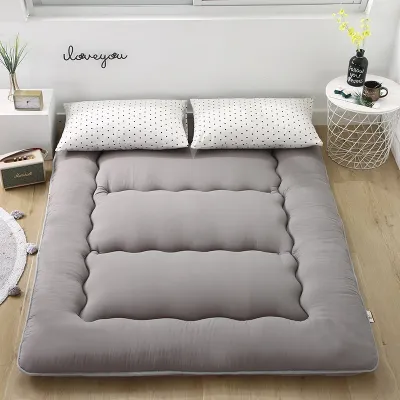
Prices are valid at publication and may change. Please refer to the product page for the latest price.
Back Sleepers
Back sleepers need a balanced sleeping surface that supports the natural S-curve of the spine without pushing the neck or lower back into unnatural angles. The primary challenge for back sleepers is preventing the pelvis from sinking too deeply, which can strain the lower lumbar muscles. A medium to medium-firm foldable tatami mattress provides the necessary push-back support under the hips while offering enough surface contouring to fill the small gap beneath the lower back. This balance ensures that body weight is distributed evenly across the entire surface of the mattress, reducing muscle tension and allowing the back to fully relax.
Stomach Sleepers
Stomach sleeping is highly demanding on the spine, requiring a firm surface to prevent the midsection from sagging. When a stomach sleeper uses a mattress that is too soft, the pelvis sinks downward, creating a hammock effect that hyperextends the lower back and strains the surrounding muscles and ligaments. To maintain a neutral spinal alignment, stomach sleepers should opt for a firm foldable tatami mattress. This firm support keeps the hips elevated and aligned with the shoulders, reducing the risk of waking up with lower back stiffness. A firm surface also ensures that breathing is not obstructed by a surface that is too plush.
Combination Sleepers
Combination sleepers, who transition between multiple positions throughout the night, require a versatile and responsive surface. A medium-firm foldable tatami mattress is often the most practical choice for mixed postures, as it offers a compromise between the pressure relief needed for side sleeping and the stable support required for back or stomach sleeping. The surface must allow for easy movement; a mattress that is too soft can trap the sleeper in one position, making transitions difficult and disrupting sleep quality. Choosing a medium-firm option ensures that the mattress adapts quickly as you shift positions, maintaining support regardless of how you lie.
How Body Weight and Type Influence Firmness Choices
Your body weight and physical build significantly alter how you perceive mattress firmness, making it necessary to adjust baseline recommendations. A mattress that feels perfectly medium-firm to an individual of average weight may feel excessively firm to a lighter sleeper or overly soft to a heavier sleeper. Lighter individuals exert less force on the mattress and may struggle to compress a firm surface enough to experience pressure relief, meaning they often benefit from slightly softer options. Conversely, heavier individuals require a firmer surface or a higher-density core to prevent excessive sinking and ensure the mattress does not bottom out.

When shopping for a foldable tatami mattress, it is essential to check the manufacturer’s maximum load specifications and weight capacity labels. Foldable models, particularly those utilizing lightweight foam or natural fibers, have structural limits that differ from traditional thick mattresses. A mattress that is overloaded will degrade quickly, lose its supportive properties, and fail to keep your spine aligned. Verifying these specifications helps ensure the mattress can support your body weight over extended use without premature sagging. Additionally, individuals with broader shoulders or wider hips may require slightly more contouring to achieve proper alignment, regardless of their weight.
Evaluating Foldable Tatami Mattress Construction and Materials
The internal construction and materials of a foldable tatami mattress dictate its overall firmness and durability. Traditional tatami mats are made of woven rush grass and a compressed straw core, offering an exceptionally firm, flat surface. Modern foldable tatami mattresses, however, often incorporate layers of high-density polyurethane foam, memory foam, coconut coir, or polyester fibers to provide varying levels of cushioning. Understanding these material differences is key to predicting how the mattress will feel in your home. For instance, coconut coir provides a highly breathable, firm support similar to traditional straw, while memory foam offers superior contouring and pressure relief.
The total thickness of the foldable mattress plays a critical role in how firm it feels, especially when placed directly on a hard floor. A thin mattress of only 5 cm may feel significantly firmer than a 10 cm model of the same material, as your body weight easily compresses the thin layer and meets the unyielding resistance of the floor. When evaluating options, check the product tags and manufacturer specifications for density ratings or indentation load deflection (ILD) indicators if available. Higher density or ILD ratings generally point to a firmer, more supportive core that resists bottoming out.
Additionally, the physical design of foldable mattresses introduces unique structural considerations. Tri-fold or multi-fold designs rely on fabric hinges or seams where the sections meet. These joints can create slight variations in surface uniformity and edge support. When choosing a mattress, inspect the hinge construction to ensure the seams do not create uncomfortable gaps under your main pressure points, such as the hips or lower back, which could compromise the overall support of your chosen firmness level. High-quality folding joints should remain flush when the mattress is fully unfolded, providing a continuous, supportive surface.
Testing and Adjusting Your Foldable Mattress Setup
Once you have selected a foldable tatami mattress, testing it in your actual sleeping environment is crucial to ensure the firmness meets your needs. The surface beneath your mattress has a profound impact on its overall feel. Placing a foldable mattress on a solid tile or hardwood floor will make it feel noticeably firmer than placing it on a carpeted area, a thick rug, or a flexible slatted bed frame. If your mattress feels slightly too firm on a bare floor, placing a non-slip underlay or a thin tatami mat underneath can soften the overall feel and improve comfort.
If you find that your chosen mattress is not providing the exact level of comfort you desire, you can adjust the surface feel without replacing the entire unit. Adding a separate mattress topper is an effective way to customize firmness. A soft memory foam or latex topper can add pressure relief to a mattress that feels too hard, while a firmer fiber topper can provide a more stable surface. This modular approach allows you to fine-tune your sleeping setup as your preferences or physical needs change over time. It is also a cost-effective way to extend the lifespan of your foldable mattress.
Pay close attention to how your body feels during the first few weeks of use. Persistent morning stiffness, localized joint pain, or waking up feeling unrefreshed are clear signs that your current setup is failing to provide adequate support. It is important to differentiate between temporary muscle adjustment to a new sleeping surface and ongoing strain caused by incorrect spinal alignment. If discomfort persists despite adjusting the underlying surface or adding a topper, you may need to re-evaluate the core firmness of your foldable mattress or consider a thicker model.
Frequently Asked Questions (FAQ)
Can I use a foldable tatami mattress directly on the floor without it feeling too firm?
Yes, you can use a foldable tatami mattress directly on the floor, but the hard surface underneath will make the mattress feel firmer than it would on a slatted frame. To prevent the setup from feeling excessively hard, choose a mattress with a thickness of at least 8 to 10 cm, or one that features a high-density foam core designed to absorb body weight. Additionally, when placing a mattress directly on the floor, you must check the manufacturer’s guidelines regarding ventilation. Regular airing and lifting the mattress off the floor during the day are essential to prevent moisture buildup and mold growth underneath, especially in humid environments.
How do I know if my foldable mattress is too soft or too firm for my back?
You can determine if your mattress firmness is incorrect by observing specific physical signs when you wake up. If the mattress is too soft, your hips will sink too deeply, causing a dull ache or stiffness in your lower back due to the spine sagging. If the mattress is too firm, you will likely experience localized joint pain or pressure points in your shoulders and hips, as the surface does not contour to your body shape. Restless tossing and turning throughout the night is another common indicator that your body is struggling to find a comfortable, pressure-free position.

Community discussion
Share your experience or ask a question. Comments are reviewed before publication.