
Selecting the perfect foldable queen mattress involves more than just finding a model that fits your storage closet. Because foldable mattresses are thinner and constructed differently than standard static beds, your sleeping position dictates not only the comfort level you need but also the minimum thickness required to prevent physical discomfort. To choose the right firmness, you must balance your primary sleeping posture—side, back, or stomach—with your body weight and the physical construction of the mattress. Matching these factors ensures your spine remains neutrally aligned and prevents you from sinking through the foam layers onto the hard floor below.
Understanding Foldable Mattress Construction and Firmness
To make an informed decision, it is essential to understand how a foldable mattress queen is engineered. Unlike standard pocket-sprung or thick hybrid mattresses, a foldable mattress relies on segmented panels—typically tri-fold or bi-fold designs—joined by fabric seams. This construction allows the mattress to fold into a compact footprint for easy storage in space-constrained apartments and condominiums. The core of these mattresses is usually composed of polyurethane foam, memory foam, or latex, sometimes arranged in dual or triple layers to balance comfort and structural support.
The primary risk associated with thinner foldable beds is a phenomenon known as “bottoming out.” This occurs when a sleeper’s body weight fully compresses the comfort layers, causing them to feel the rigid surface of the floor or bed frame beneath. Because foldable mattresses typically range from 5 cm to 15 cm in thickness, they have a much lower compression threshold than traditional 25 cm to 30 cm mattresses.
Products mentioned in this guide

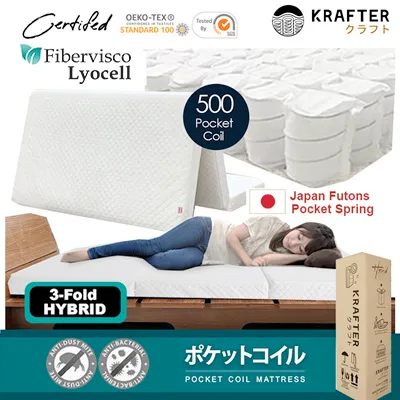
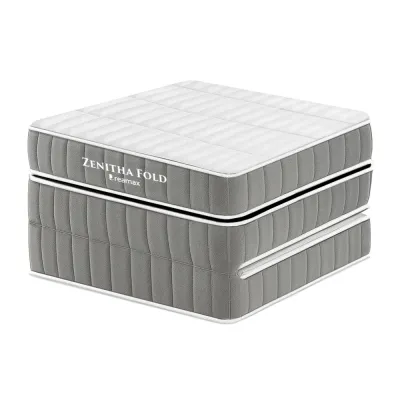

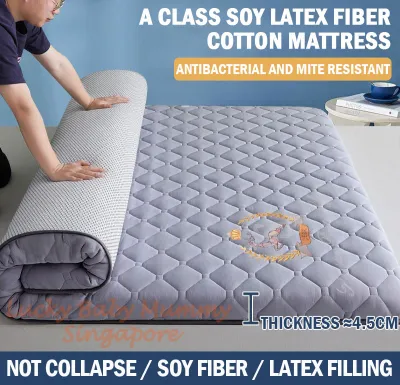
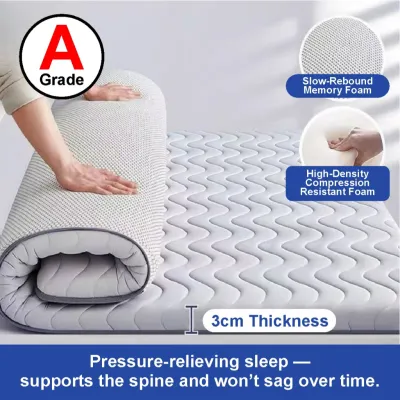
Prices are valid at publication and may change. Please refer to the product page for the latest price.
Consequently, standard firmness labels—such as soft, medium, and firm—are highly relative. A “medium” rating on a 5 cm mattress will feel vastly different from a “medium” rating on a 15 cm mattress. The perceived firmness is directly tied to the total thickness of the mattress and the density of its underlying support layers. When shopping, do not rely solely on subjective marketing descriptions. Instead, carefully review the manufacturer’s technical specifications, paying close attention to foam density ratings and the specific thickness of each material layer.
Matching Firmness Levels to Your Sleeping Position
Your sleeping posture determines how your body weight is distributed across the surface of the foldable mattress queen. Because foldable mattresses have less vertical space to absorb pressure, choosing a firmness level tailored to your specific position is critical to preventing morning aches and long-term spinal strain.

Side Sleepers: Balancing Pressure Relief and Support
Side sleeping is one of the most common positions, but it presents the greatest challenge for thin or poorly configured foldable mattresses. When you sleep on your side, your body weight is concentrated on relatively narrow contact points: the shoulders and the hips. To maintain a straight, neutral spine, these protruding joints must be allowed to sink slightly into the mattress, while the waist and neck remain supported.
For side sleepers, a medium to medium-soft firmness level is generally ideal. This range provides the necessary contouring and pressure relief to prevent numbness in the shoulders and soreness in the hips. However, this recommendation comes with a critical warning unique to foldable designs: if you select an ultra-soft mattress that is too thin, your shoulders and hips will easily compress through the soft foam and hit the hard floor. This bottoming-out effect can lead to severe joint pain and poor sleep quality. If you prefer a softer, pressure-relieving feel, ensure the mattress is at least 10 cm to 15 cm thick, with a dedicated high-density support foam base layer beneath the plush comfort layer.
Back Sleepers: Maintaining Lumbar Alignment
Back sleepers require a balanced surface that supports the natural curve of the spine. If the mattress is too soft, the heavy pelvic region will sink too deeply into the foam, causing the lower spine to bow downward and straining the lumbar muscles. Conversely, if the mattress is excessively firm, it will not contour to the lower back, leaving a gap beneath the lumbar spine and forcing the back muscles to remain tense throughout the night.
A medium to medium-firm foldable mattress typically provides the optimal balance for back sleepers. This firmness level offers enough surface elasticity to cushion the shoulders and buttocks while relying on dense base layers to keep the hips level with the rest of the body. In a foldable configuration, a medium-firm feel is highly effective because it utilizes the floor or bed base as a secondary support mechanism without allowing the sleeper to sink to a painful depth. Look for multi-layered foam designs where a top layer of contouring memory foam is supported by a dense polyurethane foam base.
Stomach Sleepers: Preventing Spinal Sagging
Stomach sleeping is highly sensitive to mattress firmness. When lying on your stomach, the majority of your body weight is concentrated around your midsection and hips. If the mattress surface is too soft, your pelvis will sink deeply into the bed, arching your lower back into an unnatural, hyperextended position. Over time, this spinal sagging can lead to chronic lower back pain and neck stiffness.
To keep the spine neutral, stomach sleepers require a firm or medium-firm foldable mattress. The surface must be rigid enough to resist deep compression, keeping the hips and shoulders on the same horizontal plane. Stomach sleeping on a soft or thin foldable mattress is highly discouraged. Without a thick, high-density support core to resist the downward force of your torso, spinal misalignment is virtually guaranteed. If you are a dedicated stomach sleeper, prioritize foldable models that feature a single, solid layer of high-density support foam rather than multi-layered plush configurations.
How Body Weight and Thickness Affect Support
Firmness is not an objective metric; it is an interactive experience between the sleeper’s body mass and the physical properties of the mattress. This interaction is amplified when using a foldable mattress queen due to the limited thickness of the foam layers.
Heavier individuals exert greater downward force on the mattress. Consequently, a mattress labeled as “medium” by a manufacturer may feel exceptionally soft to a heavier sleeper, causing them to sink rapidly through the comfort layers and experience bottoming out. For these individuals, a firmer rating or a significantly thicker profile is necessary. A heavier sleeper should look for a foldable queen mattress with a minimum thickness of 12 cm to 15 cm, featuring high-density base foam to provide adequate resistance and structural longevity.
Conversely, lighter individuals exert very little pressure on the mattress surface. To a lighter sleeper, a mattress labeled as “medium” may feel uncomfortably firm, as their body weight is insufficient to compress the foam layers and engage the contouring properties. Lighter sleepers can comfortably use thinner foldable mattresses and should lean toward medium-soft to medium ratings to ensure they receive adequate pressure relief.
To make an accurate decision, always cross-reference your body weight with the mattress’s physical dimensions and material specifications. Check the product specifications for exact density metrics and total height. High-density foams retain their firmness and shape much better under load than low-density alternatives, preventing the premature sagging that often plagues cheap foldable beds.
Step-by-Step Guide to Selecting and Testing Your Mattress
Choosing the right foldable mattress queen requires a systematic approach to ensure it fits both your physical body and your living space. Follow these steps to make a confident purchase:
- Step 1: Measure and Verify Dimensions. Before purchasing, verify the exact unfolded and folded dimensions of the mattress. A standard queen-size mattress in Singapore typically measures 152 cm in width and 190 cm in length. Ensure your designated floor area or bed frame can accommodate these dimensions comfortably. Additionally, measure your storage closets, wardrobes, or under-bed clearance to confirm the folded unit will fit when stored. If you live in an apartment, check that the folded dimensions allow for easy transport through doorways and lift cabins.
- Step 2: Review Structural Specifications. Look beyond subjective comfort descriptions and analyze the physical construction. Check the total thickness of the mattress—aim for at least 10 cm for regular adult use. Examine the cover material; in Singapore’s warm and humid tropical climate, a removable, washable cover made from breathable fabric is highly beneficial for moisture management and hygiene. Remember that material names alone do not guarantee durability; check the manufacturer's care instructions to ensure long-term performance.
- Step 3: Consider the Base Surface. The surface where you place your foldable mattress will directly alter its perceived firmness. If you plan to lay the mattress directly on a hard concrete, tiled, or vinyl floor, the lack of base flexibility will make the mattress feel significantly firmer. If you place the mattress on a slatted bed frame or a flexible wooden base, the frame will absorb some of the downward pressure, making the mattress feel slightly softer and more yielding. Test or evaluate the mattress on the exact surface you intend to use.
- Step 4: Verify Trial and Return Policies. Because firmness is highly subjective and depends on individual physical characteristics, it is difficult to judge a mattress solely from online descriptions. Prioritize retailers that offer a clear sleep trial or a flexible return and exchange policy. This allows you to test the mattress in your own home, on your preferred base, and in your natural sleeping position before making a permanent commitment.
Frequently Asked Questions (FAQ)
Can I use a mattress topper to change the firmness of my foldable mattress?
Yes, you can use a mattress topper to adjust the surface feel of a foldable mattress. For example, if your foldable bed feels too rigid, adding a soft memory foam or latex topper can provide immediate pressure relief for your shoulders and hips. However, a topper is not a cure-all. If your base foldable mattress is too thin or soft, and you are already bottoming out, adding a soft topper will not solve the issue. A topper cannot replace the structural support of a solid, high-density mattress core. Additionally, keep in mind that a separate topper will need its own storage space when the mattress is folded away.
Does a foldable mattress feel firmer on the floor compared to a bed frame?
Yes, a foldable mattress will feel noticeably firmer when placed directly on a solid floor, such as tile, concrete, or hardwood. Because the floor is completely rigid, it offers zero downward flex, forcing the mattress foam to absorb 100% of your body weight. If you place the same mattress on a slatted bed frame, the individual wooden slats will flex slightly under pressure, providing a softer, more cushioned feel. When testing your new foldable mattress during its trial period, make sure to place it on the exact surface you plan to use daily to ensure the firmness level meets your comfort needs.

Community discussion
Share your experience or ask a question. Comments are reviewed before publication.