
To find the right Dunlopillo mattress firmness, you must balance your body weight with your primary sleeping position to keep your spine in a neutral alignment. Heavier individuals and stomach sleepers generally require firmer support to prevent sagging, while lighter individuals and side sleepers need softer comfort layers to relieve pressure on the shoulders and hips. By matching these physical traits to the mattress’s structural specifications, you can avoid common sleep issues like lower back pain and morning stiffness.
Selecting a mattress is not a one-size-fits-all decision. Dunlopillo mattresses utilize various materials, including natural latex and pocketed springs, which react differently depending on the pressure applied to them. Understanding how your body interacts with these materials is the key to choosing a model that provides lasting comfort and support.
Understanding Mattress Firmness vs. Support
Many shoppers confuse firmness with support, but these two terms describe completely different aspects of mattress performance. Firmness refers to the initial feel of the mattress when you first lie down on the comfort layers. It is the immediate sensation of softness or hardness on the surface, which is highly subjective.
Products mentioned in this guide
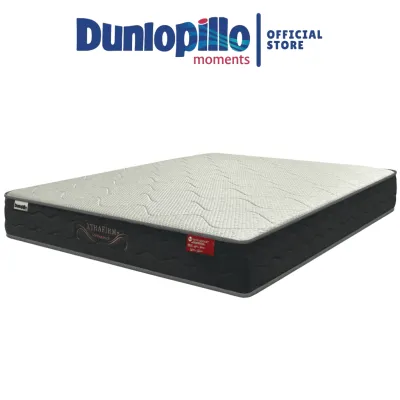


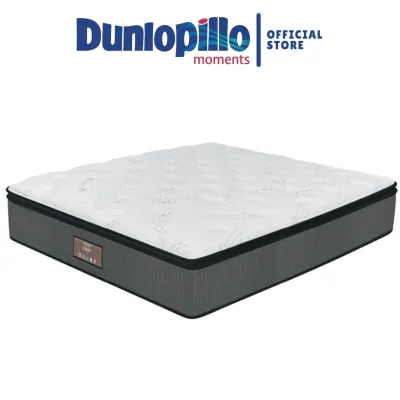
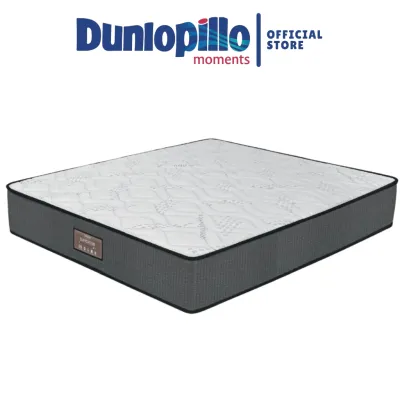
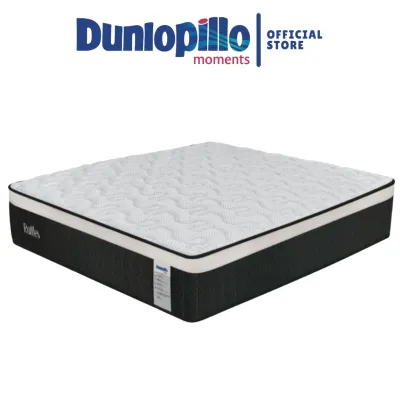

Prices are valid at publication and may change. Please refer to the product page for the latest price.
Support, on the other hand, refers to the mattress’s ability to keep your spine in a neutral, healthy alignment throughout the night. A mattress can have a very soft, plush comfort layer on top while still providing excellent deep-down support through a high-density latex core or a robust pocketed spring system. Conversely, a mattress can feel rock-hard on the surface but fail to support your lower back properly if the core lacks structural integrity.
When browsing Dunlopillo options, you will often encounter a firmness scale ranging from 1 to 10, where 1 represents an extremely soft surface and 10 represents an extra-firm feel. Because personal perception of firmness varies based on your body shape and previous sleeping habits, you should always cross-reference these numerical ratings with the actual material specifications of the mattress.
Checking the density of the latex layers and the coil count of the spring system provides a more objective measure of support than the marketing label alone. High-density natural latex offers progressive support, meaning it pushes back more as more weight is applied. This characteristic makes it highly versatile, but you must still select the correct overall firmness level to ensure the comfort layers match your physical needs.
Evaluating Your Body Weight for Proper Support
Your body weight is the primary force acting upon the mattress, determining how deeply you sink into the comfort layers and how much support you require from the core. If a mattress is too soft for your weight, your heaviest parts—typically the hips and midsection—will sink too deeply, causing your spine to curve uncomfortably. If it is too firm, your body will rest entirely on top of the mattress, creating painful pressure points.

Lightweight sleepers, generally defined as those weighing under 60 kg, do not exert enough downward force to compress firm comfort layers. If you fall into this category, a firm mattress will likely feel like a solid board, leading to shoulder and hip pain. Lightweight individuals usually find their ideal match in the soft to medium range (firmness levels 3 to 5), where the comfort layers can contour to their body shape without requiring heavy pressure.
Average-weight sleepers, weighing between 60 kg and 90 kg, exert moderate pressure and are highly compatible with medium to medium-firm mattresses (firmness levels 5 to 7). This range offers a balanced combination of surface contouring and deep-down support. In this weight bracket, the comfort layers compress just enough to cradle the joints while the support core keeps the pelvis from sinking too far.
Heavyweight sleepers, weighing over 90 kg, require a firmer mattress (firmness levels 7 to 9) or a model with a thicker, high-density comfort system. Without sufficient resistance, heavier bodies will quickly compress the comfort layers and bottom out against the support core, leading to premature wear of the mattress and severe back discomfort. For these individuals, checking the manufacturer’s specified weight limits and opting for reinforced pocketed springs or extra-firm natural latex is essential for long-term durability.
Aligning Firmness with Your Primary Sleeping Position
Your dominant sleeping position dictates where your body requires pressure relief and where it needs structural support. Each posture places unique demands on a mattress, and failing to align your firmness choice with your position can lead to chronic joint stiffness and poor sleep quality.
Side sleepers require a mattress that offers significant contouring and pressure relief. When you sleep on your side, your shoulders and hips bear the brunt of your body weight, creating concentrated pressure points. A medium-soft to medium mattress (firmness levels 4 to 6) allows these wider areas to sink into the surface, keeping the spine straight and preventing numbness in the arms.
Back sleepers need a highly balanced surface that supports the natural S-curve of the spine. If the mattress is too soft, the pelvis will sink, flattening the lumbar curve and straining the lower back muscles. If it is too firm, the mattress will not conform to the lower back, leaving a gap that forces the muscles to remain tense. A medium-firm mattress (firmness levels 6 to 7) typically provides the perfect blend of lumbar support and surface cushioning.
Stomach sleepers face the greatest risk of spinal misalignment because gravity naturally pulls the midsection downward. If a mattress is too soft, the hips will sink deeply, arching the lower back into an unnatural position that causes severe strain. To prevent this, stomach sleepers require a firm to extra-firm mattress (firmness levels 7 to 8) that keeps the hips and shoulders on the same horizontal plane.
Combination sleepers, who rotate through multiple positions during the night, need a responsive mattress that facilitates easy movement. If a mattress is too soft or slow-moving, you may feel stuck in a hole, making position changes difficult and disruptive to your sleep cycle. A medium-firm mattress with highly responsive natural latex or pocketed springs allows for effortless transitions while maintaining adequate support in all positions.
Cross-Referencing Weight and Position for Your Ideal Match
To find your perfect Dunlopillo mattress, you must synthesize your body weight and sleeping position into a unified decision framework. These two factors often interact in complex ways, requiring you to look beyond standard product descriptions to find the right balance of surface comfort and deep support.
For instance, a heavyweight side sleeper presents a unique challenge: they need deep pressure relief for their shoulders and hips, but they also require robust support to prevent their midsection from sinking too far. A standard soft mattress will bottom out, while a standard firm mattress will cause joint pain. The solution is a mattress with a thick, plush comfort layer—such as a high-density latex pillow-top—supported by an extra-firm pocketed spring core.
Conversely, a lightweight stomach sleeper needs a surface firm enough to keep their spine aligned, but they do not have the body mass to compress a standard firm mattress. An extra-firm bed might feel uncomfortably hard against their ribs and chest. In this scenario, a medium-firm mattress with a thin, high-density comfort layer offers the necessary support without feeling like an unforgiving surface.
When weight and position demands conflict, you should always prioritize spinal alignment over surface softness. A mattress that feels incredibly cozy in the first ten minutes can cause severe back pain after eight hours if it does not support your spine properly. Use your weight category to determine the required strength of the support core, and use your sleeping position to select the thickness and firmness of the top comfort layers.
Verifying Your Choice Through Testing and Trial Policies
Once you have narrowed down your ideal firmness level using your weight and sleeping position, the final step is to verify your choice through physical testing and a clear understanding of retail policies. While online research provides an excellent foundation, nothing replaces the physical feedback of resting on the mattress.
When visiting a showroom, dress in comfortable clothing and spend at least 15 to 20 minutes lying on your preferred models in your actual sleeping position. Do not simply sit on the edge of the bed or lie on your back if you are a dedicated side sleeper. Pay close attention to whether your shoulders and hips feel compressed, and check if you can easily turn over without straining.
Before finalizing your purchase, carefully review the sleep trial policies, return conditions, and warranty terms for the specific Dunlopillo model you are considering. Because a mattress can take several weeks for your body to adjust to, a sleep trial is highly valuable. Be aware that trial policies can vary significantly between authorized physical retailers and online marketplaces, so always confirm the exact terms in writing.
If you have specific physical conditions, such as chronic back pain or joint issues, consult the retailer or a healthcare professional to see if a specialized orthopedic model is appropriate. Ensuring that your chosen mattress has a robust warranty against sagging and manufacturing defects will protect your investment and guarantee long-term sleep comfort.
Frequently Asked Questions (FAQ)
What if my partner and I have different weights and sleep positions?
When partners have different physical profiles and sleep preferences, a standard mattress can force one person to compromise on comfort or support. To resolve this, look for dual-firmness mattresses or customizable split models that allow each side of the bed to be configured with a different firmness level. This setup ensures that both individuals receive the precise support they need without affecting the other.
If a split model is not available, you should prioritize the support needs of the heavier partner to prevent the mattress from sagging prematurely. You can then customize the lighter partner’s side by adding a high-quality, single-sided mattress topper to introduce extra surface plushness. This approach maintains structural support across the entire bed while tailoring the surface feel for individual comfort.
Can I change the firmness of my Dunlopillo mattress after buying it?
While you cannot alter the internal support core of a mattress after purchase, you can make minor adjustments to the surface firmness using compatible mattress toppers. A plush latex or memory foam topper can soften a mattress that feels slightly too firm, providing additional pressure relief for your shoulders and hips.
However, you should avoid using thick or incompatible toppers on a mattress that is already too soft, as a topper cannot fix a sagging or unsupportive core. Additionally, ensure that any topper you use does not trap excess heat, especially in warm climates, and verify that adding a topper does not void your manufacturer’s warranty.

Community discussion
Share your experience or ask a question. Comments are reviewed before publication.