
Selecting the ideal mattress firmness is a highly individual decision that directly impacts your sleep quality, spinal health, and daily comfort. When considering the Dunlopillo Destress range, finding the right match requires a clear understanding of how your primary sleeping position and body weight interact with the mattress’s support layers. A mattress that feels perfectly supportive to a back sleeper may cause uncomfortable pressure points for a side sleeper, while a lighter individual will experience firmness differently than a heavier person. By analyzing your physical profile and sleep habits, you can make an informed choice that ensures long-term comfort and proper spinal alignment.
Assess Your Primary Sleep Position and Spinal Alignment Needs
Your dominant sleeping posture is the most critical factor in determining how much contouring and support your mattress must provide. During sleep, your spine should maintain its natural curve, similar to your posture when standing upright. When a mattress fails to support this alignment, your muscles remain tense throughout the night, leading to stiffness and aches in the morning.
Side sleepers require a mattress that offers significant contouring, particularly around the shoulders and hips. Because these areas project furthest from the body, they bear the brunt of your weight when you lie on your side. A mattress that is too firm will press against these pressure points, restricting circulation and causing you to toss and turn. Conversely, a mattress that is too soft will allow your hips to sink too deeply, pulling your spine out of alignment. Look for a firmness level that cushions these joints while filling the gap at your waist.
Products mentioned in this guide
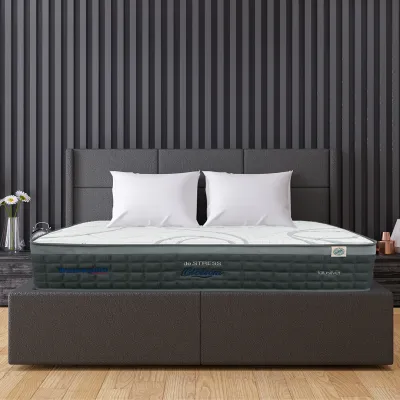
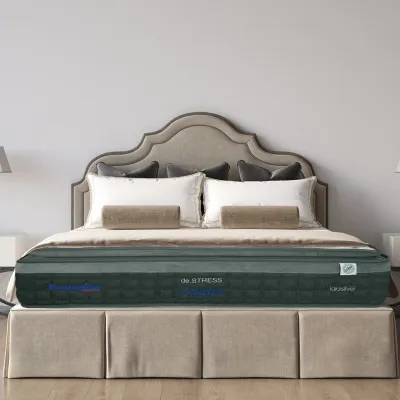
![[The Mattress Boutique]Dunlopillo Xanadu TalaSilver Latex Destress Individual Pocketed Spring Mattress](https://img.lazcdn.com/g/p/eb7963cadd0be0d3341ddc495e5c25db.jpg_400x400q80.jpg_.webp)
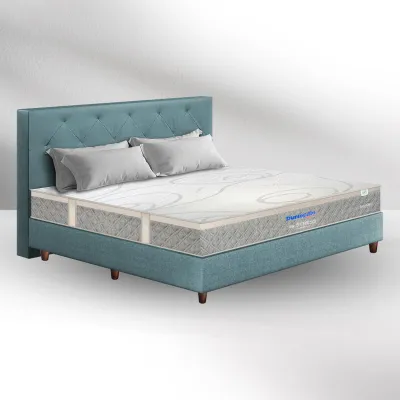
Prices are valid at publication and may change. Please refer to the product page for the latest price.
Back sleepers need a balanced surface that distributes weight evenly across the entire body. The primary challenge for back sleepers is preventing the lower back and pelvis from sinking too deeply into the mattress, which flattens the natural lumbar curve. At the same time, the mattress must offer enough surface plushness to cradle the shoulders and buttocks. A medium to medium-firm feel is generally recommended to provide this delicate balance of upward support and gentle contouring.
Stomach sleepers require a relatively firm sleeping surface to keep their hips and pelvis elevated. When sleeping on your stomach, gravity naturally pulls your midsection downward. If the mattress is too soft, your hips will sink, causing your lower back to arch excessively and putting strain on your lumbar spine. To maintain a neutral posture, stomach sleepers should look for a firmer mattress that keeps the body flat and aligned.
Combination sleepers, who shift between multiple positions throughout the night, need a responsive mattress that facilitates easy movement. If a mattress is too soft or slow-moving, you may feel “stuck” in the comfort layers, making it difficult to change positions and disrupting your sleep cycle. A responsive middle ground—typically a medium-firm option with resilient materials—allows you to transition smoothly between side, back, and stomach sleeping without losing support.
Evaluate Your Body Weight and Pressure Distribution
Your body weight determines how much force you exert on the mattress, which directly influences how firm or soft the bed feels to you. Mattress manufacturers design their firmness scales based on average weight distributions, meaning your personal experience of a mattress may differ from its official rating.

Lighter individuals, typically weighing under 60 kg, exert less downward force on a mattress. Because they do not compress the comfort layers deeply, standard mattresses often feel significantly firmer than advertised. For lighter sleepers, a softer mattress or one with thicker, more pressure-relieving comfort layers is often necessary to prevent pressure build-up on the shoulders and hips, especially when sleeping on their side.
Average-weight individuals, falling between 60 kg and 80 kg, generally experience mattress firmness as intended by the manufacturer. Standard medium to medium-firm specifications are designed to align with this weight range, offering a balanced mix of surface contouring and deep support. If you fall into this category, your primary sleeping position should be the main deciding factor when choosing between the available firmness levels.
Heavier individuals, weighing over 80 kg, exert substantial pressure on the mattress structure. They require firmer support and high-density materials to prevent excessive sinkage, which can lead to spinal misalignment and premature wear of the mattress. A mattress with robust edge support is also essential for heavier sleepers, as it prevents the feeling of rolling off the bed and makes sitting on the edge much easier.
To ensure long-term durability and performance, always verify the manufacturer’s weight limits and material density specifications. Check the product label or consult the retailer’s technical specifications to confirm that the mattress is rated for your weight category. High-density foams and robust pocket spring systems are key indicators of a mattress that can withstand higher weight capacities without sagging over time.
Matching Your Profile to Dunlopillo Destress Firmness Options
Once you have assessed your sleeping position and weight, you can begin cross-referencing these needs with the specific options available in the Dunlopillo Destress lineup. Understanding how to read product specifications and interpret mattress technology will help you narrow down your choices.
Start by reading the official product tags and retailer descriptions carefully. Look for specific firmness indicators, which are often rated on a scale from 1 to 10, with 1 being extremely soft and 10 being exceptionally firm. Pay close attention to the comfort layer materials and support zones. Multi-zone support systems, for example, are designed to provide different levels of firmness under the head, shoulders, lumbar region, and legs, helping to maintain spinal alignment regardless of your position.
Map your personal profile to the general firmness tiers offered in the Destress collection. If you are a lighter side sleeper, look for the softest model in the range. If you are a heavier back or stomach sleeper, prioritize the firmest options available. For average-weight combination sleepers, a medium-firm model typically provides the most versatile support.
Consider how the specific technology used in the Destress range affects the overall feel. Dunlopillo mattresses often utilize advanced pocket spring systems, natural latex, or high-density memory foams. Pocket springs operate independently, contouring to your body shape and reducing motion transfer. Natural latex provides a responsive, buoyant feel that keeps you lifted on top of the mattress, while memory foam offers deep pressure relief by cradling your body. Verify the exact material composition of the Destress model you are considering to ensure it matches your tactile preferences.
If you share your bed with a partner, you must also evaluate how the mattress handles different sleep profiles. If you and your partner have vastly different weights or sleeping positions, look for models that offer excellent motion isolation to prevent one person’s movements from waking the other. Some ranges also offer dual-firmness options, allowing each side of the bed to be customized to individual preferences.
In-Store Testing and Final Verification Checklist
Before finalizing your purchase, it is highly recommended to perform a physical test and verify the practical compatibility of the mattress with your home environment.
When testing a mattress in-store, spend at least 10 to 15 minutes lying on it in your primary sleeping position. Do not hesitate to bring your own pillow from home, as the height and loft of your pillow significantly affect your neck and spinal alignment. Pay attention to how your shoulders and hips feel, and check if you can turn over easily without feeling stuck.
Perform thorough spatial checks before placing your order. Measure your bedroom space, your existing bed frame or foundation, and the access routes into your home. In Singapore, navigating narrow corridors, tight doorways, and HDB lifts can be challenging for larger mattress sizes like queen or king. Verify the finished dimensions of the mattress and ensure that delivery personnel can safely transport it into your bedroom.
Review the retailer’s sales policies carefully. Confirm the exact terms of any trial periods, return conditions, and potential restocking or delivery fees. In Singapore, some retailers offer comfort exchanges or trial periods, but these may come with administrative fees, often ranging from S$50 to S$150, or require you to purchase a mattress protector. Ensure you have these details in writing before making your payment.
Finally, if you suffer from chronic back pain, neck pain, or other medical conditions that affect your sleep, stop and consult a medical professional or a qualified sleep specialist. While a supportive mattress is essential for comfort, it is not a substitute for professional medical advice or treatment for underlying health issues.
Frequently Asked Questions (FAQ)
How long does it take to adjust to a new Dunlopillo Destress mattress?
It typically takes between two to four weeks for your body to fully adjust to a new mattress. During this break-in period, the materials in the mattress will soften slightly, and your muscles and spine will adapt to the new support system. It is normal to experience some mild stiffness or discomfort during the first few nights. However, if you experience persistent, sharp pain after thirty days, it may indicate that the firmness level you selected is fundamentally incorrect for your body type or sleeping position.
Can I use a mattress topper to change the firmness of my Destress bed?
A mattress topper can be a useful temporary solution to add surface plushness to a mattress that feels too firm. However, a topper cannot fix a mattress that is too soft or lacks adequate core support. If your mattress is sagging or does not support your spine, adding a topper will only follow the contours of the sag, failing to resolve the underlying issue. Additionally, before adding a third-party topper, check the manufacturer’s warranty terms to ensure it does not void your coverage or affect the mattress’s specialized features.

Community discussion
Share your experience or ask a question. Comments are reviewed before publication.