
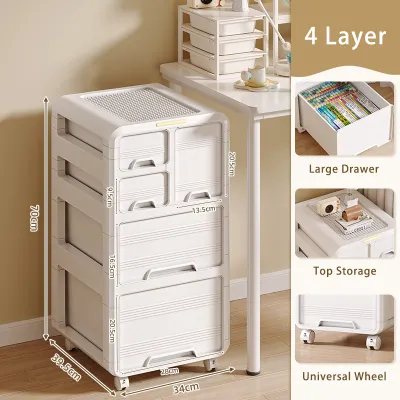
To fit a typical HDB bedroom comfortably, a 5-tier storage drawer should generally feature a depth of 40 to 45 cm, a width of 40 to 60 cm, and an overall height of 100 to 130 cm. These dimensions strike the ideal balance between maximizing vertical storage capacity and preserving the limited floor area characteristic of modern Singapore public housing. Selecting the right size requires a careful assessment of your room’s layout, ensuring the unit does not obstruct walkways, wardrobe doors, or essential wall fixtures.
Assessing Your Available Bedroom Floor Space
Before purchasing any furniture, you must accurately measure the physical footprint of the intended location. Start by measuring the exact floor width and depth using a metal measuring tape. When measuring, account for the thickness of HDB bedroom skirting boards, which typically protrude 1.5 to 2 cm from the plaster. If you overlook this detail, your drawer unit may not sit flush, causing it to stick out further into the room than anticipated. Additionally, locate all wall-mounted power outlets, light switches, and internet ports to ensure the unit will not block access to essential utilities.
Mapping out the operational clearance of your existing furniture is the next critical step. Use masking tape on the floor to outline the footprint of the proposed 5-tier drawer, then physically open your wardrobe doors, built-in drawers, and bedroom entry doors to check for potential collisions. For swing-door wardrobes, maintain a clear zone matching the door’s swing radius plus standing space. For sliding-door wardrobes, the clearance requirements are less demanding, but you still need to ensure the drawer unit does not block your ability to stand comfortably while browsing.
Products mentioned in this guide
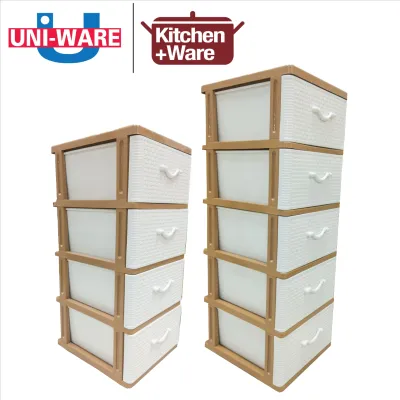
![[4/5 Tier] UNI-WARE White & Colorful Drawer Cabinet / home organizer stocker container storage boxes / Made in Thailand](https://img.lazcdn.com/g/p/fcc6febcdd5f64580882011bc66a5966.jpg_400x400q80.jpg_.webp)
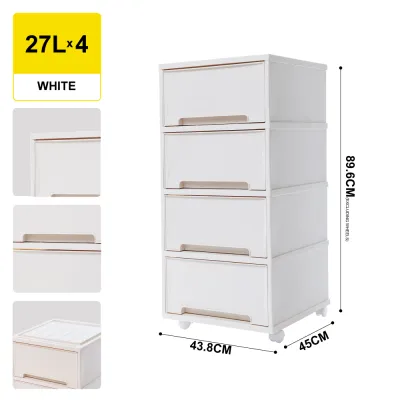
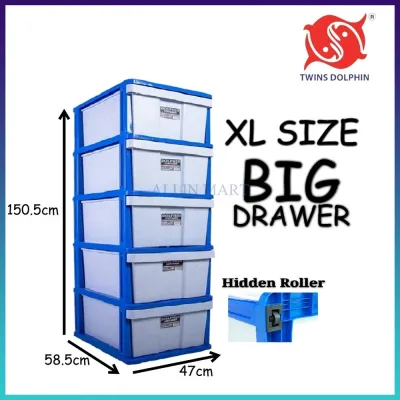
![[Household]Twin Dolphin 4/5 Tiers Premium Storage Cabinet Plastic Storage Box Drawer Organizer](https://img.lazcdn.com/g/p/83ddeaf02eb483240f807cd77ec0e5e4.jpg_400x400q80.jpg_.webp)
Prices are valid at publication and may change. Please refer to the product page for the latest price.
Finally, prioritize maintaining a comfortable walkway clearance around the bed and study desk. In a compact HDB bedroom, a minimum walkway width of 60 cm is recommended to allow a person to walk naturally without turning sideways. If the placement of a 5-tier drawer reduces this pathway to less than 50 cm, the room will feel cramped, and you run the risk of constantly bumping into the corners of the furniture. If space is exceptionally tight, consider placing the drawer unit in an underutilized corner or alongside the bedside as a tall nightstand replacement.
Matching Dimension Profiles to Your Room Layout
Once you have your room’s measurements, you can match them to the appropriate dimension profiles available on the market. Slim or narrow 5-tier storage drawers, which typically measure 30 to 40 cm in width, are highly effective for tight corners, narrow gaps between wardrobes and walls, or small alcoves. These slim profiles utilize vertical space that would otherwise go to waste, making them excellent for storing smaller items. However, if you have a broader, unbroken wall space, a standard-width drawer unit measuring 60 to 80 cm wide will offer significantly more storage volume.

Depth is perhaps the most critical dimension when it comes to preserving walkway space in a compact layout. Prioritizing shallow-depth models that measure between 35 and 42 cm can prevent the furniture from encroaching too far into the center of the room. A shallow drawer unit keeps the floor area open and maintains a spacious feel. While deeper drawers (45 to 55 cm) hold more items, they often make compact HDB bedrooms feel overcrowded and can severely restrict your movement if placed parallel to the side of a bed.
Understanding the height of a 5-tier unit is equally important for both functionality and aesthetics. Most 5-tier storage drawers stand between 100 cm and 130 cm tall, placing the top surface at a convenient height for displaying decorative items or holding daily essentials. However, you must consider how this height interacts with your bedroom’s architectural features. For instance, if you plan to place the unit near a window, ensure the top does not exceed the height of the window sill or block the window latch. Visually, a tall, dark-colored unit can dominate a small room, so opting for lighter colors or semi-translucent drawer fronts can help minimize the visual weight.
Planning for Drawer Clearance and Safety
Selecting a drawer unit based solely on its closed dimensions is a common mistake; you must also plan for operational clearance. When a drawer is fully extended, it can easily double the depth footprint of the unit. For example, a 40 cm deep cabinet with drawers that pull out 30 cm will require at least 70 cm of total depth clearance when in use. If you plan to open multiple drawers simultaneously or need to stand directly in front of the open drawer to organize items, you should allocate at least 80 to 90 cm of clear space in front of the unit.
Safety is another paramount consideration, particularly because 5-tier drawers are relatively tall and can become top-heavy when loaded. When multiple upper drawers are pulled out simultaneously, the center of gravity shifts forward, creating a tip-over hazard. To mitigate this risk, verify if the manufacturer includes an anti-tip wall anchoring kit with the unit. Securing the drawer to the concrete or drywall of your HDB bedroom is a crucial safety step, especially if you have young children, pets, or if the floor is slightly uneven.
To ensure a clean and stable installation, check the bottom rear design of the drawer unit. High-quality storage units often feature baseboard cutouts or recessed back panels that allow the cabinet to sit completely flush against the wall despite the presence of skirting boards. Without these features, the unit sits away from the wall, creating an awkward gap where dust can collect. Alternatively, look for models equipped with adjustable leveling feet, which allow you to compensate for any minor slopes or unevenness in your bedroom flooring.
Verifying Manufacturer Specifications and Features
When shopping online or in-store, always cross-check the manufacturer’s exact dimension specifications rather than relying on generic category names like “medium” or “large.” Marketing titles can be misleading, as one brand’s ‘slim’ model might match another’s ‘standard’ size. Look for detailed technical drawings or dimension diagrams that clearly label the outer width, depth, and height, as well as the internal dimensions of the individual drawers. This ensures that your storage boxes, organizers, or folded clothes will actually fit inside the drawers.
The type of drawer slide mechanism used also plays a significant role in space efficiency and usability. Full-extension drawer slides allow the drawer to pull out completely, giving you unobstructed access to the very back of the compartment, but they require maximum front clearance. Partial-extension slides, common in budget-friendly plastic or fabric drawers, do not pull out all the way, which saves front clearance space but makes retrieving items from the back slightly more awkward. Everyday clothing benefits from full-extension slides, while seasonal items work well in partial-extension drawers.
Finally, assess the unit’s rated weight capacity and structural stability before making a purchase. A 5-tier drawer made of lightweight plastic may be easy to move, but it may warp or buckle if loaded with heavy books or thick winter blankets. Conversely, solid wood or engineered wood units offer excellent stability and high weight capacities but are much heavier and harder to reposition. Check the manufacturer’s guidelines for the maximum load limit per drawer and the total weight capacity of the entire unit to ensure it can safely accommodate your storage needs.
Alternative Storage Solutions for Tight Layouts
If your measurements reveal that a standard freestanding 5-tier drawer simply will not fit without blocking vital pathways, several practical alternatives can help you organize your space. Mobile storage units equipped with lockable casters offer excellent flexibility for compact HDB bedrooms. These units can be easily rolled out of the way when you need to open a wardrobe door or clean the floor, and then rolled back into a corner when not in use.
Another highly adaptable option is a modular or stackable drawer system. Instead of a single, rigid 5-tier tower, you can purchase individual drawer units and stack them to fit your exact space constraints. For example, you could stack three drawers in a tight corner and place the remaining two drawers inside your wardrobe or under a study desk. This modular approach allows you to bypass architectural obstacles like low window sills while still achieving the same total storage capacity.
When floor space is completely maxed out, look upward and utilize your walls. Wall-mounted shelving units, floating drawers, or over-door organizers can free up valuable floor space entirely. Elevating your storage keeps the floor clear, visually expanding the room and simplifying cleaning. Combining a smaller 3-tier floor drawer with a few wall-mounted shelves can often provide the same storage volume as a tall 5-tier unit without compromising your bedroom’s physical footprint.
Frequently Asked Questions (FAQ)
Can I place a 5-tier storage drawer in front of an HDB bedroom window?
Placing a tall 5-tier storage drawer directly in front of an HDB bedroom window is generally not recommended unless the unit is low enough to sit completely below the window sill. A tall unit will block natural light, making your bedroom feel darker and smaller. Furthermore, blocking the window restricts airflow, which is essential for preventing humidity buildup in Singapore’s tropical climate. If you must place it near a window, ensure the height of the drawer does not obstruct the window latch or prevent you from opening the window fully for ventilation.
How do I prevent a tall 5-tier drawer from tipping over on smooth floors?
To prevent a tall 5-tier drawer from tipping over on smooth surfaces like polished tiles, vinyl, or laminate flooring, you should always secure it to the wall using an anti-tip safety kit. These kits anchor the back of the unit directly to the wall. Additionally, practice proper weight distribution by storing your heaviest items—such as jeans, bed sheets, or books—in the bottom two tiers, while keeping lighter items like t-shirts and accessories in the upper drawers. Finally, use a spirit level to check that the floor is completely flat, and use adjustable leveling feet or felt pads to correct any minor tilt before loading the drawers.

Community discussion
Share your experience or ask a question. Comments are reviewed before publication.