
Finding the best corner clothes rack in Singapore requires balancing space efficiency with structural integrity. In compact urban apartments, such as HDB flats and condominiums, unused corners represent valuable real estate. A well-chosen corner rack transforms these awkward nooks into functional storage zones for daily wear, bags, and accessories.
To make a successful purchase, you must look beyond aesthetic appeal. The ideal rack must fit your specific corner dimensions without obstructing walkways, support the weight of your garments without tipping, and withstand the local humid climate. By systematically evaluating your space, material specifications, and assembly requirements, you can select a durable organizer that fits both your home layout and your daily routine.
Measure Your Space and Define Storage Needs
Before browsing online marketplaces or visiting local furniture showrooms, you must obtain precise measurements of your target corner. Start by measuring the width and depth of the floor space. Keep in mind that baseboards or skirting boards along the bottom of the wall can prevent a rack from sitting completely flush, so measure from the outer edge of the baseboard rather than the bare wall.
Products mentioned in this guide
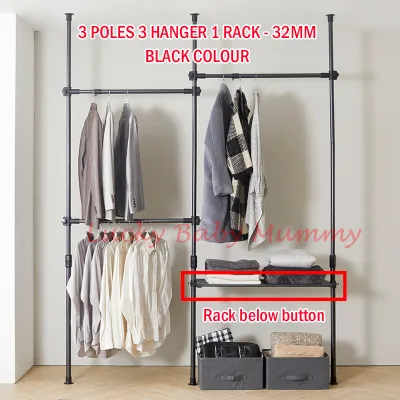
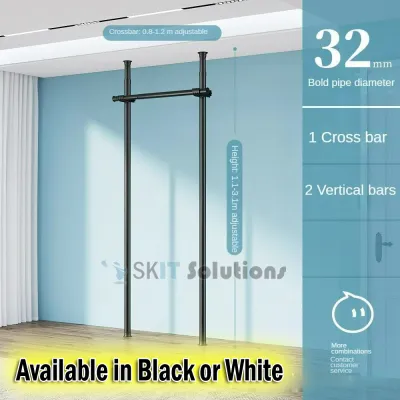
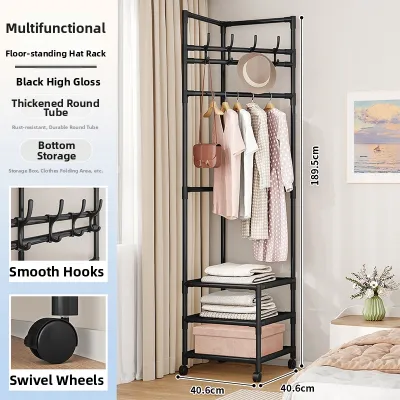
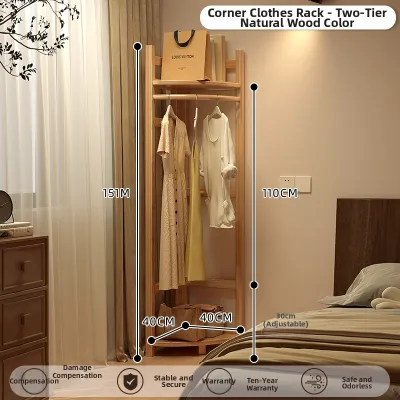
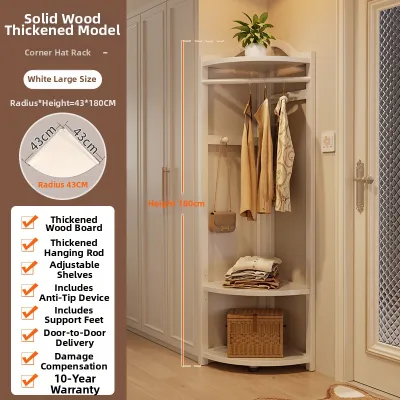
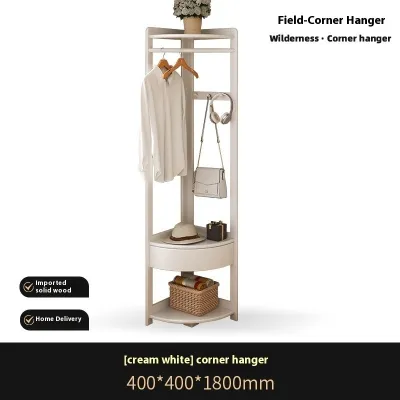
![[V.Home] Adjustable Clothes Drying Hanger Rack / Corner Rack / Floor to Ceiling / Laundry Hanger / no Drill no Nail](https://img.lazcdn.com/g/p/3a0535906c7584947ba128b9ae18bdf6.jpg_400x400q80.jpg_.webp)
Prices are valid at publication and may change. Please refer to the product page for the latest price.
Next, measure the vertical clearance from the floor to the ceiling. This is particularly important if you plan to purchase a tall, tension-rod style rack or a model with high hanging rails. Ensure there is enough overhead space to easily lift hangers off the rail without hitting the ceiling or any low-hanging light fixtures.
Do not forget to account for nearby architectural features. Check the swing paths of adjacent doors, wardrobe panels, and windows to ensure the rack will not block their movement. Additionally, locate any nearby power outlets, light switches, or wall-mounted air conditioning units that might be obstructed or made inaccessible by a fully loaded clothes rack.
Once you have the physical dimensions, define your storage capacity requirements. Take an inventory of the items you plan to hang. If you intend to store heavy items like structured suits, winter coats for overseas travel, or heavy denim, you will need a rack with a high weight capacity and a robust frame.
Conversely, if you only need a place to air out lightweight daily wear, activewear, or ironed work shirts, a lighter frame may suffice. Estimating your garment volume helps you determine the necessary length of the hanging rail.
Finally, decide if you require multi-functional storage. Many corner racks offer more than just a hanging rail. If you need a spot to keep shoes, storage boxes, handbags, or laundry baskets, look for models that incorporate lower-tier shelves, built-in drawers, or integrated wire baskets. Defining these needs early prevents you from buying a rack that you will quickly outgrow.
Evaluate Stability, Materials, and Weight Limits
A corner clothes rack must remain stable when fully loaded, as an unevenly balanced rack poses a safety hazard. When evaluating a freestanding model, pay close attention to the base design. Racks with a wider base span or a heavy, solid bottom plate offer superior resistance to tipping.

Consider how the center of gravity shifts when you hang items. A rack with a narrow base may become unstable if heavy bags are hung on outer hooks or if garments are concentrated on one side. If you have young children or pets in the home, prioritizing a low center of gravity and checking for optional wall-anchoring hardware is highly recommended.
Material selection is another critical factor, especially given Singapore’s year-round high humidity. Do not rely solely on generic material names like “metal” or “wood” to assume durability. Instead, examine the product specifications for details on surface treatments and finishes.
For metal racks, look for explicit mentions of powder-coated steel, rust-resistant coatings, or high-grade stainless steel. These treatments help prevent moisture from reaching the underlying metal, reducing the risk of rust and corrosion over time. If you prefer wooden or bamboo racks, verify that the material has been treated with a water-resistant sealant or lacquer to prevent mold growth and warping in humid conditions.
The structural integrity of the rack also depends heavily on its joint connections. Inspect how the different components are held together. Racks that utilize heavy-duty metal screws, bolts, or threaded inserts generally offer greater stability and longevity than those relying on simple plastic snap-fit connectors or friction joints.
Always check the manufacturer’s stated maximum weight capacity before making a purchase. This limit is typically broken down into overall capacity and individual shelf or rail limits. Adhering strictly to these guidelines ensures the frame does not bend, sag, or collapse under pressure, preserving both your garments and the rack itself.
Match the Rack Type to Your Corner Layout
Corner clothes racks come in several distinct configurations, each suited to different spatial constraints and aesthetic preferences. Understanding these types allows you to match the rack’s structural form to the exact layout of your room.
L-shaped or corner-specific racks are engineered to sit flush against two intersecting walls. This design maximizes the standard 90-degree corner, turning what is often dead space into a highly efficient wardrobe extension. Because they hug the walls, these racks tend to offer excellent stability and a clean, integrated look, making them ideal for bedrooms and walk-in wardrobes.
Tree-style or branching racks feature a single vertical pole with multiple hooks radiating outward at various heights. These models have an exceptionally small footprint, making them perfect for tight entryways, narrow hallways, or small study rooms. However, because they rely on a single central support, they require careful, balanced load distribution to prevent tipping, and they are best suited for lightweight items like hats, bags, and daily jackets.
Racks with integrated storage combine hanging rails with horizontal shelves, drawers, or baskets. These multi-tier units are highly versatile, allowing you to organize shoes at the bottom, hang clothes in the middle, and place storage bins or decorative items on top. They are an excellent choice for studio apartments or rooms lacking built-in closets, providing a comprehensive storage solution within a single compact footprint.
Tension-rod corner racks are another option, utilizing a spring-loaded vertical pole that wedges securely between the floor and the ceiling. These racks often feature adjustable trays and hangers that can be rotated to fit the corner perfectly. They require no drilling, making them highly popular among renters, though you must verify that your ceiling is solid and not a suspended or false ceiling before installation.
Verify Delivery, Assembly, and Return Policies
Purchasing a corner clothes rack involves logistical considerations that can impact your overall satisfaction. Before finalizing your order, especially when shopping on online marketplaces, verify the packaged dimensions of the product.
Ensure that the delivery box can easily pass through your building’s main entrance, lift doors, and apartment corridors. In some residential developments, tight corners in hallways or small elevator cabins can make transporting long or bulky packages difficult. Knowing the package size beforehand helps prevent delivery day complications.
Next, carefully review the assembly requirements. Most flat-packed furniture requires some level of self-assembly. Check the product listing to see if the necessary tools, such as Allen keys or mini wrenches, are included in the package, or if you will need to provide your own screwdriver or hammer.
If you prefer not to assemble the rack yourself, check if the retailer offers professional assembly services for an additional fee. Reading customer feedback regarding the clarity of the assembly instructions can also give you a good idea of how straightforward the setup process will be.
Finally, examine the retailer’s return policy and warranty terms. Even with careful planning, a rack may arrive with transit damage, missing hardware, or manufacturing defects.
Confirm how many days you have to report issues and what the process is for requesting replacement parts or a full refund. A clear, customer-friendly return policy provides peace of mind and ensures you are protected if the product does not meet your expectations upon arrival.
Frequently Asked Questions (FAQ)
How can I prevent a freestanding corner rack from tipping over?
To keep a freestanding corner rack stable, always place heavier items, such as boots, storage boxes, or heavy bags, on the lowest shelves or closest to the central support pole. This keeps the center of gravity low and minimizes the risk of the rack swaying or tipping. When hanging clothes, distribute the weight evenly across the rail rather than clustering items on one side. If the manufacturer provides anti-tip wall straps or brackets, install them according to the instructions. Before drilling into the wall to secure these straps, verify your wall material (such as concrete or drywall) and consult your tenancy agreement if you are renting.
Is it safe to place a metal clothes rack in a humid area?
Placing a metal clothes rack in a humid environment, such as near a bathroom door or on a sheltered balcony, is safe only if the rack is specifically treated to resist moisture. Before purchasing, check the product specifications for explicit mentions of rust-proof coatings, powder-coated finishes, or marine-grade stainless steel. To prolong the lifespan of the rack, maintain adequate room ventilation by using fans or dehumidifiers, and avoid hanging damp laundry directly on the frame unless it is rated for wet use. Periodically inspect the joints, screws, and welded areas for early signs of oxidation, and wipe them down with a dry cloth to prevent moisture buildup.

Community discussion
Share your experience or ask a question. Comments are reviewed before publication.