
To protect your home office flooring and ensure smooth, quiet movement, you must match the hardness of your chair castors to the specific material of your floor. The fundamental rule of floor protection is simple: use soft wheels on hard floors and hard wheels on soft floors. Standard office chairs often ship with hard nylon wheels designed for carpeted commercial spaces, but when used on residential hard surfaces, these stock wheels can grind in grit, leave unsightly scuff marks, or create a loud, distracting rumble. Swapping out your stock wheels for the correct castor type is a highly effective, low-cost upgrade that preserves your floor’s finish and improves your daily working comfort.
In many modern homes, especially in Singapore where space is optimized and flooring materials vary from room to room, selecting the right wheel material is crucial. Whether your workspace features polished ceramic tiles, resilient luxury vinyl, or delicate natural parquet, understanding how different castor materials interact with these surfaces will help you make an informed decision. By taking a few minutes to evaluate your flooring and measure your chair’s mounting points, you can avoid costly floor repairs and enjoy a much quieter, more ergonomic workspace.
Understanding Your Floor and Castor Options
Before purchasing replacement castors, you must identify the exact type of flooring in your home office. Residential spaces commonly feature ceramic or porcelain tiles, vinyl or luxury vinyl tiles (LVT), and engineered wood or parquet. Each of these materials reacts differently to the pressure and friction of a rolling office chair. For example, ceramic tiles are highly durable but have grout lines that cause vibration and noise, while parquet and engineered wood have delicate surface sealants that scratch easily under heavy, concentrated loads.
Products mentioned in this guide


![[SG Ready Stock]Office Chair Caster Wheels 3 Inch Universal Mute Whee 5PCS/Set Replacement 60KG Swivel Rubber Soft Safe Rol](https://img.lazcdn.com/g/p/3309f2fd04dad1bc1715850d1e17710a.jpg_400x400q80.jpg_.webp)
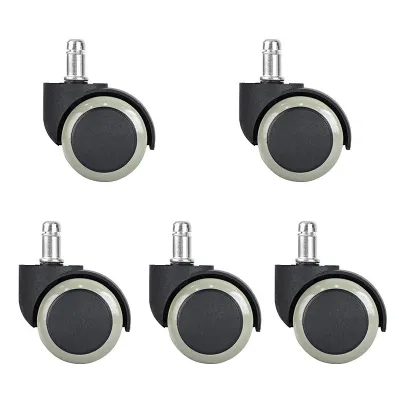


Prices are valid at publication and may change. Please refer to the product page for the latest price.
This brings us to the core physical principle of castor selection: material hardness pairing. Soft wheels, typically made of polyurethane or rubber, are designed to deform slightly under weight. This deformation increases the contact patch with the floor, distributing your weight more evenly and absorbing micro-vibrations. Conversely, hard wheels, usually made of rigid nylon or hard plastic, are designed to glide over soft, high-friction surfaces like carpets and rugs without sinking. If you use hard wheels on a hard floor, the contact area is extremely small, creating high point-load pressure that can crack tiles, dent wood, or stretch vinyl over time.
Beyond floor compatibility, your choice of castors must account for the physical design of your office chair. You need to consider the stability of the chair’s star base, the load capacity of the wheels, and the specific stem mounting mechanism used to attach the castors. Furthermore, your typical movement patterns—such as how often you roll between your desk and a nearby filing cabinet—will dictate how much wear and tear your floor experiences. Understanding these variables ensures that your new castors will not only protect your floor but also maintain the structural integrity and safety of your seating.
Matching Castor Types to Common Flooring
When shopping for replacement chair castors, you will generally choose from three primary categories: rollerblade-style wheels, soft rubber or polyurethane wheels, and hard plastic or nylon wheels. Each design has distinct physical properties, mounting profiles, and rolling characteristics that make them suitable for specific environments.

There is no single universal option that excels on every surface. The right choice for your workspace depends entirely on your floor’s material, the presence of grout lines or seams, and the overall cleanliness of your home office environment. Evaluating these options side by side allows you to select the material that offers the best balance of protection, mobility, and noise reduction.
Rollerblade-Style Castors
Rollerblade-style castors feature a single, narrow wheel made of high-grade polyurethane mounted on a steel bracket with ball bearings. These wheels are highly suitable for hard, flat surfaces such as ceramic tiles, vinyl, and well-sealed parquet floors. Because they utilize high-quality bearings, they allow the chair to glide with minimal effort, making them an excellent choice for users who move frequently within their workspace.
The primary advantage of rollerblade-style castors is their exceptionally smooth and quiet operation. The soft polyurethane outer layer cushions the ride, allowing the wheel to roll over tile grout lines and minor floor transitions without transferring vibrations to the chair base. Additionally, because the wheel rotates on a precision axle, it reduces the dragging friction that often causes scuff marks on sensitive vinyl or timber surfaces.
However, rollerblade-style castors have physical limitations that you must check before buying. Because of their design, they are typically larger than standard stock wheels, often increasing the overall height of your chair base by 2 to 3 centimeters. This added height raises your minimum seating position, which can affect desk clearance and alter your ergonomic posture. Before installing them, verify that your desk has enough clearance for your thighs and that you can still sit with your feet flat on the floor. If your desk height is fixed, this minor elevation change might require you to adjust your armrests or keyboard tray to prevent wrist strain.
Soft Rubber and Polyurethane Castors
Standard soft-tread castors typically feature a twin-wheel design covered in a layer of synthetic rubber or polyurethane. These wheels are designed specifically for delicate parquet, luxury vinyl tiles (LVT), and mixed hard surfaces where controlled movement is preferred. Unlike rollerblade wheels, twin-wheel soft castors provide a moderate amount of rolling resistance, which prevents your chair from sliding away too easily when you stand up or sit down.
The main benefit of these castors is their ability to absorb minor floor imperfections while maintaining excellent traction. The twin-wheel configuration distributes the user’s weight over two separate contact points per castor, reducing the point-load pressure on soft wood or vinyl. This design is highly effective at preventing the deep indentations that can occur when a heavy chair remains stationary on a resilient floor for long periods.
Despite these benefits, you must check the quality of the rubber compound before purchasing. Lower-quality rubber wheels can degrade over time, especially in warm or humid climates. As the material breaks down, it can become sticky, attracting dust, pet hair, and grit from the floor. This trapped debris turns the wheel into an abrasive surface that can scratch your floor as you roll. To avoid this, look for product specifications that explicitly state the wheels are non-marking, oil-resistant, and designed for hard floors.
Hard Plastic and Nylon Castors
Hard plastic and nylon castors are the standard wheels supplied with the vast majority of office chairs. These rigid, twin-wheel castors are designed specifically for carpeted floors, low-pile area rugs, or heavy-duty plastic chair mats. On these soft surfaces, the hard material allows the wheels to roll freely without sinking into the carpet fibers, providing excellent mobility.
Using hard nylon castors directly on hard floors carries significant risks. Because nylon is extremely rigid, any tiny grain of sand or dust between the wheel and a hard floor is pressed down with immense force. As you roll, the wheel drags this grit across the surface, acting like sandpaper and wearing away the protective sealant on parquet or scratching the wear layer of vinyl. Furthermore, hard wheels rolling on ceramic tiles generate a loud, hollow noise that can be highly disruptive in a quiet home environment.
If you are transitioning an office chair from a carpeted room to a hard floor, you should replace the stock hard castors immediately. Continuing to use hard nylon wheels on unprotected wood or vinyl will eventually lead to visible wear patterns and surface damage. Replacing these wheels early is a simple preventive measure that can save you from the high cost of refinishing timber or replacing damaged vinyl planks.
What to Check Before Buying and Installing
Before purchasing a new set of castors, you must verify their physical compatibility with your existing chair base. Castors are attached to the chair using a metal stem, and these stems come in several different sizes. The most common standard is the grip ring stem, which typically measures 11 millimeters in diameter and 22 millimeters in length. However, some chair brands use a smaller 10-millimeter stem. To ensure a secure fit, pull out one of your current castors and measure the stem diameter precisely using a caliper or a standard drill bit template. Installing a stem that is too small will cause the castor to wobble or fall out, while a stem that is too large will not fit into the base socket.
Next, review your chair’s weight capacity and warranty terms. High-quality replacement castors should have a rated load capacity that easily supports both the weight of the chair and your body weight. Keep in mind that weight is not always distributed evenly across all five wheels when you lean or move, so choosing castors with a generous safety margin is advisable. Be aware that some chair manufacturers may void their structural warranty if you install third-party aftermarket castors, especially if the new wheels alter the chair’s center of gravity or increase the leverage on the star base.
Even if you install the softest polyurethane castors, you must inspect your floor regularly for cleanliness. No wheel material can prevent scratches if the floor is covered in abrasive grit, sand, or small debris. When a castor rolls over a hard particle, the particle can become embedded in the soft tread of the wheel, turning it into a scratching hazard. Regular sweeping, vacuuming, or damp-mopping of your workspace is essential to keep the rolling path clear of debris.
Finally, consider whether your specific flooring installation requires an additional layer of protection. If your wood floor is newly installed, unsealed, or particularly sensitive to pressure, or if the combined weight of the user and a heavy ergonomic chair is exceptionally high, a protective desk mat may still be necessary. A high-quality, clear polycarbonate or tempered glass mat can distribute point loads over a much larger area, protecting the floor from both rolling friction and accidental drops. While a mat changes the aesthetic of your workspace, it provides an extra layer of security for highly vulnerable surfaces.
Frequently Asked Questions (FAQ)
Can I use a floor mat instead of changing my chair castors?
Yes, you can use a protective floor mat instead of changing your castors, but this approach has distinct trade-offs. A thick polycarbonate or tempered glass mat is highly effective at distributing heavy point loads and protecting your floor from scratches caused by trapped grit. However, mats alter the visual appeal of your room, can be difficult to clean around, and may slide out of place over time. Additionally, if dust or moisture becomes trapped underneath a plastic mat, it can act as an abrasive or trap humidity, potentially discoloring vinyl or damaging the finish of wood floors underneath. Upgrading to soft castors solves the mobility and noise issues directly at the source without altering your room’s appearance, though it does not protect against dropped objects. For the highest level of protection on very delicate floors, combining soft castors with a clean, high-quality mat is often the most reliable solution.
How do I clean and maintain my chair castors to prevent floor scratches?
To keep your chair castors rolling smoothly and prevent them from damaging your floor, you should establish a simple maintenance routine. Start by regularly inspecting the wheels and removing any hair, threads, or carpet fibers wrapped around the axles. If debris builds up, it can prevent the wheels from rotating freely, causing them to drag across the floor and create flat spots or deep scratches. Next, wipe the wheels periodically with a damp microfiber cloth to remove accumulated dust and embedded grit. If the wheels have sticky residue, use a mild soapy water solution to clean them, avoiding harsh chemicals that can degrade the polyurethane or rubber. Finally, check the physical condition of the castors every few months; if you notice any cracking, peeling treads, or flat spots, replace the castors immediately to ensure your floor remains protected.

Community discussion
Share your experience or ask a question. Comments are reviewed before publication.