
Selecting the right shoe storage organiser requires a careful balance between your total footwear count and the physical limits of your home. To avoid a cluttered entryway or a cabinet that blocks your front door, you must align your collection size with precise spatial measurements. The ideal decision path involves auditing your current footwear, measuring your available footprint, and selecting a structurally compatible design that accommodates future purchases.
Assess Your Current and Future Shoe Collection
Start by gathering every pair of shoes in your household to conduct a thorough inventory. Footwear silhouettes vary drastically in height, width, and depth, meaning a standard flat sneaker requires different clearance than high heels, platform sandals, or ankle boots. Grouping your shoes by type allows you to identify how many high-clearance slots you need versus standard flat shelves.
Consider the seasonal rotation of your footwear and how many household members will share the organiser. In a tropical climate, daily-wear sandals and canvas sneakers might need quick-access open shelves, while formal leather shoes or delicate heels require enclosed protection from dust and ambient humidity. If multiple family members share the unit, allocate dedicated zones for each person to keep daily routines orderly.
Products mentioned in this guide
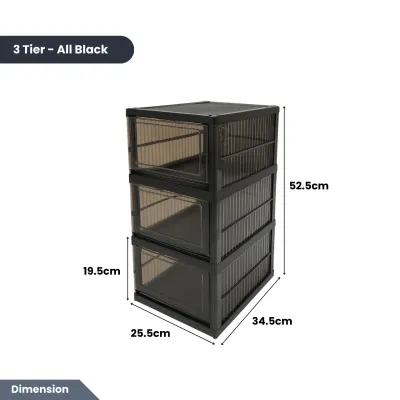
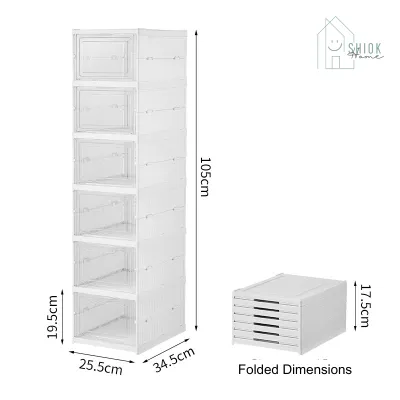
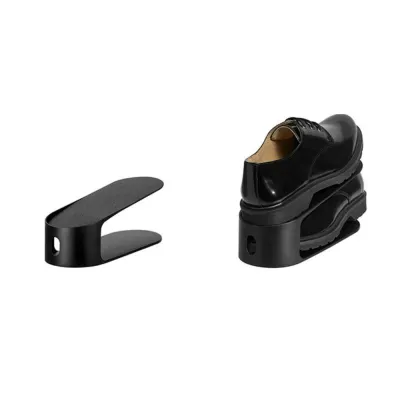
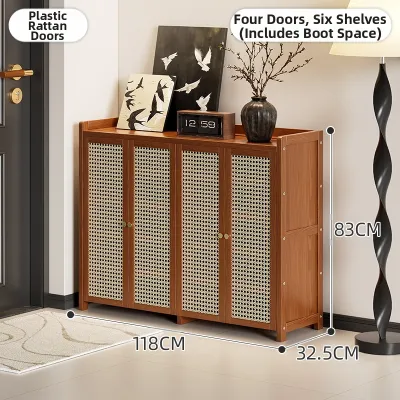
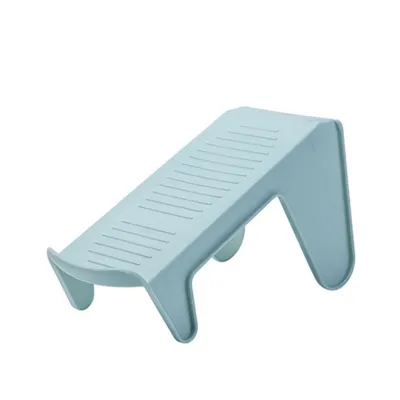
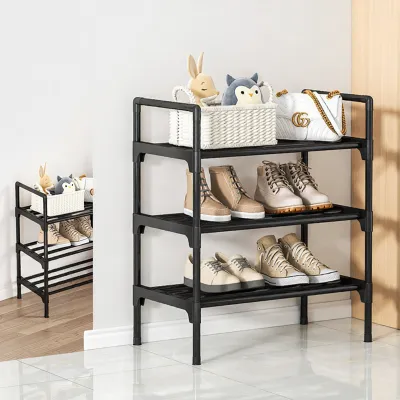
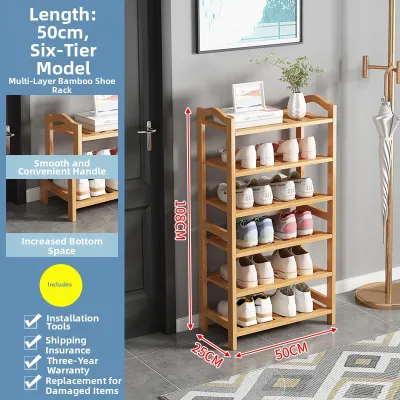
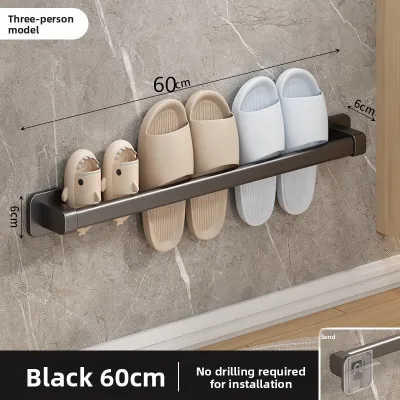
Prices are valid at publication and may change. Please refer to the product page for the latest price.
Always factor in a 10% to 20% capacity buffer when calculating your target storage size. A shoe collection is rarely static, and leaving a few empty slots prevents immediate overcrowding while ensuring you do not have to purchase an entirely new organiser when you acquire a new pair. This buffer also improves air circulation around your shoes, which is essential for preventing moisture build-up and unpleasant odours.
Measure Your Available Space Accurately
Before browsing online marketplaces or visiting local furniture showrooms, grab a measuring tape to map out your designated placement zone. Measure the maximum width, height, and depth of the wall or alcove where the organiser will sit. Do not rely on visual estimates; even a few millimetres of overhang can prevent a cabinet from fitting flush against the wall.

Pay close attention to architectural obstacles such as skirting boards, door frames, light switches, and electrical outlets. Skirting boards can push the base of a freestanding cabinet away from the wall, creating an unstable gap unless the unit features a baseboard cutout. Ensure the organiser does not cover essential wall outlets or interfere with light switches that you access daily.
Clearance is critical, especially in compact entryways or narrow corridors typical of modern apartments and HDB flats. Measure the swing radius of your front door, nearby room doors, or household shelter doors to ensure the organiser does not obstruct these pathways. You must also account for the space required to stand comfortably in front of the unit while opening its doors or pulling out drawers.
Finally, verify the delivery and assembly pathway from your building’s entrance to the final room. Measure the width of your lift doors, stairwells, and main apartment doorway. This step ensures that large, fully assembled units or heavy flat-pack boxes can be safely transported into your home without getting stuck in tight corners.
Match Storage Types to Your Space and Capacity Needs
Different structural designs are engineered to solve specific spatial challenges and capacity demands. Choosing the right configuration depends on whether you need to maximise vertical wall space, preserve floor area, or conceal your collection behind closed doors.
Freestanding and Stackable Racks
Freestanding and stackable racks are highly versatile options, making them ideal for spacious entryways, utility rooms, or walk-in wardrobes. These units allow for easy reconfiguration and can often be expanded upward as your collection grows.
When selecting stackable modular designs, it is vital to check the manufacturer’s specified weight limits, interlocking mechanisms, and overall stability. As you stack units higher, the centre of gravity shifts, increasing the risk of tipping. Always verify if the product includes wall-anchoring hardware to secure the frame, especially if you plan to stack it more than three tiers high.
Additionally, inspect the vertical tier spacing of the rack. Ensure there is sufficient clearance between shelves so that taller footwear can fit comfortably without being crushed or bent. If the tiers are fixed and too narrow, you may find yourself unable to use certain shelves for anything other than flat slippers.
Wall-Mounted and Over-Door Solutions
Wall-mounted shelves and over-door organisers are excellent for narrow corridors, compact entryways, or small bedrooms where floor space is at a premium. By utilising dead vertical space, these solutions keep your floors clear and make the room feel more spacious.
Before installing a wall-mounted organiser, verify your wall construction type, such as drywall, hollow brick, or solid concrete. Solid concrete walls offer excellent load-bearing capacity but require specific masonry drill bits and wall plugs, whereas drywall installations require finding studs or using heavy-duty toggle bolts. Checking these installation conditions beforehand prevents the unit from pulling away from the wall under the weight of your shoes.
For over-door solutions, check the clearance between the top of the door and the frame to ensure the hanging brackets do not prevent the door from closing. You should also verify that the hanging organiser does not strike the adjacent wall or damage the skirting board when the door is swung open.
Enclosed Cabinets and Benches
Enclosed shoe cabinets and storage benches offer a clean, streamlined aesthetic by keeping your footwear completely out of sight. They also provide excellent protection against dust, though they generally require a larger physical footprint and deeper clearance than open racks.
When planning for an enclosed cabinet, carefully check the swing radius of hinged doors or the projection distance of pull-out drawers. In a narrow hallway, a door that swings outward can completely block the walkway, making a sliding door or a tilting drawer mechanism a much more practical choice.
Look for cabinets with adjustable internal shelves rather than fixed dividers. Adjustable shelving allows you to customise the internal layout, letting you raise a shelf to accommodate boots or lower it to maximise the number of flat shoes you can fit. Ensure the shelf support pins are sturdy and fit tightly into their pre-drilled holes to maintain structural integrity.
Common Sizing Mistakes to Avoid
One of the most frequent mistakes is ignoring variations in shoe sizes within a household. Standard shoe organisers are often designed around average shoe sizes, meaning larger men’s shoes, wide-fit trainers, or high-top sneakers may not fit side-by-side on a single shelf. This can force you to place shoes at an angle, drastically reducing the unit’s actual capacity.
Another common error is focusing solely on the number of tiers while neglecting the physical depth of the shelves. If the shelf depth is shallower than the length of your shoes, the heels or toes will overhang the front edge. In a busy hallway, overhanging shoes can easily catch on passing traffic, causing them to fall off or create a tripping hazard.
Lastly, buyers often fail to account for the final assembled external dimensions of the organiser, focusing only on the internal shelf space. A unit might seem ideal on paper, but once assembled, its decorative trim, handles, or wide legs might cause it to protrude into a walkway or fail to fit into a tight alcove. Always compare the maximum outer dimensions against your physical space measurements before making a purchase.
Frequently Asked Questions (FAQ)
How do I calculate the exact number of pairs a rack can hold?
Manufacturer capacity ratings are often based on ideal, compact scenarios using smaller shoe sizes. To get a realistic estimate, measure the width of your typical shoes at their widest point (usually the sole near the toes). Next, check the product specifications for the usable internal width of a single shelf. Divide the shelf width by your shoe width and round down to the nearest whole number to find how many pairs will fit per tier. Multiply this by the number of tiers to determine the true capacity of the organiser for your specific collection.
Should I buy a shoe rack with adjustable shelves?
Yes, choosing an organiser with adjustable shelves is highly recommended if your collection includes a diverse mix of footwear styles. Adjustable shelves allow you to adapt the storage space as your collection changes, preventing wasted vertical space above low-profile shoes like flats and sandals. When evaluating adjustable options, inspect the shelf support brackets and the thickness of the panels to ensure that adjusting the height does not compromise the overall stability or load capacity of the frame.

Community discussion
Share your experience or ask a question. Comments are reviewed before publication.