
To choose the right capacity for a shoe shelf stacker, you must balance your total pair count with the physical limits of your designated floor space and vertical clearance. A successful setup accommodates your current collection plus a buffer for future purchases, while ensuring the physical dimensions of the rack do not obstruct walkways or door swings. By calculating your storage needs beforehand and understanding how different footwear profiles affect shelf space, you can select a modular or fixed system that keeps your entryway organized and safe.
Assess Your Current Shoe Collection and Available Space
Begin by conducting a thorough inventory of your entire shoe collection. Lay out every pair you own and group them by style, as high heels, bulky sneakers, and flat sandals occupy vastly different amounts of physical space. Count the total number of pairs to establish a baseline capacity, and then add a buffer of about ten to twenty percent to accommodate future purchases or seasonal footwear changes.
Once you have a clear picture of your collection size, transition to measuring your physical space. Use a reliable tape measure to determine the exact width, depth, and height of the area where you plan to place the stacker. If you are placing the unit in a narrow foyer or behind an entryway door, measure the full swing path of the door to ensure the stacker will not block entry or exit routes.
Products mentioned in this guide
![[SG Stock] Adjustable Shoes Rack Shoe Stacker Shoe Slots Shoe Storage Rack Anti Slip Footwear Holder Space Saving Shoe Box Shoe Organiser](https://img.lazcdn.com/g/p/fc7a332836062dc07720aa078b592af6.jpg_400x400q80.jpg_.webp)
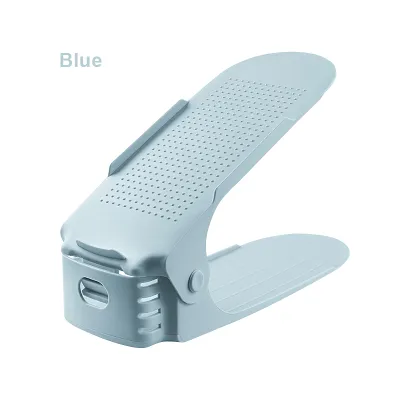
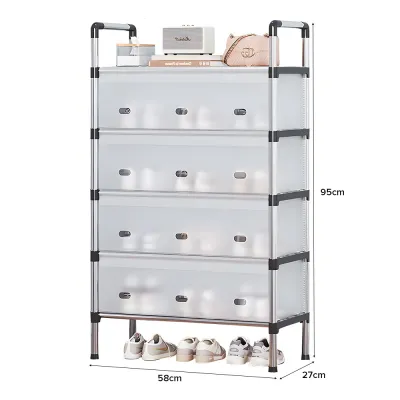
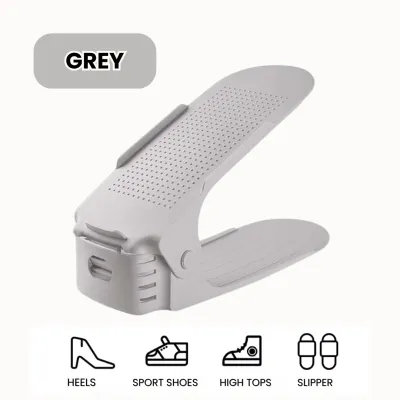
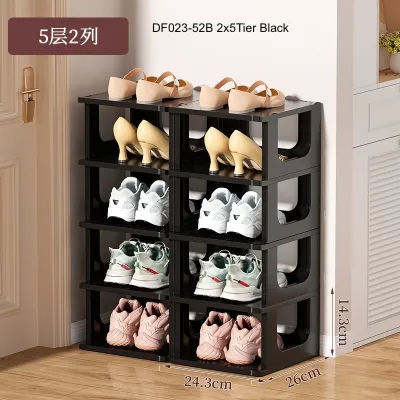
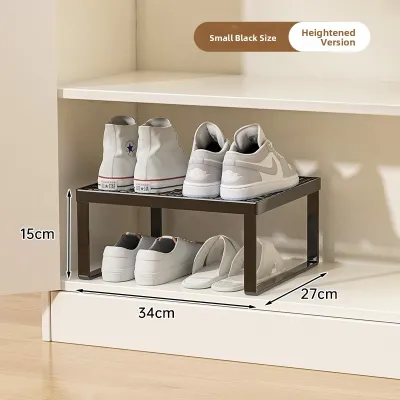
Prices are valid at publication and may change. Please refer to the product page for the latest price.
Pay close attention to architectural details that might interfere with the stacker’s placement. Baseboards can push a shelf forward by one to two centimeters, which might prevent it from sitting flush against the wall and reduce usable walkway space. Additionally, check for wall switches, electrical outlets, or distribution box doors that need to remain accessible, as a tall vertical stacker could easily block these essential features.
Understand Shoe Shelf Stacker Configurations and Tier Limits
The actual capacity of a shoe shelf stacker is determined by its width and the profile of the shoes you place on it. A standard tier width of sixty centimeters typically accommodates two to three pairs of adult shoes, while an eighty-centimeter tier can hold three to four pairs. However, these estimates vary depending on whether you are storing slim flats or wide, structured running shoes.

Different footwear styles require varying amounts of horizontal and vertical space. High-top sneakers and boots require more vertical clearance between tiers, which can reduce the total number of shelves you can safely stack in a given height. When planning your configuration, check the manufacturer’s specifications for tier height to ensure your tallest shoes will fit without being bent or compressed.
As you plan to stack multiple units vertically, structural stability becomes a critical consideration. Most manufacturers provide guidelines for the maximum safe stacking height, which is often limited to three or four modular units. Exceeding these recommendations can make the assembly top-heavy and prone to wobbling, especially on carpeted surfaces or in high-traffic areas.
When evaluating stacker designs, consider the choice between fixed-tier and adjustable or expandable configurations. Fixed-tier stackers offer excellent structural rigidity but limit you to a single, uniform shelf height. Adjustable or expandable designs allow you to customize the height of individual tiers or extend the width of the shelves, providing flexible capacity management as your collection evolves.
Match Stacker Capacity to Your Room Layout and Usage
In narrow closets or walk-in wardrobes, high-capacity vertical stacking is often the most efficient way to maximize storage. Utilizing vertical space allows you to store dozens of pairs on a minimal floor footprint. When building a tall vertical stack, always place heavier footwear, such as boots and heavy sneakers, on the bottom tiers to lower the center of gravity and improve overall stability.
For entryways, foyers, or narrow hallways, a low-profile, wide stacker configuration is generally more practical. A two-tier or three-tier unit can sit comfortably under an entryway bench or along a wall without protruding into the main walkway. This setup keeps daily-wear shoes easily accessible while maintaining a clean, unobstructed path through the home.
Regardless of where you place the stacker, ensuring adequate clearance for daily access is essential. Leave enough space in front of the shelves to comfortably stand, bend down, and retrieve your shoes. If the stacker is placed in a tight corridor, verify that a fully loaded shelf does not create a tripping hazard or narrow the walkway beyond safe building guidelines.
Common Capacity and Sizing Mistakes to Avoid
One of the most common mistakes when choosing a shoe shelf stacker is assuming all footwear has the same height profile. Buyers often purchase a multi-tier stacker with fixed fifteen-centimeter clearances, only to find that their high heels, ankle boots, or high-top sneakers do not fit. Always measure the height of your tallest daily-wear shoes and compare them against the shelf clearance before buying.
Another frequent oversight is failing to account for the outward footprint of the stacker’s frame. Some modular units feature flared legs, external connector joints, or anti-tip wall brackets that extend beyond the nominal width of the shelves. If you are fitting a stacker into a tight alcove or closet niche, ensure your measurements account for these structural protrusions to avoid a tight or impossible fit.
Finally, many buyers fail to plan for daily “drop zone” overflow. Even with a high-capacity stacker, family members and guests often kick off their shoes directly onto the floor rather than placing them on a shelf. To prevent this clutter, choose a stacker that sits slightly off the floor, leaving a clear gap underneath where dirty or wet shoes can be quickly tucked away without taking up official shelf space.
Frequently Asked Questions (FAQ)
Can I mix different shoe types on the same tier of a stacker?
Yes, mixing different shoe types on a single tier is an excellent way to maximize space. Placing a slim pair of sandals or flats next to a bulky pair of sneakers allows you to utilize the full width of the shelf more efficiently than grouping only wide shoes together.
How do I know if a stackable shoe shelf will tip over when fully loaded?
To prevent tipping, check the manufacturer’s weight ratings and ensure the heaviest shoes are placed on the bottom shelves. If you stack units higher than three tiers, or if you have pets or young children in the home, secure the stacker to the wall using the provided anti-tip hardware.
Is it better to buy one large stacker or multiple smaller ones?
Multiple smaller modular units offer greater flexibility, as you can arrange them side-by-side in wide entryways or stack them vertically in narrow closets. However, a single large, integrated stacker often provides superior structural stability and a more seamless appearance for high-capacity storage needs.

Community discussion
Share your experience or ask a question. Comments are reviewed before publication.