
Choosing the right capacity for a shoe rack with door is a balancing act between keeping your entryway tidy and ensuring you do not overcrowd your living space. To find the appropriate fit for your household, you must systematically audit your current shoe collection, translate those numbers into physical dimensions, and verify that the cabinet fits your home’s layout. By taking these steps, you can select an enclosed storage solution that keeps your footwear organized, protected, and easily accessible.
Assess Your Household's Shoe Inventory and Habits
The foundation of choosing the right shoe rack with door is a thorough audit of your household’s current footwear. It is easy to underestimate how many pairs you actually own until they are all lined up. Gather every family member’s shoes, including daily work shoes, school shoes, casual sneakers, sports footwear, formal heels, and seasonal items like sandals or rain boots. Counting the exact number of pairs gives you a realistic baseline to start your search.
Beyond your immediate family’s collection, consider your lifestyle and hosting habits. If you frequently welcome guests, your entryway can quickly become cluttered with shoes left near the door. Allocating a dedicated lower shelf or a small section inside your enclosed cabinet for visitors’ shoes keeps the entryway looking pristine. Alternatively, keeping a few pairs of guest slippers handy inside the cabinet requires a small amount of dedicated capacity that you should plan for in advance.
Products mentioned in this guide
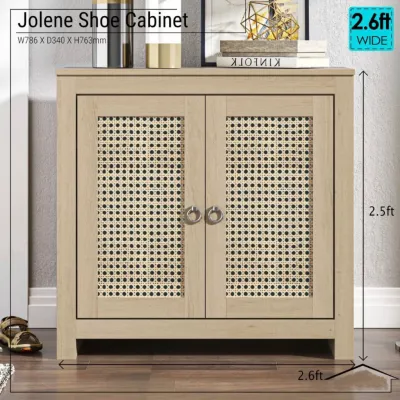

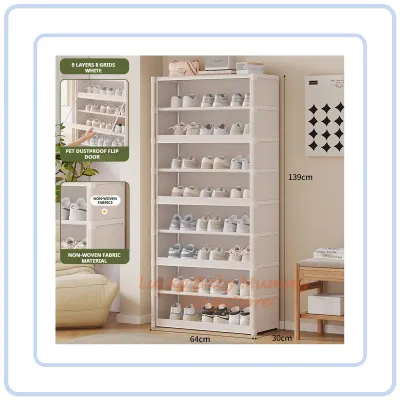
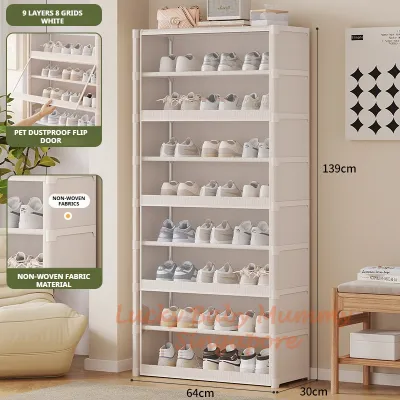
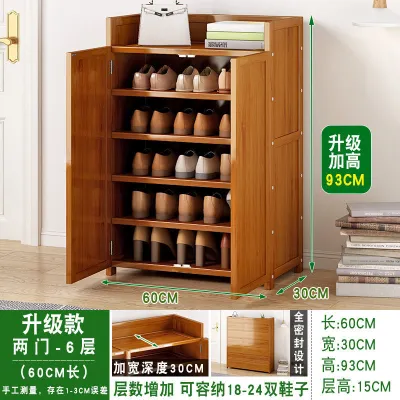
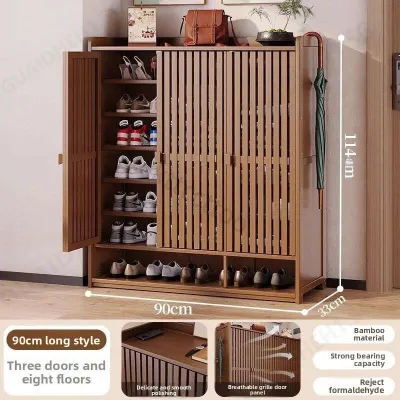
Prices are valid at publication and may change. Please refer to the product page for the latest price.
It is also helpful to categorize your shoes by how often they are worn. Daily wear items need to be easily accessible, whereas formal shoes, hiking boots, or off-season footwear can be stored elsewhere. If your entryway space is limited, a hybrid storage strategy works well. You can select a compact shoe rack with door for the foyer to hold active daily pairs, while keeping less frequently worn shoes in bedroom wardrobes or utility closets. This prevents you from needing an excessively large cabinet in a tight entryway.
Translate Pair Count into Rack Tiers and Dimensions
Once you have a clear pair count, you must translate that number into physical cabinet specifications. When browsing shoe racks with door, you will often see product descriptions stating a maximum capacity, such as “holds up to 24 pairs.” It is crucial to understand that these estimates are typically based on standard, low-profile adult shoes, such as flat loafers or canvas sneakers. They do not account for the varied shapes and sizes of a real household’s footwear collection.

Bulky footwear significantly reduces the actual capacity of any given tier. High-top sneakers, running shoes with thick soles, work boots, and high heels take up more vertical and horizontal space than flat sandals. If your household collection consists mainly of these larger, structured shoes, you should expect the actual capacity of the rack to be lower than the manufacturer’s maximum estimate. Checking the specific height and width of each shelf compartment is essential to avoid disappointment.
Pay close attention to the internal depth of the cabinet. Standard adult shoes generally require an internal depth of at least 30 to 35 centimeters to sit straight on the shelf. If someone in your home wears larger shoe sizes, a shallow cabinet might force you to place the shoes at an angle, which drastically reduces the number of pairs you can fit on a single tier. Always verify the internal dimensions rather than relying solely on the external measurements of the cabinet.
Finally, compare different structural configurations to find the most suitable footprint-to-capacity ratio for your home. A tall, narrow multi-tier cabinet utilizes vertical wall space efficiently, making it ideal for tight corners. On the other hand, a low, wide cabinet offers a broader surface area that can double as an entryway console table or a convenient bench for sitting down while putting on shoes. Evaluate your entryway’s layout to decide which configuration maximizes storage without overwhelming the room.
Measure Your Available Space and Pathways
Before finalizing your purchase, you must verify that the chosen shoe rack with door physically fits your intended location. Use a reliable tape measure to record the exact width, depth, and height of the allocated floor space. Be sure to account for any architectural details that might interfere with the cabinet’s placement, such as baseboards, skirting boards, electrical outlets, light switches, or wall-mounted intercoms. A cabinet that cannot sit flush against the wall due to a protruding baseboard can look awkward and unstable.
Pathway clearance is another critical factor, especially in homes with narrow entryways, corridors, or foyer areas. Placing a bulky cabinet in a high-traffic zone can restrict movement and create a safety hazard. Ensure there is ample walking space remaining after the cabinet is installed. As a general rule, you should be able to walk past the cabinet comfortably without having to turn sideways or squeeze through, maintaining a clear and welcoming entrance to your home.
Do not forget to plan for the delivery and assembly process. Measure the width and height of your home’s main entrance door, hallway corners, stairwells, and elevator doors. If you are purchasing a pre-assembled cabinet, it must be able to pass through these tight spaces without scratching your walls or damaging the furniture. For flat-pack units, ensure you have a clear, spacious area near the entryway to assemble the pieces safely according to the manufacturer’s instructions.
Account for Door Clearance and Ventilation Needs
Because you are selecting an enclosed shoe rack, the way the doors operate is just as important as the cabinet’s internal capacity. Traditional hinged doors swing outward, which means you must leave enough clear floor space in front of the cabinet for the doors to open fully. If your entryway is narrow, hinged doors might block the hallway or collide with your main entrance door. In such cases, consider alternative door styles, such as sliding doors or pull-down tipping drawers, which require minimal front clearance.
Ventilation is a vital consideration for enclosed shoe storage, particularly in humid tropical climates. Storing damp or worn shoes in a completely sealed cabinet traps moisture, leading to mold growth, mildew, and persistent odors that can ruin your footwear. To prevent this, look for cabinets designed with built-in ventilation features. Slatted doors, mesh panels, or ventilation holes in the back panel allow air to circulate freely, keeping your shoes dry and fresh while keeping them neatly hidden from view.
Proper maintenance of the cabinet’s moving parts will ensure long-term functionality. High humidity can sometimes affect metal hinges and tracks, leading to squeaks or stiffness over time. Review the manufacturer’s care instructions for maintaining these components. Periodically checking the alignment of the doors, tightening loose screws, and keeping the tracks free of dust and debris will ensure that your shoe rack with door remains easy to operate and looks great for years to come.
Common Capacity Mistakes to Avoid
One of the most common mistakes when choosing a shoe rack with door is assuming that all shelves will accommodate your footwear equally. Fixed-height shelves can lead to wasted vertical space above low-profile shoes like flats, while failing to accommodate taller shoes like boots or high heels. To avoid this issue, look for cabinets with adjustable or removable shelves. This flexibility allows you to customize the interior layout to match your specific collection, maximizing the usable capacity of the unit.
Another frequent oversight is ignoring the weight distribution and structural stability of the cabinet. Filling a tall, multi-tier shoe rack to maximum capacity with heavy footwear can make the unit top-heavy and prone to tipping over. Always check the manufacturer’s specified weight limits for each shelf and the overall unit. To ensure safety, especially in households with active pets or young children, choose a cabinet that includes wall-anchoring hardware and follow the installation instructions carefully to secure it to the wall.
Frequently Asked Questions (FAQ)
How many pairs of shoes typically fit on a single tier?
The number of pairs that fit on a single tier depends entirely on the shelf’s width and the style of shoes you are storing. A standard shelf width of about 80 centimeters typically accommodates three to four pairs of average-sized adult shoes. However, you should always check the manufacturer’s specific product dimensions. Bulky sneakers, wide boots, or structured dress shoes will take up more space, reducing the actual capacity, while slim sandals or children’s shoes may allow you to fit more pairs per tier.
Should I buy a larger shoe rack to accommodate future family expansion?
While planning for future needs is practical, you must balance this against your current space constraints and entryway layout. A cabinet that is too large can make your foyer feel cramped and restrict daily movement. If you anticipate your shoe collection growing, consider choosing modular or stackable shoe racks with doors. These systems allow you to expand your storage capacity vertically or side-by-side in the future, provided you follow the manufacturer’s guidelines for safe stacking and secure anchoring.

Community discussion
Share your experience or ask a question. Comments are reviewed before publication.