
A shoe bench with storage serves a dual purpose in your entryway: it provides a convenient spot to sit while putting on footwear and keeps daily clutter out of sight. To estimate your required capacity, a practical baseline is to allocate space for two to three pairs of daily-use shoes per household member. This means a couple typically needs a bench that holds four to six pairs, while a family of four requires storage for eight to twelve pairs.
This baseline focuses strictly on primary entryway storage—the shoes you wear multiple times a week. Occasional, formal, or seasonal footwear should reside in secondary closet overflow areas rather than crowding the main entryway. If your household includes active sports enthusiasts who require multiple specialized pairs, or if you frequently host guests, you should adjust this baseline upward by adding space for two to four additional pairs.
Assessing Your Household's Shoe Inventory
Before purchasing a shoe bench with storage, conducting a thorough inventory audit prevents underestimating your storage needs. Begin by gathering all footwear currently scattered near your entryway. Separate these shoes into two distinct categories: daily-wear items that must remain immediately accessible, and occasional or seasonal pairs that can be stored elsewhere.
Products mentioned in this guide
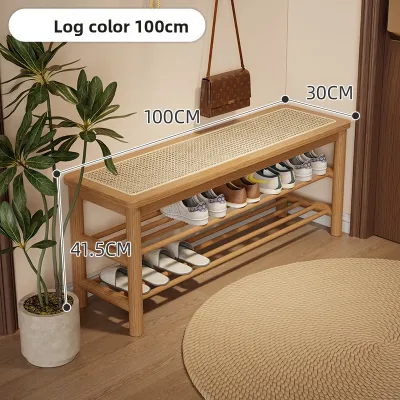
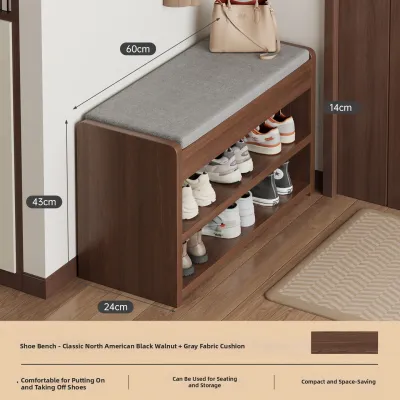
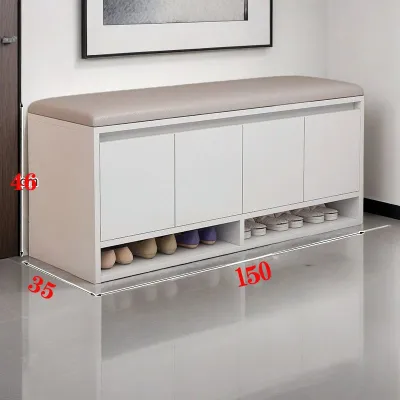
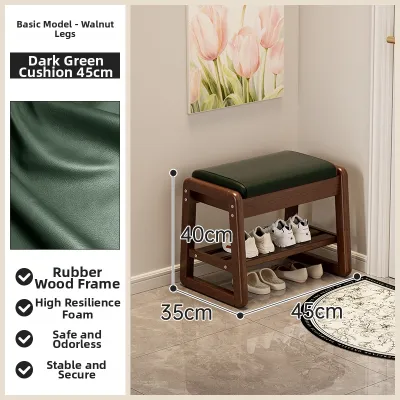
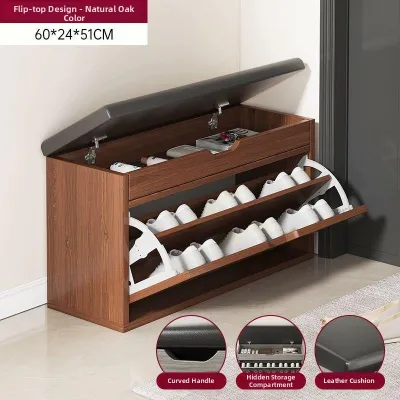
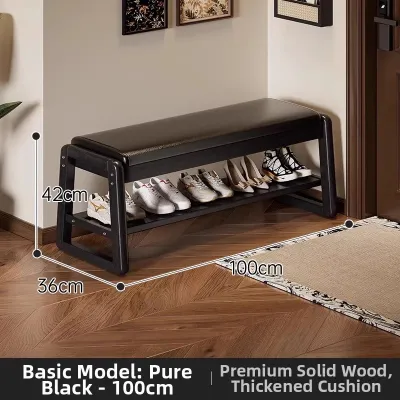
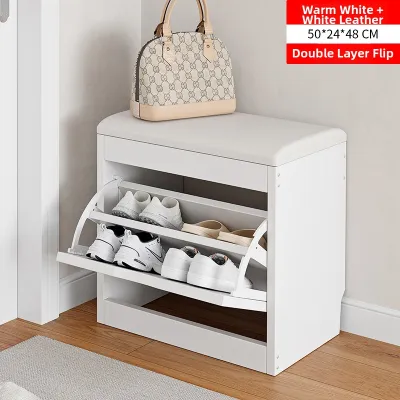
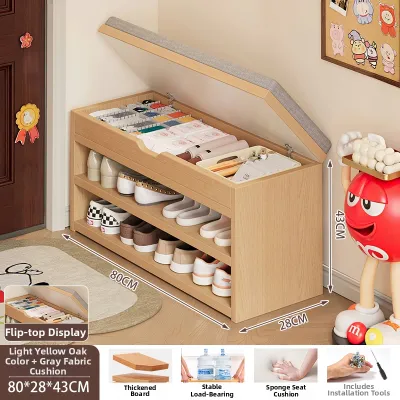
Prices are valid at publication and may change. Please refer to the product page for the latest price.
When counting your shoes, remember to account for household growth and changing needs. Children’s shoes are small now, but their sizes will increase rapidly, requiring adult-sized storage slots within a few years. Additionally, leave a buffer of at least twenty percent in your capacity calculations to accommodate future footwear purchases without overflowing the bench.
Your storage planning must also account for non-shoe items that often accumulate near the front door. Many shoe benches feature drawers, cubbies, or side pockets designed for accessories. If you plan to store shoe care kits, umbrellas, keys, or clean socks inside the bench, verify how much shoe capacity you must sacrifice to accommodate these items. Selecting a model with dedicated accessory compartments ensures your shoes and daily essentials do not compete for the same physical space.
Matching Bench Capacity to Household Size
Selecting the right internal configuration depends heavily on your household’s size and the results of your inventory audit. For singles and couples living in compact apartments, a streamlined shoe bench with storage is often the most efficient choice. These setups typically feature a single-tier shelf or a shallow double-tier drop-down compartment, comfortably holding four to six pairs of shoes while maintaining a minimal footprint in narrow corridors.

Small families of three to four people require a more robust configuration to keep the entryway organized. Multi-tier benches or wider designs measuring around 80 to 100 centimeters in width are ideal for these households, offering space for eight to twelve pairs. Some families also benefit from modular add-on units that sit adjacent to the bench, allowing you to expand storage as children grow.
Large households with five or more members face the greatest storage challenges and must maximize vertical and horizontal space. For these homes, a standard bench alone is rarely sufficient; the most effective strategy is combining a high-capacity bench with an adjacent tall shoe cabinet. This setup allows the bench to hold the absolute essentials while the vertical cabinet handles the remaining daily footwear.
Regardless of your household size, pay close attention to shelf adjustability and tier spacing. Standard flat shelves work well for low-profile shoes like flats, sandals, and loafers. However, bulky sneakers, high heels, and ankle boots require greater vertical clearance. Look for benches with adjustable or removable shelves, which allow you to customize the interior height to match your specific footwear mix.
Space, Dimensions, and Placement Checks
A shoe bench with storage must fit your physical space just as well as it fits your footwear collection. Start by measuring the available footprint in your entryway, paying close attention to clearance zones. Ensure that opening cabinet doors, drawers, or drop-down compartments will not block walking paths or collide with your main entry door.
Beyond the final placement spot, you must plan for the delivery and assembly process. Measure the width of your entry door, hallway corners, staircases, and elevator doors to confirm the packaged bench can safely reach your home. If you live in a high-rise apartment, verifying these dimensions beforehand prevents the frustration of a delivery that cannot fit through the lift doors.
Safety and structural integrity are paramount for furniture designed for seating. Always verify the manufacturer’s stated weight capacity limits before purchasing, ensuring the bench can safely support the weight of household members. Look for robust joinery and stable base designs, especially if multiple people might sit on the bench simultaneously.
Finally, consider the local climate and environmental conditions of your entryway. In humid environments like Singapore, enclosed shoe storage can trap moisture, leading to mold and unpleasant odors. Review the product specifications for built-in ventilation features, such as slatted doors, open backs, or breathable materials. If placing the bench in a semi-outdoor area like a sheltered corridor, check that the material finish is rated for moisture resistance and follow the manufacturer’s care instructions to maintain its appearance.
Frequently Asked Questions (FAQ)
How do I store tall boots in a standard shoe bench?
To store tall boots, check if the bench features adjustable or removable shelves that allow you to create a taller single compartment. If the shelves are fixed, you can lay boots flat on their sides, or reserve the bench exclusively for low-profile shoes while storing boots in a separate tall cabinet.
Should I leave empty space in the bench for guests' shoes?
It is best not to overbuy daily bench capacity solely for occasional guests. Instead, reserve a single flexible tier or cubby within your bench for visitors, or utilize a temporary, foldable floor mat near the entryway that can be easily tucked away when guests leave.
What is the best way to prevent odors in a closed shoe bench?
Preventing odors requires proper air circulation and moisture control. Choose a bench with built-in ventilation slots or an open-back design, place moisture-absorbing sachets inside the compartments, and always ensure your shoes are completely dry before placing them inside the closed storage.

Community discussion
Share your experience or ask a question. Comments are reviewed before publication.