
Selecting the ideal capacity for a metal iron shoe rack requires balancing your household’s current shoe collection with the physical limits of your entryway. Rather than guessing based on the number of family members, a successful choice depends on auditing your footwear types, calculating precise tier widths, and verifying structural stability. By matching your storage needs to the physical dimensions of the rack, you can maintain an organized, clutter-free home while ensuring your furniture remains safe and functional.
Assess Your Household's Actual Shoe Volume
To establish a realistic baseline capacity, begin by conducting a thorough inventory of every pair of shoes currently in use. Divide your collection into daily footwear, seasonal items, and occasional or formal pairs. Daily shoes require immediate, easy-access storage near the door, while seasonal or rarely worn pairs can often be relegated to secondary storage elsewhere in the home. Do not forget to account for guest footwear if you frequently host visitors, as a few temporary pairs can quickly overwhelm a tight entryway.
Different household members have distinct footwear profiles that impact space requirements. For instance, high heels, bulky athletic sneakers, and work boots occupy significantly more vertical and horizontal space than children’s shoes or flat sandals. Group your shoes by height and width during your inventory to understand the physical volume they occupy. This grouping prevents the common mistake of assuming all shoes fit neatly into uniform slots.
Products mentioned in this guide
![[SG SELLER] Upgraded Multi Layer Metal Shoe Rack (5-8)/Minimalist Modern Design Rust-proof/space saving BTO HDB](https://img.lazcdn.com/g/p/a828e8ed935d1223b29087a944fc04ff.png_400x400q80.png_.webp)
![[SG spot] metal shoe rack minimalist design shoe rack BTO shoe rack HDB shoe rack rust-proof shoe rack 5-10 layers](https://img.lazcdn.com/g/ff/kf/Sbf43e544afd04067a995ec80e540911dp.jpg_400x400q80.jpg_.webp)
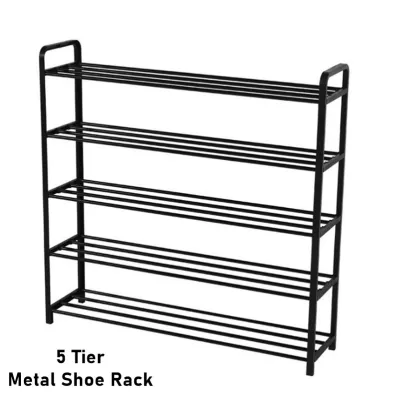
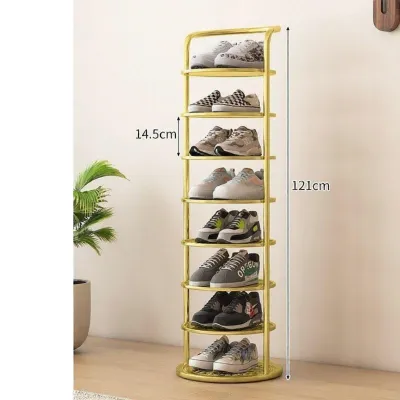
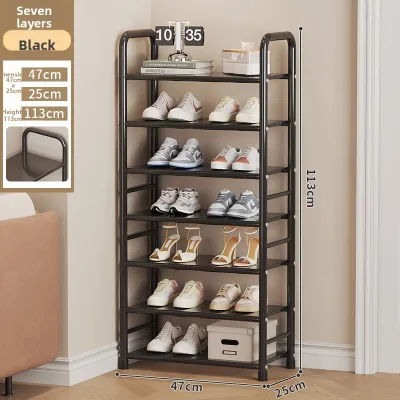
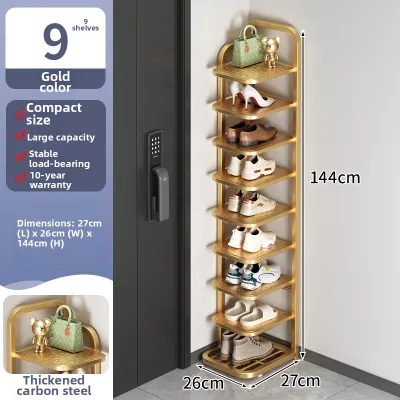
Prices are valid at publication and may change. Please refer to the product page for the latest price.
Finally, build a sensible buffer into your calculations to accommodate future purchases. If your household buying habits suggest a steady influx of new footwear, adding a ten to twenty percent capacity buffer is a practical safeguard. This extra space ensures your new acquisitions do not immediately force you to upgrade your storage setup or leave shoes spilling onto the floor.
Translate Shoe Volume into Rack Tiers and Layout
Once you have a total shoe count, you must translate this number into physical rack dimensions by calculating pairs per tier. Standard adult shoes typically measure between twenty to twenty-five centimeters in width per pair. Measure the internal horizontal length of the metal rack you are considering and divide it by your average shoe width to determine how many pairs will fit on a single tier. Always round down to the nearest whole number to avoid squeezing shoes together, which can damage delicate materials.

The vertical layout of the rack is equally critical, especially when dealing with a mix of flat shoes and tall boots. Fixed-tier metal racks offer uniform spacing, which is highly efficient for flats and sneakers but impractical for high-cut footwear. If your collection includes boots or high heels, look for metal racks featuring adjustable or removable shelves. This flexibility allows you to customize the vertical clearance of individual tiers without wasting valuable vertical space on shorter shoes.
As you increase the number of tiers to boost capacity, you must evaluate the rack’s overall stability. Tall, narrow metal shoe racks are susceptible to tipping, particularly when loaded with heavy footwear on the upper shelves. To prevent accidents, check if the manufacturer recommends anchoring the rack to the wall. If anchoring is not possible in your layout, prioritize wider, lower-profile designs that maintain a low center of gravity.
Verify Entryway Space and Clearance Limits
A high-capacity shoe rack is only useful if it fits comfortably within your home’s layout without blocking traffic. Measure the exact floor width and depth of your designated entryway space before browsing products. Remember to account for baseboards, which can prevent a metal frame from sitting flush against the wall, and the physical overhang of larger shoes that may extend past the edge of the shelves.
Walkway clearance is a vital safety and comfort consideration in busy foyers and hallways. Ensure that placing the rack still leaves sufficient room for doors to swing fully open and for household members to walk past without bumping into the furniture. In tight apartment entryways, a rack that is too deep can create a bottleneck, making it difficult to carry groceries or move larger items through the front door.
Additionally, consider the logistics of getting the shoe rack into your home. If you are purchasing a fully assembled metal or iron rack, verify the dimensions of your building’s elevator, stairwells, and main doorway. A heavy, welded iron frame cannot be easily disassembled to fit through tight corners, making pre-delivery measurements essential to avoid delivery failures or return complications.
Check Structural and Material Limits for Metal Racks
Metal and iron shoe racks are favored for their strength, but they are not immune to structural limits. Always check the manufacturer’s specified weight capacity per tier rather than assuming metal can support unlimited weight. Heavy work boots, leather dress shoes, and wet weather gear can add up quickly, potentially causing thin metal mesh or hollow tubes to sag or bend over time.
The construction of the shelves also dictates what types of shoes you can store. Wire grid or mesh shelves are excellent for ventilation, but thin heels can easily slip through the gaps, causing damage or instability. If you plan to store high heels, look for metal racks with solid sheet inserts or closely spaced flat bars that provide a stable surface for all heel types.
Environmental factors in your entryway should also influence your material choice. In humid climates, such as Singapore, moisture brought in from wet shoes or humid air can lead to rust on poorly treated iron or steel. Inspect the product specifications for protective surface treatments, such as powder coating or rust-resistant paint. Regular maintenance, including wiping down the frame to remove moisture and dirt, will extend the lifespan of your metal rack.
Avoid Common Capacity and Sizing Mistakes
One of the most frequent errors is choosing a shoe rack based solely on the number of people in the household. A family of three might easily own more shoes than a family of five, depending on lifestyle, hobbies, and work requirements. Always base your purchase on an actual physical count of your footwear rather than a generic headcount formula.
Another common oversight is ignoring the depth of the rack relative to larger shoe sizes. Standard shoe racks often feature a depth of around thirty centimeters, which may cause larger men’s shoes or extended athletic soles to overhang significantly. This overhang not only looks untidy but can also obstruct narrow walkways and cause shoes to fall off the rack.
Lastly, avoid the temptation to overload a high-capacity rack beyond its structural limits. Piling extra shoes on top of existing pairs or crowding the tiers compromises ventilation, damages shoe shapes, and increases the risk of the rack tipping over. If your collection outgrows your current rack, it is safer to declutter or invest in a secondary storage solution rather than pushing a single metal frame past its intended capacity.
Frequently Asked Questions (FAQ)
How much weight can a typical metal iron shoe rack hold?
To determine the weight capacity of a metal iron shoe rack, always refer to the manufacturer’s official product specifications. Weight limits vary widely depending on the thickness of the metal tubes, the quality of the welds, and whether the shelves are solid or mesh. To maintain structural integrity and prevent bowing, distribute the weight of your shoes evenly across all tiers, placing the heaviest footwear on the bottom shelves to keep the rack stable.
Should I leave extra space for future shoe purchases?
Yes, leaving a buffer for future purchases is highly recommended to prevent your entryway from becoming cluttered. When selecting a rack, calculate a ten to twenty percent capacity buffer based on your typical shopping habits. If you have limited floor space but anticipate a growing collection, consider modular, stackable, or horizontally expandable metal shoe racks that allow you to increase storage capacity as needed without requiring a complete furniture replacement.

Community discussion
Share your experience or ask a question. Comments are reviewed before publication.