
Finding the right storage solution for your footwear requires balancing physical space with realistic capacity needs. A bamboo rack shelf offers an eco-friendly, lightweight, and visually warm option for organizing your shoes, but selecting the wrong size can lead to cluttered entryways or squished footwear. To choose the right capacity, you must look beyond generic labels like “small” or “large” and instead calculate your actual storage requirements based on your current collection, expected growth, and the physical constraints of your home.
Assess Your Shoe Collection Size and Growth
Before browsing product listings, gather every pair of shoes in your household to conduct a thorough inventory. Group your footwear by style, as different types of shoes occupy vastly different amounts of physical space. Flat sandals and canvas slip-ons can often be nested or placed closely together, whereas chunky sneakers, basketball shoes, and high heels require significantly more horizontal and vertical clearance. If you have a collection of ankle boots or formal leather dress shoes, these will demand even more dedicated space on a bamboo rack shelf.
Once you have a clear count of your current inventory, factor in your future purchasing habits and seasonal rotations. If you regularly acquire new footwear, it is wise to select a rack that offers at least twenty percent more capacity than your current needs. Consider how you handle seasonal footwear; some pairs might be better off stored in closet boxes, leaving the main entryway rack dedicated to daily-wear items.
Products mentioned in this guide
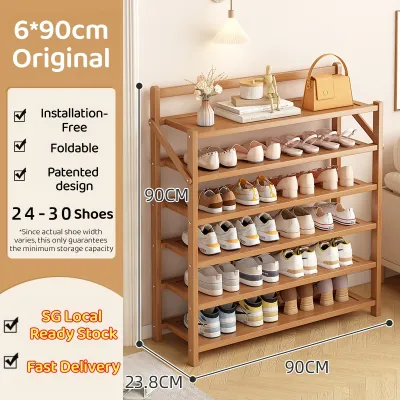
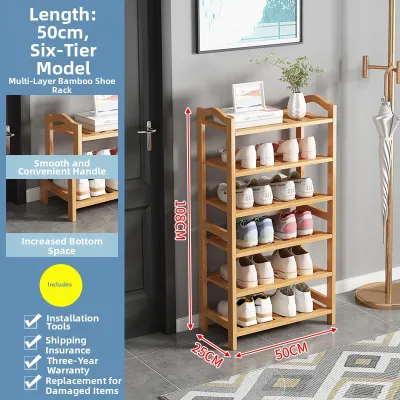
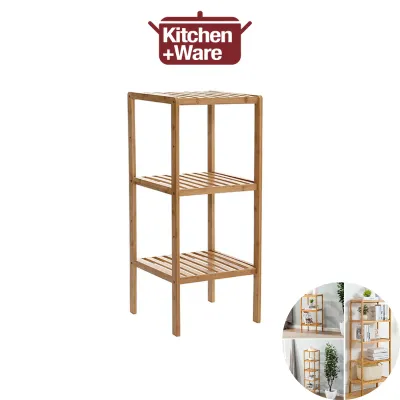
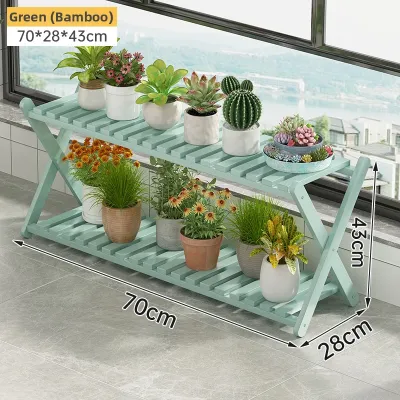
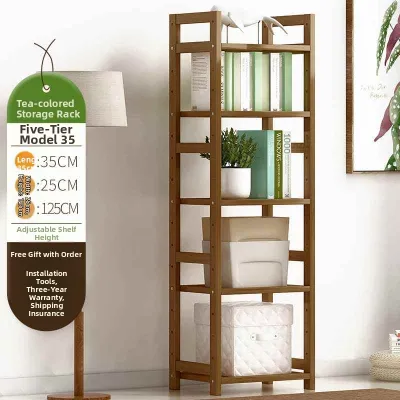
Prices are valid at publication and may change. Please refer to the product page for the latest price.
Another critical decision is whether you plan to store your shoes directly on the slats or keep them inside their original shoeboxes. Storing shoes in boxes protects them from dust but drastically increases the physical footprint required on each shelf. A single shoebox can easily take up the space of two pairs of unboxed shoes, requiring a bamboo rack shelf with much deeper and taller clearances between tiers.
Translate Shoe Counts into Shelf Dimensions
To ensure your new bamboo rack shelf accommodates your collection without overcrowding, you must translate your shoe count into precise physical dimensions. Start by measuring the width of your widest pairs of shoes, such as bulky trainers or wide-sole boots. Line up a few pairs side-by-side on the floor as if they were on a shelf, and measure the total span with a tape measure. Dividing this total width by the number of pairs gives you a reliable average width per pair, which you can use to evaluate product specifications.

Next, verify the shelf depth of any bamboo rack shelf you are considering. Standard adult shoes typically require a shelf depth that matches or exceeds the length of the sole to prevent the heels or toes from overhanging. Overhanging shoes look untidy and can be easily knocked off by passing foot traffic. If you or family members wear larger shoe sizes, pay extra attention to the depth specification provided by the manufacturer to ensure a secure fit.
Finaly, determine the number of tiers you need by dividing your total shoe count by the number of pairs that can realistically fit on a single tier. Relying on generic product descriptions like “holds 12 pairs” can be misleading, as these estimates are often based on small, flat shoes. By calculating the required horizontal width and multiplying it by the necessary vertical tiers, you can select a rack size based on real-world measurements.
Measure Your Entryway or Storage Space
A high-capacity shoe rack is only useful if it fits comfortably within your designated living space. In Singapore, where entryway space in HDB flats and condominiums is often premium, precise physical measurements are essential. Use a metal measuring tape to record the exact width, height, and depth of the floor area where you plan to position the bamboo rack shelf. Be sure to measure at the floor level as well as higher up the wall, as baseboards, electrical outlets, or light switches can restrict how the unit sits.
Take note of the surrounding architectural features that could interfere with the rack’s placement or usability. If the rack is positioned behind a main door or near a bedroom entrance, calculate the door swing arc to ensure the door can open fully without striking the furniture. Walkway clearance is equally important; you should leave enough open space in front of the rack for household members to stand, bend down, and comfortably put on or take off their shoes without blocking the main passage.
Do not forget to plan for the delivery and assembly process of your new furniture. Check the dimensions of your apartment’s main entrance, hallways, and lift doors to ensure that either the fully assembled rack or the flat-pack packaging can be easily transported into your home. If you are choosing a larger, multi-tiered bamboo unit, verifying these access pathways beforehand prevents the frustration of receiving a package that cannot easily clear tight corners.
Identify Design Features That Maximize Capacity
When evaluating different bamboo rack shelf options, look for specific design features that enhance storage efficiency and flexibility. Adjustable or removable shelves are incredibly valuable, as they allow you to customize the vertical clearance of individual tiers. By removing a single shelf or adjusting its height, you can create a taller compartment for boots or high heels while keeping the remaining tiers closely spaced for flat sandals and slippers, thereby maximizing the overall capacity of the unit.
The angle of the shelves also plays a significant role in how space is utilized. Slanted shelf designs can reduce the overall depth profile of the rack, making them ideal for narrow hallways where a standard flat shelf would protrude too far. However, if you choose a slanted design, ensure it features built-in heel stops to keep shoes from sliding off. Flat shelves offer more stable storage for shoeboxes and allow you to stack flat shoes on top of one another if needed.
Additionally, pay attention to the clearance beneath the very bottom tier of the rack. Many well-designed bamboo shoe racks feature an elevated bottom shelf that leaves a gap of several centimeters above the floor. This open space acts as an informal extra tier, allowing you to slide everyday slippers, flip-flops, or wet umbrellas underneath without occupying the primary shelf space above, effectively increasing your storage capacity without increasing the physical height of the furniture.
Avoid Common Sizing and Capacity Mistakes
One of the most frequent mistakes when purchasing a bamboo rack shelf is assuming that all racks with the same number of tiers offer identical storage capacities. A “4-tier” rack from one manufacturer might be significantly narrower than a “4-tier” rack from another, resulting in a major difference in the actual number of shoes they can hold. Always ignore the generic tier count as a sole metric and focus instead on the specific internal shelf width listed in the product specifications.
Another common oversight is failing to account for the thickness of the bamboo frame itself. Product listings typically display external dimensions, which include the thick vertical support pillars. The actual usable width of the shelf slats—the net space where your shoes will sit—is often several centimeters shorter than the overall external width. If you fail to subtract the frame thickness from your calculations, you may find that your final pair of shoes on each tier does not quite fit.
Lastly, avoid the temptation to overload a lightweight rack beyond its structural limits. While bamboo is known for its impressive strength-to-weight ratio, individual shelves still have strict weight capacities determined by the thickness of the slats and the quality of the assembly hardware. Overloading a shelf with heavy leather boots can cause the bamboo to bow, sag, or split over time. Always verify the manufacturer’s stated weight limit per tier to ensure your collection is supported safely.
Frequently Asked Questions (FAQ)
Can a bamboo shoe rack hold heavy winter boots or chunky sneakers?
Yes, a high-quality bamboo shoe rack can accommodate heavier footwear, but you must verify the manufacturer’s specific weight capacity per shelf. Because bamboo is a natural material, its load-bearing ability depends heavily on the thickness of the slats and the overall structural design of the frame. To safely store heavy boots or bulky sneakers, look for models that feature reinforced joints or thicker bamboo poles in their product descriptions. Additionally, measure the vertical clearance between the tiers to ensure that high-top sneakers or boots can fit comfortably without scraping against the shelf above, which can damage both the footwear and the rack’s finish.
How do I maintain a bamboo shoe rack in humid environments?
Maintaining a bamboo shoe rack in a humid climate, such as Singapore, requires following the manufacturer’s specific care and cleaning instructions to preserve the material’s integrity. Ensure the rack is placed in a well-ventilated area away from direct water exposure, such as open balconies or wet bathroom entryways, to prevent moisture buildup. When cleaning, avoid using harsh chemical cleaners or soaking the wood with excessive water; instead, use a slightly damp, soft cloth to wipe away dust and dry the surface immediately. If you suspect mold growth or warping due to high humidity, consult the manufacturer’s guidelines for approved wood-safe treatments rather than applying random household chemicals.

Community discussion
Share your experience or ask a question. Comments are reviewed before publication.