
Finding the perfect shoe storage solution requires balancing your home’s physical layout with the actual volume and variety of your footwear. To choose the right Caninet shoe rack capacity, you must measure your available floor space, calculate your household’s storage needs based on shoe types, and verify the manufacturer’s internal shelf specifications. Taking these steps ensures your selected cabinet fits seamlessly into your entryway without obstructing daily traffic, blocking essential utilities, or compromising home safety.
Assess Your Available Floor Space and Layout
Accurately measuring your designated entryway, hallway, or closet is the essential first step before purchasing any storage furniture. Use a reliable metal measuring tape to record the maximum width, depth, and height available for the shoe rack. Do not rely on visual estimates, as even a few millimeters of discrepancy can prevent a cabinet from fitting into a tight alcove. Remember to account for skirting boards, baseboards, or wall trim, which often project outward and prevent flat-backed furniture from sitting completely flush against the wall.
Beyond basic floor dimensions, observe the vertical wall space and surrounding fixtures. Check for the placement of light switches, electrical outlets, intercom units, or wall-mounted distribution boxes that a tall cabinet might block. You must also factor in door swings, ensuring that your main entrance door, bedroom doors, or nearby closet doors can open fully without striking the shoe rack.
Products mentioned in this guide
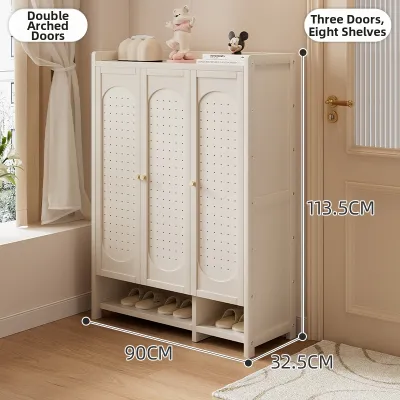
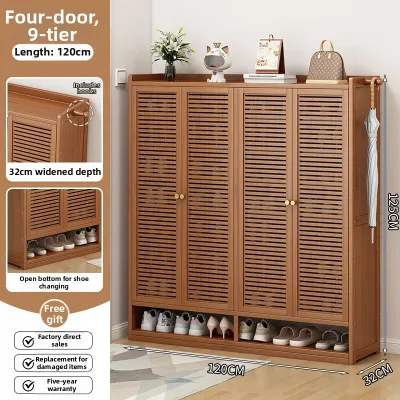
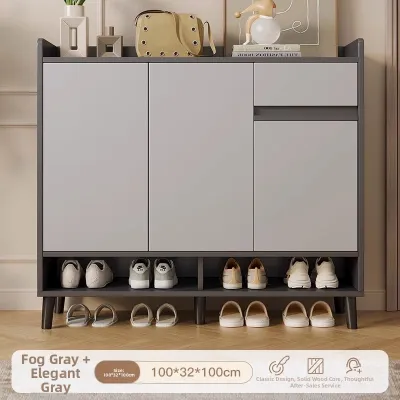
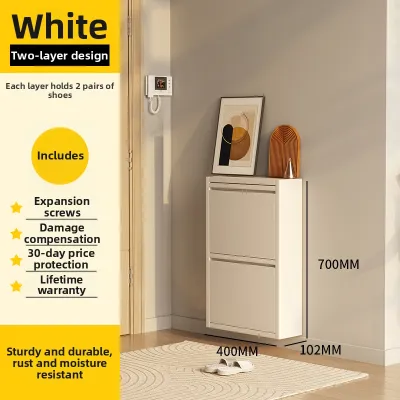
Prices are valid at publication and may change. Please refer to the product page for the latest price.
Traffic flow and safety are paramount when planning your layout. Entryways and hallways are primary evacuation routes, so any furniture placed here must leave a clear, unobstructed path. In compact apartments, such as those commonly found in Singapore, maintaining a wide walkway is crucial for daily comfort and emergency situations.
Finally, evaluate the floor type and wall structure of the installation site. Uneven floor tiles or slightly sloped surfaces can cause a tall cabinet to wobble or sit unevenly, which affects door alignment and overall stability. If you plan to install a heavy or high-capacity unit, identify whether your wall is made of solid masonry or hollow drywall, as this determines the correct anchoring hardware required to secure the unit safely.
Calculate Your Shoe Storage Capacity Needs
To determine the ideal capacity of your new shoe rack, you must perform a realistic inventory of your household’s current footwear collection. Gather all the shoes currently scattered around your entryway or stored in temporary boxes, and count them systematically. It is wise to add a buffer of at least 10% to 15% to this total to accommodate future purchases, seasonal footwear changes, or shoes belonging to occasional house guests.

Keep in mind that different types of footwear require vastly different amounts of storage space. Standard flat shoes, sandals, and low-profile slippers can be placed close together and require minimal vertical clearance, allowing you to maximize shelf space. On the other hand, bulky running shoes, high-top sneakers, and tall boots demand significantly more height and depth. If your collection consists heavily of high-top sneakers or boots, a standard fixed-shelf rack may not offer enough vertical clearance, meaning you will need to look for models with adjustable or removable shelves.
You must also decide whether the new rack will serve as a high-rotation daily station or a comprehensive storage solution for your entire collection. A daily-wear rack placed right by the door only needs to hold a few pairs per family member, allowing you to choose a compact, low-profile design. Conversely, if you intend to store every pair of shoes your household owns, you will need a much larger cabinet with a high tier count, which requires a larger physical footprint and careful space planning.
Match Caninet Shoe Rack Dimensions to Your Space
With your physical space measurements and shoe inventory in hand, you can begin comparing different Caninet shoe rack models to find the right match. Carefully review the manufacturer’s listed external dimensions, including the total width, depth, and height, as well as the specified tier count. Be sure to distinguish between the external product width and the actual usable shelf width, as the outer frame and side panels can subtract several centimeters of storage space on each level.
When evaluating capacity, remember that manufacturer estimates are typically based on standard-sized, low-profile shoes. If your household wears larger shoe sizes or bulky footwear, the actual capacity of the rack will be lower than the advertised maximum. For example, a shelf rated for four pairs of standard shoes might only comfortably fit three pairs of wide-soled athletic sneakers.
For homes with limited floor space, a slim-profile Caninet cabinet featuring tilt-out drawers or slanted shelves is often an excellent choice. These specialized designs allow shoes to be stored vertically or at an angle, significantly reducing the external depth of the cabinet while still accommodating standard shoe lengths. If you have a wider entryway, a traditional horizontal shelf layout provides straightforward access and highly predictable storage capacity.
If your storage needs are likely to change over time, look into modular or expandable Caninet options. Some models are designed to be stacked vertically or connected side-by-side, allowing you to scale your storage capacity as your household grows or your collection expands. This modular approach prevents the need to replace your entire storage setup in the future, offering a highly adaptable and cost-effective solution.
Check Clearance, Ventilation, and Installation Requirements
A functional shoe rack must not only fit your space but also remain easy and safe to use on a daily basis. When selecting a Caninet cabinet, verify the clearance required for opening doors, pulling out drawers, or operating tilt-out mechanisms. You should be able to stand comfortably in front of the fully opened cabinet to retrieve or store your shoes without blocking the entire hallway or bumping into adjacent walls.
Proper ventilation is another critical factor to consider, particularly in warm and humid climates like Singapore’s. Enclosed shoe cabinets can easily trap moisture, sweat, and dirt, creating an environment prone to unpleasant odors, mold, and mildew growth that can ruin expensive leather footwear. To prevent this, look for Caninet models that incorporate ventilation features, such as slatted front doors, open back panels, or built-in air vents that promote continuous airflow.
Safety and stability are essential, especially for taller or heavier shoe storage units. Review the manufacturer’s assembly instructions to check for wall-anchoring requirements. Tall cabinets can become top-heavy when fully loaded with shoes, presenting a serious tip-over hazard if they are not securely fastened to the wall. This safety precaution is particularly vital in households with young children or pets who might attempt to climb or pull on the furniture.
Frequently Asked Questions (FAQ)
How much depth do I need for a Caninet shoe rack if I have large sneakers?
When storing large sneakers, high-tops, or wide-soled athletic shoes, you must check the internal shelf depth rather than relying solely on the external cabinet dimensions. Standard shoe racks generally offer an internal depth of 30 to 35 centimeters, which is sufficient for most shoe sizes. If your footwear exceeds these dimensions, look for Caninet models that feature adjustable shelf heights or slanted shelf configurations. Slanted shelves allow longer shoes to sit at an angle, maximizing the usable space and accommodating larger sizes without requiring a deeper, bulkier cabinet footprint that encroaches on your floor space.
Can I place a Caninet shoe rack in a shared building corridor?
Placing a shoe rack in a shared building corridor depends on both the material durability of the rack and local housing regulations. In Singapore, housing authorities and building management committees enforce strict rules regarding corridor obstructions to ensure clear evacuation paths and prevent fire hazards. Always consult your local building guidelines before placing any furniture outside your unit. Additionally, verify the manufacturer’s specifications to ensure the Caninet model is rated for outdoor or semi-outdoor use, as exposure to high humidity, ambient moisture, and indirect sunlight can quickly degrade materials designed strictly for indoor environments.

Community discussion
Share your experience or ask a question. Comments are reviewed before publication.