
Finding the right bookcase for your HDB flat or condominium in Singapore requires balancing storage capacity with spatial harmony. With modern residential layouts prioritizing efficient use of space, choosing furniture is an exercise in precise planning. A bookcase that looks well-proportioned in a spacious showroom can easily overwhelm a compact living room or block a vital walkway at home. To make the appropriate choice, you must evaluate your room’s physical boundaries, understand delivery logistics, and select a configuration that complements your lifestyle.
Assessing Your Available Space and Layout
Before browsing online marketplaces or visiting local showrooms, you must obtain precise measurements of your designated area. Start by measuring the exact floor footprint where the bookcase will stand. Use a high-quality measuring tape and measure the width and depth of the floor space. Do not rely on general floor plans, as actual built dimensions can vary. Remember to account for skirting boards, which run along the base of your walls. Skirting boards typically protrude by 1 to 2 centimeters, preventing flat-backed furniture from sitting completely flush against the wall unless the bookcase features a base cutout designed to accommodate them.
Vertical space is equally critical, especially if you are considering a tall unit to maximize storage. Measure the ceiling height from the floor to the lowest point of the ceiling. In many Singaporean homes, false ceilings, plaster boards, or structural concrete beams can reduce the available height in specific areas. If you plan to place the bookcase near a corner or under a beam, measure the clearance at that exact spot. Additionally, check for any ceiling fixtures, such as downlights, ceiling fans, or track lighting, that could interfere with the top of a tall bookcase or cast shadows over your reading material.
Products mentioned in this guide
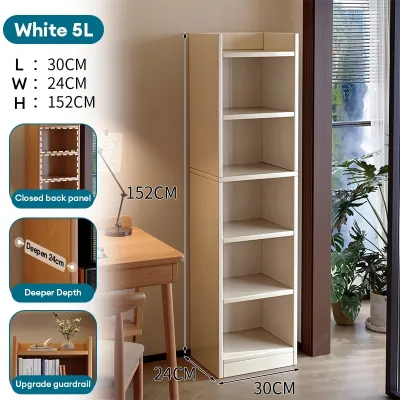
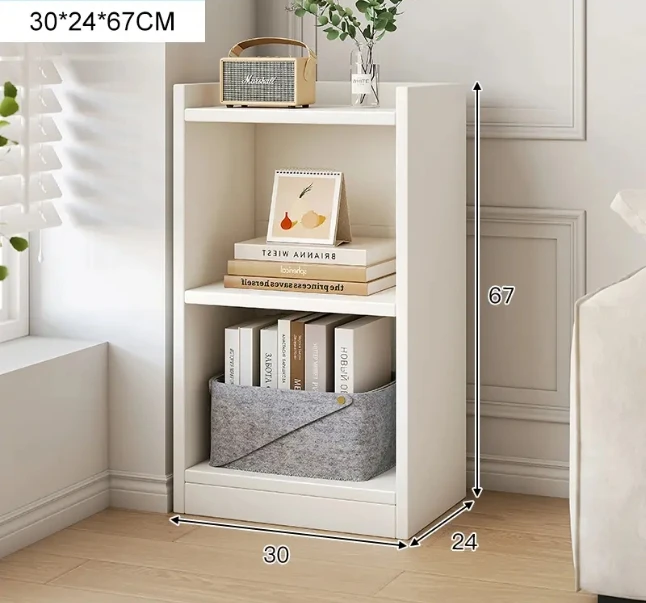
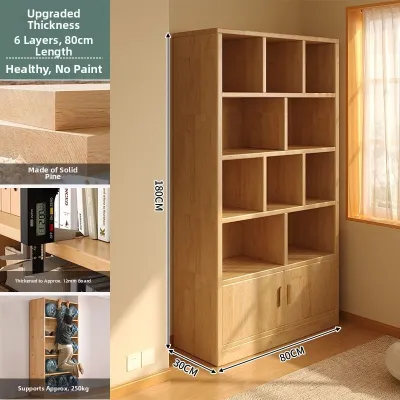
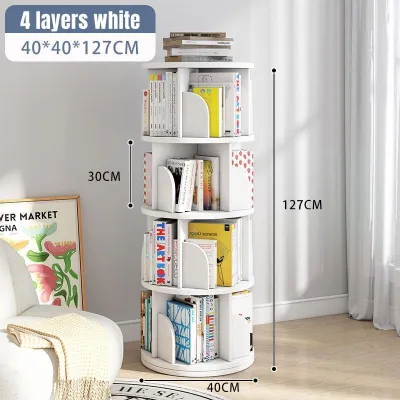
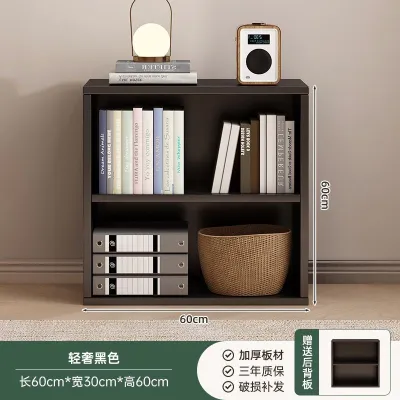
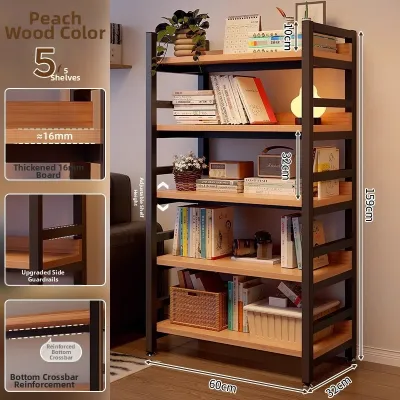
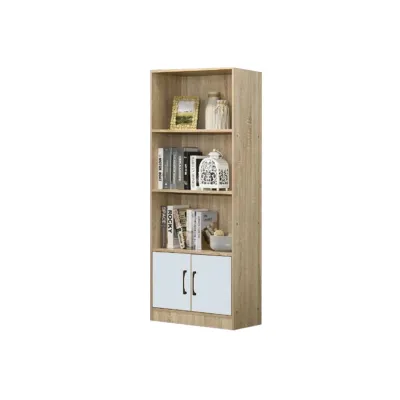
Prices are valid at publication and may change. Please refer to the product page for the latest price.
Beyond the physical footprint of the bookcase, you must factor in the clearance zones required for daily movement and existing furniture. A comfortable walkway typically requires a clearance of 60 to 90 centimeters. If your bookcase features swinging wooden or glass doors, you must add the full swing radius of the doors to the depth of the unit to ensure they can open fully without striking your sofa, coffee table, or bed frame. If space is exceptionally tight, consider open shelving or sliding doors, which do not require extra clearance to access your books.
Finally, inspect the wall for potential obstructions that could be blocked or damaged by a large piece of furniture. Take note of the positions of electrical outlets, light switches, telephone jacks, and fiber optic termination points. Covering these utilities can make daily tasks highly inconvenient. Furthermore, pay close attention to the location of wall-mounted air conditioning units. A tall bookcase placed directly beneath or near an aircon unit can restrict airflow, reduce cooling efficiency, and make routine filter cleaning or servicing extremely difficult for technicians.
Matching Bookcase Proportions to Different Rooms
The ideal scale and style of your bookcase will depend heavily on the room it occupies. In the living room, which serves as the social hub of the home, a bookcase must balance visually with other major furniture pieces. A massive, dark-wood bookcase can easily dominate a small living room, making the entire space feel cramped and dark. To maintain a balanced aesthetic, try to match the height of your bookcase with other tall elements, such as window frames or door frames. Alternatively, you can opt for a low, wide bookcase that doubles as a console table, keeping the sightlines open and allowing natural light to flow freely across the room.

In bedrooms and dedicated study nooks, floor space is often at a premium, making vertical storage the most logical choice. Tall, narrow bookcases allow you to utilize the vertical plane effectively, leaving more floor space for your bed, wardrobe, or desk. However, you must position these tall units carefully to avoid blocking natural light from windows. Placing a tall bookcase directly next to a window can cast deep shadows across your workspace, requiring more artificial lighting. Ensure that the placement of the bookcase does not restrict the movement of wardrobe doors or prevent you from fully opening bedroom doors.
For homeowners who anticipate changing storage needs or live in homes with irregular layouts, modular or adjustable shelving systems offer an excellent solution. These systems allow you to customize the height and arrangement of individual shelves to accommodate books of varying sizes, from small paperbacks to large art folios. Modular designs also give you the flexibility to expand your storage over time by adding matching units side-by-side or stacking them vertically, ensuring your furniture can adapt to your evolving collection without requiring a complete replacement.
Navigating Delivery and Assembly Constraints
One of the most common oversights when purchasing large furniture in Singapore is failing to plan for the delivery and assembly process. Even if a bookcase fits comfortably within your room, it must first make its way from the delivery truck to its final position. Start by measuring the dimensions of your building’s lift. Check the lift door width, interior height, and depth to ensure a long flat-pack box or a pre-assembled unit can fit inside. If your building does not have lift access or if the unit is too large for the elevator, you will need to coordinate manual carrying up the stairwell, which often incurs additional fees and requires checking stairwell clearances and tight turns.
Once the delivery team reaches your front door, the unit must navigate your home’s internal pathways. Measure the clear opening width of your main entrance door and any bedroom or study doors. Keep in mind that door handles, security gates, and narrow corridors can restrict the actual maneuvering space. If your hallway has a sharp 90-degree turn, a long, rigid package may get stuck, even if the doorway itself is wide enough. Taking these measurements beforehand allows you to discuss potential delivery challenges with your retailer and avoid costly return fees.
If you choose flat-pack furniture, you must also consider the physical space required for assembly. Assembling a bookcase typically requires a clear floor area that is at least twice the size of the finished unit. This space is necessary to lay out the side panels, shelves, and hardware safely without scratching your flooring. Furthermore, pay close attention to the height clearance required to upright the bookcase. When you assemble a unit flat on the floor and tilt it upward, the diagonal measurement of the bookcase is temporarily greater than its final standing height. If your ceiling clearance is too low, you may find it impossible to stand the assembled unit upright, forcing you to assemble it vertically, which can be significantly more difficult and may require multiple people.
Space-Saving Configurations for Compact Homes
For homes with severe spatial limitations, traditional freestanding bookcases may not be the most practical choice. Fortunately, several space-saving configurations can help you store your book collection without sacrificing valuable floor space. Wall-mounted and floating shelves are practical options for compact rooms. By anchoring shelves directly to the wall, you keep the floor area completely clear, creating an open, airy feel. This configuration is particularly useful above desks, beds, or low TV consoles, turning empty wall space into functional storage.
Another underutilized area in many homes is the corner. Standard rectangular furniture often leaves corners empty or awkwardly filled. A dedicated corner bookcase is designed to fit snugly into these 90-degree angles, maximizing storage capacity while keeping the center of the room clear. Similarly, over-door shelving systems utilize the space above doorways, which is typically left empty. This approach is ideal for storing books that you do not need to access daily, keeping them organized and out of the way while adding a unique architectural element to your home.
If you have narrow hallways, passageways, or shallow alcoves, consider choosing a shallow-depth bookcase. While standard bookcases often have a depth of 30 to 40 centimeters, many books—especially standard novels and paperbacks—only require a shelf depth of 20 centimeters. Opting for a shallow-depth unit prevents the bookcase from protruding into walkways, ensuring that your hallways remain safe and easy to navigate. By selecting a bookcase depth that matches your actual reading material, you can save precious centimeters of floor space throughout your home.
Frequently Asked Questions (FAQ)
Do I need to anchor my bookcase to the wall?
Yes, anchoring your bookcase to the wall is highly recommended for safety, especially for units that are tall, narrow, or top-heavy. Tipping hazards pose a significant risk in homes with young children or pets who might attempt to climb or pull on the shelves. To prevent accidental tip-overs, always follow the manufacturer’s installation instructions and use the specific wall-anchoring hardware provided with the unit. Depending on your wall material—such as solid concrete common in HDB flats or drywall partitions in some condos—you must select the appropriate wall plugs and screws to ensure a secure and stable hold.
How much weight can a standard bookcase shelf hold?
There is no single weight standard for bookcase shelves, as load capacity depends on several factors, including the shelf material, thickness, overall span length, and the type of support brackets used. To ensure safety and prevent unsightly sagging, you should always check the manufacturer’s specified weight limit for your exact bookcase model. Shelves made from solid wood, plywood, or metal generally offer higher load capacities than those made from thin particleboard or medium-density fibreboard (MDF). If you plan to store heavy items like textbooks, binders, or large hardcovers, distribute the weight evenly and consider units with shorter shelf spans or reinforced central supports.

Community discussion
Share your experience or ask a question. Comments are reviewed before publication.