
Selecting the right book trolley size requires balancing your available floor space, transit pathways, and book collection volume. A trolley that is too large will obstruct walkways, while one that is too small will fail to hold your books safely, leading to overloading and tipping hazards. By measuring your designated parking spots, assessing transit routes, and calculating the weight of your books, you can select a mobile storage unit that integrates seamlessly into your home.
Measure Your Available Floor Space and Pathways
Before browsing online marketplaces, identify where the book trolley will park. Measure the designated parking spot’s width, depth, and height clearance. Record these dimensions accurately, as even a discrepancy of a few centimeters can prevent the trolley from fitting flush against a wall or beside a desk. If you plan to tuck the trolley under a desk, pay close attention to the vertical clearance, factoring in any protruding handles or top-shelf rails.
Mobility is the primary benefit of a book trolley, making it essential to evaluate transit routes. Measure the width of every doorway, hallway, and tight turn the trolley must navigate. In compact residential layouts, such as typical apartments in Singapore, corridors and entryways can be narrow, making precise measurements crucial. If your building requires using an elevator to move items between levels, check the elevator door width and interior cabin dimensions to ensure hassle-free transport.
Products mentioned in this guide
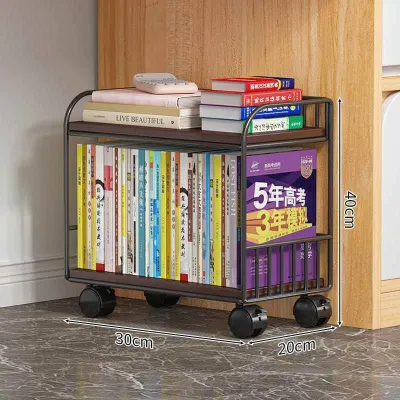
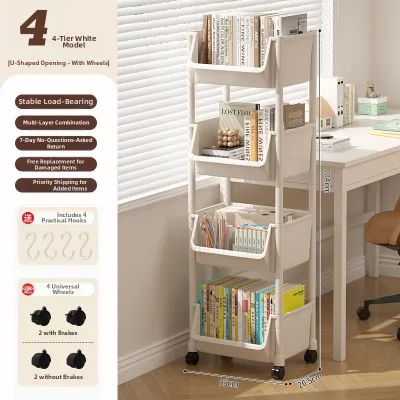
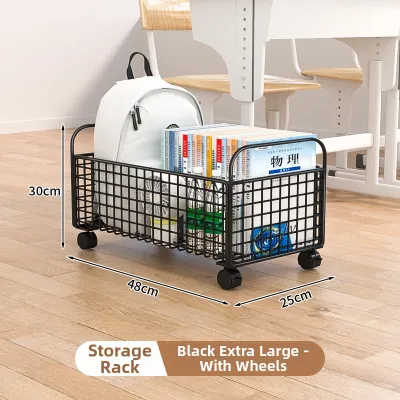
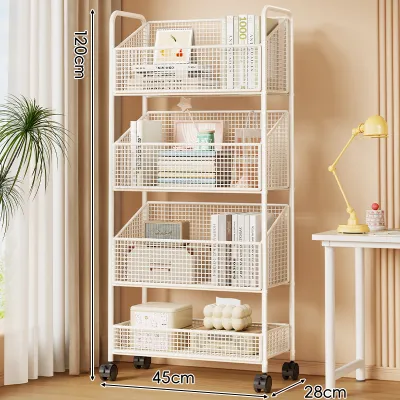
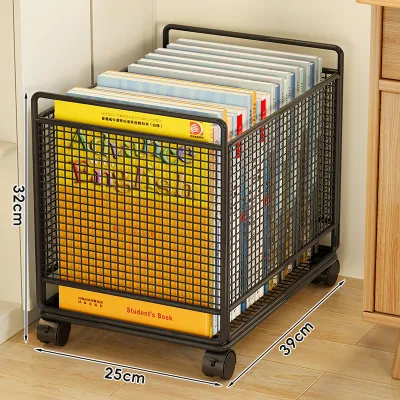
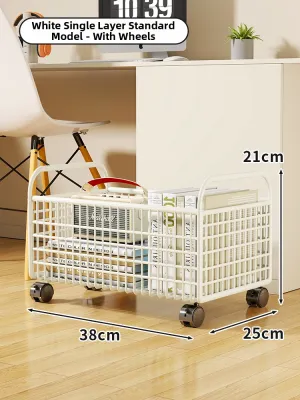
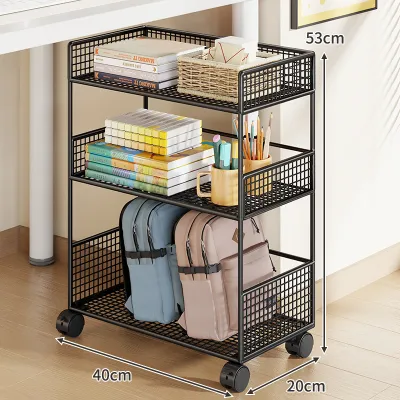
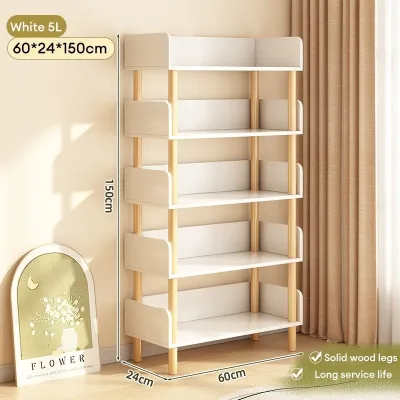
Prices are valid at publication and may change. Please refer to the product page for the latest price.
Do not forget to account for the extra clearance space needed to operate the trolley’s features. If the model you choose includes drawers, cabinet doors, or pull-out shelves, measure the space required for these components to extend fully. Opening these parts should not cause the trolley to hit walls, scratch adjacent furniture, or block active walkways. Leaving a buffer zone of at least ten to fifteen centimeters around the parking spot will help prevent accidental scuffs and allow you to maneuver the unit comfortably.
Estimate Your Book Collection Volume and Weight
A book trolley must be structurally capable of supporting your library without bending or tipping. Begin by estimating the total number of books you plan to store and categorizing them by size. Standard paperbacks are relatively light and uniform, whereas large hardcovers, art books, and academic textbooks require significantly more vertical clearance and depth. Grouping your books by size allows you to determine the minimum shelf depth and height spacing required to keep your collection organized.

Check the trolley’s shelf spacing and verify whether the shelves are adjustable. Fixed-shelf trolleys limit your storage options, often forcing you to store taller books horizontally, which wastes valuable space. Adjustable shelves allow you to customize the vertical clearance of each tier, maximizing storage efficiency for a mixed collection of paperbacks and large volumes. Ensure that the shelf depth is sufficient to prevent books from overhanging the edges, which can lead to damaged spines or accidental drops when the trolley is in motion.
Weight distribution is critical for maintaining the structural integrity of your mobile storage. Review the manufacturer’s specifications for the maximum load limit per shelf and the total weight capacity of the entire unit. Heavy hardcovers should always be placed on the bottom shelf to keep the center of gravity low, while lighter paperbacks can occupy the upper tiers. Exceeding these weight limits can cause shelves to sag, strain the wheels, or make the trolley highly unstable when pushed across the room.
Match Trolley Dimensions to Common Room Layouts
Integrating a book trolley into your home requires matching its physical dimensions to your specific room layout. For narrow spaces, study rooms, or tight corridors, opt for a slim-profile or vertical trolley. These designs utilize height rather than floor area, offering multiple tiers of storage while keeping the footprint minimal. A vertical design allows you to store a substantial number of books without encroaching on valuable floor space, keeping your walkways clear and safe.
In open-plan living areas or larger bedrooms, wider and lower trolleys offer excellent versatility. These models can serve dual purposes, acting as mobile side tables next to a sofa or even as temporary room dividers to separate a study nook from a living zone. Because these trolleys have a wider base, they offer excellent stability and can hold larger, heavier books on their broad shelves. Their lower height also keeps sightlines open, preventing the room from feeling cluttered or cramped.
If your available floor space is highly restricted or multi-functional, consider space-saving designs such as foldable frames or nesting options. Foldable book trolleys can be collapsed and stored in a closet or behind a door when empty, making them ideal for temporary projects or seasonal reading. Nesting trolleys, which can slide partially under other furniture or fit together when not in use, provide flexible storage that adapts to your changing daily needs without permanently occupying floor space.
Evaluate Mobility, Stability, and Safety Features
The safety and functionality of a book trolley depend heavily on its mobility features and structural build. Examine the wheel types, focusing on castors that feature reliable locking mechanisms. Heavy-duty polyurethane or rubber wheels are ideal for protecting hard floors and tiles from scratches, while larger wheels are better suited for rolling smoothly over thick rugs or carpeted areas. Ensure at least two of the castors have individual locks to keep the trolley securely in place when you are loading or unloading books.
Verify the base width and the overall center of gravity of the trolley to prevent tipping hazards. A trolley with a narrow base and a tall frame is inherently more prone to tipping, especially when fully loaded and moved over floor transitions or door thresholds. To ensure stability, look for models with a sturdy, wide-set wheel base that distributes weight evenly. Testing the trolley’s stability by gently pushing it when partially loaded can help you identify any balance issues before filling it to capacity.
Review the assembly requirements and the quality of the structural joints before finalizing your purchase. High-quality joints, reinforced screws, and solid metal or dense wood frames are essential for supporting the heavy, concentrated weight of books over time. Loose joints or flimsy materials can cause the frame to wobble, compromising safety and leading to premature wear. Regularly checking and tightening the assembly hardware will help maintain the trolley’s structural stability and ensure smooth, quiet operation.
Common Sizing Mistakes to Avoid
One of the most frequent errors when choosing a book trolley is ignoring the difference between the base footprint and the shelf overhang. Protruding shelves or handles can stick out, blocking walkways and catching on clothing. Always use the maximum outer dimensions, rather than just the base measurements, when planning where to park and move your trolley.
Another common mistake is overlooking the total height of the trolley in relation to low fixtures. Placing a tall trolley under sloped ceilings, low window sills, or directly beneath wall-mounted air conditioning units can restrict access or block airflow. Measure the vertical clearance of your entire room, noting any low-hanging fixtures, to ensure the trolley can be positioned safely without causing obstructions.
Finally, avoid prioritizing maximum storage capacity over actual maneuverability. It is tempting to buy the largest trolley available to house your entire book collection, but an oversized unit is difficult to steer, heavy to push, and awkward in tight, multi-purpose spaces. Opting for a slightly smaller, highly maneuverable trolley often provides a much better user experience, even if it means keeping a portion of your books on permanent shelving.
Frequently Asked Questions (FAQ)
How do I know if a book trolley will fit through my doors?
To verify transit clearance, measure the narrowest point of your door frame, taking into account the door itself if it does not open fully flat against the wall. Compare this measurement to the trolley’s largest single dimension, which is typically its overall width or depth including any handles. Allow a safety margin of at least three to five centimeters on either side to ensure you can guide the trolley through the doorway comfortably without scraping your knuckles or damaging the door frame.
Can I use a book trolley on uneven floors or thick rugs?
Yes, but you must select a trolley equipped with larger, heavy-duty castors designed to handle surface transitions. Small, plastic wheels often struggle on thick rugs or uneven thresholds, causing the trolley to stall or tip. Look for rubber or polyurethane wheels with a larger diameter to roll smoothly over carpets, and always ensure the locking mechanisms are engaged when the trolley is parked on any slight slope or uneven surface to prevent unwanted movement.

Community discussion
Share your experience or ask a question. Comments are reviewed before publication.