
Selecting the right bench shoe rack requires balancing your family’s daily footwear volume with the physical limits of your entryway. By calculating your household’s storage needs and matching them to specific bench dimensions, you can choose a unit that offers comfortable seating and practical organization without overcrowding your space. Taking the time to measure your entryway and assess your storage habits ensures a clutter-free home and a welcoming entrance.
Assess Your Household's Shoe Storage Needs
To determine the ideal capacity for your bench shoe rack, start by analyzing the daily footwear habits of everyone in your home. A common mistake is trying to store every single pair of shoes you own in the entryway. Instead, designate the entryway bench specifically for active, high-rotation footwear. For most households, this includes work shoes, school shoes, and casual everyday pairs.
On average, plan for two to three pairs of active shoes per household member. In a household of four, this translates to a baseline requirement of eight to twelve shoe slots. If your family members frequently switch between different types of footwear—such as athletic shoes for workouts, formal shoes for office wear, and light sandals for quick errands—your active count will naturally sit on the higher end of this estimate.
Products mentioned in this guide
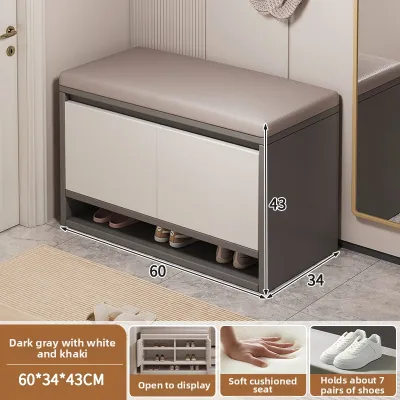
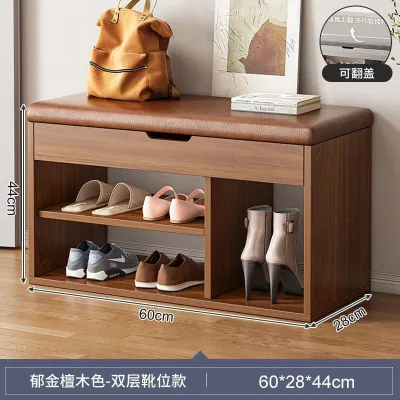
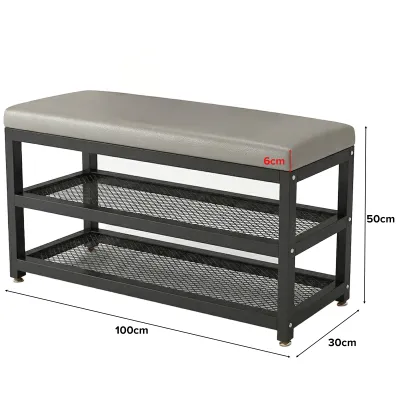
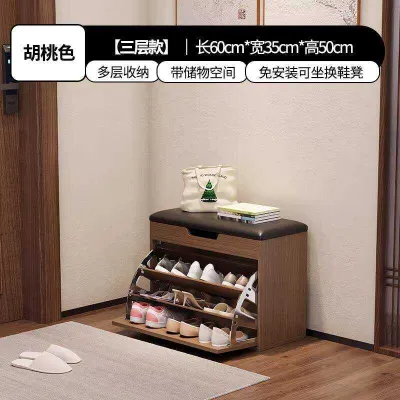
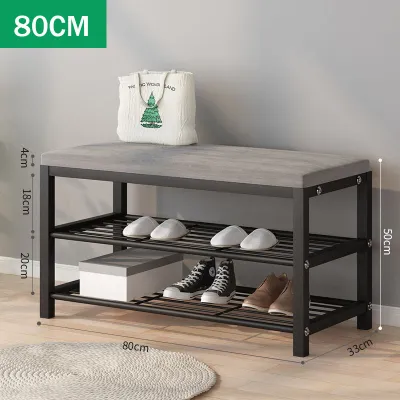
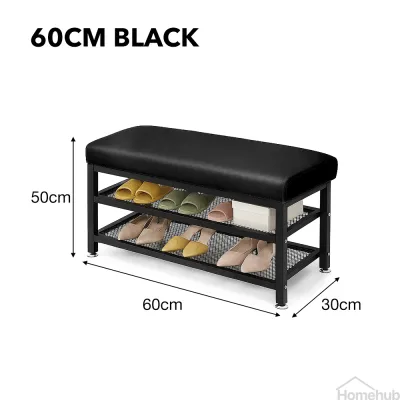
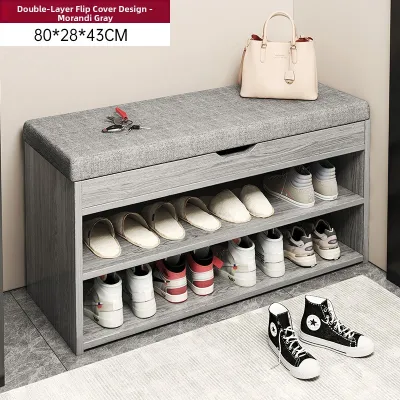
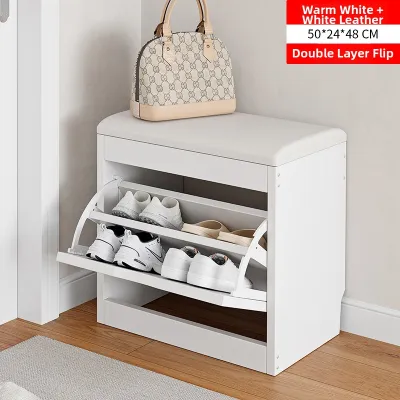
Prices are valid at publication and may change. Please refer to the product page for the latest price.
Beyond your family’s daily shoes, consider whether you need to accommodate guests. If you frequently host friends or extended family, incorporating a dedicated shelf or a few extra slots for guest slippers is highly practical. This keeps the immediate entrance clear of loose footwear when visitors arrive.
Additionally, think about specialized outdoor gear. If you or your family members participate in sports that require specific footwear, such as running shoes or football boots, decide whether these will live on the entryway rack or in a separate storage cabinet. Factoring these items into your initial calculations prevents unexpected overflow later on.
Match Capacity to Bench Dimensions and Tiers
Once you have a target number of shoe slots, you can translate this capacity into physical bench dimensions and shelf configurations. The storage capacity of a shoe bench is determined by its overall length and the number of tiers underneath the seating surface.

A standard pair of adult shoes typically requires about 20 to 25 centimetres of horizontal shelf space. Using this baseline, a compact bench with a length of 60 centimetres can comfortably hold two pairs of adult shoes per tier. A medium bench measuring 80 to 90 centimetres can accommodate three pairs per tier, while a larger bench of 120 centimetres can hold four to five pairs per tier.
To maximize capacity without increasing the bench’s footprint, look for multi-tier designs. A single-tier bench is excellent for minimalist spaces but only offers storage for a few pairs. A two-tier or three-tier configuration significantly increases storage density, allowing a 90-centimetre bench to hold six to nine pairs of shoes. Some hybrid designs feature integrated side cubbies or vertical shelving on one end, which can be useful for separating different shoe types.
The height of the shelves is just as important as the width. Standard flat shelves are ideal for low-profile footwear like sneakers, flats, and sandals. However, if your household frequently wears high-top sneakers, ankle boots, or high heels, standard shelves may not offer enough vertical clearance. Look for benches with adjustable or removable shelves. This flexibility allows you to customize the interior height, ensuring taller footwear fits comfortably without being bent or crushed, while preserving lower shelves for flatter shoes.
Evaluate Space and Placement Constraints
Before purchasing any furniture, you must carefully measure your entryway to ensure the bench fits comfortably without creating physical obstacles. Start by measuring the available floor width and depth along the wall where you plan to place the bench.
Pay close attention to door swing clearances. If your front door swings inward, measure the arc of the door to ensure it can open fully without striking the bench. Even a minor obstruction can cause daily frustration and potential damage to both the door and the furniture.
Walkway clearance is another critical factor, particularly in compact apartment layouts or narrow corridors common in Singapore’s HDB flats. To maintain a comfortable and safe passage, aim to leave at least 90 centimetres of clear walkway space in front of the bench. This ensures that family members can easily walk past, even when someone is seated on the bench putting on their shoes.
Do not forget to account for architectural details like baseboards or skirting boards. If your home has thick skirting boards along the floor, a bench with a completely flush back may be pushed forward by a few centimetres, eating into your walkway space. To avoid this, look for benches with recessed back legs or a design that accommodates skirting boards, allowing the seating surface to sit flush against the wall.
Finally, consider the logistics of getting the bench into your home. Verify the finished dimensions of the unit against your doorway widths and lift access. If you live in a high-rise apartment, ensuring the packaged or fully assembled bench can fit into the building’s lift is a crucial step before finalizing your delivery options.
Check Structural and Safety Limits
A bench shoe rack serves a dual purpose: it is both a storage unit and a piece of seating furniture. Therefore, verifying its structural integrity and safety limits is essential to ensure it can support the weight of seated users and the accumulated load of stored footwear.
Always check the manufacturer’s specified weight capacity for the seating surface. A reliable entryway bench should comfortably support the weight of an adult, with many standard models rated for at least 100 to 120 kilograms. If you anticipate multiple family members sitting on the bench simultaneously—such as a parent helping a child put on shoes—look for a higher weight rating and a stouter frame.
The stability of the unit depends heavily on its base design. A bench with a wide, low-slung base is inherently more stable and less prone to tipping when someone sits down or stands up. Avoid models that feel top-heavy or have excessively narrow legs, as these can wobble under shifting weight.
For taller, multi-tier hybrid units or benches that feature high vertical coat racks or shelving units attached to the back, tipping risks increase. In these cases, wall anchoring is highly recommended. Check if the manufacturer includes wall-mounting hardware, and verify that your entryway wall material can securely hold the anchors. Properly securing these taller units prevents accidental tip-overs, especially in active households.
Frequently Asked Questions (FAQ)
How many pairs of shoes should I plan for per person?
For an entryway bench shoe rack, plan for a baseline of two to three pairs of active shoes per person. This typically covers daily work or school footwear, a casual pair of sneakers, and a pair of easy-to-wear sandals or slides. Any additional footwear, such as seasonal boots, formal dress shoes, or specialized sports gear, should ideally be stored in a primary wardrobe or a separate closed shoe cabinet to prevent the entryway from becoming cluttered. If you have growing children or frequently host guests, adding a buffer of two to three extra slots to your overall household calculation is highly recommended.
What is the standard depth for a bench shoe rack?
The standard depth for a bench shoe rack typically ranges between 30 and 35 centimetres. This depth is generally sufficient to accommodate standard adult shoe sizes flat on the shelves without the heels or toes overhanging the edges. If members of your household wear exceptionally large shoe sizes, you may want to look for a bench with a depth of 38 to 40 centimetres, or consider models with angled shelves. Angled shelves allow shoes to sit at a slant, reducing the required front-to-back floor footprint of the bench while still accommodating longer footwear.

Community discussion
Share your experience or ask a question. Comments are reviewed before publication.