
Selecting the perfect acrylic shelf for your home involves more than just finding an attractive design. Because acrylic is completely transparent, it offers a minimalist, floating aesthetic that can make tight spaces feel significantly larger and brighter. However, unlike traditional wood or metal shelving, acrylic is a flexible polymer that requires careful dimensional planning to prevent sagging, bowing, or structural failure under weight. To choose the right size, you must balance your physical wall space, the clearance requirements of your room, the specific dimensions of your display items, and the material thickness necessary to support your intended load.
An improperly sized shelf can quickly become a safety hazard or a visual eyesore, especially if it bows under the weight of heavy books or blocks a high-traffic walkway. By taking precise measurements and understanding how acrylic behaves under physical stress, you can select a shelf that remains perfectly flat, secure, and visually balanced.
Measure Your Space and Identify Installation Constraints
Before purchasing, map out the physical footprint where your shelf will reside. Use a steel measuring tape to determine the available width and height of your target wall or the surface area of the furniture, such as a study desk or console table, where the shelf will rest. If planning a wall-mounted installation, do not simply measure the open wall space; identify structural constraints that could interfere with mounting or daily room use.
Products mentioned in this guide
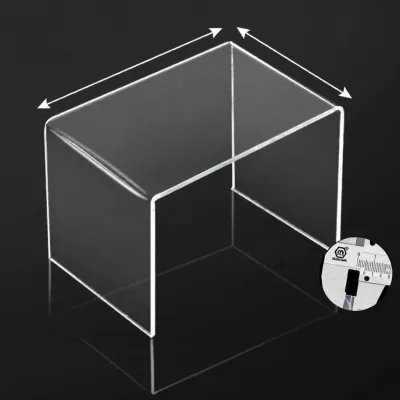
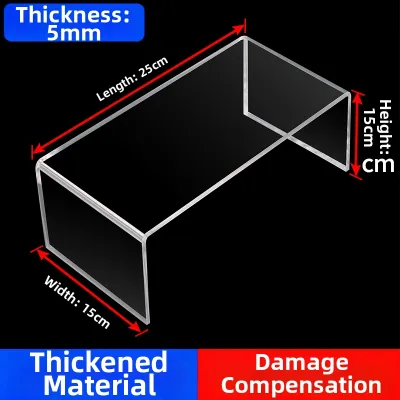
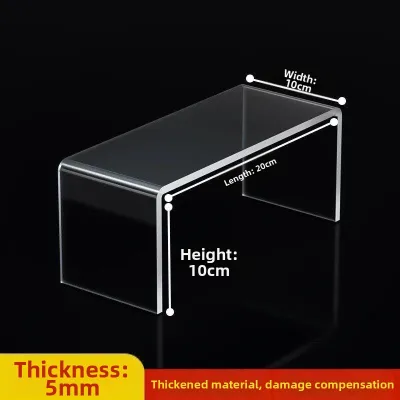
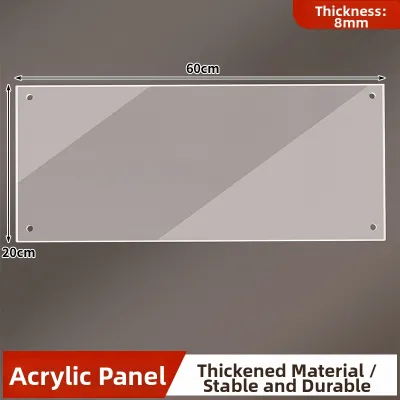
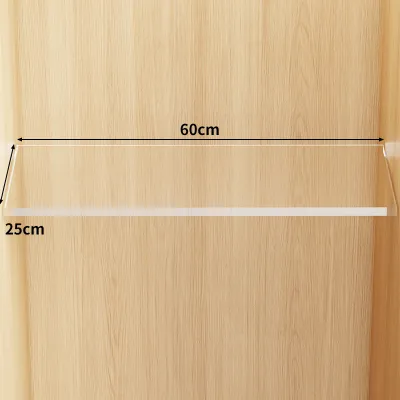
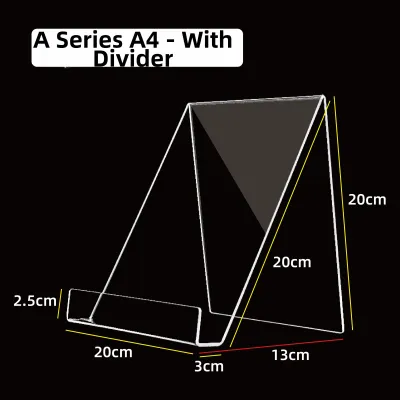
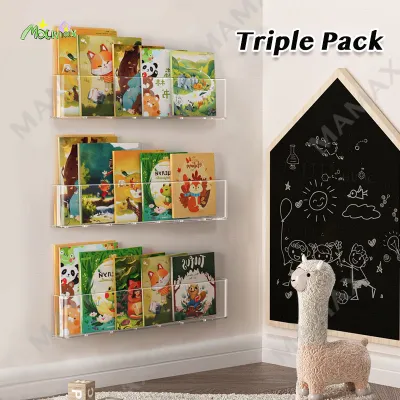

Prices are valid at publication and may change. Please refer to the product page for the latest price.
In compact Singapore apartments, such as modern HDB flats or condominiums, clearance is a critical factor. A shelf that protrudes too far can easily obstruct narrow hallways, interfere with door swings, or block access to light switches and power outlets. Measure the clearance zone around your proposed installation site. Ensure that when doors or wardrobe panels are fully opened, they will not strike the acrylic. If the shelf is placed near a walkway, a deep profile can create a bumping hazard, particularly for households with young children or elderly family members.
Furthermore, account for the physical footprint of the installation hardware. Floating acrylic shelves often use rear-mounted brackets, metal standoffs, or integrated keyhole slots, while heavier setups may require visible metal L-brackets. These mounting systems can add several millimeters or centimeters to the overall depth and width. If you plan to use adhesive strips for lightweight, rental-friendly setups, keep in mind that they require a completely flat, clean surface and may limit proximity to wall trim or textured wallpaper.
Finally, investigate the wall composition before finalizing dimensions. Concrete walls, standard in most local residential builds, require masonry drilling and heavy-duty wall plugs to secure brackets safely. If mounting onto drywall or partition walls—common in newer condo layouts—you must locate internal studs or use specialized toggle bolts. Stud spacing can dictate the maximum length of your shelf, as brackets must align with these structural supports to prevent the shelf from pulling away from the wall.
Match Acrylic Shelf Length and Depth to Your Display Items
To ensure your shelf is functional, its length and depth must align precisely with the physical dimensions of your display items. Choosing a single generic size for every room often leads to wasted space or overcrowded surfaces. Categorizing your belongings by their physical dimensions allows you to select the most efficient shelf profile.

For small, lightweight items like cosmetics, nail polish bottles, spice jars, or small framed photographs, a shallow shelf depth of 8 cm to 12 cm is ideal. These shallow profiles keep items organized in a single row, preventing smaller bottles from getting lost behind larger ones. If you plan to display standard paperbacks, medium-sized ceramic pots, or small trailing plants, look for a medium depth of 15 cm to 20 cm. For heavy hardcover books, large collectible figurines, or wide storage baskets, you will require a deep shelf of 25 cm to 30 cm.
While matching physical dimensions is essential, you must also design with visual breathing room in mind. Packing a transparent shelf edge-to-edge with items defeats its aesthetic purpose, creating a cluttered look. As a general rule, calculate the combined width of all items you plan to place on a single shelf, and then add a buffer of 15% to 20%. This extra space allows the transparent material to show through, creating the signature floating effect that makes acrylic shelving visually appealing.
Ergonomics and sightlines also play a major role in dimension selection. If mounting a shelf at or above eye level, such as over a bed, sofa, or study desk, opt for a shallower depth to minimize the risk of head bumps. Additionally, ensure the shelf features a front lip or raised edge if you plan to store round or unstable items like perfume bottles or cosmetics. This design detail prevents items from slipping off the smooth, low-friction acrylic surface, protecting both your belongings and your flooring.
Choose the Right Acrylic Thickness to Prevent Sagging
Unlike wood, steel, or tempered glass, acrylic is a thermoplastic polymer that exhibits viscoelasticity. Under continuous mechanical stress—such as the constant downward force of heavy items—acrylic will undergo “creep,” a slow, progressive deformation that manifests as a permanent sag or bow. To maintain a flat, safe, and professional look, you must select an acrylic thickness that matches both the weight of your items and the distance between structural supports.
The thickness of an acrylic shelf is its most critical structural specification. Standard retail shelves typically range from 3 mm to 10 mm in thickness. For lightweight displays, such as a few framed photos, keys, or light cosmetics, a thickness of 3 mm to 4 mm is generally sufficient, provided the shelf is relatively short. If you plan to store medium-weight items like glassware, small potted plants, or lightweight books, step up to a thickness of 5 mm to 6 mm. For heavy-duty applications, including large hardcover textbooks, heavy ceramic vases, or dense collectibles, look for premium sheets that are at least 8 mm to 10 mm thick.
The relationship between thickness and the “span”—the horizontal distance between wall brackets—is exponential. A longer span significantly increases the bending moment on the sheet. For example, a 4 mm thick shelf might hold a moderate load over a short span of 30 cm. However, if you extend that same shelf to a span of 60 cm without adding a middle support bracket, the center will quickly bow under the same load. If you prefer a clean, minimalist look with fewer visible brackets, you must compensate by choosing a significantly thicker acrylic sheet.
To ensure long-term safety, check the manufacturer’s product specifications and structural guidelines before purchasing. Reputable manufacturers explicitly state the maximum weight capacity and recommended bracket spacing for each thickness level. Never make generic assumptions about load limits, as the chemical formulation and manufacturing process (cast versus extruded acrylic) also influence rigidity. If your intended load exceeds recommendations, or if specifications are unavailable, choose a thicker option or install additional intermediate brackets to reduce the unsupported span.
Avoid Common Sizing and Clearance Mistakes
Even with careful measurements, minor oversights during planning can lead to frustrating installation issues. One common error is ignoring the physical dimensions of mounting brackets. Many shoppers measure only the acrylic sheet itself, forgetting that wall brackets, side supports, or decorative standoffs add significant width and depth to the overall footprint. In tight alcoves or narrow wall sections, this extra hardware can prevent the shelf from fitting into the designated space entirely.
Another mistake is overestimating the load-bearing capacity of thin sheets over wide spans. It can be tempting to buy a long, seamless 90 cm shelf for a clean look, but if the material is only 4 mm thick and supported only at the far ends, it will inevitably deform over time under continuous loads. This permanent bowing compromises the stability of display items, increasing the risk of them sliding off. If you require a long shelf, plan for intermediate brackets or invest in a commercial-grade thickness.
Neglecting vertical clearance is another frequent oversight. When planning a vertical stack of multiple shelves, calculate the height of your tallest display item and add at least 5 cm to 10 cm of clearance above it. This space is necessary to allow your hands to comfortably place and retrieve items without knocking over adjacent decor. If installing a shelf beneath overhead cabinets, range hoods, or low ceilings, verify that the vertical opening is tall enough to accommodate both the shelf and its contents.
Finally, verify that your mounting hardware is compatible with your specific wall type. Attempting to mount a heavy-duty shelf onto a hollow drywall partition using standard concrete wall plugs can lead to the brackets pulling out of the wall, damaging your home and shattering your display. Always cross-reference the manufacturer’s installation manual with your wall material, and consult a professional if you are uncertain about the structural integrity of your mounting surface.
Frequently Asked Questions (FAQ)
How much extra space should I leave between multiple acrylic shelves?
When planning a vertical stack of multiple shelves, the ideal spacing depends on the height of your tallest display items. Measure the tallest object you intend to place on the lower shelf, and add a minimum of 5 cm to 10 cm of extra vertical clearance. This buffer ensures you have enough room to comfortably reach in and retrieve items without your hands striking the shelf above. Visually, leaving a vertical gap that is roughly equal to or slightly greater than the depth of the shelves creates a balanced look that prevents the wall from feeling cramped.
Can I order custom-sized acrylic shelves for awkward wall spaces?
Yes, custom-sized shelves are widely available and are an excellent solution for irregular wall niches, tight corners, or specific display requirements. Local acrylic fabricators in Singapore can cut, bend, and polish sheets to your exact dimensional specifications. When placing a custom order, provide precise measurements for length, depth, and thickness. Additionally, specify that you require flame-polished or diamond-polished edges. Unpolished cut acrylic has sharp, frosted edges that can cause cuts and detract from the premium, glass-like appearance of the material.
Will a deep acrylic shelf block light in a small room?
Unlike solid wood, metal, or painted MDF shelves, clear acrylic has exceptional optical properties, with a light transmission rate of approximately 92%. This means even a deep shelf (such as 30 cm or more) allows ambient light to pass through almost entirely, preventing the heavy, dark shadows cast by opaque shelving. This optical clarity makes deep acrylic shelves an excellent choice for small or dimly lit rooms, preserving an open feel. However, keep in mind that dust, fingerprints, or surface scratches can slightly reduce transparency over time, so regular cleaning with a soft microfiber cloth is recommended.

Community discussion
Share your experience or ask a question. Comments are reviewed before publication.