
Finding the best rack with wheels for a small HDB kitchen requires balancing tight spatial constraints with your daily culinary habits. In a compact Singapore home, floor space is at a premium, and standard stationary shelves can block pathways or limit access to essential appliances. A mobile storage unit offers a flexible solution, allowing you to roll extra counter space or pantry storage exactly where you need it and tuck it away when prep work is finished.
To make the most of this mobile storage, you must evaluate your kitchen’s specific layout, measure your available gaps down to the millimeter, and choose a design that matches your primary storage deficits. Whether you need a slim cart to slide into an unused gap or a heavy-duty utility station for small appliances, selecting the right model is a matter of verifying structural specifications and material durability.
Assessing Your HDB Kitchen Space and Storage Needs
Typical HDB kitchen layouts, especially in modern BTO flats, present distinct spatial challenges. Galley and one-wall kitchen configurations are common, resulting in narrow walkways where two people can rarely stand side-by-side. In these tight setups, fixed furniture can permanently restrict movement and make opening low cabinets or oven doors difficult. Introducing a mobile storage solution helps bypass these layout limitations by keeping floor space adaptable.
Products mentioned in this guide
![2/3/4 Tiers Kitchen Bathroom Organizer Trolley Shelf/Rack/ Storage/Utility Cart with Rollers Wide - White / Grey Color [Stock in SG]](https://img.lazcdn.com/g/p/c3b7bda38d6f5ae35cdc88c062c34715.jpg_400x400q80.jpg_.webp)
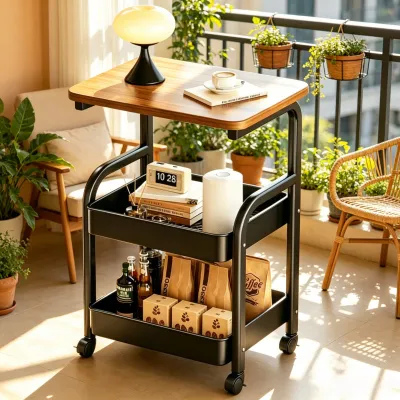
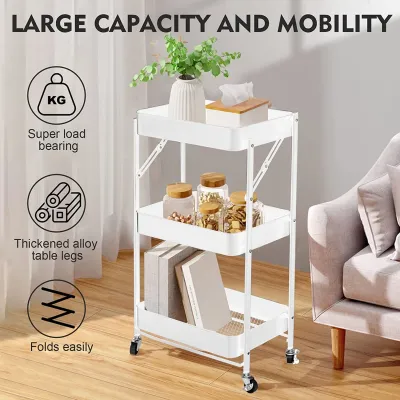
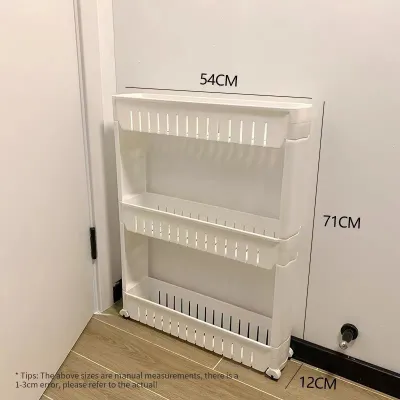
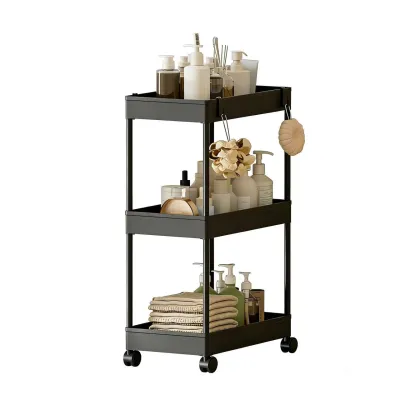
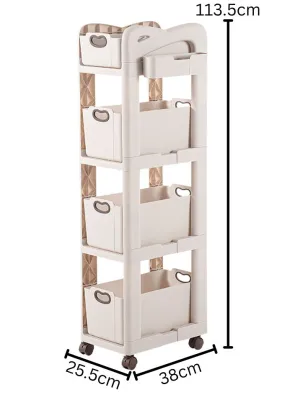
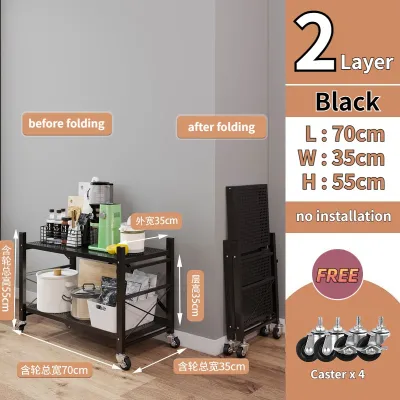
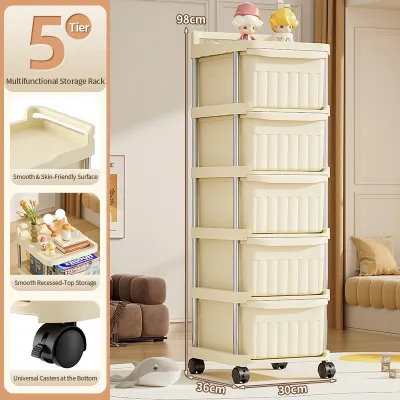
Prices are valid at publication and may change. Please refer to the product page for the latest price.
Identifying underutilized areas or “dead spaces” is the first step in planning your kitchen layout. Look for narrow gaps that are often left empty, such as the space between your refrigerator and the main countertop, the area adjacent to the service yard door, or the corner next to your sink. These small pockets of space are ideal parking spots for a mobile cart, turning empty floor area into functional storage without encroaching on your main cooking path.
Before choosing a cart, evaluate what items are currently cluttering your countertops or cabinets. If your main issue is dry food overflow—such as onions, potatoes, garlic, and ginger that require ventilation—you will need a cart with breathable mesh baskets. If you lack space for small appliances like your air fryer, rice cooker, or electric kettle, you require a flat-surfaced utility cart with high weight limits. For those who simply need more food preparation space, a cart with a flat wooden or stainless-steel top can serve as a temporary prep station.
Critical Features for a Space-Saving Rack with Wheels
When shopping for a rack with wheels, precise measurements are critical to ensure a proper fit. Do not rely solely on the general dimensions listed on product pages; instead, measure the exact width, depth, and height of your designated parking spot. Be sure to account for skirting boards along the bottom of the wall, which can reduce your available floor width by one to two centimeters. Additionally, check for low-hanging wall plugs, light switches, water pipes, and the swing clearance of nearby cabinet doors or refrigerator handles.

Because kitchen floors in Singapore are typically finished with smooth homogenous or porcelain tiles, wheel quality and stability are paramount. Look for 360-degree swivel casters made of soft polyurethane or rubber, which glide smoothly without scratching the tile glaze. It is essential that the cart features at least two locking wheels to keep the unit completely stationary during food preparation or when retrieving heavy items, preventing accidental rolling.
Load capacity and structural stability must be verified before purchase to prevent tipping hazards. Check the manufacturer’s specifications for both the individual shelf capacity and the total weight limit of the frame. Avoid models that lack structural bracing, such as crossbars or reinforced joints, as these are prone to swaying when fully loaded. A top-heavy cart can easily tip over when rolled across tile grout lines, so a sturdy frame is vital for daily safety.
Singapore’s high humidity levels mean that kitchen storage is constantly exposed to moisture, steam, and airborne cooking oils. Check product labels and care instructions to verify that the frame has a rust-resistant finish, such as powder-coated carbon steel or high-grade stainless steel. Avoid assuming a material’s durability based on its name alone; instead, confirm that the manufacturer explicitly recommends the product for high-humidity environments and outlines simple, non-abrasive cleaning steps.
Top Rolling Rack Styles for Compact Kitchens
Different kitchen layouts require different mobile storage designs. Selecting the right style depends on whether you need to fill a narrow gap, create a temporary workspace, or organize heavy cooking equipment.
Slim Slide-In Gap Racks
Slim gap carts are designed specifically to utilize the narrow spaces between major appliances and cabinets. Typically measuring between 12 and 20 centimeters in width, these ultra-narrow units slide easily into the gap beside your refrigerator or washing machine. They are ideal for storing tall bottles of cooking oil, soy sauce, spice jars, and canned goods. Because these racks are tall and narrow, they have a higher center of gravity; placing the heaviest items on the bottom shelf is necessary to keep the unit stable when you pull it out.
Foldable and Collapsible Carts
Foldable rolling carts offer excellent versatility for multi-functional HDB spaces. These units can be quickly unfolded to provide extra workspace during intensive cooking sessions or family gatherings, and then collapsed down to a thickness of less than 10 centimeters when empty. Once folded, they can be stored out of sight behind the kitchen door, in the service yard, or inside a utility closet. This style is particularly useful for homeowners who only need extra storage or prep space occasionally and want to keep their walkways clear the rest of the time.
Multi-Tier Utility Carts
Standard three-tier utility carts are the workhorses of kitchen organization. Featuring deep baskets or adjustable shelves, these carts are highly versatile and can hold everything from heavy pots and pans to daily dinnerware and fresh produce. Models with adjustable shelf heights allow you to customize the spacing to accommodate taller items like blenders or bulk cereal boxes. Their open-air design ensures excellent ventilation, making them highly suitable for storing root vegetables and dry pantry staples that do not require refrigeration.
Smart Placement and Daily Usage Strategies
To maximize the utility of your mobile cart, organize each shelf by function to streamline your cooking routine. For example, you can set up a dedicated beverage station on the top shelf with your coffee maker, mugs, and tea canisters. The middle shelf can hold frequently used seasonings, oils, and prep bowls, while the bottom shelf is reserved for heavy items or cleaning supplies. This systematic zoning reduces the time spent searching through deep cabinets during meal preparation.
Managing the flow of traffic in a small kitchen requires mindful placement of your mobile cart. During active cooking, position the cart close to your stove or prep counter so ingredients are within arm’s reach, ensuring it does not block the main walkway or prevent others from entering the kitchen. Once your cooking is complete, roll the cart back to its designated parking spot in a corner or under a counter to keep the walkways clear for cleaning and dishwashing.
An adaptable rolling cart can easily transition from the kitchen to other areas of your home. During weekend gatherings or hotpot dinners, the cart can be rolled into the dining room to hold extra ingredients, serving plates, or drinks, keeping your dining table uncluttered. This cross-scenario usability makes a mobile cart a highly practical investment for small-space living, serving as a temporary side table, a plant stand, or a mobile bar cart when hosting guests.
Assembly, Safety, and Maintenance Guidelines
Before loading your new cart with heavy kitchen items, ensure it is assembled correctly. Follow the manufacturer’s manual carefully, tightening all joints, screws, and wheel attachments securely. A loose screw can cause the frame to warp under load, leading to unstable movement or sudden structural failure. Periodically inspect the connections and re-tighten any hardware that may have loosened from regular rolling.
Always load your cart starting from the bottom up to maintain a low center of gravity. Place heavy appliances, bulk liquids, and cast-iron cookware on the lowest shelf, while reserving the middle and top shelves for lighter items like spices, towels, and dry goods. This weight distribution prevents the cart from becoming top-heavy, reducing the risk of it tipping over when navigating floor transitions or tile grout lines.
Regular maintenance will keep your cart rolling smoothly and extend its lifespan. Kitchen grease, dust, and hair can easily accumulate in the wheel casters, causing them to stick or drag. Wipe down the frame with a damp cloth and mild soap according to the manufacturer’s care instructions, and clean the wheel axles regularly to remove debris. Periodically test the locking mechanisms to ensure they still grip your kitchen tiles firmly.
If you notice any structural wobbling, bent metal frames, cracked plastic joints, or a malfunctioning wheel lock, stop using the cart immediately. Do not attempt to overload a compromised frame, as this can lead to sudden collapse and potential injury. Consult the manufacturer’s customer service for replacement parts or guidance, and replace the unit if the structural integrity cannot be safely restored.
Frequently Asked Questions (FAQ)
Can a rolling rack damage HDB kitchen floor tiles?
Whether a rolling rack damages your floor depends largely on the wheel material and the cleanliness of your tiles. Before purchasing, check the manufacturer’s floor-compatibility labels. Soft polyurethane or rubber wheels are highly recommended for homogeneous and porcelain tiles, as they glide quietly and cushion the weight. Hard plastic or metal wheels can scratch or chip tile glaze over time. Additionally, keep your kitchen floor swept; small, hard particles like sand or dropped salt crystals can get trapped under the wheels and cause scratches as the cart is rolled across the room.
How do I measure the gap for a slide-in rolling rack?
To measure a tight gap accurately, use a metal measuring tape and measure the width at three different points: near the floor, in the middle, and near the top. Walls and cabinets are rarely perfectly straight, and measuring at multiple heights ensures you find the narrowest point of the gap. Check for protruding skirting boards at the floor level, wall outlets, gas pipes, and any appliance hinges that might narrow the entry path. Finally, subtract at least one to two centimeters from your narrowest measurement to allow sufficient clearance so the cart can slide in and out smoothly without scraping your walls or appliances.

Community discussion
Share your experience or ask a question. Comments are reviewed before publication.