
Finding the right coat hanger stand for a compact Singaporean entryway requires balancing tight spatial limits with daily functional needs. In typical HDB flats and condominium units, the foyer is often a high-traffic transition zone where every square centimeter counts. A poorly chosen stand can easily block walkways, obstruct front doors, or tip over under the weight of daily essentials. To make an informed decision, you must look beyond aesthetics and evaluate structural stability, material durability under local humidity, and precise physical dimensions.
Defining Space and Functional Constraints for Compact Entryways
Spatial limitations in Singaporean apartments demand careful planning before making any furniture purchase. HDB corridors and condo foyers are notoriously narrow, meaning a standard coat stand can quickly become an obstacle. Before browsing different brands, measure the exact floor area where you plan to place the stand. Account for the swing radius of the main door, shoe cabinet doors, and any adjacent bedroom or kitchen entrances to ensure a clearance of at least 60 to 90 centimeters for comfortable passage.
Vertical clearance is equally critical when selecting entryway furniture. While high ceilings might suggest vertical space is unlimited, you must consider the height of the items you intend to hang. Long umbrellas, trench coats, or large tote bags require sufficient vertical drop so they do not drag on the floor or bunch up at the base. Ensure the top hooks are easily reachable for all household members without requiring a step stool, while keeping the overall height proportional to your entryway.
Products mentioned in this guide
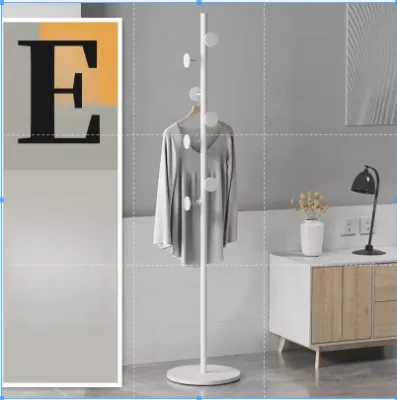
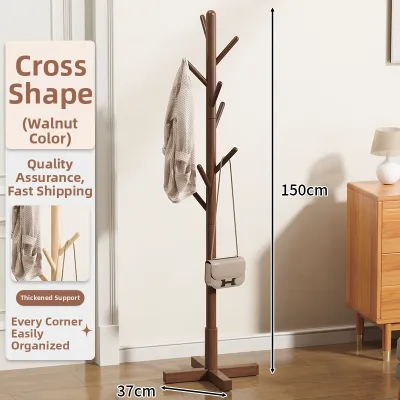
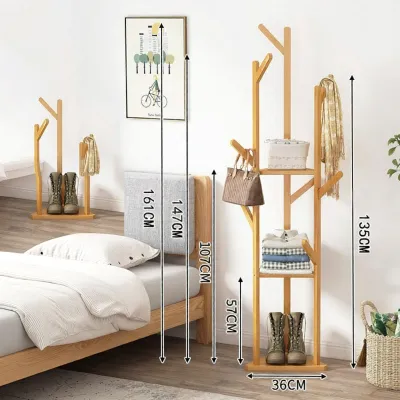
![[SG Stock] Japanesque 100% Solid Beech Wood Wooden Clothes Hanger Rack Clothes Hanger Hook Bedroom Coat Stand Rack](https://img.lazcdn.com/g/p/b731f0728b47eeb05fe55ea7d72334cc.jpg_400x400q80.jpg_.webp)
![[✅SG Ready Stock] 100% solid wood Wooden Clothes Hanger Rack Nordic Style Clothes Hanger Hook Bedroom Coat Stand Rack](https://img.lazcdn.com/g/p/55813a535e85f05145eac7dbf91d2125.png_400x400q80.png_.webp)


Prices are valid at publication and may change. Please refer to the product page for the latest price.
Assessing your daily load capacity will help you avoid buying an under-engineered stand. A single professional living in a studio condo has vastly different storage needs than a multi-generational family in a 5-room HDB flat. Calculate the number of items likely to hang on the stand simultaneously, including daily-use bags, hats, umbrellas, light cardigans, and keys. Overestimating this load is safer than underestimating, as overloading leads to structural strain and tipping hazards.
Integrating multi-functional features is an excellent way to maximize utility in a small entryway. In a tight foyer, a single-purpose furniture piece can be an inefficient use of space. Look for coat stands that incorporate secondary storage solutions, such as built-in umbrella holders with drip trays to catch water from sudden tropical downpours. Other designs combine a hanging rail with a lower shoe rack or a small bench seat, reducing visual clutter and consolidating your entryway footprint.
Space-Saving Designs and Structural Features to Look For
Comparing configurations is the first step in finding a design that fits your layout. Vertical tower stands, often called pole or tree stands, occupy the smallest footprint, making them ideal for tight corners. Multi-tier branch designs stagger hooks at different heights, which prevents hung items from bunching together and creating a bulky profile. Corner-specific freestanding designs feature a flat back or a right-angle frame, allowing them to push flush against walls to reclaim wasted corner space.

Base stability and weight distribution are the most critical safety components of any freestanding coat stand. A narrow, lightweight base is highly prone to tipping when loaded unevenly or bumped in a high-traffic zone. Look for stands with heavy, flat bases made of materials like solid marble, cast iron, or weighted steel plates. While tripod bases can be stable, they require a wider radial footprint that can easily trip residents in narrow walkways.
Material selection is vital for ensuring longevity in Singapore’s tropical climate. High relative humidity poses a constant threat to furniture, as untreated wood can warp, swell, or develop mold, while cheap metals are highly susceptible to rust. When evaluating materials, prioritize powder-coated steel, rust-resistant aluminum, or highly durable hardwoods like teak or treated bamboo. Ensure any wooden components are sealed with a moisture-resistant polyurethane or lacquer finish.
Ease of cleaning and maintenance should also influence your choice of materials and finishes. Entryway furniture is constantly exposed to outdoor dust, damp umbrellas, and dirty shoes. Smooth, non-porous surfaces are much easier to wipe down and maintain over time. Avoid intricate carvings or deep crevices where dust and moisture can accumulate, opting instead for clean lines that can be easily wiped with a damp microfiber cloth.
Evaluating Brand Reliability and Product Specifications
Deciphering manufacturer specifications is essential when shopping online or in-store. Do not rely on generic marketing descriptions like “space-saving” or “heavy-duty” without verifying the actual numbers. Look for precise technical drawings or specification sheets that list the exact height, base diameter, hook length, and maximum weight capacity. If a brand does not publish these details, it is a sign to proceed with caution.
Understanding weight limits will prevent premature product failure and safety hazards. A reliable brand will specify both the maximum total load capacity of the stand and the individual hook capacity. For example, a stand might support a total of 20 kilograms, but each hook might be rated for only 3 kilograms. Exceeding these limits can bend the hooks or compromise the vertical pole’s structural integrity, leading to permanent damage.
Warranty and return policies are strong indicators of a brand’s confidence in its product quality. High-quality furniture brands typically offer a warranty against manufacturing defects, structural failures, or premature rust. Check if the brand provides a clear warranty period—ideally at least one to two years—and understand what is covered. Additionally, verify the return policy in case the stand does not fit your space or fails to meet stability expectations upon assembly.
Analyzing user feedback and reviews provides real-world insights into a product’s performance. Since you cannot always test a coat stand’s stability in a showroom, customer reviews are invaluable. Look for feedback on reputable retail websites or independent forums, paying close attention to comments regarding assembly difficulty, missing hardware, wobbling under load, or paint chipping. Consistent complaints about stability or material degradation are strong indicators of poor manufacturing quality.
Pre-Purchase Measurement and Safety Checklist
Delivery and access planning is a crucial step that is often overlooked. Before finalizing your purchase, consider how the coat stand will arrive at your home. While many modern stands are flat-packed for easy transport, some high-end or vintage-style units come fully assembled. Ensure the packaged or assembled dimensions can easily fit inside your condominium or HDB lift, through narrow stairwells, and around tight corridor corners.
Placement and clearance zones must be mapped out carefully within your foyer. The stand must not block access to essential household features, such as the electrical distribution board (DB box), fiber termination points, or intercom systems. Furthermore, ensure the stand does not encroach on designated fire escape routes or create a hazard near the main entrance where residents might bump into it in the dark.
Tipping risk and safety measures are paramount if you have young children, elderly family members, or active pets. A freestanding coat stand presents a potential tipping hazard if loaded unevenly or pulled. Assess whether the stand can be safely anchored to the wall using discreet brackets or straps. If wall-anchoring is not possible, prioritize models with an exceptionally low center of gravity and a wide, heavy base, and instruct household members to load items from the bottom up.
Assembly and tool requirements should be reviewed before the product arrives. Many flat-packed coat stands require self-assembly, which can vary significantly in difficulty. Check if the manufacturer includes all necessary tools, such as Allen keys or specialized wrenches, or if you will need your own screwdriver and level. Clear, step-by-step assembly instructions are crucial, as poorly aligned screw holes or loose joints will directly compromise the stand’s stability.
Frequently Asked Questions (FAQ)
Can a freestanding coat stand hold heavy winter coats without tipping?
Yes, a freestanding coat stand can safely hold heavier garments, but its ability to do so depends entirely on its physical design and how it is loaded. The stability of a stand is governed by the relationship between its base weight, footprint width, and center of gravity. To prevent tipping, always check the manufacturer’s specified maximum weight limit and distribute heavy items evenly across all sides of the stand. Hanging a single heavy bag or coat on one side will shift the center of gravity outside the base footprint, causing the unit to topple. Placing heavier items on lower hooks also helps lower the overall center of gravity, significantly improving stability.
Are wall-mounted coat racks a better alternative for very small entryways?
Wall-mounted coat racks are often an excellent alternative when floor space is extremely limited or virtually non-existent. By eliminating the floor base entirely, wall-mounted options keep walkways completely clear and allow you to utilize the space underneath for shoe storage or seating. However, they require careful installation and a structural assessment of your walls. In Singapore, HDB internal walls are typically made of concrete or lightweight concrete panels, which require appropriate wall plugs and drilling. You must verify the load-bearing capacity of both the wall and the mounting hardware to ensure the rack can safely support your items without pulling loose from the plaster.

Community discussion
Share your experience or ask a question. Comments are reviewed before publication.