
Building a custom modular shelving system with solid wood boards allows you to balance personalized aesthetics with robust storage. To choose the right board thickness and dimensions, you must align the physical limits of your space with the weight of your items and the structural capacity of your modular hardware. Selecting the wrong dimensions can lead to unsightly sagging, hardware failure, or boards that simply do not fit into your brackets. By systematically evaluating your layout, calculating load spans, and selecting compatible wood species, you can build a durable shelving system that remains stable for years.
Assess Your Modular Shelf Configuration and Space
Before purchasing any timber, you must thoroughly evaluate the physical environment where the modular shelves will be installed. Begin by measuring the available wall width, floor footprint, and vertical clearance, keeping in mind any obstructions like light switches, electrical outlets, or skirting boards. In compact urban living spaces, such as apartments in Singapore, vertical space is highly valuable, but it also comes with strict structural boundaries that dictate how high or wide your shelving unit can safely go.
Equally important is planning the logistics of getting the raw materials into your home. Long solid wood boards can be incredibly difficult to maneuver through tight spaces. You must measure the clearance of your building’s passenger lifts, stairwells, entry doors, and narrow hallways to ensure that boards of your desired length can be safely delivered and carried into the designated room without damaging the walls or the timber itself.
Products mentioned in this guide
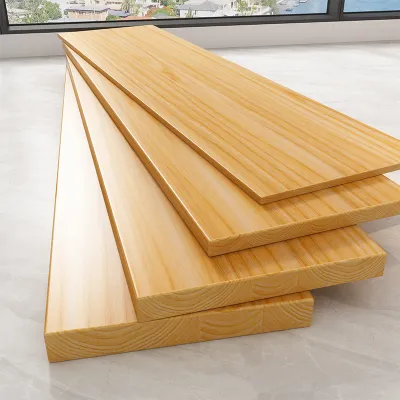
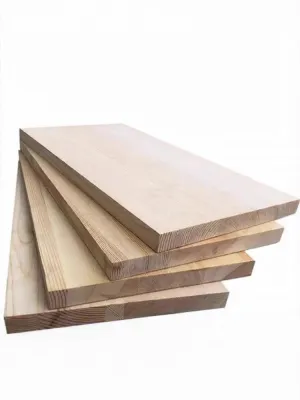
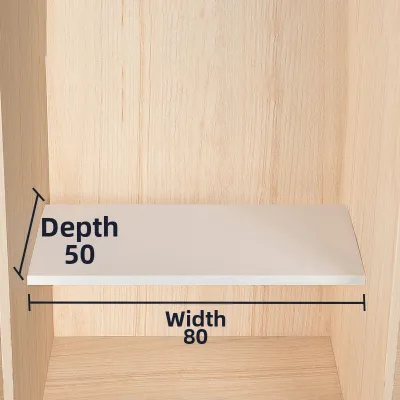
Prices are valid at publication and may change. Please refer to the product page for the latest price.
Finalise your preparation by examining the specific modular system you plan to use, whether it relies on wall-mounted twin-slot tracks, floor-standing ladders, or freestanding metal frames. Identify the manufacturer’s specified mounting points and the maximum recommended distance between vertical supports. This hardware-defined span is the foundation of your entire build, as it directly dictates how long your solid wood boards can be before they require additional intermediate brackets or vertical uprights.
Determine Load Capacity and Span Requirements
To prevent your shelves from bowing under pressure, you must estimate the weight of the items you intend to store. Categorize your belongings into weight classes: lightweight decorative items, medium-weight folded clothes or files, and heavy items like textbooks, ceramic tableware, or kitchen appliances. Distinguish between static loads, which remain stationary over long periods, and dynamic loads, which involve items frequently placed down or moved, creating temporary localized stress on the wood.

The physical relationship between the unsupported span length—the distance between two brackets—and board deflection is governed by mechanical principles. As the span increases, the risk of sagging increases exponentially under a continuous load. For instance, a board that remains perfectly flat across a 60 cm span may bow noticeably if stretched to 120 cm under the exact same weight. You must check the deflection limits of your chosen wood species to ensure the center of the shelf does not bend beyond acceptable visual and structural tolerances.
Always establish a conservative safety margin by planning for a load capacity that exceeds your actual estimated weight by at least twenty to thirty percent. Once you have calculated this target weight, cross-reference it with the rated load limits of your modular hardware, including the brackets, wall anchors, and vertical standards. Even the thickest solid wood board will fail if the underlying metal brackets or wall anchors are overloaded beyond the manufacturer’s certified capacity.
Select the Right Solid Wood Board Thickness
Matching the thickness of your solid wood board to your calculated span and load is critical to achieving structural integrity without adding unnecessary weight to your wall. For shorter spans of up to 60 cm holding light to moderate loads, a standard nominal thickness of 18 mm to 20 mm is often sufficient. However, as the span stretches toward 90 cm or 120 cm, or if you plan to store heavy items like books, you will generally need to step up to a thickness of 25 mm to 30 mm to resist bending.
Beyond structural performance, you must consider the visual proportions of the board thickness within your overall design. A very thin board on a massive, industrial metal frame can look flimsy and cheap, while an excessively thick 40 mm slab on a delicate, minimalist wire bracket system can look bulky and visually overwhelming. Aim for a balanced aesthetic where the thickness of the timber complements the scale and material of the modular uprights.
Most importantly, verify that your chosen board thickness is fully compatible with your modular hardware. Many modular systems use brackets with fixed slot sizes, retaining lips, or clamping mechanisms that only accept specific board thicknesses. Measure the internal clearance of these brackets, the diameter of any securing pins, and the limits of any adjustable clamps before finalizing your timber order. Forcing a thick board into a tight bracket can damage the wood fibers or bend the metal, while using a board that is too thin may cause the shelf to slide or tilt unsafely within the hardware.
Choose Board Width, Length, and Wood Species
Selecting the horizontal dimensions of your boards requires a clear understanding of what you plan to store and the physical limits of your modular frame. The width, or depth, of the board should comfortably accommodate your largest items without letting them overhang dangerously. However, the board width must also align with the bracket depth; a shelf that extends too far past the front edge of a bracket creates a cantilever effect, putting immense leverage on the mounting screws and increasing the risk of the bracket pulling out of the wall.
The choice of wood species plays a dual role in determining both the shelf’s load-bearing capability and its long-term durability. Hardwoods like oak, ash, or teak possess dense grain structures that offer high resistance to indentation and bending, making them excellent choices for heavy-duty shelving. Softwoods like pine or fir are lighter and easier to work with, but they have lower hardness ratings and are more prone to scratching and sagging over long spans, requiring closer bracket spacing.
In tropical climates with high relative humidity, such as Singapore, natural wood movement is a critical factor to manage. Solid wood is a hygroscopic material that absorbs and releases moisture from the surrounding air, causing it to expand and contract across its grain. If you transition boards from an air-conditioned room to a humid, naturally ventilated space, or vice versa, the wood will undergo dimensional changes. To prevent warping, cupping, or splitting, allow the raw timber to acclimatize in the target room for several days before installation, and apply a high-quality, moisture-resistant protective finish to all sides of the board.
Verify Structural Stability and Installation Conditions
A modular shelving system is only as secure as its connection to the wall and floor. Before beginning assembly, inspect the wall structure to determine the appropriate anchoring method. Solid concrete, brick, or masonry walls—common in Singaporean homes—provide exceptional holding power when paired with high-quality nylon wall plugs or masonry anchors. If you are mounting onto drywall or partition walls, you must locate the internal timber or metal studs to secure the vertical tracks; relying solely on hollow-wall anchors for heavy solid wood shelving is highly risky.
Use a reliable spirit level to check both the vertical alignment of your upright tracks and the horizontal level of your floors. Uneven walls or sloping floors can cause the modular uprights to install out of plumb, leading to racking, unstable brackets, and shelves that tilt forward. Many modular systems offer adjustable leveling feet or shim options to compensate for these minor structural imperfections.
Finally, carefully review the manufacturer’s instructions for fastening the solid wood boards to the brackets. When securing screws into the underside of a solid wood shelf, always pre-drill pilot holes of the correct diameter and depth. Skipping this step can easily split the wood grain, strip the screw heads, or cause the screws to pull out under load. Ensure the screws are long enough to grip the wood securely without penetrating through the top finished surface of the shelf.
Frequently Asked Questions (FAQ)
Can I use standard pre-cut solid wood boards for modular shelving?
Yes, standard pre-cut solid wood boards are widely available and can save significant time, but you must carefully evaluate their dimensions against your modular system. Check that the pre-cut width matches your bracket depth and that the edges are perfectly square, sanded, and finished. If the pre-cut boards are slightly warped or do not align with your bracket spacing, you may need to use a track saw or hand plane to trim them for a precise, safe fit.
How do I prevent long solid wood shelves from sagging over time?
To prevent long-term sagging, avoid exceeding the recommended span for your board thickness and wood species. If a long span is necessary, you can install intermediate support brackets, attach a solid wood stiffener cleat along the front or back underside of the shelf, or periodically rotate the boards if the mounting system allows. Additionally, keep heavy items distributed evenly across the shelf rather than concentrating them in the center, and regularly check that your wall hardware remains tight and secure.

Community discussion
Share your experience or ask a question. Comments are reviewed before publication.