
Quick Answer: Evaluating Capacity-to-Footprint Efficiency
When space is at a premium in Singapore apartments, selecting a shoe storage solution requires balancing maximum storage capacity with a minimal physical footprint. The core metric to evaluate is the capacity-to-footprint ratio, which is calculated by dividing the number of usable shoe pairs by the square footage of floor space the unit occupies. A highly efficient slim shoe rack typically achieves a high ratio by utilizing vertical space and innovative storage mechanisms rather than expanding outward into valuable walkway areas.
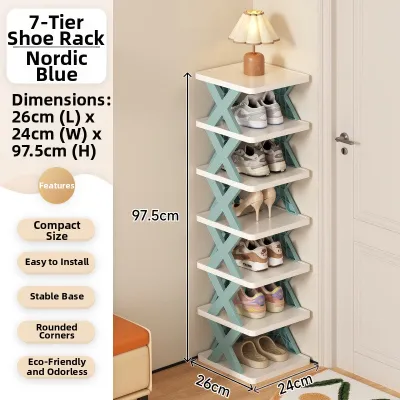
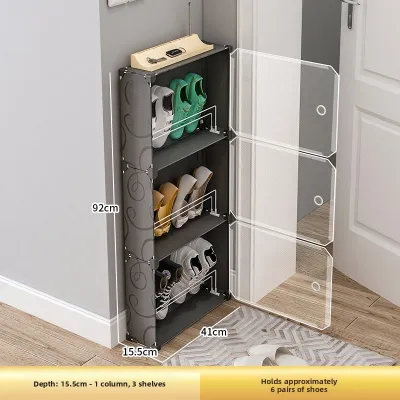
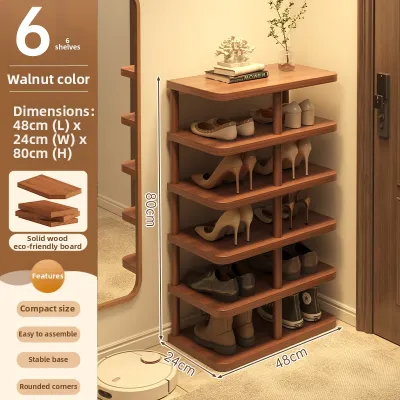
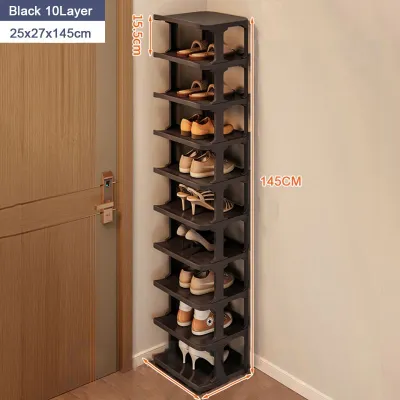
However, achieving a ultra-narrow depth introduces a direct trade-off with structural stability. As a cabinet becomes shallower—often shrinking to depths of 15 to 24 centimeters—its center of gravity rises, making it inherently prone to tipping. To overcome this, efficient designs often employ tilting drawer mechanisms, adjustable internal shelving, or modular vertical stacking. When evaluating these options, you must prioritize units that offer secure wall-anchoring solutions to ensure that maximizing your storage efficiency does not compromise the safety of your living space.
How to Calculate True Storage Efficiency
To determine the actual storage efficiency of a slim shoe rack, you must look beyond the nominal capacity claims provided by manufacturers. Start by calculating the physical footprint of the unit by multiplying its external width by its external depth. Next, calculate the total usable shelf area. For traditional flat-shelf designs, this is the width of the shelf multiplied by the depth, multiplied by the number of tiers. For tilting drawer designs, the calculation depends on the internal compartment depth and the angle of the tilt, which dictates how many rows of shoes can sit side-by-side without overlapping.
Products mentioned in this guide
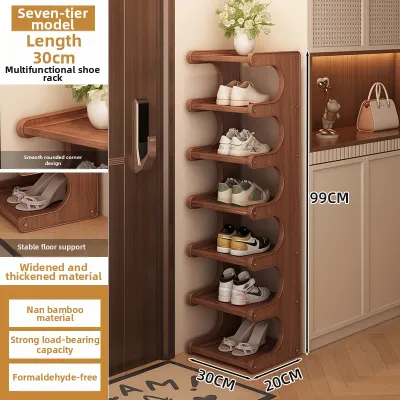
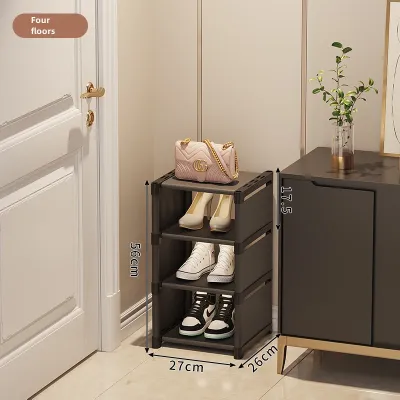
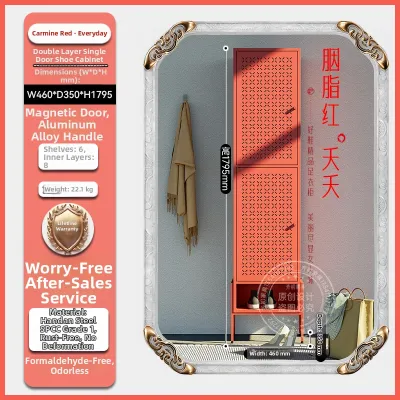
Prices are valid at publication and may change. Please refer to the product page for the latest price.

Nominal capacity claims are frequently based on standard, low-profile footwear, such as flat sandals or children’s shoes. In reality, the physical shape and size of your shoe collection will heavily influence the actual capacity. Bulky items like high-top sneakers, running shoes with thick soles, or formal leather shoes require more vertical clearance and width. If a shelf lacks adjustable heights, a single pair of tall shoes can force you to leave adjacent space empty or store items at awkward angles, drastically reducing the real-world capacity-to-footprint ratio.
Furthermore, structural frames, partition walls, and door hinges consume internal space that is often unaccounted for in marketing descriptions. A cabinet advertised to hold 18 pairs of shoes might only accommodate 12 pairs of adult men’s shoes if the internal width is restricted by thick side panels. To avoid surprises, measure the widest part of your largest shoes and compare this measurement against the internal clearances specified by the manufacturer, keeping in mind that shoe overhang can prevent cabinet doors from closing completely.
Essential Space and Dimension Checks Before Buying
Before purchasing a slim shoe rack, precise physical measurements of your designated installation area are mandatory. Begin by measuring the available floor depth, width, and vertical clearance of the space. If you plan to place the rack behind an entryway door or along a narrow hallway, you must account for the swing paths of nearby doors, including main entrance doors, metal gates, and bomb shelter doors. A cabinet that fits perfectly when closed may block a doorway or prevent a gate from opening fully when its drawers are tilted open.
In Singapore, housing developments such as HDB flats often have strict regulations regarding common corridor usage. The Singapore Civil Defence Force (SCDF) mandates that a minimum clear escape path of 1.2 meters must be maintained along common corridors. If you intend to place your shoe rack outside your flat, you must measure the remaining corridor width with the shoe rack doors fully open to ensure compliance with fire safety guidelines. Placing an oversized or non-compliant unit in these shared spaces can lead to forced removal or safety hazards during emergencies.
Additionally, you must verify the internal depth of the shelves or tilting compartments. For flat-shelf designs, the internal depth must be equal to or greater than the length of your longest pair of shoes to prevent them from overhanging the edge. If your shoes overhang, they will either prevent sliding doors from closing or obstruct the walkway in front of an open-front rack. For tilting drawer cabinets, check the maximum shoe length supported by the tilt mechanism, as shoes that are too long may jam the rotating hinges or prevent the drawer from latching shut.
Assessing Build Quality and Structural Stability
Because slim shoe racks feature a narrow base and a tall profile, assessing their build quality and structural stability is critical to preventing accidents. When browsing product specifications, check whether the manufacturer includes dedicated wall-anchoring hardware, such as L-brackets, safety straps, or wall plugs. Any slim cabinet with a depth of less than 30 centimeters should be securely anchored to the wall, especially if it features heavy tilting drawers that shift the center of gravity forward when opened.
Evaluating the materials and joinery of the shoe rack will give you a clear indication of its long-term durability. Common materials include engineered wood (such as MDF or particleboard), solid wood, metal, and plastic. While engineered wood is popular for its clean aesthetic, you must verify that the panels have high-quality edge banding and moisture-resistant laminates to prevent swelling in humid environments. Check the manufacturer’s specifications for the maximum load-bearing capacity per shelf; a high-capacity rack is of little use if the shelves sag under the weight of heavier footwear.
Finally, always verify the warranty terms and return policies before finalizing your purchase, whether you are buying from a local physical showroom or an online marketplace. A reputable retailer should offer a clear return policy in case the unit arrives with structural defects, misaligned pre-drilled holes, or damaged hardware. For online purchases, check if the seller provides professional assembly services, as improper self-assembly can severely compromise the structural integrity and stability of a tall, narrow cabinet.
Safety, Anchoring, and Weight Distribution
Ensuring the safety of a slim shoe rack goes beyond the initial installation; it requires ongoing attention to how the unit is loaded and maintained. To maintain a low center of gravity and minimize tipping risks, always practice proper weight distribution. Place your heaviest footwear, such as boots, heavy sneakers, and formal leather shoes, on the lowest shelves or bottom drawers. Lighter items, such as slippers, sandals, and canvas flats, should be stored on the upper levels to keep the unit stable during daily use.
For homes with young children or pets, wall anchoring is not optional. Children may attempt to climb open shelves or pull on tilting drawers, which can easily cause an unanchored slim cabinet to topple forward. When installing wall anchors in Singapore homes, identify the wall material first. Structural concrete walls require masonry drill bits and heavy-duty wall plugs, whereas drywall partitions require specialized toggle bolts. If you are renting and cannot drill into the walls, you may need to opt for lower-profile, wider shoe benches that do not present a tipping hazard.
Another critical factor to consider is ventilation and moisture control, particularly given Singapore’s tropical, high-humidity climate. Enclosed shoe cabinets can trap moisture from damp shoes, leading to mold growth, unpleasant odors, and damage to both the footwear and the cabinet material. Look for slim designs that incorporate ventilation features, such as louvred doors, open-slat back panels, or built-in ventilation cutouts. If you choose a fully enclosed model, ensure shoes are completely dry before storing them, and consider placing moisture absorbers inside the compartments.
Building Your Shortlist: Comparing Models and Specifications
To find the ideal slim shoe rack for your home, compile a structured shortlist by extracting exact specifications from product listings. Create a comparison matrix that lists the external dimensions, internal clearances, nominal capacity, material composition, and mounting requirements of each candidate. This systematic approach allows you to filter out models that do not fit your physical space constraints or fail to meet your storage requirements, saving you time and preventing costly purchasing mistakes.
When researching online marketplaces or brand websites, pay close attention to customer reviews to identify potential real-world issues. Look for recurring feedback regarding shelf sagging, flimsy backboards, or tilting mechanisms that stick or break over time. Reviews often provide practical insights into how easy the unit is to assemble and whether the actual color and finish match the product images. Be cautious of listings with overwhelmingly positive reviews that lack detailed descriptions or photos of the installed product.
Ultimately, your personalized comparison matrix should balance your specific space limitations with your shoe collection size. If you have a narrow entryway but a large collection of flat shoes, a tall, ultra-slim tilting cabinet with wall anchors will offer the best capacity-to-footprint ratio. If you have fewer shoes but require storage for taller boots, a modular, adjustable flat-shelf rack may be more suitable. By focusing on verifiable dimensions, material specifications, and safety features, you can confidently select a shoe rack that maximizes your space safely.
Frequently Asked Questions (FAQ)
Can slim shoe racks accommodate high heels and boots?
Yes, slim shoe racks can accommodate high heels and boots, provided you select a model with adjustable or removable shelving. For traditional flat-shelf designs, look for units where shelf heights can be customized to provide the necessary vertical clearance. For ultra-slim tilting drawer cabinets, check if the internal dividers can be adjusted or completely removed to fit taller footwear. Keep in mind that removing a divider to fit boots will reduce the overall capacity of that drawer, so you must plan your storage layout accordingly.
How do I prevent a tall, narrow shoe rack from tipping over?
To prevent a tall, narrow shoe rack from tipping over, you must secure it to the wall using the manufacturer-provided wall-anchoring hardware, such as L-brackets or safety straps. Ensure you use the correct wall plugs and screws for your specific wall type, such as masonry plugs for concrete walls. Additionally, always load the heaviest shoes on the bottom shelves to maintain a low center of gravity, and avoid pulling multiple tilting drawers open at the same time, which shifts the weight forward.

Community discussion
Share your experience or ask a question. Comments are reviewed before publication.